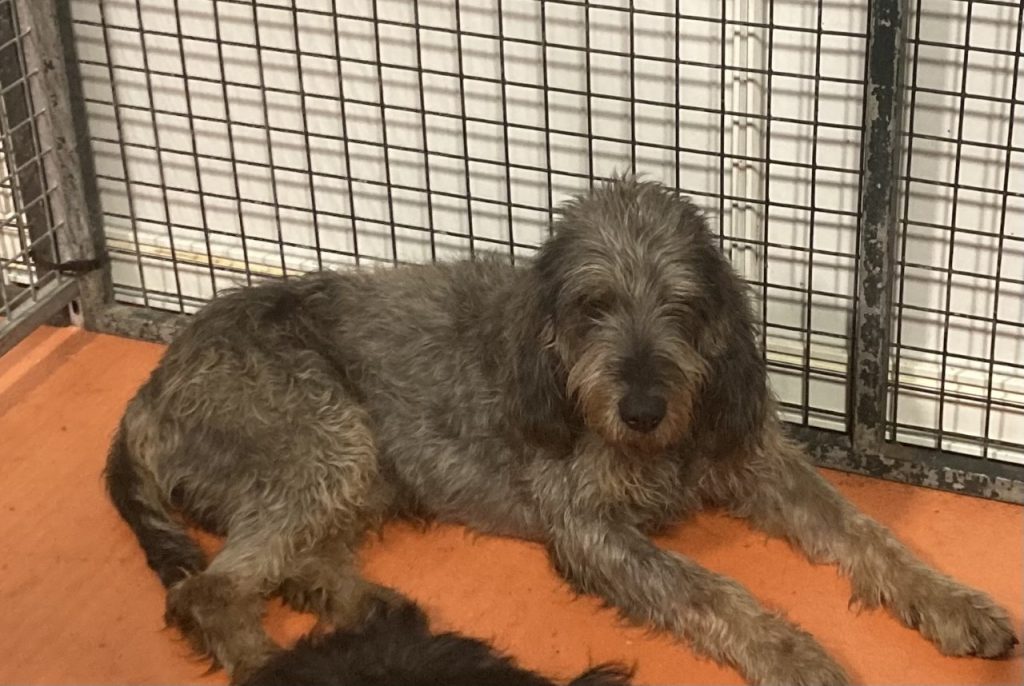
The Greenland griffon is one of the most unique and lesser-known French hounds: a rustic hunting dog, with a grey hair and expressive gaze, bred for centuries in the Nivernais region to follow the trail of the wild boar in the most difficult terrain. Resurrected almost out of thin air in the 20th century, today it is a rare breed that falls in love with those looking for a tireless hunter and a loyal companion, as long as it can offer the field and activity they need.
Is the Gryffindor to you?

The Greyhound is not a dog for everyone. It is, first and foremost, a working hound with a strong hunting instinct, a lot of energy and a remarkable will. It shines in the hands of hunters, sportsmen, or people who live in the countryside and enjoy outdoor scent activities. Instead, on a city floor, with short walks and no stimulation, he becomes a frustrated dog. Before you fall in love with her hairless face, be honest about your lifestyle.
In favour .
- An exceptional hunter, with a very good sense of smell and a powerful voice.
- Rustic and hardy, withstands cold and humidity.
- Balanced at home – neither shy nor aggressive.
- Low-maintenance fur (brushed a few times a year).
- Very sociable with other dogs because of their pack origin.
- Loyal, brave and affectionate to his family.
To be taken into account
- He needs plenty of exercise and space; he’s not a city dog.
- Stubborn and independent: education requires patience.
- Strong tracking instinct; can walk away following a scent.
- Long ears prone to infection if left unattended.
- Sensitive to heat despite its resistance to cold.
- Rare breed: finding specimens and breeders is not easy.
Character and temperament
The standard of the International Kennel Federation describes the Griffin nivernais as a brave and determined, never afraid. dog. The French Central Canine Society adds nuances that portray it perfectly: a balanced character, neither timid nor aggressive, calm at home, obedient but at the same time determined and independent.
In day-to-day life he is a loving and gentle dog with his family, enjoying company and contact. But when he goes out into the countryside and catches a trail, his hound nature comes out: Concentrated, tenacious and able to work for hours without getting discouraged. That independence, so valuable in hunting, is also what can despair a first-time owner who expects blind obedience. The Nightingale is cooperative, but in his own way and at his own pace.
Coexistence: children, other pets, flat and loneliness

With children. Its balanced temperament and tolerance make it a good companion for families with children who know how to respect the dog.
With other dogs. stands out especially here: bred to hunt in small packs, it usually gets along very well with other dogs and enjoys group life.
With other pets. Its powerful hunting instinct advises caution with small animals. A cat with which it is bred from a puppy may be part of the family, but rabbits, birds or rodents awaken its tracking and chasing drive.
Flat and lonely. is not a city dog. It needs space, long walks and stimulation; in a flat without frequent access to the countryside it gets bored and may develop undesirable behaviors. It also does not do well in prolonged solitude: it is a dog accustomed to the constant company of its pack and its hunter.
Education and training
Raising a nivernais griffin is a balancing act. The breeders themselves sum it up well: its strong temperament demands a gentle, without brutality, but without falling into laxity either education. Neither force-fighting nor permissiveness works with this hound.
The key is consistency and positive reinforcement. He’s an intelligent dog who learns, but his independence makes him need reasons to obey: Prizes, olfactory games and a relationship of trust yield far more than imposition. Early socialization with people, dogs, and diverse environments is essential to prevent their determined nature from leading to stubbornness. And it’s good to work from a puppy on calling and tracking instinct control, because an adult who’s hooked on a scent can completely ignore your voice.
Exercise and activity
If there’s one thing that’s non-negotiable with this breed, it’s exercise. The nivernais griffin was bred to follow the wild boar for hours in swamps, bushes and rough terrain, and that endurance machinery is still intact. It needs intense and daily physical activity: long walks, runs, exploration and, above all, olfactory work, which is what really satisfies it.
A simple walk around the block does not serve it. The ideal is the countryside, where you can use your nose and expend energy. It is resistant to cold and humidity, but you have to be careful with the heat, to which it is sensitive: in summer it is convenient to exercise it at first and last hour of the day. For sportsmen, hunters and fans of mantrailing or trail tests, it is an untiring companion.
Care: fur and hygiene

The good news is that its characteristic hirsuto coat is surprisingly easy to maintain. brush and cushion him three or four times a year is enough to remove dead hair and retain the rough, natural texture that protects it from the elements.
The real focus is the ears. They are long, slender, and fairly hairy, have poor ventilation, and tend to accumulate moisture and dirt, which can promote mild infections. They should be checked and cleaned regularly, and any excess ear canal hair should be carefully shaved. Basic hygiene is completed by cutting nails, checking pads after field trips, and regular dental care.
Foodstuffs
More important than the brand is how ? it is fed: the breed is prone to gastric torsion or dilation, a serious condition that can be triggered by eating a lot and bumping or exercising on a full stomach.
That is why breeders recommend dividing the ration into two daily servings and, above all, respecting a period of rest after eating, avoiding intense physical activity just before and just after meals.
Health and life expectancy
The Griffin nivernais is a rustic breed and, in general, healthy: no particular hereditary diseases have been documented no characteristic pathologies.
That said, there are two aspects that mark your veterinary care. The first is the ears, whose fallen, hairy conformation makes them prone to otitis if not cleaned regularly. The second is risk of gastric torsion, common in deep-breasted dogs, which is prevented with good feeding and rest guidelines. With regular check-ups, vaccination, deworming and those specific care, it’s a dog that enjoys a long, active life, in line with similar-sized hounds.
Physical appearance
The Gryphon nivernais is a medium size, 55 to 60 cm at the withers dog, of rustic and robust appearance but dry build, without any heaviness.
The most striking feature is its coat: long, hairy, coarse and hairless, which gives him that unmistakable air of a sympathetic drifter. The color is carbonate lionskin, with shades ranging from light gray to wild grey thanks to the white hairs scattered throughout the mantle. The standard collects shades with picturesque names: of a fat content, by weight, exceeding 13%(rabbit hair), grey wolf(wolf grey) and grey blue(blue grey). A small white spot on the chest is admitted.
The head is light, dry and elongated, with parallel skull and snout lines, dark eyes under marked eyebrows that give it expression, and sloping, thin and hairy ears that reach up to the birth of the truffle.
Origin and history
The story of the Griffon nivernais is one of the most novel in French cynology. It is considered a descendant of the chien gris of Saint-Louis, the grey dog that, according to tradition, arrived in Europe after the Eighth Crusade, in the middle of the 13th century, and which formed the royal packs until the reign of Francis I, when its popularity declined in front of the white dog. The knights of the Nivernais kept that ancient type, used in the following centuries to hunt wolves and wild boars, until the Revolución Francesa made the breed disappear along with the nobility that maintained it.
Reconstruction began in the 19th century, when hunters in the region recovered the type under the popular name “country dog”, crossing specimens descended from those grey dogs with the The great Vandean Gryphon, the English Foxhound and the Otterhound. In 1925 the Club du Griffon Nivernais was founded, chaired by the Viscount d’Anchald. The Second World War left the numbers down to a minimum, and it was not until 1969 that the club reactivated the national team. Recognized by the FCI with the standard no. 17 within the group of hounds, the breed lives today a modest renaissance and is exported to other countries as a rarity for those looking for a unique dog.
Curiosities
- It is a reconstructed race: the original disappeared after the French Revolution and the current one was recreated in the 20th century from other hounds.
- Its ancestor, the chien gris of Saint-Louis, would have arrived in France from the East with the Crusaders.
- The medieval dogs from which he descended hunted wolves and wild boars and were much larger than today’s Gryphon nivernais.
- The evocative names of their colors – “hare hair”, “wolf gray”, “blue gray” – are part of the breed’s own standard.
- Despite its resistance to cold and wet swamps, it is sensitive to heat, a curious contrast for such a rustic dog.
- Among the breeds used in its reconstruction is the Otterhound, another rough-haired hound today also very scarce.
If you are attracted to the canine temperament of the Griffon nivernais, you may be interested in other similar hunting and tracking breeds. You can discover the legendary smell of the Bloodhound, the unmistakable ears of the Basset Hound, the tracking joy of the Beagle or the classic British hound that is the Foxhound, one of the breeds that intervened in its reconstruction.
Frequently Asked Questions About the Nivernais Griffon
Is the nivernais griffin a good companion dog?
It can be for the right person. It is a rustic hunting dog, brave and very attached to its work. As a pet it is affectionate and quiet at home, but needs a lot of exercise and space; the standard itself and breeders agree that it is not designed for urban life.
How tall is a nivernais griffin?
It is a medium-sized dog, measuring between 55 and 60 cm at the withers.
Does the Nightingale get along with children?
Its balanced character, neither shy nor aggressive, fits well with children who know how to treat a dog. Being a pack hunter, it is used to living in a group.
Does the Griffin need a lot of exercise?
It’s bred to track and chase wild boar for hours on end in rough terrain, needs long daily outings, preferably in the countryside, and activities that stimulate its sense of smell.
How much hair do you shed and what skin care do you need?
Its hair is long, hard and hairy, easy to maintain. It is enough to brush and cushion it three or four times a year to remove the dead hair. What does require constant attention are the fallen and hairy ears, which must be carefully cleaned.
Does the Griffin have any health problems?
No particular hereditary diseases have been documented in the breed. The two points to watch out for are long and plugged ears (prone to infection if not cleaned) and the risk of gastric torsion, so it is advisable to distribute the food and let it rest after eating.
Do you adapt well to living in a flat?
It’s not their natural environment. It’s a field dog, resistant to cold and humidity but sensitive to heat, that needs space and long walks. On a floor with no frequent access to wide areas where running and sniffing is easily frustrating.
Is it easy to train the Gryffindor?
It is intelligent but stubborn and independent, traits typical of the hound. It responds to a firm, consistent and positive upbringing, never abrupt or permissive.