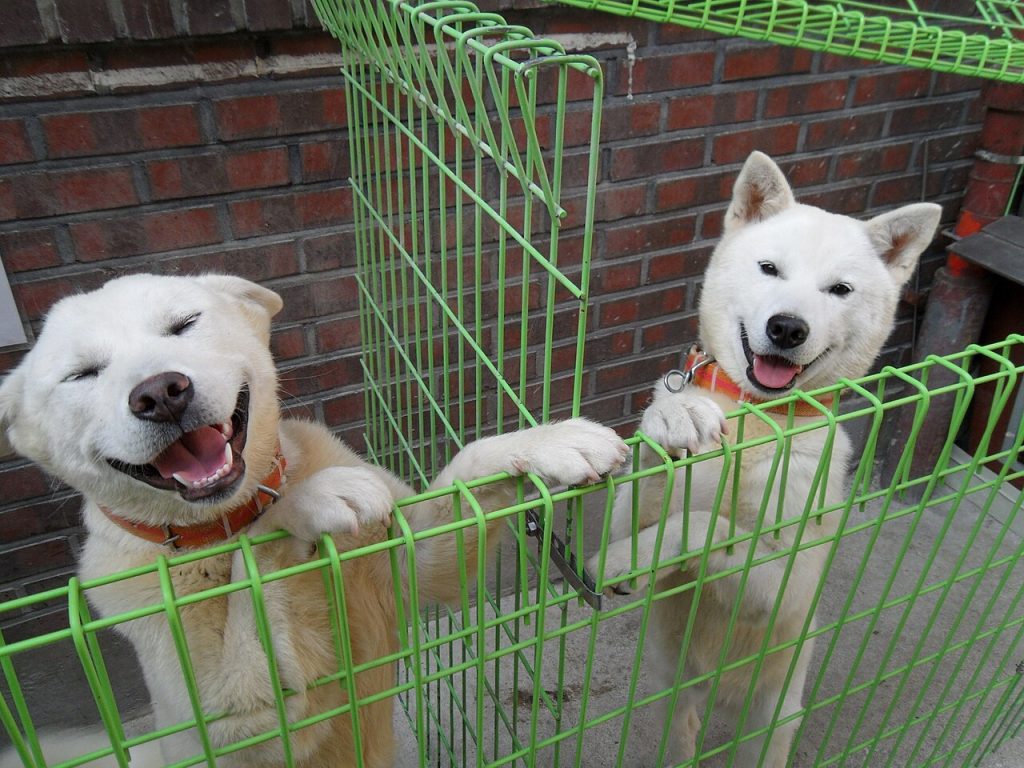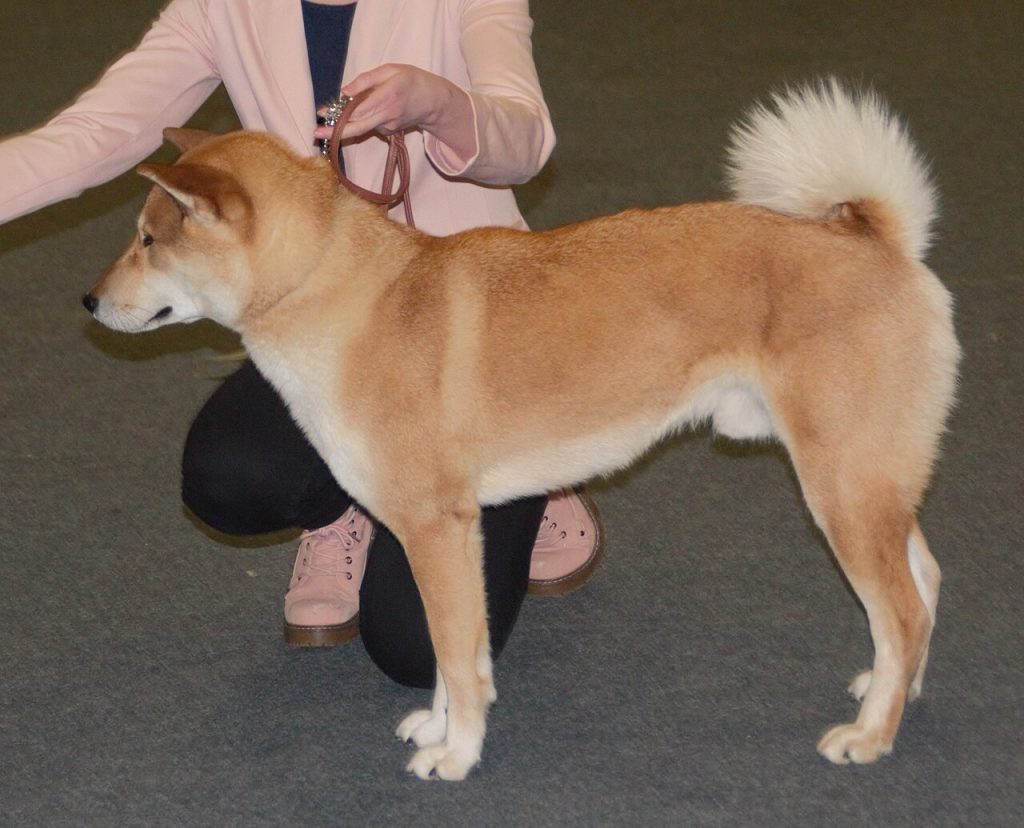
The Shikoku is a medium-sized Japanese mountain spitz dog bred for centuries to hunt wild boar and deer in the steep forests of the island that gives it its name. Agile, hardy, intensely loyal to its family and with a keen hunting instinct, it is one of Japan’s six native breeds and one of the rarest. If you’re looking for a rustic, athletic, noble but independent dog, this article tells you everything you need to know before sharing your life with a Shikoku.
Is Shikoku for you?
The Shikoku is not a dog for everyone. It is a wonderful companion for one who understands and respects the mindset of primitive dogs, but it can be demanding for one who expects a submissive and manageable dog. Before you decide, weigh honestly what it offers and what it demands.
In favour .
- Loyal and very close to his family; he forms deep bonds.
- Athletic and tireless: ideal companion for hiking and mountaineering.
- Clean, almost odorless and easy to care for.
- Intelligent, sharp, and highly capable of learning.
- Good dog of alert and manageable size (medium size).
- Rustic and usually healthy and long-lived.
To be taken into account
- Strong hunting instinct: difficult with cats and small pets.
- He is independent and firm in character; he does not obey just to please.
- It can be selective or dominant with other dogs.
- He needs plenty of exercise and daily stimulation.
- It requires early and intense socialization.
- Very rare breed: few breeders and hard to find.
Character and temperament

The Shikoku combines the classic qualities of the Japanese spitz-type dog: it is alert, courageous, energetic, and highly sensitive. The AKC itself describes it as “a dog of remarkable endurance, keen sense, with a naive, energetic and very alert expression; an enthusiastic hunter and docile to his master”.
To his family he is affectionate and deeply loyal, almost devoted, and usually chooses one or two people of reference. With strangers he is reserved and watchful, without being aggressive by nature. He’s a dog who thinks to himself: His history as a hunter working at some distance from man has given him an independence you must know how to read. He’s not stubborn on a whim, but he’s used to making decisions. If you’re looking for a dog that “lives to please”, you’ve got the wrong breed; if you value a noble, confident, self-assured character, you’ll find an exceptional companion in the Shikoku.
It is sensitive to its owner’s tone and mood, and responds much better to respect and consistency than to imposition.
Coexistence: children, other pets, flat and loneliness
With children: Raised in a family, the Shikoku is usually tolerant and protective of the children in his home, especially if he grows up with them.
With other pets:‘s hunting instinct is intense, so cats, rabbits and small rodents are a real challenge; it can learn to live with the animals it is raised with, but will rarely be reliable with strangers. With other dogs it tends to be selective and, among males, competitive.
Floor and solitude: can adapt to a floor if it is guaranteed plenty of exercise, but thrives best in a house with well-fenced terrain, as it jumps and climbs freely. It is not a dog that copes well with prolonged solitude: bored or under-stimulated, it can become destructive or vocal.
Education and training

Educating a Shikoku is an exercise in patience, consistency and mutual respect. He’s very intelligent and quick to learn, but his independence means he doesn’t repeat commands just to please: He needs to understand what he’s winning. Positive reinforcement, short and varied sessions and powerful motivation (value food, play) work much better than hard correction, which only gets you to close in on the band.
The early socialization is the most important investment you’ll ever make: exposing him as a puppy to people, dogs, environments, noises and diverse situations in a positive way reduces reactivity and shapes a safe adult. The remembrance work (coming to the call) deserves special attention, because its hunting instinct can make it ignore the order if it detects a prey; it should be strongly reinforced and be cautious with freedom in unfenced areas.
It is a dog that is grateful to have a “job”: smell, hiking, playful obedience or canine sports channel its mental energy and prevent it from being directed towards problematic behaviors.
Exercise and activity
The Shikoku was developed by chasing large game through hillsides and forests, and that past is noticeable: it is a highly resistant, agile and climbing dog, which needs to burn energy daily. A minimum of one to two hours of quality activity per day is reasonable, combining long walks, controlled running, play and mental stimulation.
He is an outstanding hiking companion: endures demanding walks, is fluent in technical terrain and enjoys exploring. It also fits well in canine sports such as canicross, mantrailing or olfactory testing. What he doesn’t tolerate is sedentary lifestyle: A Shikoku with no way out physically or mentally gets frustrated, and that frustration ends in wrecking, barking or escape attempts. If you’re an active outdoorsman, this breed will shine with you.
Care: fur and hygiene
The Shikoku’s coat is twofold: a hard and rough outer coat and a dense and soft undercoat that insulates it from the cold and moisture of the mountain.
The exception is the two seasonal seedlings, in spring and autumn, when it releases the undercoat in large quantities; in those weeks it is advisable to brush it daily, ideally with a card or a detachable rake, to speed up the replacement and control the hair at home. Bathing should be sporadic: Its coat is practically self-cleaning and hardly smells, and washing it too much dries out the skin. Complete the routine with checking and cleaning ears, trimming nails when they don’t wear out on their own, and regular dental hygiene.
Foodstuffs
The Shikoku is an athletic dog that must always be kept in working condition, lean and muscular, without excess weight. A quality diet, rich in animal protein and adjusted to its age, size and activity level, is the basis.
It is a rustic breed that does not usually have particular digestive demands, but it is advisable to monitor individual tolerance and always keep fresh water available, especially after exercise.
Health and life expectancy

The Shikoku is a primitive and rustic breed, selected for centuries for its functionality, and that translates into generally good and solid health.
The only major health problem documented in the breed is certain predisposition to epilepsy. Much more specific cases of canine metatarsal fistulation and neuroendocrine lipofuscinosis have been reported in Japan, particularly in the Shikoku region. As this is a small population, choosing a serious breeder who works on genetic diversity and is transparent about the health of their lines is especially important. With regular veterinary checkups, vaccination, deworming, and an active lifestyle, the Shikoku usually remains strong and healthy for many years.
Physical appearance
The Shikoku is a medium-sized dog, of sober and balanced appearance, with the unmistakable imprint of the Japanese spitz: small, triangular, erect ears, slightly triangular eyes of waking expression, and a thick coiled or sickled tail on the back. The body is strong and muscular, slightly longer than high (proportion 11:10), and is always shown in athletic condition.
The standard height is about 52 cm at the cross in males and 49 cm in females, with a tolerance of ±3 cm. Sexual dimorphism is evident in both expression and structure. As for coat, the standard supports three colors: Sesame, red sesame and black sesame. There is also a cream variant called pinto, very rare and not accepted by the standard. In all colours appears the urajiro, a characteristic pale mark on the cheeks, sides of the snout, lower jaw, chest, belly, inner face of the legs and lower tail. That contrast is one of the hallmarks of race identity.
Origin and history
Shikoku, also known as Kochi Inu or Shikoku Ken, comes from the mountainous island of Shikoku, the smallest of the four major islands in the Japanese archipelago. There he was developed as a large hunting dog of the matagi, the traditional Japanese hunters, who used him to chase and restrain wild boars and deer in rough and difficult terrain. The isolation of those mountains kept the race pure and functional for generations.
The matagi trained the Shikoku in two main hunting styles: The hoeru-dome, bark to hold the prey, and the i ‘m going home ., bite to hold it; the former was preferred for the safety of the dog. In the 1930s, the Japanese cynologist Haruo Isogai classified the native breeds of the country into three sizes, and framed the Shikoku among the medium dogs, along with the Kai Ken, the Ainu (Hokkaido) and the Kishu Ken. That effort was part of a nationalistic reaction to the European-race fashion that had spread in Japan.
From the work of rebuilding the race emerged five distinct lines: the eastern part of Iya and Kochi-Aki, and the western part of Hata, Hongawa and Awa. The Awa line virtually disappeared due to the hardships of World War II and the frequent crossing with foreign dogs. The hard-to-reach Hongawa region retained the purest specimens, and modern Shikoku descends mainly from the Hongawa and Hata lines. In 1937 it was declared a “natural monument” in Japan, reflecting its heritage value.
Curiosities
- It is one of the six indigenous races of Japan, along with the Akita, Shiba, Kishu, Kai and Hokkaido; its size is halfway between the large Akita and small Shiba.
- It is sometimes nicknamed the “Japanese wolf” for its wild appearance and primitive demeanor, although it is neither a wolf nor directly descended from it.
- The breed’s distinctive marked pale has its own name, urajiro, a trait it shares with other Japanese breeds.
- It is a natural climber: its development on steep terrain makes it an agile climber and an excellent mountain companion.
- It remains a rare breed even in Japan, and its numbers are gradually declining, something it shares with the Kishu Ken.
If you are attracted to the Shikoku’s primitive, loyal, and athletic nature, you may be interested in other similarly minded breeds, such as the Akita, its larger Japanese relative; the sleek and versatile Husky Siberiano, another hardworking and tough spitz; the noble Samoyedo, a double-coated Nordic spitz; or the imposing Chow Chow, another Oriental breed with an independent character.
Frequently Asked Questions about Shikoku
Is the Shikoku a good dog for beginners?
It’s not the easiest option. The Shikoku is intelligent and loyal, but also independent, with a strong hunting instinct and a strong personality. It needs a steady owner who understands the mindset of primitive Japanese dogs and knows how to socialize it as a puppy. A very involved and well-advised beginner can live with him, but he is not a dog for whom automatic docility is sought.
How tall and how much does a Shikoku weigh?
The standard marks a cross height of about 52 cm in males and 49 cm in females, with a tolerance of ±3 cm. It is a medium-sized dog, located between the Akita, the largest, and the Shiba Inu, the smallest.
Does the Shikoku get along with other dogs and cats?
With other dogs it can be selective and, especially among males, tend to compete. With cats and small pets its hunting instinct complicates coexistence: it can learn to tolerate the animals it grows up with, but is rarely reliable with strangers.
How much exercise does the Shikoku need?
Enough. It is a hardy mountain dog, bred to hunt in rough terrain. It needs at least one or two hours a day of quality activity: long walks, hiking, play and mental stimulation. It is an excellent companion for walking and climbing, but it becomes frustrated and can become destructive if bored.
Does the Shikoku shed a lot of hair?
It has a double layer and makes two strong moults a year, in spring and autumn, in which it releases hair in abundance. The rest of the year the fall is moderate.
What health problems does Shikoku have?
It is a rustic and generally healthy breed. The only major problem documented is a certain predisposition to epilepsy.
Can the Shikoku live on one floor?
It can adapt to a flat if it receives enough daily exercise and stimulation, but it is not its ideal environment. Its energy, its need for space and its vigilance instinct fit better with a house with well-fenced terrain. On the flat it requires a high commitment to outings and activity.
Is the Shikoku a rare breed?
Yes. It is one of the six native breeds in Japan and one of the least numerous, even within its country of origin. Its numbers are in gradual decline, something it shares with the Kishu Ken. Outside Japan it is very rare, although it has specialized breeders and recognition from clubs such as the UKC and the AKC foundation service.