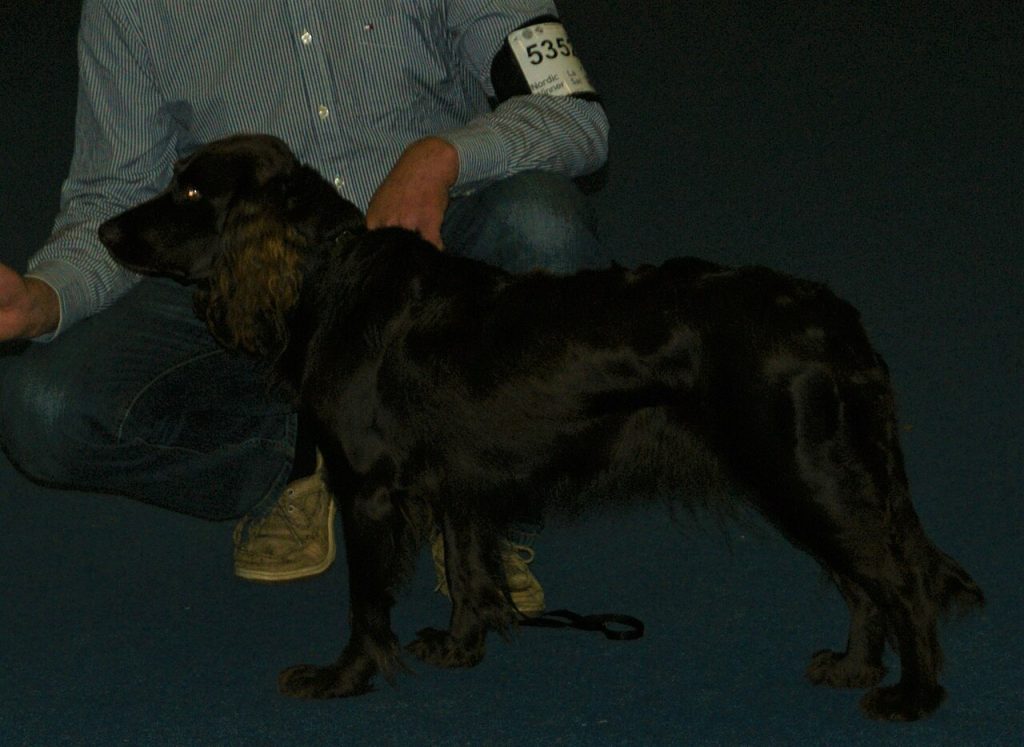
The German loser– known in its country of origin as Deutscher Wachtelhund and in English as German Spaniel– is a medium-sized, versatile and tireless German hunting dog, bred to track, lift and collect parts in the forest. Outside Germany it is a little-known breed, highly prized by hunters and rangers for its exceptional nose, well-balanced character and devotion to work. If you’re looking for a couch dog, this isn’t your dog; if you’re looking for an athletic companion with a hunter’s soul, keep reading.
Is that the German Perdiguero for you?

The German Shepherd is, first and foremost, a working dog. Its selection has been guided for more than a century by its aptitude for hunting and not by its domestic life, and that completely dictates what you can expect from it. Before you fall in love with its pretty wavy coat, be honest about your pace of life.
Points in favour
- Multipurpose hunting dog: tracks, lifts and snakes on land and in water.
- Extraordinary sense of smell, compared in his day to that of the hound.
- Balanced, sociable and very attached to his guide.
- Intelligent and predisposed to team up with the person.
- Rustic, sturdy and of robust constitution.
- Good medium size, comfortable to drive in the field.
Points to Consider
- It needs a lot of exercise and work; it is not an inactive floor dog.
- Strong hunting instinct: watch out for cats and small animals.
- Rare outside Germany: hard to find and with few breeders.
- He gets bored and frustrated if he doesn’t have a job.
- Long, droopy ears: ear infections should be monitored.
- A coat that requires regular brushing after field trips.
Character and temperament
The German Shepherd has a character that fits like a glove into its function: it is alert, courageous, and very resilient, but at the same time docile and very attached to its guide. It is not a nervous or uncontrollable dog, but a collaborator who enjoys working alongside the person, something that hunters value above almost anything else.
This closeness to the human translates into a loving and loyal dog at home, as long as his activity needs are met. It is sensitive to its owner’s voice and guidance, which makes the job easier, but it also has the independence of a dog that must make decisions only when following a trail away from the hunter. It therefore combines obedience with self-discipline, a mixture demanded by an involved owner.
With strangers it is usually calm and without gratuitous aggression; it is not a guard or defense dog, but a co-worker. Its engine is in the nose: where there is an interesting smell, there goes its attention. Understanding this is the key to living with it without frustrations.
Coexistence: children, other pets, flat and loneliness

With children. is a balanced and affable dog that, well socialized, coexists very well with the smallest of the house.
With other pets. usually gets along well with other dogs, especially if it has been socialized since puppyhood. The delicate point is small animals: its tracking and lifting instinct can shoot up with cats, rabbits or birds.
On the floor. is not its natural environment. It can live in a flat only if it is provided several hours daily of intense exercise and mental stimulation. Without that relaxation, a dog bred to work full days in the mountains accumulates frustration.
Soledad. is a dog very attached to its people that does not take long absences well. If it spends too many hours alone and inactive, it can develop undesirable behaviors. It needs company and, above all, a purpose.
Education and training
The good news is that the German Shepherd is intelligent and genetically predisposed to work with people, making it very responsive to training. It is a breed designed to respond to the hunter’s guidance, collect parts, and track by following directions, so that it easily assimilates tasks that give it meaning.
The key is to start early and channel your instinct. Starting as a puppy, it’s best to work on socialization, basic obedience, and chase impulse control. Positive reinforcement works especially well: rewarding work well done and turning it into a game with purpose. Tracking, collecting, and searching exercises are ideal because they take advantage of what the breed does best.
You must count on its independence: when it follows a trail, its nose commands. That is why the work of calling and remote control must always be reinforced. A well-educated German Shepherd is an obedient and cooperative dog; one without education or occupation is a bunch of energy that is difficult to redirect.
Exercise and activity
There are no half-measures here: the German Shepherd needs plenty of exercise, both physical and mental. It was bred to cover long distances in the forest for hours, searching, lifting and charging, and that energy demand remains intact even though it lives in a family.
Ideally, he combines strenuous physical exercise – long walks, running, swimming (he loves the water) – with mental stimulation through olfactory games, tracking, and collecting exercises. Hunting is, of course, its star activity, but canine sports such as mantrailing, nose work, or collection tests are excellent substitutes for non-hunting. A tired, busy-headed Wachtelhund is a happy, well-balanced dog at home.
Care: fur and hygiene

The German Shepherd’s mantle is short and thin on the head and long, strong and dense on the body, with a wavy or curly texture and good undercoat that insulates it from cold and water.
Brushing several times a week keeps the mantle free of knots, especially in areas with fringes, and helps remove weeds, seeds and grains that get stuck after field trips.
The point that requires the most vigilance are the ears: being long and fallen, they retain moisture and favor otitis, especially in a dog that is frequently wet. Clean and dry them regularly, especially after swimming. Complete hygiene with cutting nails when necessary and regular dental care.
Foodstuffs
As a medium-sized working dog with a high energy expenditure, the German Shepherd needs a quality diet tailored to its actual activity level. A dog that hunts or trains daily has very different requirements from one that leads a quieter life, and the ration must be adapted to avoid both thinness and overweight.
Choose a balanced feed or diet, with a good intake of protein and fat that supports your muscles and your endurance. Divide the food into two servings and avoid intense exercise right after eating. Adjust the amounts according to the season (hunting season versus rest) and consult with your veterinarian on the most appropriate diet for your age, weight and activity.
Health and life expectancy
Having been selected for generations for their suitability for work and not for aesthetic criteria, they have retained a robust constitution and good overall health, without the morphological exaggerations that penalize other breeds.
The points to watch are mainly derived from their anatomy and lifestyle.The long and dropped ears, together with frequent contact with water, make otitis the most common problem, so cleaning and drying the ears are fundamental.After field trips, it is advisable to check the eyes, pads and skin for spikes, ticks or small wounds.
As with any athletic dog, maintaining an adequate weight protects its joints long-term. With daily vaccination, regular deworming, veterinary checkups, and a good hygiene routine, the German Shepherd is a healthy and resilient companion throughout its lifetime.
Physical appearance
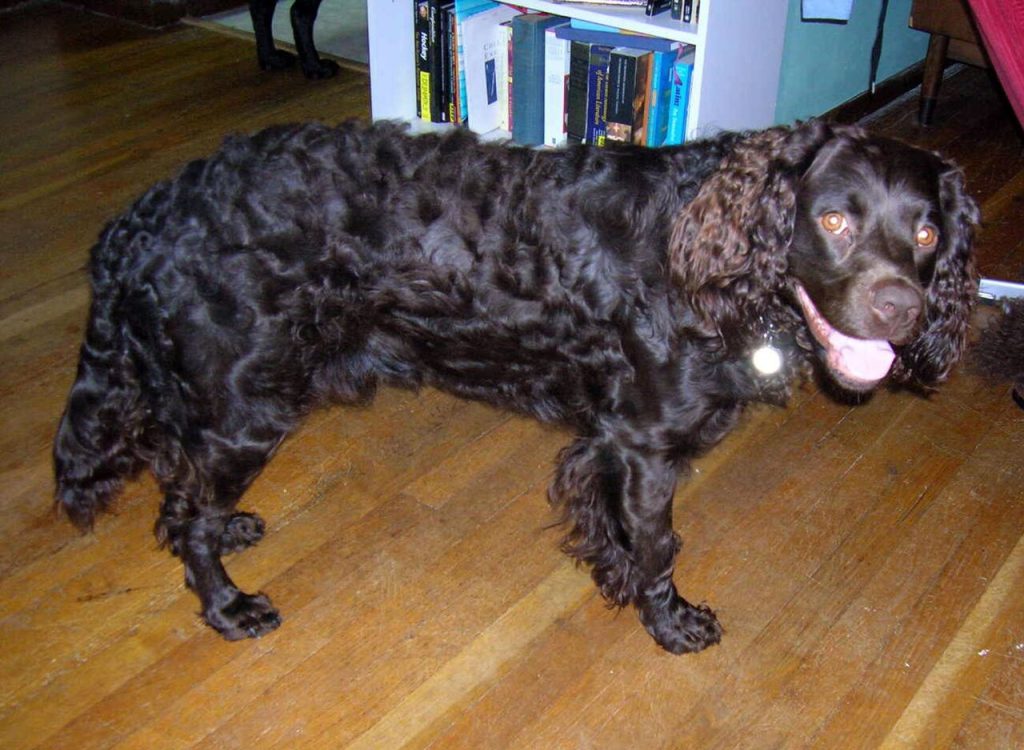
The Deutscher Wachtelhund is a medium-sized hunting dog, with strong bones and well-developed musculature, with a solid and functional appearance that transmits resistance.
Its most characteristic feature is the mantle: short and thin on the head, and long, strong, dense and wavy or curly on the body, with enough undercoat to protect it.
In terms of color, brown tones predominate: solid brown or ruano brown, often with white spots on the chest or legs and white mottling spread throughout the body. There are also red and red specimens with white.
Origin and history
The modern German Hound developed in Germany around 1890. Its creation is attributed to breeder Frederick Roberth, who started from an ancient German breed now extinct, the Stöberer(literally, “the one who rummages or searches”). This versatile dog had become popular among the common people after the revolutions of 1848 in the German states, when the ordinary citizen obtained the right to hunt and needed a versatile hunting dog. The Stöberer was already mentioned in literature in 1719 and was credited with a nose as powerful as that of a hound.
In the late 19th century, Roberth found Stöberer specimens in Bavaria and crossed them with water dogs and hunting spaniels to form the current breed. In 1903 the Deutscher Wachtelhund was recognized as a breed and the German club, the I’m not going to tell you what to do.(VDW) was organized.
In 1910 the VDW selected eleven specimens – four males and seven females – from different regions of Germany to set the standard of the breed; all registered German Shepherds today are descended from these eleven dogs. The breed is related to the Small Münsterländer and the Drentse Patrijshond, all descendants of ancient quail dogs dating back to at least the 15th century.
In the 1960s and 1970s several specimens were imported to the United States, and their descendants are now used in Canada to track and raise the American black bear.
Curiosities
- Its German name, Wachtelhund, literally means ” quail dog”, in reference to one of its traditional prey.
- John Scott, 1st Earl of Eldon and Lord Chancellor of Great Britain, had a German Shepherd named Pincher, considered his favorite dog, who was portrayed by the famous painter Edwin Henry Landseer.
- All registered specimens of the breed descend from only eleven dogs selected by the German club in 1910.
- In Canada, descendants of imported Wachtelhunds are used to track and harass the American black bear.
- It is the only representative of the Stöberer fighter category recognized in Germany.
- It is not usually kept as a pet: its usual owners are rangers and professional hunters.
If you are attracted to the profile of the German Shepherd, you may be interested in other equally active and water-bound hunting and gathering breeds. You can continue to explore the Cocker Spaniel, the versatile Labrador Retriever, the sleek Golden Retriever or the energetic Hungarian pointer Vizsla, all of whom are co-workers with a big nose and passion for the activity.
Frequently Asked Questions about the German Perdiguero
Is the German Shepherd a good companion dog to live in a flat?
It’s not his ideal environment. The German Hound (Deutscher Wachtelhund) is a versatile hunting dog bred to work full days in the forest, with a lot of energy and need to track and collect parts. In a flat it can adapt only if you guarantee it several hours a day of intense exercise and mental stimulation; otherwise it gets bored, barks and looks for undesirable exhaust valves. It fits much better with hunters, rangers or very active families with access to the countryside.
How tall and how much does a German Perdiguero weigh?
It is a medium-sized dog. Males measure approximately between 48 and 54 cm at the withers and females between 45 and 52 cm. The average weight, both in males and females, is between 18 and 25 kg. It is a dog with strong bones and marked musculature, compact and resistant rather than light.
What colors can the German Shepherd’s coat be?
The most common is solid brown or ruano brown, with possible white spots on the chest or legs and white mottling on the body. There are also red and red specimens with white. Solid black does not appear in the breed. The coat is short and thin on the head and long, dense and wavy or curly on the body, with undercoat that protects it from water and weeds.
Does the German Shepherd get along with children and other pets?
In general, yes, if it is well socialized. It is a balanced, sociable and very attached dog to its people, which usually tolerates children well. With other dogs it coexists without great problems. The caution is with small animals: its strong instinct of hunting and tracking can be activated with cats, rabbits or birds, especially if you have not grown up with them.
Is it easy to train the German Shepherd?
It is intelligent and very predisposed to working with the guide, which makes training easier, but it is also independent and has a lot of smell, so it needs constant and positive education from puppyhood. It responds very well to tracking, collecting and obedience tasks. The key is to channel its energy and nose with useful work; a Wachtelhund without occupation is a frustrated dog.
How long does a German Shepherd live and how healthy is he?
It is a rustic and functional breed, selected for its fitness for work rather than for aesthetics, which has favored robust health. As a medium-sized dog with long, droopy ears, it is advisable to monitor otitis and check ears, eyes and pads after field trips. Keep up-to-date vaccinations, deworming and veterinary control; with good care it is a long-lived companion within the expected range for its size.
What’s the German Perdiguero used for?
It is a versatile hunting dog par excellence. It tracks, lifts the piece (it is a Stöberer or ‘dog that harasses’) and collects both on land and in water.
Is the German Shepherd the same as the German Spaniel or the Deutscher Wachtelhund?
Yes, they are names for the same breed. ‘Deutscher Wachtelhund’ is the original German name (literally ‘cod dog’), ‘German Spaniel’ is its English name and ‘German Perdiguero’ or ‘German Spaniel’ are the forms used in Spanish. It is recognized by the FCI with Standard No. 104 and by the United Kennel Club since 1996.