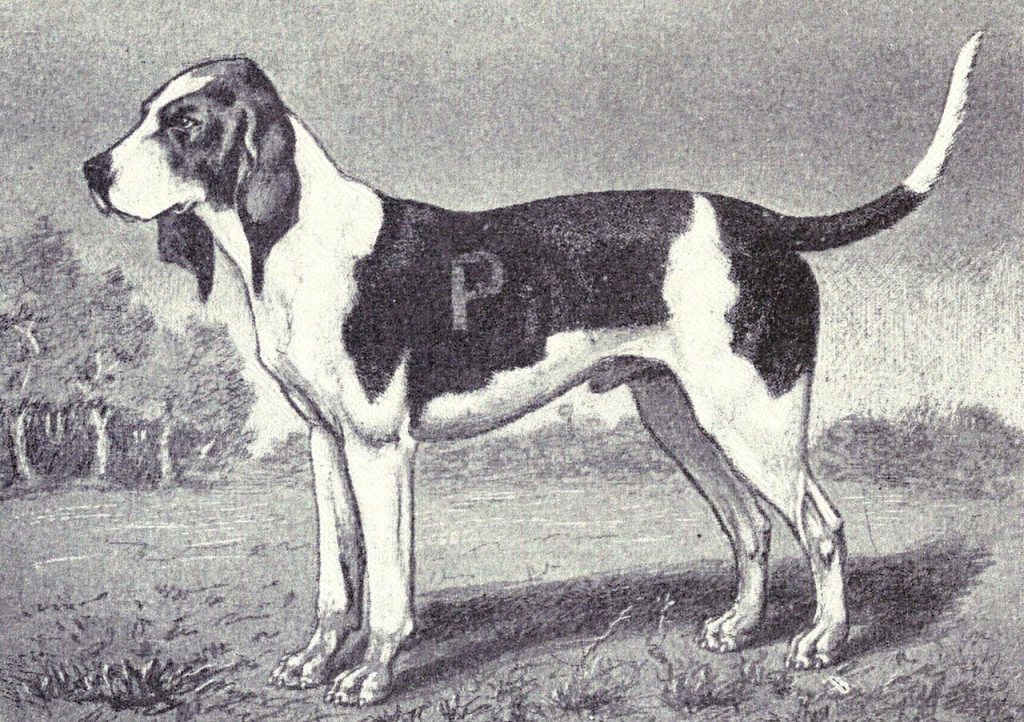
The Sabueso Artesiano(in French The Chien d’Artois, also called Dogue d’Artois) is one of those French herding dogs that were on the verge of disappearing and that today survive thanks to the commitment of a handful of breeders. It is a medium-sized, robust, muscular tracking dog with an extraordinary sense of smell, a powerful voice, and a sociable character typical of dogs bred to work in groups. It’s not an easy pet to find outside of France, and understanding where it comes from helps you know if it’s a good fit for you.
Is the Artesian Hound for you?
Before you fall in love with his classic three-color hound pattern, be honest: The Artesian Hound was designed to hunt in packs, follow a trail for hours and warn with a voice. Those qualities, which are a wonder in the field, completely condition life with him at home. He’s a dog for active people, with space and patience to channel his instincts, not for a small apartment where he spends the day alone.
In favour .
- Balanced, sociable and non-aggressive, true to his herd past.
- Sturdy and rustic, made for prolonged outdoor exercise.
- Exceptional sense of smell: he greatly enjoys games and tracking sports.
- He gets along well with other dogs and is usually tolerant of children.
- Short coat that barely needs a hairdresser or complex maintenance.
To be taken into account
- Powerful barking and “musical” – can be noisy for neighbors.
- Follow any trail: you need a secure fence and a little loose unchecked.
- Lots of energy – you get bored and frustrated if you don’t exercise daily.
- Independent and stubborn; blind obedience is not his thing.
- Very rare breed outside France: hard to get and little known.
Character and temperament
The temperament of the Artesian Hound is that of a quiet, sociable working dog. He is described as a well-built animal whose slow, graceful gait transmits restrained strength and energy, and that same balance is seen in his character: is not nervous or aggressive, but a kind companion who trusts people and rarely seeks conflict. It comes from pack breeds, where dozens of dogs have to coexist and cooperate without fighting, and that gregarious instinct carries on.
Of course, he’s a purebred hound, which means he lives through his nose. When it catches an interesting smell, it goes into “trace mode” and disconnects from its environment: Stop listening to you, pull the leash and concentrate on following the trail. It’s not disobedience or ill will, it’s exactly what you were selected for for centuries. To this intensity of smell was added a characteristic, sonorous, modulated voice – the French call it a “musical” bark – that he used to indicate to hunters where the piece was going. At home, that voice doesn’t go away.

He’s an intelligent but independent dog. It quickly learns what interests it and becomes deaf to what does not, so it is best to treat it firmly, kindly, and without expecting the submission of a sheepdog. Well socialized and sufficiently active, it is a caring, stable, and grateful companion, enjoying both a long day in the field and resting with his family afterward.
Coexistence: children, other pets, flat and loneliness
With the family, the Artesian Hound is usually an affable and patient dog. Its calm temperament and tolerance make it fit to live with children, always with the supervision and respect that any dog of its size demands; it is not a brusque animal, but its energy and body can knock down a small child in full play.
other dogs is where his legacy is best seen: Raised to work side by side in large packs, it naturally accepts canine companionship and is rarely conflicted. The story with small other pets is different. We’re talking about a hunter with a marked prey instinct, so cats, rabbits or birds can activate their chase impulse. If you are to live with them, you should ideally be raised with them as a puppy, but still be cautious.
As for the floor, it’s not their natural environment. It’s a field dog, with high movement needs and a powerful voice that in a neighborhood block can cause trouble. You live much better in a house with a well-fenced garden – remember that a hound will follow a trail under or over a loose fence . And as for the loneliness, her herding instinct works against her: It’s a companion dog that can’t handle prolonged isolation, and when it’s bored and alone, it may bark, howl, or look for escape routes.
Education and training
Training an Artesian Hound is an exercise in patience and perseverance. He’s smart and capable, but his dog independence makes him not obey “because he does”: He needs to understand what he’s gaining, and nothing motivates him more than food and the opportunity to use his nose. Positive reinforcement – rewards, play, kind voice – works infinitely better than toughness, which with this sensitive breed only creates blockage or distrust.
There are two fronts to work on as a puppy. The first is the call and control with smells: Because as soon as you smell something interesting, you tend to disconnect, you have to really reinforce the vein in increasingly distracting environments, and assume that total release will only be safe in enclosed spaces. The second is the management of voice: Teaching him early on not to bark indiscriminately avoids coexistence problems later on. Early socialization with people, dogs, noises, and varied situations completes the foundation of a balanced adult.
Exercise and activity
This is the key to all coexistence. The Artesian Hound was designed to follow a trail for hours, traveling miles without getting tired, and that endurance is still intact in the modern dog. You need abundant daily exercise: Long walks, running, exploring and, above all, activities that put their sense of smell to work. A dog with these characteristics that only makes a short turn around the apple will end up frustrated, noisy, and probably looking for trouble.
Beyond the physical expense, what really fills it is the nose work. Tracking games, searching for hidden food, the sports mantrailing or any olfactory activity leave it satisfied and mentally tired, which is how a hound best rests. If you have access to the countryside and a habit of long walks, this dog will be in its element; if your life is sedentary, you should think twice about it.
Care: fur and hygiene
In the maintenance section, the Artesian Hound is one of the most grateful dogs. Its hair is short, wide, fairly hard and attached to the body., without the length or the woolly undercoat of other breeds. A weekly brushing with a glove or bristle brush is enough to remove the dead hair and keep it clean and shiny; in moult season it may be convenient to brush more often.
The point that demands the most attention are the ears. The ears are long, fallen, and stuck to the head, and this type of ear retains moisture and poor ventilation, which favors otitis, especially if the dog gets wet or works in weeds. They should be checked and cleaned regularly. Complete the routine as usual for any dog: Cut your nails when necessary, take care of dental hygiene and watch your pads after field work.
Foodstuffs
Being an athletic, medium-sized dog, the Artesian Dog needs a complete and balanced diet, adjusted to its high level of activity.
As a good hound, he’s a voracious eater and food is his biggest motivator, so keeping an eye on the quantity is key: Excess weight punishes the joints and reduces quality of life. Divide your food into two servings a day, always have fresh water available, and, if you play sports or hunt with it, avoid strenuous exercise right after eating. If you have any doubts about the quantity or type of feed, it is best to consult your veterinarian.
Health and life expectancy
The Artesian Hound is a rustic and resistant dog, the result of centuries of selection for hard work in the field. It does not carry the reputation of frailty of other breeds, and its life expectancy is around 13 years old, a very reasonable figure for a dog of its size.
That doesn’t mean you don’t have to take care of him. Its long, sloping ears predispose it to ear infections if left unchecked, and as with any active, medium-sized dog, it is advisable to monitor the joints and keep it at its ideal weight to protect them. As it is a breed reconstructed from very few specimens, its genetic base is narrow, another reason to turn to serious breeders who prioritize health. Regular veterinary checks, a schedule of vaccinations and deworming and good prevention do the rest.
Physical appearance
The Artesian Hound is a medium size, muscular and well built hound, with a cross-height of about 53 to 58 cm and a weight around 28 to 30 kg(some sources place it between 25 and 30 kg).
The head is large and strong, of medium length, with a rather square profile snout, large and dark eyes of sweet expression and thick lips.
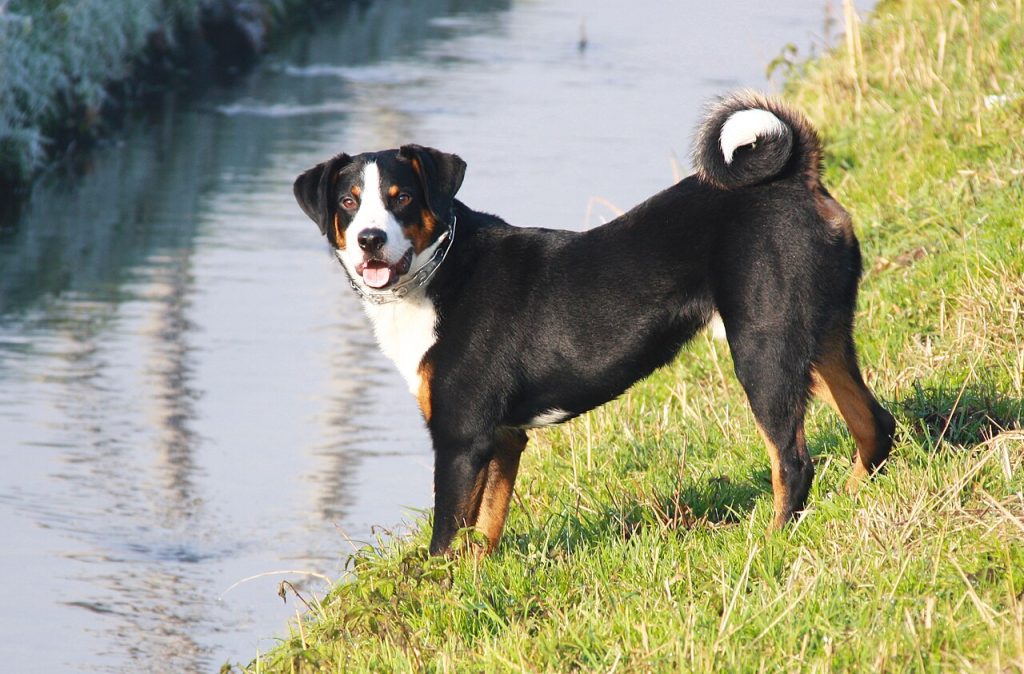
The coat is short, dense and hard, attached to the body. The classic colour is the tricolor on a white background, with mantle and black spots and lion-like markings (fire), a coat that the standards describe evoking the coat of the hare or badger.
Origin and history
The Artesian Hound takes its name from Artois, the historical region of northern France along the English Channel. It is a dog of very ancient roots, descended from the legendary Dog of St. Hubert, and appears in texts from very early: As early as 1609 Prince Alexandre de Gray mentioned in a letter “a herd of little dogs of Artois”. Also known as Picard, it was highly prized for hunting in Henry IV and Louis XIII times, a time when these hounds shone as pack hunters.
The 19th century almost wiped it out. The fashion for crossing it with British breeds became so widespread that by 1890 the cynologist Le Couteulx de Canteleu, in his Manufacture in which the value of all the materials used does not exceed 30% of the ex-works price of the product, lamented how difficult it was to find a pure Artois, although he acknowledged that it was still one of the best dogs for hare hunting. There were attempts to recover the old type, such as those of Ernest Levair in Picardy in the 1880s, but the Segunda Guerra Mundial was devastating and left the breed practically extinct.
Their salvation came in the 70s, when a group of enthusiasts – with breeder Audréchy, of Buigny-les-Gamaches, and Mrs Pilat at the head – decided to rebuild the breed from the very few specimens left, including some from the Prince de Condé. Thanks to that work, today’s Artesian Hound closely resembles the historical one. Today it is recognized by the FCI(Group 6 of hounds and tracking dogs, section of medium-sized hounds, standard no. 28) and by the United Kennel Club, although it remains a rare breed even in its native France.
Curiosities
- Its official name in French is The Chien d’Artois; “Sabueso Artesiano” is the Spanish translation of the FCI nomenclature.
- It was on the brink of extinction after World War II and the entire current lineage descends from a handful of specimens recovered in the 1970s.
- Their modulated, sonorous barking, described as “musical”, enabled hunters to follow the herd by ear, without seeing it.
- The standard describes its tricolor coat by comparing it to the fur of the hare or badger, a nod to its prey and its hunting environment.
- Despite its historical antiquity and appearing in 17th-century texts, it remains virtually unknown outside France.
If you are attracted to the French Hound’s balanced, olfactory nature, you will be interested in comparing other tracking and hunting breeds with similar personalities. Take a look at the Beagle, another vocal and sociable pack hound; the Bloodhound or St. Hubert’s Dog, the great tracker patriarch and ancestor of the Artesian; the Basset Hound, a cousin with long ears and a prodigious sense of smell; and the Pointer, another hunting classic with a very different but equally marked temperament.
Frequently Asked Questions About the Artesian Hound
Is the Artesian Hound a good family dog?
Yes, within his profile, he’s sociable, balanced and tolerant of children, and rarely aggressive, but he’s a pack hunter with a lot of energy and a powerful voice, so he’s better suited to active families with space than small apartments.
Does he bark a lot?
It tends to be vocal. Its sonorous, “musical” barking is part of its job as a pack dog, and it uses it when it crawls, is bored, or is alone.
How much exercise do you need?
It was bred to follow tracks for hours, so it needs plenty of daily exercise: long walks, running, and, above all, olfactory activities.
Can you have it on one floor?
It’s not ideal. It’s a noisy, very active field dog that lives much better in a house with a well-fenced garden. On the floor it would only work with a huge dedication to exercise and voice management.
Is it easy to train?
It’s intelligent but independent and stubborn, typical of a hound. It learns well with positive reinforcement and food as motivation, but don’t expect blind obedience.
How long does he live and how is his health?
It is a rustic and resistant dog, with a life expectancy of around 13 years. You have to watch its long ears (prone to otitis), keep it in its weight to take care of the joints and go to serious breeders, since its genetic base is narrow.
Do you get along with other dogs and pets?
With other dogs, very well: their herd instinct makes them naturally sociable. With small pets (cats, rabbits, birds) you have to be careful, because their hunting instinct can be activated; coexistence is safer if you grow up with them.
Is this a rare breed?
It was almost extinct after World War II and was rebuilt in the 1970s from a few specimens.