Perros y piscinas: seguridad, cloro y cómo enseñarle a salir
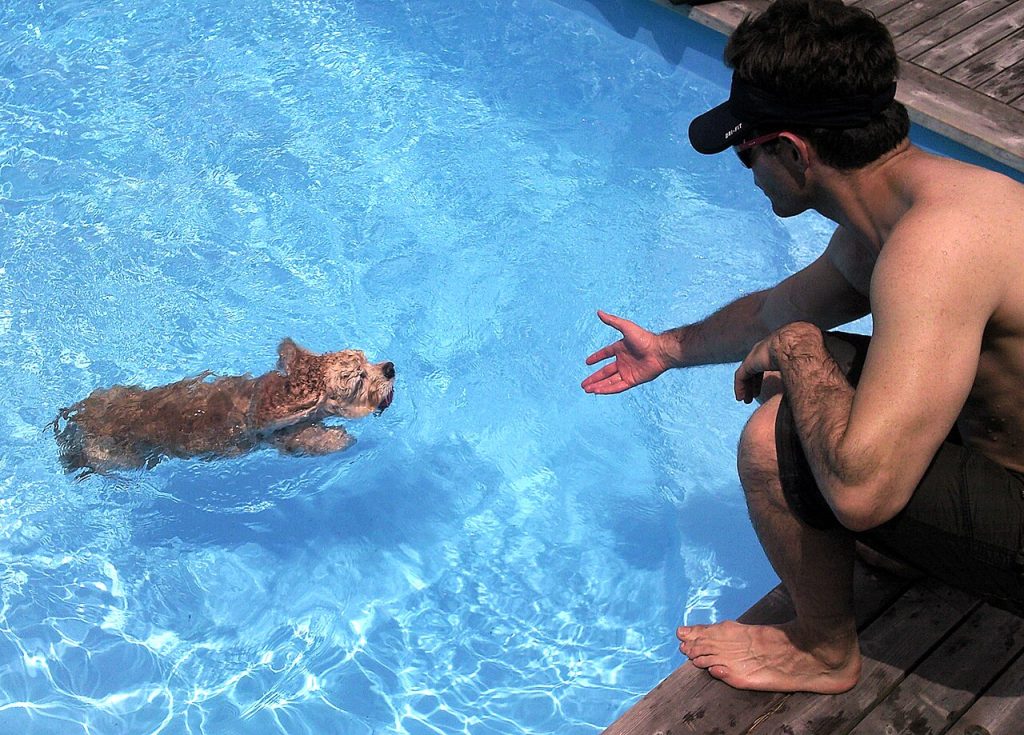
The heat comes on, you open the pool and your dog starts running around the edge looking like he wants to jump on his head. The dog and pool combination may be one of the best things about summer: Low-impact exercise, heat relief, and fun in a rush. But it also has its real risks, and most are not what people think. Chlorine, which is so troubling, is almost never the problem; your dog not knowing how to get out of the water, yes.
In this guide, we tell you, without alarmism, what you should know before the first dive: how to teach him to get out (the skill that really saves lives), what happens to chlorine, which breeds need more caution and what to do after each bath.
First thing, teach him to get out of the pool.
There is a phrase repeated by trainers and emergency veterinarians: dogs don’t drown because they can’t swim, they drown because they can’t find a way out.. A dog that falls into the water accidentally swims by instinct to the nearest edge, grabs its front legs to the overflow and tries to climb over a vertical wall that it cannot climb. There it is exhausted. If no one sees it, the outcome can be fatal, even in dogs that swim well.
So before you think about games, balls or vests, the first lesson is one: who can reach the ladder or ramp from anywhere in the pool.
- First contact by the exit, not the edge. You enter the water by the ladder or the beach area and encourage your dog to enter there, calmly and with prizes: so associate the exit from the first minute.
- Short sessions, in the shallowest area. Five or ten minutes is enough: a nervous or exhausted dog does not learn.
- Gradually increase the distance.: place him one meter away from the ladder and guide him towards it. press each correct exit. repeat, increasing the distance and, very importantly, changing the angle: let him learn to find the exit from each side of the pool, not just from the front.
- Put a fixed visual reference next to the exit. A large pot, a flag, an umbrella. From the water level all the edges look alike; a vertical signal serves as a beacon.
- Let me find her alone. When he masters the guided exercise, stay close but let him swim to the exit unassisted.
- He refreshes the training every season. A couple of reps opening the pool every summer keeps the “mind map” up to date.
And a non-negotiable rule: never throw a dog in the water.“to learn”. It doesn’t learn to swim; it learns to panic in the water, and a dog in a panic is just the one that ends up clinging to the edge without thinking.
What if my pool only has a vertical staircase?
If your pool does not have a working ladder or beach area, install a exit ramp for dogs: non-slip platforms anchored to the edge and partially submerged. Train the exit on the ramp just like with a ladder. In removable or elevated pools, the ramp is not an extra: it is the only possible exit.
Golden rules of dog safety in the pool
With the learned output, these are the guidelines recommended by veterinary associations like the AAHA and emergency clinics for any dog with access to a pool:
- Supervision at all times. is the most effective measure of all. A dog should never swim alone, just like a small child. Most drownings happen without anyone in front.
- Check the access when you’re not there. Perimeter fence with automatic locking door, rigid blanket or dive alarm. Eye: a flexible tarp doesn’t protect, it kills.. Dog walks on it, the tarp gives way, sinks wrapped and can’t get out. If your blanket can’t hold the weight of an adult, for the dog it’s a trap.
- Life-jackets with handles for puppies, senior dogs, at-risk breeds or any dog that’s just starting out.
- Heatstroke and intense exercise in the water don’t mix well, preferably first thing in the morning or late afternoon.
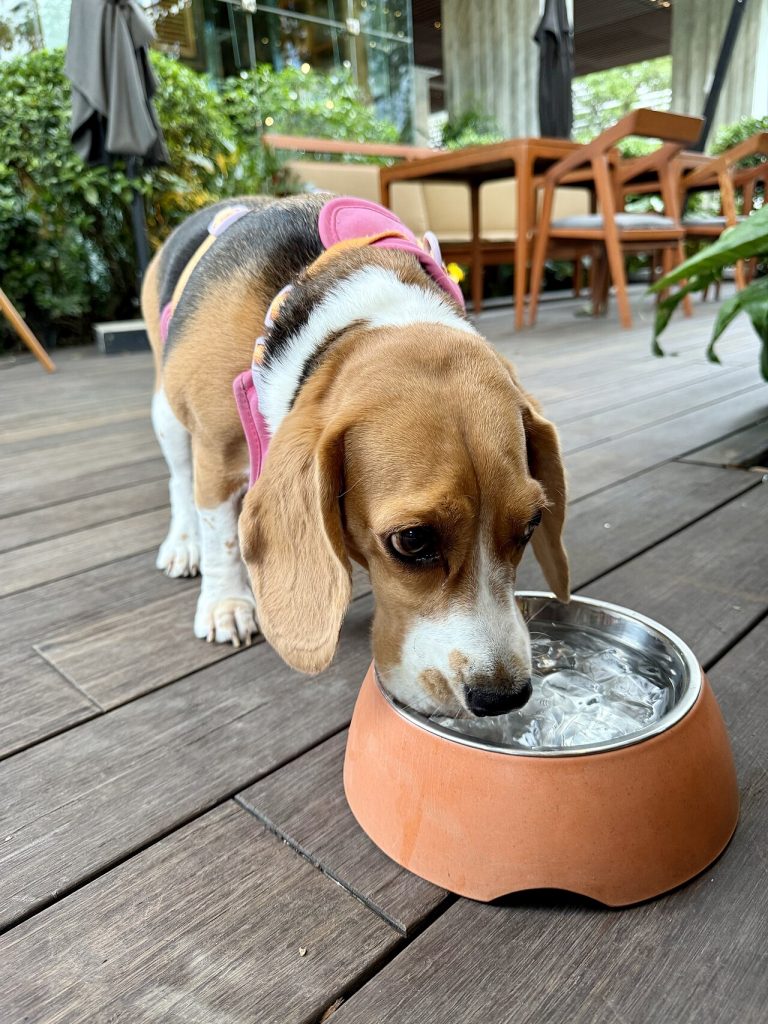
- Fresh water always on hand. A drinker by the pool greatly reduces the temptation to drink from the glass.
- If a dog comes out of the water coughing, lethargic or breathing strangely, to the vet without waiting: problems after a near-drowning can appear hours later.
Chlorine: What is a real problem and what is not
The star question: can a dog bathe in chlorinated water? The short answer is yes, in a well-maintained pool chlorine is not a relevant hazard. Dr. Jerry Klein, chief veterinarian of the American Kennel Club, sums it up this way: the concentration of chlorine in a pool water is insignificant to a dog; the real toxic danger is in the tablets and concentrated products, which should be stored where the dog can never reach them.
That doesn’t mean chlorinated water is 100 percent harmless, which you can expect, just like people:
- Slightly red eyes and dry skin after long sessions is prevented by rinsing with fresh water after bathing.
- Digestive problems if you drink a lot of water. Some sips are just anecdotal; swallowing large amounts can cause vomiting and irritation of the stomach and esophagus.
- Dull or rough coat in dogs bathed daily throughout the summer, especially in long coat breeds.
Pills, chlorinating agents and chemicals: here yes, maximum caution
The concentrated chlorine (pills, granules, liquid) is corrosive. A bitten pill can cause severe burns to the mouth, esophagus and stomach. Store the products in a closed cabinet, do not leave the floating dosage dispenser within reach of the dog (for many it is an irresistible floating toy) and do not let the dog bathe immediately after a shock treatment: respect product waiting times, which are the same as for people.
What about the salt pools?
Let’s clear up a myth: a saline electrolysis pool it’s not a “chlorine free” pool.. The equipment generates chlorine from the salt; it just keeps levels more stable and water less irritating to skin and eyes. Good choice for bathing, but it’s also not drinking water: drinking it in quantity is still a bad idea.
Can all dogs swim?
No. The idea that every dog swims by instinct is one of the most dangerous myths of the summer. Everyone does the “doggy” move when they fall into the water, but that’s not the same as swimming effectively or staying afloat for a long time.
- Born swimmers. Water working breeds such as the Labrador Retriever, Golden Retriever or the giant Terranova– historic water rescue dog – enjoy the water and swim with power.
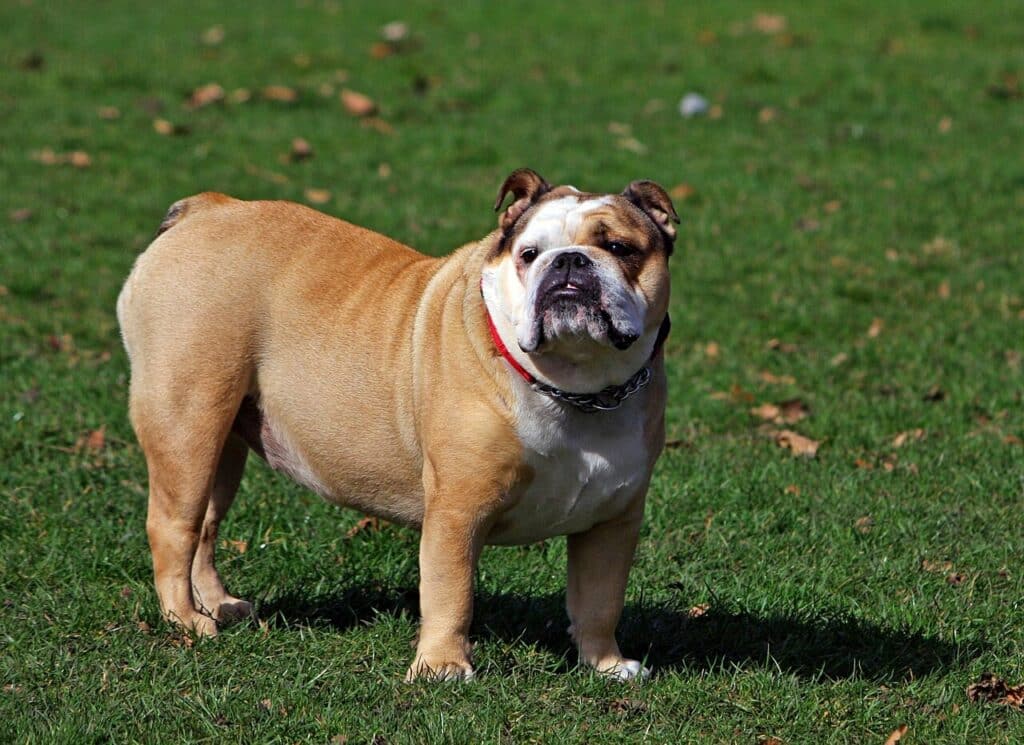
- High risk: brachycephalic. Flat-faced dogs such as the Bulldog Inglés, Bulldog Francés or Pug have to raise their head a lot to breathe, which puts their body almost vertical in the water: they lose buoyancy and sink easily. Many, directly, cannot swim. For them: life vest always, very short sessions and never without supervision at an arm’s length.
- Long body and short legs. Breeds like the Teckel float poorly and tire quickly: they can get wet and splash, but they are not dogs for long swims.
| Type of dog | Examples | Risk in the pool | Recommendation of the Commission |
|---|---|---|---|
| Water and brine breeds | Labrador, Golden and Newfoundland | Below | Teaching exit and controlling playtime |
| Brachycephalic | Bulldog, French Bulldog, Pug | Very high. | Always wearing a vest, constant supervision or avoiding bathing |
| Long body, short legs | It’s called Teckel Corgi Basset. | Stop it ! | Jacket, shallow area, brief sessions |
| Puppies and seniors | Any race | Stop it ! | Jacket with handle and accompaniment in water |
Individual evaluation rules: there are labradors who hate water and some bulldogs who splash happily in their vests.
Water intoxication: Rare, but worth knowing
hyponatremia or water intoxication is a rare but potentially life-threatening condition that occurs when a dog swallows too much water in a short period of time – by biting into a hose jet, diving for toys nonstop, or “biting” the water while swimming. Excess water dilutes sodium in the blood and cells, including brain cells, swell.
Symptoms may appear in less than half an hour or take a few hours: lethargy, vomiting, swollen abdomen, loss of coordination, excessive drooling, dilated pupils and, in severe cases, seizures. This is an immediate veterinary emergency., especially dangerous in small dogs, which reach the critical threshold earlier.
The prevention is simple: breaks every 10-15 minutes of water play, avoid compulsive diving for objects, prefer flat toys (they force you to open your mouth less than a large ball) and stop the session if you see him constantly swallowing water.
After bathing: cleansing, ears and skin
The post-pool routine lasts two minutes and avoids most summer dermatological and ear problems:
- Cleanse with fresh water the entire body to remove chlorine or salt residue from fur and skin.
- Dry your ears well. Moisture retained in the ear canal is the perfect breeding ground for otitis, especially in dropped-ear breeds like the Cocker Spaniel. Dry the outside with a gauze or towel; if your dog is prone to otitis, ask your veterinarian for an optical cleaner with dryer for after baths.
- Dry folds and armpits in breeds with wrinkles, and check the skin a couple of times a week: redness, dandruff or persistent itching are a matter of consultation.
- Offer him clean water and shade. After exercise you’ll want to drink: better from your tap than from the pool.
Common Mistakes to Avoid
- Assuming he can swim. because “all dogs swim”. False and dangerous.
- Throwing the dog in the water as a teaching method only creates fear and accidents.
- Relying on Flexible Canvas as a security barrier, it’s the opposite: a trap.
- Don’t show the way out. and leave everything to supervision.
- That’s where the real toxic risk is.
- The marathon sessions. A dog exhausted in water is a dog in danger.
- Bathing the brachycephalic “because he likes it” without a vest or close surveillance.
- Forget cleaning and drying your ears.
An honest note: If your dog has recurrent respiratory, heart, skin, or ear problems, consult your veterinarian before making swimming a part of your daily routine.
Frequently Asked Questions
Can my dog bathe in a chlorine pool?
Yes. In a pool with the correct chlorine levels, bathing is safe for most dogs: the concentration in the water is very low. The real risks are the concentrated chlorine (pills and granules, which are corrosive if bitten) and the lack of subsequent cleaning, which can dry out the skin and fur.
What do I do if my dog drinks pool water?
Occasional sips usually do not cause problems. If you drink too much, you may vomit or have digestive irritation, and in extreme cases of massive intake, there is a risk of hyponatremia. Always offer cool water by the pool and go to the veterinarian if after the bath he is lethargic, repeatedly vomits or shows a lack of coordination.
How long can a dog swim in a row?
It depends on your physical condition, age and race, but as a rule of thumb it works well to take breaks every 10-15 minutes of intense water play.
Is it true that all dogs can swim by instinct?
No, they all kick when they fall into the water, but brachycephalic breeds like the Bulldog or the Pug can barely stay afloat, and those with long bodies and short legs wear out quickly.
How do I protect my dog from the pool when I’m not home?
With real physical barriers: a perimeter fence with a self-closing door, a rigid weight-bearing blanket or, as a reinforcement, a diving alarm. A flexible tarp is useless: if the dog walks on it, it gives way and catches it. And always show him where the exit is, in case he falls into the water one day.
Are salt pools safer for dogs?
They are usually a little gentler on the skin and eyes, but they are not “chlorine-free” pools: the electrolysis equipment generates chlorine from the salt.