¿Cuántas veces debe comer un perro al día según su edad?
If you’ve just filled the feeder and your dog looks at you like he’s been fasting for a week, don’t worry: It happens to all of us. Knowing how many times does a dog eat? up to date is one of the most common doubts among those who share their life with one, and the short answer is that it depends mostly on your age: A two-month-old puppy needs up to four doses a day, while an adult needs two. In this guide, I explain the guidelines recommended by veterinarians and organizations such as the American Kennel Club (AKC) or VCA veterinary hospitals, with sample schedules, adjustments for breed size, and mistakes to avoid.
Quick answer: daily intakes by age
This table summarizes the general guideline handled by most veterinarians and the AKC puppy feeding guide.
| Age of the dog | Meals a day | Notes |
|---|---|---|
| 6 to 12 weeks | 4 shots | Toy breeds: up to 4-6 small doses to prevent hypoglycaemia |
| 3-6 months | 3 shots | Reduces gradually, not overnight |
| 6 to 12 months | 2 takes | Even with puppy feed in most breeds |
| Adult (1-7 years) | 2 takes | It is the most recommended dietary allowance; daily ration divided into two |
| Senior (7+ years) | Two or three takes. | Take smaller and more frequent doses if digestion becomes slow |
Note: we are talking about frequency, not quantity. The total daily ration is determined by weight, activity and the food itself (always look at the manufacturer’s table as a starting point and adjust it with your veterinarian).
Puppies: from 4 to 2 in their first year
A puppy is a small growing factory: it burns a lot of energy and, at the same time, it has a tiny stomach that can’t process large amounts at once, so the norm is more shots, smaller ones., and keep spacing them as their digestive system matures.
From 6 to 12 weeks: 4 meals a day
Newly weaned, the puppy needs to eat four times a day with a specific puppy food, which covers its high demands for energy, protein and calcium.
3 to 6 months: 3 meals a day
At this stage you can lower three doses a day. Do it progressively: eliminate one dose by dividing that amount among the others for a few days. It is also the phase in which the puppy begins to lose the round baby triptych; if it is still too stuffy, comment on it at the veterinary check-up.
6 to 12 months: 2 meals a day
Starting at six months, most puppies pass to two meals a day, the pattern that will continue throughout their adult life. It ‘s important . continuing with two doses does not mean switching to adult feed. Small breeds usually make this transition between 7 and 9 months, while large breeds must continue on puppy food (large breed format) until 12-14 months, because their skeleton takes longer to form.
How often does an adult dog eat?
For a healthy adult dog, the most widespread recommendation is clear: two meals a day, splitting his daily ration into two halves, one in the morning and one in the afternoon-night. It’s the guideline advised by both the AKC and VCA veterinary hospitals, and it has a physiological explanation: After 8 to 10 hours on an empty stomach, the dog’s body starts sending out intense hunger signals, and spending too many hours fasting promotes digestive discomfort.
And just one meal a day? There are dogs that tolerate it, but it has drawbacks: more food anxiety, more likely to swallow at full speed, bile vomiting on an empty stomach, and, in large breeds with deep chest, it has been associated with an increased risk of stomach torsion (we’ll talk about that now). Unless your vet tells you otherwise for a specific reason, two takes is the safest and most comfortable option..
These two meals are compatible with training rewards and some snacks, provided the daily ration is discounted: as a general rule, extras should not exceed 10% of the calories for the day.
Older dogs: when to go back to 3 takes
A senior dog (from about 7 years old, before in giant breeds) can go on perfectly with his usual two meals.
- More slow digestion: the bowel loses mobility and some copious meals feel worse.
- Less appetite: for loss of smell, toothache or illness.
- Medicación: some drugs should be given with food, and distributing doses helps to fit them.
- Less energy expenditure: many seniors need fewer total calories; monitor weight so the change in routine doesn’t end in overweight.
Any sudden change in appetite in an older dog merits veterinary consultation before touching the meal schedule: at that age, eating less is almost never “age-appropriate”.
Size and race also count
Age sets the standard, but the size of the dog introduces important nuances.
Mini and toy breeds: beware of hypoglycaemia
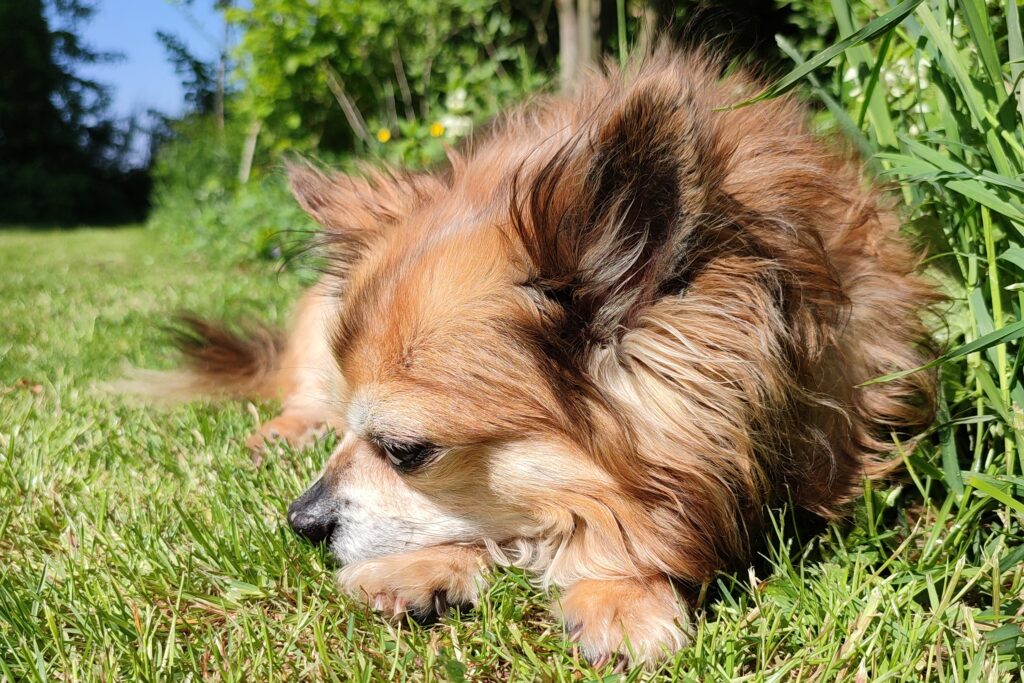
Very small dogs, such as the Chihuahua, Yorkshire Terrier or Pomerania, have limited glucose reserves, especially from puppies. A toy puppy may need 4-6 small doses a day during its first months to prevent low blood sugar (hypoglycaemia), which is manifested by weakness, tremors or apathy and is a veterinary emergency. As adults, always having two drinks – better than one – helps them to avoid spending too many hours fasting.
Large breeds: the risk of stomach torsion
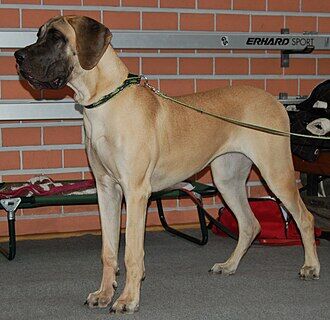
In large, deep-chested giant breeds, such as the Gran Danés or Pastor Alemán, there is a real risk of gastric dilation-torsion(GDV), a potentially life-threatening emergency. Although it is a multifactorial problem and not all scientific evidence is unanimous, studies suggest that eating a single large meal a day and swallowing too quickly increases the risk. That’s why in these breeds divide the ration into at least two servings is recommended, use anti-voracity feeders if eating cravings and avoid intense exercise just before and after eating, leaving a margin of around an hour. On other factors, such as elevated feeders, the evidence is contradictory: ask your veterinarian what is best for you.
Fish of the species Gallus domesticus
Dogs with a very good appetite like the Labrador Retriever– a breed that has even been described as having a genetic mutation associated with more hunger – appreciate slow feeding and well-measured rations, and brachycephalic breeds like the Bulldog Francés or Pug tend to swallow air when eating quickly, so small, quiet, non-competitive takes are especially good for them.
How to arrange meals
More important than the exact time is the regularity: the dog’s digestive system works better with steady routines, and a fixed schedule allows you to quickly detect if a dog doesn’t want to eat on a given day – a valuable warning sign.
- Set two schedules and stick to them daily, also on weekends. For example: 8:00 and 20:00. Try not to spend much more than 10-12 hours between dinner and breakfast.
- Measure the ration with a measuring cup or kitchen scale and split it between the sockets.
- Remove the feeder. in 15-20 minutes, finished or not, teaches the dog to eat when it touches and lets you monitor its appetite.
- Leave rest around meals. in large races: leisurely ride yes, intense game session no, especially the later hour.
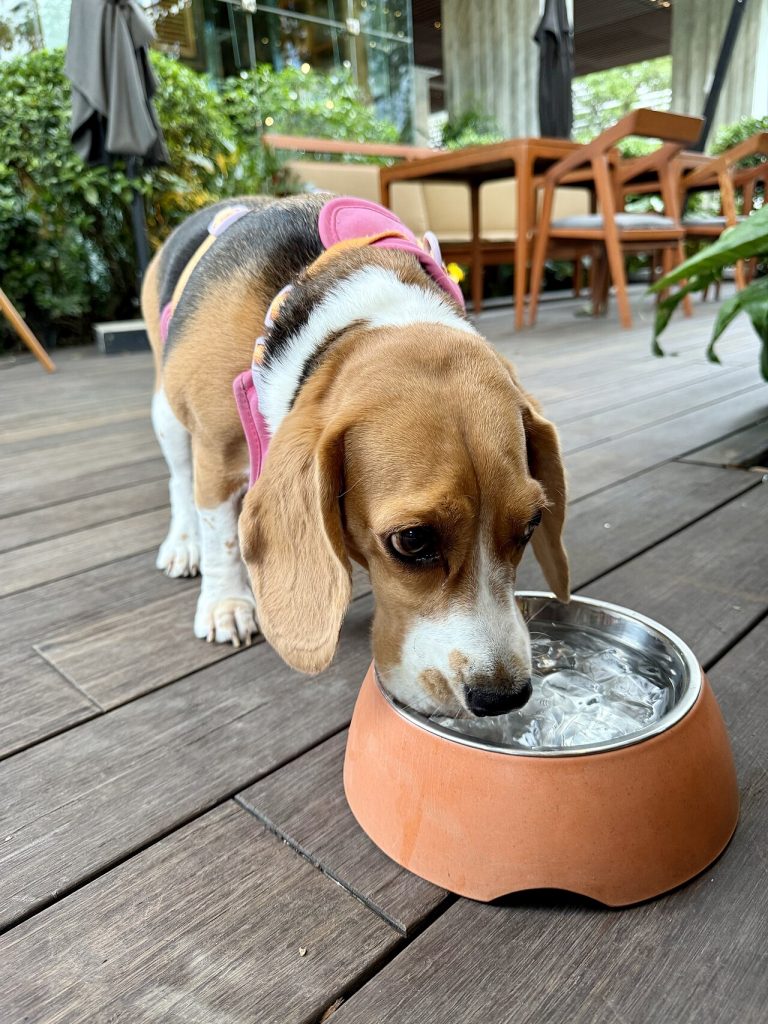
- Water restriction is not part of any healthy eating regimen.
- Feed changes, in 7-10 days, progressively mixing the new with the old to prevent diarrhoea.
Common Mistakes When Feeding Your Dog
- Leave the feeder full all day(feeding “ad libitum”). Except as directed by the vet, it promotes obesity and prevents you from knowing how much and when you eat.
- Deep thoracic Only one meal a day in large breeds: is one of the factors associated with gastric torsion.
- That little bit of nothing repeated every day adds up to a lot of calories.
- Changing food at a stroke, no transition, and be surprised with diarrhea the next day.
- Feeding the toy puppy only twice a day too early, with the consequent risk of hypoglycaemia.
- Interpret the pleading look as real hunger. Many dogs beg for habit or boredom; if their weight is right and they eat their ration, they don’t need more.
- Sharing dangerous food: Chocolate, grapes and raisins, onions, garlic, avocados or cooked bones must not enter any serving, at any time.
When to see the veterinarian
The guidelines in this article apply to healthy dogs. Talk to your veterinarian before setting or changing the frequency of meals if your dog has of diabetes mellitus(meals should be coordinated with insulin), digestive problems such as reflux or frequent bile vomiting, is overweight or obese, is a pregnant or lactating female (needs more meals and more calories), or is a puppy that is not gaining weight at the expected rate. And come without waiting if your dog stops eating for more than 24 hours, repeatedly vomits or shows a hard, swollen abdomen with unproductive arches: The latter is compatible with a gastric torsion and is a immediate emergency.
Frequently Asked Questions
Is it bad for a dog to eat only once a day?
It is not ideal for most. With a single intake the dog spends many hours fasting, which favors food anxiety and biliary vomiting, and in large breeds with deep chest is associated with an increased risk of gastric torsion. The most recommended guideline for a healthy adult is to divide their ration into two meals a day.
How many hours can a dog go without eating?
After 8-10 hours on an empty stomach, the dog already feels intense hunger; therefore, it is advisable not to exceed 10-12 hours between meals in adults, and much less in puppies and toy breeds.
Is it better to feed him before or after the walk?
The safest way is to separate food from intense exercise: walk first, let the dog calm down for about 20-30 minutes and then feed it, or feed it and wait about an hour before vigorous activity.
Can I leave the feeder full all day?
In general, it is not recommended. Free-range feeding promotes obesity and prevents you from detecting loss of appetite, which is an early sign of illness.
When do I turn my puppy into adult food?
It depends on the size: small breeds usually change between 7 and 9 months, and large breeds between 12 and 14 months, because their bone development is slower.
Why does my dog vomit yellow foam in the mornings?
This morning bile vomiting usually occurs when the stomach spends too many hours empty during the night. It often gets better by having breakfast earlier, delaying dinner, or adding a small sip before bedtime. If it occurs frequently, rule it out with your veterinarian, because it may also indicate reflux or other digestive problems.