Frutas y verduras que tu perro sí puede comer (y cuáles no)
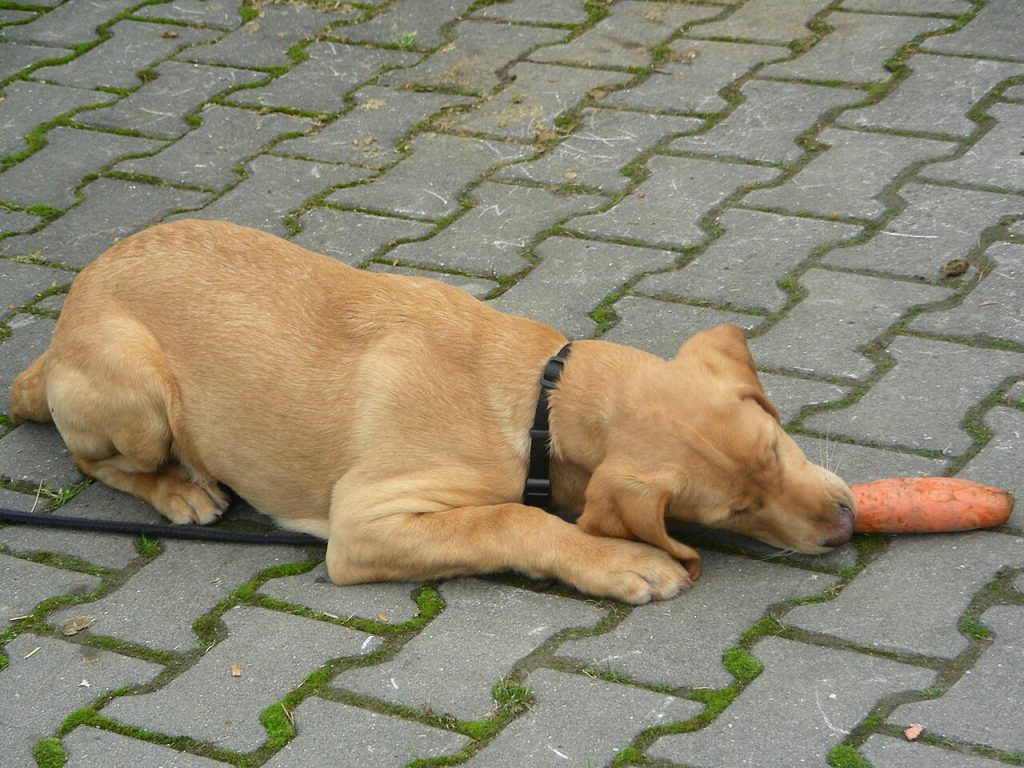
You’re having a snack, your dog gives you that look of “I want one too”… and you end up giving him a piece of what you’ve got in your hand. It’s happened to all of us. The problem is that with fruits and vegetables, not everything works: some are a great prize, very cheap and healthy, and others can send your dog straight to the veterinary emergency room.
In this guide to fruits for dogs(and also vegetables) let’s get practical: which you can eat without a problem, which only with caution, which are strictly forbidden and in what quantity to offer. All cross-checked with veterinary sources such as the American Kennel Club, the Merck Veterinary Manual and the ASPCA poison control center. And an honest notice of entry: If you have any unusual symptoms or doubts, your vet always has the final say.
Quick chart: yes, carefully or never
If you’re in a hurry, here’s the summary. Below I’ll explain why in each case, which is what will really help you decide wisely.
| Food | Can you eat it? | Key |
|---|---|---|
| The apple. | ✅ Yes | No nuggets and no heart |
| Fruit and nuts | ✅ Yes | Low quantity: lots of sugar |
| Blueberries and strawberries | ✅ Yes | Ideal small prize |
| Watermelon and melon | ✅ Yes | No bark and no nuggets |
| Carrots | ✅ Yes | Raw or cooked, very low in calories |
| Pumpkin and squash | ✅ Yes | Cooked and unsalted |
| Green beans and peas | ✅ Yes | Natural, never canned with salt |
| Orange orange | ⁇ ️ Careful | Only bald guys, small quantity |
| Tomatoes | ⁇ ️ Careful | Only ripe red pulp; never green parts |
| Broccoli and spinach | ⁇ ️ Careful | Small and occasional quantities |
| Grapes and raisins | ⁇ Never | Risk of acute renal failure |
| Onions, garlic and leeks | ⁇ Never | Anemia due to destruction of red blood cells |
| Avocadoes | ⁇ Avoidance | Dangerous Persina and Bone |
| Cherries (with bone) | ⁇ Avoidance | Toxic and obstructive bone |
Fruits for dogs that you can eat
These fruits are safe for the overwhelming majority of healthy dogs, always in pieces adapted to their size and as an occasional supplement, not as the basis of the diet.
The apple.
Probably the most helpful fruit reward: crispy, refreshing and with fiber and vitamin C. Always remove the nuggets and the heart: the seeds contain amygdalin, a compound that releases cyanide.
Fruit and nuts
Almost all dogs love it, and it provides potassium and fiber, but it’s a fruit with more sugar, so a few thin slices now and then, perfect; half a banana every afternoon, bad idea, especially for overweight dogs.
Blueberries and strawberries
Blueberries are almost the perfect prize: small, low in calories and rich in antioxidants. Many trainers use them as reinforcement in dogs that work hard on obedience, such as the Border Collie, because they allow repeating prizes without firing the calories. Strawberries, washed and without the rabbit, are also safe in pieces.
Watermelon and melon
With more than 90% water, watermelon is a summer classic for them too. Remove the crust and kernels(they can cause digestive discomfort or obstruction in small dogs) and offer it fresh. Melon is worth the same, with the same warning of sugar: in diabetic or overweight dogs, it is better to consult it with the veterinarian first.
Pears, mangoes, peaches and pineapples
- Pera: safe with no nuggets and no heart, just like the apple.
- Mango: only the pulp, peeled and boneless; the bone is toxic and a serious choking hazard.
- Peaches and apricots: the pulp is safe; the bone, never (cyanide + blockage).
- Piña: small pieces of fresh pulp, without the crust or hard core.
Safe vegetables for your dog
Vegetables are often even a better choice than fruit as the usual prize: less sugar and very few calories.
- Raw serves as a natural low-calorie “bone” that also aids in the mechanical cleaning of teeth when gnawing; cooked is more digestive. Labrador Retriever Pug
- Calabaza: cooked and unspiced, is a source of soft fibre that many veterinarians recommend as support in mild episodes of diarrhoea or constipation.
- Pumpkin and cucumber: practically water and fiber; refreshing and fit for almost any dog.
- Green beans: cooked naturally (never canned with salt), they satiate a lot while providing very few calories; they are often used in supervised weight loss guidelines.
- Avoid them if your dog has kidney problems, because they contain purines.
- Boniato: is always cooked, it’s very digestible and rich in beta-carotene; it’s also caloric, so small amounts.
- Brócoli: is safe in small amounts; in excess, its isothiocyanates can irritate the stomach.
- Espinacas: improves only occasionally; its oxalic acid hinders the absorption of calcium and, in large and sustained amounts, may affect the kidney.
Prohibited fruits and vegetables: no bargaining here
Grapes and raisins – the most dangerous
It’s the most serious fruit poisoning in dogs. Grapes and raisins can cause acute renal failure, and the most disturbing thing is that sensitivity varies greatly between individuals: There are dogs that tolerate several grapes and others that get seriously ill with very few. In 2021, veterinarians at the ASPCA Poison Control Center identified isocyanate as the likely culprit: The dogs can barely eliminate it and it builds up damaging the kidney. Since there is no known safe dose, the rule is simple: not a grape, not a pass, never. I also keep an eye out for pastries and cereal with hidden raisins. The first symptoms (vomiting, lethargy) usually appear within the first 6 to 24 hours, and kidney damage can occur within 72 hours: If your dog eats grapes, call the vet right away, don’t wait to see if they “feel bad”.
Onions, garlic, leeks and onions
The entire Allium family is toxic: Its sulfur compounds (thiosulfates) oxidize red blood cells and destroy them, causing hemolytic anemia. According to the Merck Veterinary Manual, intakes of 15-30 g of onion per kilogram of weight already produce major changes in the blood, and garlic is 3 to 5 times more potent. It doesn’t matter if it’s raw, cooked or powdered (soufritos, broths, potitos, spicy food): The toxic can’t be destroyed by cooking. Also, the symptoms are misleading, because anemia can take several days to appear: weakness, white gums, dark urine. In very small dogs, such as a Chihuahua or a Yorkshire Terrier, the dangerous dose is reached with ridiculously small amounts: A little leftover sofrito may be enough.
Avocadoes
The skin, leaves and bone contain persin, which causes vomiting and diarrhea. The pulp has much less, but is very fatty (risk of pancreatitis) and the bone, slippery and of the perfect size to get stuck, is a classic cause of intestinal obstruction. With so many safe alternatives, avocado does not compensate.
Cherries, green tomato, raw potato and company
- Cerezas:, the pulp itself is not toxic, but the bone contains cyanogenic compounds and is a blockage magnet.
- The red, ripe pulp in small amounts is safe, but never green tomatoes, leaves or stems.
- Raw potatoes or with green parts: is also solanine, cooked and uncooked, safe in small amounts.
- The loose grains are not toxic, but the whole carrot is one of the most common causes of surgical bowel obstruction.
- Rhubarb and wild mushrooms: off the list, no exceptions.
How much fruit can a dog eat?
The reference used by veterinary nutritionists (ACVN, UC Davis Veterinary Hospital) is clear: all extras combined – fruit, vegetables, prizes, leftovers – should not exceed 10% of daily calories of the dog. The other 90% should come from their complete and balanced food. Going beyond that unbalances the diet and opens the door to overweight, which shortens the life of dogs in a measurable way.
In practice, that 10% is less than it seems. For a small dog of 5 kg we are talking about 30-40 extra kcal a day: Half an apple and you’re almost done. For a Golden Retriever of 30 kg, the margin is around 100-130 kcal: A handful of carrots and some blueberries, not a fruit stand. And remember that breeds with infinite appetites, like the Beagle, will ask you for more with their faces if they’ve never eaten: It’s not hunger, it’s theater.
How to Offer Fruit and Vegetables Step by Step
- If diarrhoea, vomiting or itching appear, remove it and consult.
- Start with a minimum amount: a small die, even if your dog is big.
- Wash, peel when you touch and always remove seeds, bones, hearts and bark. Most of the problems don’t come from the pulp, but from everything else.
- Cut into pieces proportional to the dog: what to a mastiff is an appetizer, to a Chihuahua is a potential tracheal plug.
- Serves the natural: no sugar, no salt, no spices, no preparations in the mixer. Special care with processed products “without sugar”: xylitol is extremely toxic to dogs.
- Use the fruit and vegetables as a reward or topping, not as a substitute for your food. Frozen in summer (blueberries, watermelon dice) is a great enrichment.
- It fits your history: diabetic dogs, with kidney problems or prior pancreatitis need veterinary approval before any extras.
Common Mistakes (and How to Avoid Them)
- There’s no safe amount of grapes, and in mini dogs, the toxic doses are minuscule.
- Trust that “I’ve always given it to him and nothing ever happened to him”. Grape toxicity is unpredictable: that nothing happened yesterday does not guarantee tomorrow.
- Forget about the hidden ingredients: onion sandwiches, mashed garlic powder, raisins and cakes, corn on the cob.
- Give the fruit as if the dog were a person: human rations break the 10% rule easily.
- Leave the trash or the fruit stand within reach. Fragmented and sweet breeds self-medicate; a bucket with a lid and clear countertops avoid half the emergencies.
- With grapes and onions, every hour counts: call the vet or a veterinary toxicology hotline immediately.
Frequently Asked Questions
My dog ate a grape, do I go to the vet even though he’s fine?
Yes, call right away even if you don’t have symptoms. sensitivity to tartaric acid varies greatly between dogs and there is no known safe dose. acting in the first few hours (before it is absorbed) makes a difference in renal prognosis.
Can you eat bananas every day?
Better not. It’s safe, but it has plenty of sugar and calories: as a rule, a few thin slices 2-3 times a week at most, always counting within 10 percent of daily extras. In overweight or diabetic dogs, consult your vet first.
Can dogs eat oranges?
Yes, the pulp in small quantities (one or two peeled peas, without seeds or partly white). The shell and its essential oils irritate the digestive system, and excess citrus can cause discomfort. Many dogs, directly, are not attracted to the acid taste.
Does raw carrot clean your teeth?
Help: Gnawing provides partial mechanical cleaning and entertainment, all with very few calories. But it is not a substitute for brushing or veterinary checkups; it is a supplement, not a treatment.
Can I get you some tomatoes?
Only red, well-ripened pulp, in small quantities and occasionally. Never eat green tomatoes, leaves or stems of the plant, which contain solanine. If you have a garden, fence off the tomato area.
Is frozen fruit safe?
Yes, and in the summer it’s an excellent refreshing treat: frozen blueberries or watermelon dice with no nuggets work just fine.
The final idea is simple: fruits and vegetables are a great addition if you choose them well, prepare them without seeds or bones and respect the 10% rule. Memorize the black list – grapes, raisins, onions, garlic, avocados – and, in the face of any suspicious ingestion or strange symptom, don’t hesitate: veterinary physician. Your dog won’t know how to thank you with words, but it will in years.