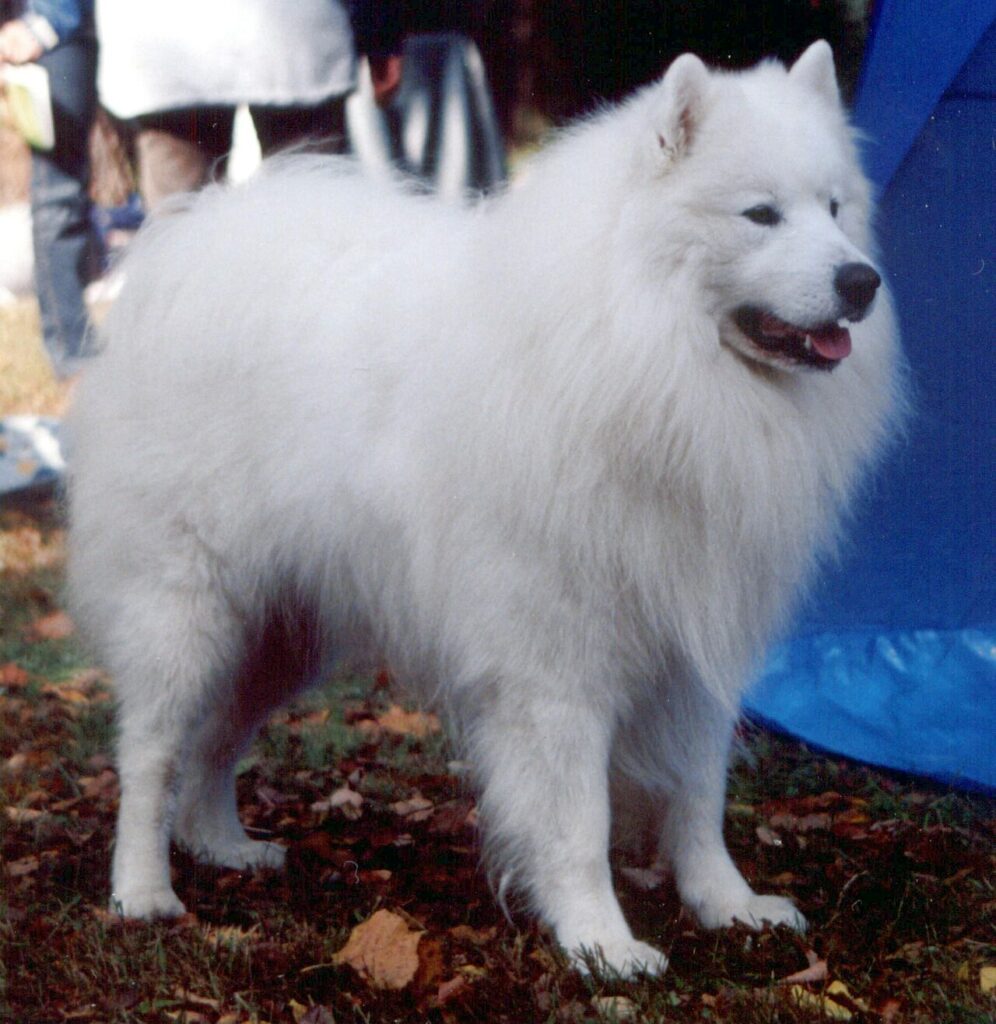
The Samoyed is one of the most recognizable dogs in the world: an arctic spitz with a white coat and a permanent smile who was born in Siberia to herd reindeer, hunt and pull sleds alongside Nenets villages. Behind its plush appearance is a tough, sociable, hardworking dog that needs companionship, exercise, and plenty of brushing. In this comprehensive guide, we review its character, care, health, and history so that you know if the Samoyed is really a good fit for you.
Is the Samoyed for you?
The Samoyed loves at first sight, but is a demanding dog in hair, companionship and temperature. Before letting yourself be carried away by its stuffed face, it is advisable to look at the pros and cons with coolness. This breed rewards those who devote time and punishes it with behavior problems when it gets bored or stays alone for too many hours.
In favour .
- Friendly, cheerful and very sociable, even as an adult.
- Excellent with children and, well socialized, with other dogs.
- He barely has a dog body odor.
- Self-cleaning white coat that repels dirt pretty well.
- Intelligent and versatile: shepherding, agility, canicross, and obedience.
- Robust and long-lived for his size.
Against
- It sheds a lot of hair and requires frequent brushing.
- It suffers from heat: it is a cold climate dog.
- Barking and, if he gets bored, digging and destroying.
- Bad guard dog defense: it is too kind.
- He pulls the strap hard because of his shooting instinct.
- He needs company; prolonged solitude hurts him.
Character and temperament
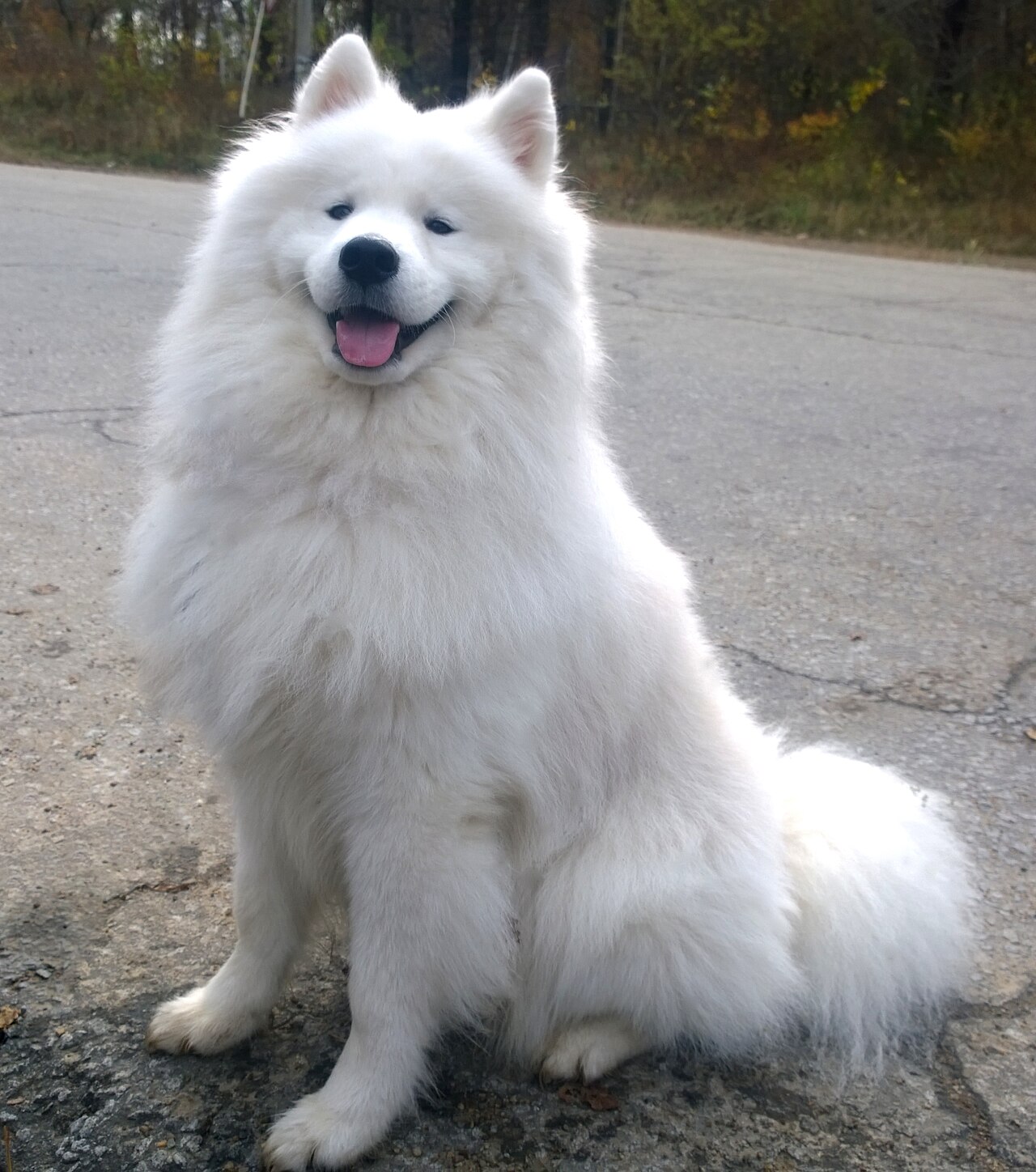
If there is one word that defines the Samoyed, it is happiness. Its wakeful, laughing expression has earned it nicknames such as “Sammie smile” or “smiling dog”: the upward-curving corners give it that friendly gesture that is the hallmark of the house.
That same sociability makes him a poor candidate for watchdog in the classic sense: An aggressive Samoyed is a rarity, and it normally greets strangers by wagging its tail. Of course, it barks when something approaches its territory, so it works well as a warning dog. Because of his past as a sled shooter, he has no problem pulling weight, and an uneducated specimen will tend to pull on the leash rather than walk beside you.
It is also marked shepherding instinct. It is not uncommon that, playing, it tries to “drive” children or other animals wherever it wants, surrounding them. It is an intelligent and sensitive dog that needs to be part of family life; relegated to the garden and without stimuli, it becomes frustrated and develops unwanted behaviors.
Coexistence: children, other pets, flat and loneliness
- With children: is excellent. It is patient, playful and tolerant, one of the most recommended breeds for families with small children, always supervising play as with any dog.
- With other dogs: is very good when socialized as a puppy.
- With other pets: retains hunting and grazing instinct, so gradual introductions with cats and small animals are appropriate.
- On the floor: is possible, but it requires daily exercise, company and a fresh environment.
- Driven to the limit, a Samoyed bored or alone for too many hours barks, digs and wrecks.
Education and training
The Samoyed is smart and quick to learn, but it has an independent vein inherited from centuries of autonomous work in the Arctic. It is not a dog of blind obedience like a working shepherd: it responds much better to positive reinforcement, to short and varied sessions and to a firm but gentle tone.
There are two matters that need to be worked on soon. The first is the strap: Because of his shooting instinct, if you don’t teach him to walk with you as a puppy, he’ll end up taking you. The second is barking and boredom; a stimulated Samoyed, with exercise and mental play, barks much less than one who spends the day alone. Early socialization with people, dogs, and different environments is key to maximizing that sociable character.
Exercise and activity
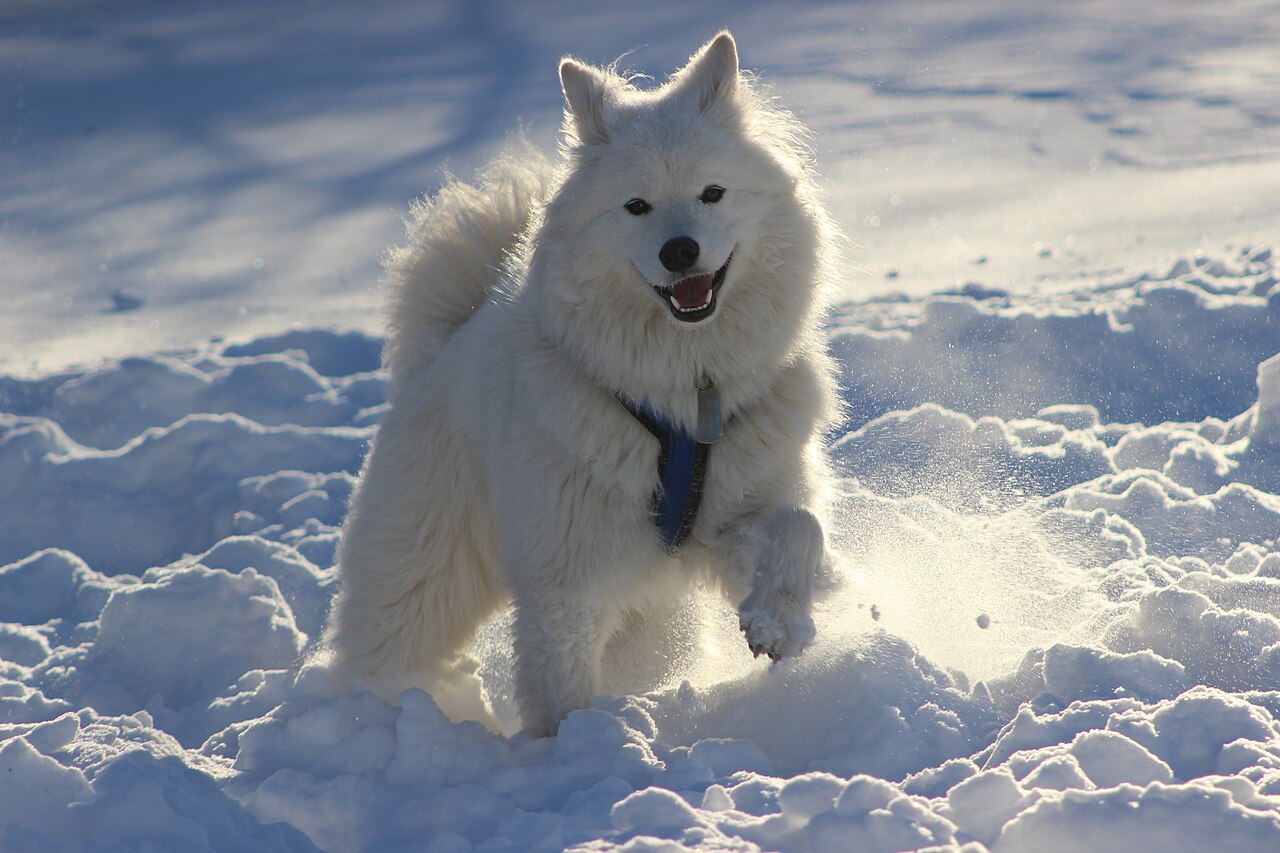
This is a medium-high-energy working dog. It is not enough to go around the block: it needs long walks, play and, if possible, an activity that makes it think and move. It is a natural athlete who enjoys snow and cold like a fish in water.
The Samoyed stands out in a multitude of canine disciplines: agility, obedience, flyball, tracking, mushing and karting, plus pasture trials where you can bring out your instinct. Channeling that energy into a shared hobby is the best way to have a balanced dog at home. It ‘s important . In summer and warm climates, you have to adjust your exercise to cooler hours, because its dense mantle makes it very sensitive to heat stroke.
Care: fur and hygiene
The coat is the great commitment of this breed. The Samoyed has a very dense double coat: an outer layer of long, straight and rough guard hair, and a woolly, soft and short inner layer that insulates it. This inner layer is changed massively once or twice a year, a process known as “blowing coat”, but the fine hair falls out throughout the year and sticks to clothing and furniture.
To keep it in good condition, it needs frequent brushing, ideally several times a week and daily in full mould, paying attention to areas that become entangled such as behind the ears. The good news is that its hair repels dirt quite well, and the dog usually washes itself, so few baths are needed. Only the hair that grows between the pads should be trimmed; otherwise, the mantle stays in its natural shape.
An important warning: you must not shave. to Samoyed except for medical reasons. Their hair acts as insulation from both cold and moderate heat and protects their fair skin from sunburn; shaving can damage the regeneration of the mantle and leave it unprotected. As it barely has body odor and releases little dandruff, it is usually considered relatively hypoallergenic, although that does not mean it does not shed hair: It loosens it, and a lot.
Foodstuffs
The Samoyed does not have exotic dietary needs, but it is advisable to take care of the quality and, above all, the quantity. It is a dog of medium size and compact musculature that, well fed, retains vitality until old age. A complete and balanced diet, adapted to its age (puppy, adult, senior), activity level and body state, is the basis.
Split your food into several servings a day, monitor your weight to avoid being overweight, and, as with all deep-breasted and active dog breeds, avoid strenuous exercise right after eating. Since the breed is somewhat predisposed to diabetes, it is wise not to overindulge in prizes and calories and to maintain a healthy weight throughout life. If you have any questions about specific rations or diets, it is best to consult your veterinarian.
Health and life expectancy
The Samoyed is, in general, a robust and long-lived dog: its life expectancy is around 12-14 years, and even some recent study in the UK places it slightly above the average of purebred dogs.
The most characteristic is hereditary glomerulopathy of the Samoyed, a kidney disease linked to the X chromosome and therefore more severe in males, who can develop kidney failure at a very early age; a genetic test exists to detect carriers. Other conditions described in the breed include hip dysplasia, diabetes mellitus (which usually appears in maturity), progressive retinal atrophy (PRA), cataracts and other eye problems, pulmonary stenosis (a more common heart defect than in other breeds), and sebum adenitis, a rare autoimmune skin disease. Buying from a breeder who does health testing greatly reduces these risks.
Physical appearance
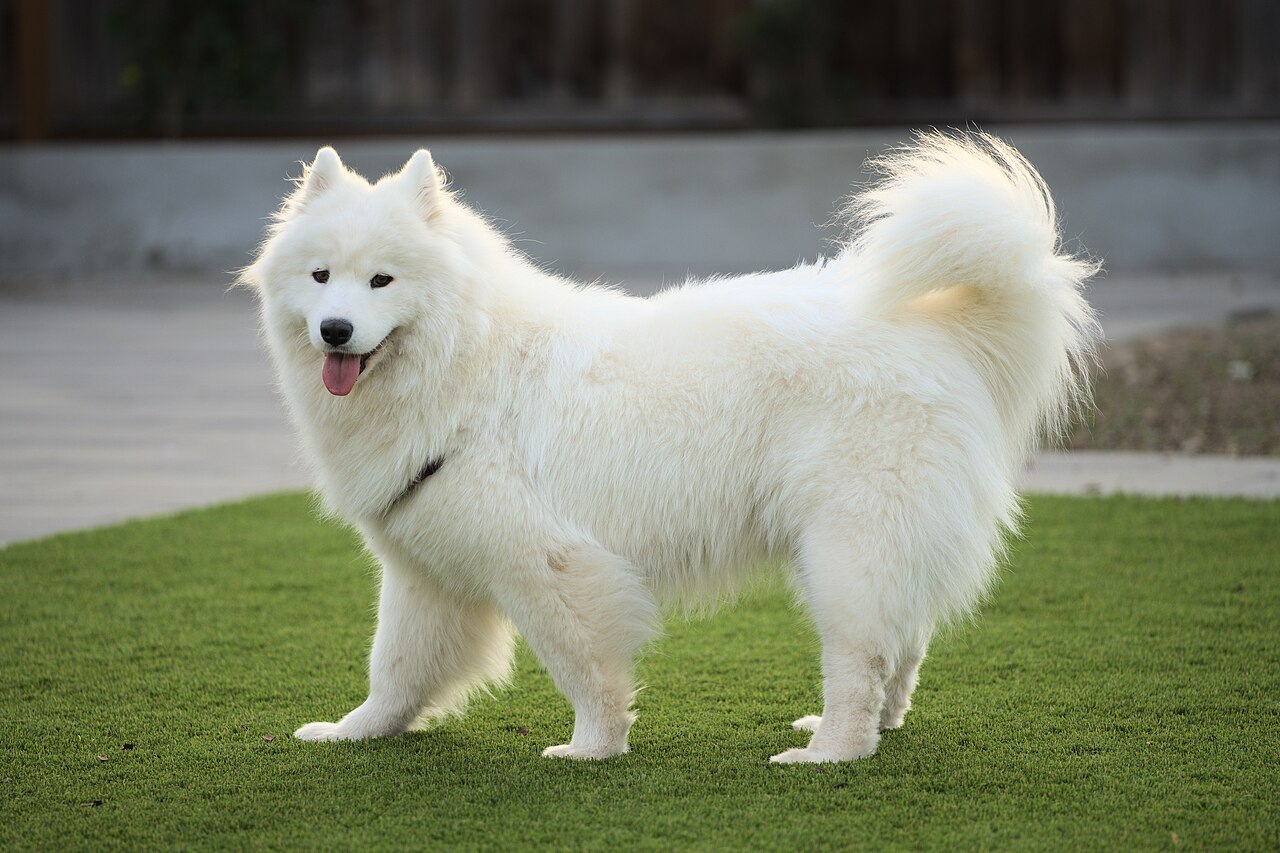
The Samoyed is a medium-sized, sleek and compact spitz, with a clear difference between the sexes: males measure around 53 to 60 cm at the cross and weigh about 20 to 30 kg, while females stay at about 48 to 53 cm and 16 to 23 kg.
Its most famous feature is the white coat, which can also present the cream tone called “biscuit”, alone or combined with white. The eyes are almond-shaped and dark, wide-eyed; the ears, triangular, thick, hairy and erect. The nose is usually black, although it may lighten in winter (the so-called “winter nose”). The tail is another hallmark: It is wrapped around the back, touching it and falling to the side, and in the extreme cold the dog uses it to cover its nose while sleeping.
Origin and history
The Samoyed is a very ancient breed, originating from northern Siberia (Russia). It takes its name from the Samoyedic peoples – who after the Russian revolution of 1917 became known as Nénets – and descends from the Nenets Herding Laika, the spitz dog that these ethnic groups used to herd reindeer, hunt, watch and pull sleds. DNA analysis places it among the most basal and ancient races known, an arctic lineage that has endured for thousands of years.
In the late 19th century, explorers such as Fridtjof Nansen employed them in their expeditions to the North Pole, and Roald Amundsen had a team led by a Samoyed named Etah on the first expedition to reach the South Pole.
The British zoologist Ernest Kilburn-Scott is considered the founder of the modern breed: in 1889 he returned to England with a puppy acquired near Arkhangelsk, and there drafted the first official standard in 1909. From those imported specimens, predominantly white, was fixed the Samoyed we know today in Europe and the United States.
Curiosities
- The smile has a function: these upward curved corners are not only nice; they prevent the dog from drooling, which in the Arctic prevented the formation of ice cubes in the muzzle.
- Polar hero: the Samoyed Etah led the shot that took Amundsen to the South Pole in 1911.
- Hair that is woven: mutated hair has been used as an alternative to wool in fabrics, with an angora-like texture, and even to make artificial fishing flies.
- The anti-social cloak:‘s white hair naturally repels mud, so the dog looks clean with surprising ease.
- One of the 14 oldest breeds: DNA matches it to other primitive dogs such as the Siberian Husky, Alaskan Malamute or Chow Chow.
- No smell of dog: is one of the characteristics that most surprises those who live with one for the first time.
If you’re drawn to the world of Nordic Spitz and sled dogs, you’ll be interested to learn about other breeds in the same family: the tireless Siberian Husky, the mighty Alaskan Malamute, the peculiar and lionlike Chow Chow and the white and elegant American Eskimo Dog.
Frequently Asked Questions About the Samoyed
Is the Samoyed hypoallergenic?
It is considered relatively hypoallergenic because it barely has body odor and releases little dandruff, but it is not a “hairless” dog: it mutes a lot.
Do you lose a lot of hair?
It has an intense seasonal moult once or twice a year when it “loosens the mantle”, and it also loses fine hair throughout the year.
Is he a good guard dog?
As a defense dog, no: it is too friendly and aggression is rare in the breed. As a warning dog it works well, because it barks when something approaches its territory.
Can you handle the heat?
No, it’s an arctic breed with a very dense coat, so it suffers in hot climates. In the summer you have to offer it shade, water and a cool place, exercise it in cool hours and never shave it, because the hair also protects it from the heat.
Can you have it on one floor?
Yes, as long as he gets daily exercise, company, and a fresh environment, he doesn’t tolerate prolonged solitude well.
Is he good with kids?
Very good. It is patient, playful and sociable, one of the most recommended breeds for families. Due to its shepherding instinct, it sometimes tries to “lead” children around them during play.
How long does a Samoyed live?
Its life expectancy is about 12 to 14 years, a high figure for its size, and with proper care it retains its vitality and playfulness into old age.
Do you need a lot of exercise?
Yes. It has medium-high energy and is a working dog: long walks, play and dog sports such as agility, mushing or herding. A well-exercised Samoyed is a much more balanced dog at home.