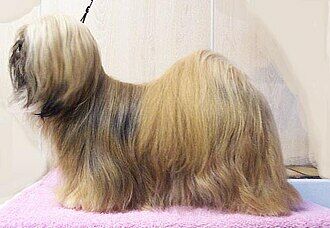
The Lhasa Apso is a small dog of Tibetan origin, unmistakable by its long mane and its gaze hidden behind the fringe. Behind that toy-like appearance lives a millennial guardian: confident, independent and deeply loyal to his own. This guide brings together everything you need to know about the Lhasa Apso before and after sharing your life with one.
Is the Lhasa Apso for you?
The Lhasa Apso is not a dog for everyone. It’s a great companion for those who value a small, quiet indoor dog with a strong personality, but its hair and independence take a toll on those looking for a dog of low maintenance or immediate obedience.
In favour .
- Small size, perfect for living on the floor.
- Very long-lived: often over 15 years.
- Watchful and attentive; alert to any developments.
- He needs little intense physical exercise.
- Loyal and affectionate to his family, with a clown spot.
To be taken into account
- Long hair requires daily brushing or periodic cuts.
- Independent and stubborn: education requires patience.
- He tends to bark to warn us.
- Reserved with strangers; needs early socialization.
- He can be domineering with other dogs if you don’t work him.
Character and temperament

The Lhasa Apso combines two souls in a small body: that of a loving lap dog and that of an alert guard dog. With his family, he is cheerful, playful and surprisingly clownish, able to mount small shows to attract attention. But just a strange noise brings out his vigilant side: he raises his head, watches and warns.
It is a self-confident and independent dog. It was not bred to follow orders, but to make decisions on its own while on guard duty, and that heritage is noticeable: it has its own criteria and does not like to be pressured. With strangers it is reserved, even suspicious at first. It has difficulty making friends, but when it trusts someone it does so for life.
That mixture of loyalty, stubbornness, and composure makes it a companion with a lot of character for its size.
Coexistence: children, other pets, flat and loneliness
- With children: gets along well with respectful children, especially older ones. It does not tolerate harsh treatment or being disturbed while resting, so it is advisable to teach the little ones to respect their time.
- With other dogs: can be dominant, especially in males, and good socialization from puppyhood is key to stress-free coexistence.
- With other pets: usually accepts cats and other animals it grows up with, although its warning instinct does not disappear entirely.
- On the floor: is one of the apartment dogs par excellence. Its size and moderate exercise needs fit perfectly in small spaces.
- In the face of loneliness: is very attached to his family and does not like to be left alone for long hours.
Education and training
Training a Lhasa Apso is an exercise in patience and diplomacy. It’s not a dumb dog, far from it, but it ranks low in the obedience rankings precisely because it’s independent and selective: it obeys when it makes sense, not just to please.
The formula that works is positive reinforcement: prizes, play, friendly voice and short and varied sessions so you don’t get bored. Punishment and monotonous repetition are counterproductive. Early socialization, exposing him to people, noises, and other dogs from a puppy, is as important as basic commands, because it softens his natural suspicion of the unknown.
Two fronts deserve special attention: teaching him to control warning barking and working on tolerance for loneliness.
Exercise and activity

The Lhasa Apso has some exercise needs moderate. With one or two daily walks and some playing time at home it is satisfied; it is not an athlete that requires long runs or intense sport.
It’s an alert dog that appreciates mental stimulation: interactive toys, sniffing games and small challenges keep it balanced and prevent it from channeling its energy into barking or mischief.
Because of its flat face, it is advisable to avoid intense exercise with heat and to watch that it does not suffocate in summer.
Care: fur and hygiene

Hair is undoubtedly the greatest commitment of this breed. The Lhasa wears a double coat: a long, smooth, hard outer layer, and a softer undercoat that insulated him for centuries from the cold of Tibet. That gorgeous hair tends to tangle easily, so the brushing should be practically daily. Even deliberate brushing can form knots, especially if the dog is active or walks in the countryside or on the beach.
Many families opt for a maintenance cut(the popular “puppy cut”), which drastically reduces the daily work without giving up a clean and comfortable dog.
The rest of the hygiene is the usual: bathing every few weeks with suitable products, checking and cleaning ears to prevent infections, eye care, nail trimming and regular dental hygiene.
Foodstuffs
As a small, long-lived dog, the Lhasa Apso needs a a balanced and quality diet, adjusted to its age, weight and activity level.
The great enemy is the overweight: It’s a gluttonous, low-calorie dog, so rations should be measured and rewards counted toward the daily total. It is advisable to divide food into two portions and to keep water fresh at all times. If you have any doubts about quantities, intolerances or switching to a senior diet, it is best to consult your veterinarian, who will tailor the regimen to each animal.
Health and life expectancy
The Lhasa Apso is a robust and especially long-lasting breed, with a life expectancy of around 12 to 15 years and specimens that easily exceed that figure.
- Eye problems: Dry keratoconjunctivitis (dry eye), progressive retinal atrophy and prolapse of the third eyelid gland (cherry eye).
- Hereditary renal dysplasia: an abnormal kidney development of genetic origin, rare but described in the breed.
- Dislocation of the patella: displacement of the kneecap, common in small dogs.
- Skin problems: atopic dermatitis and allergies as well as sebaceous adenitis.
- Infections of the ear: favored by the dropped ears and hair, hence the importance of checking them.
Choosing a responsible breeder who performs health tests, maintains veterinary checks, and takes care of weight are the best guarantees of a long and healthy life.
Physical appearance
The Lhasa Apso is a small dog but not in miniature, with a strong structure and body longer than tall.
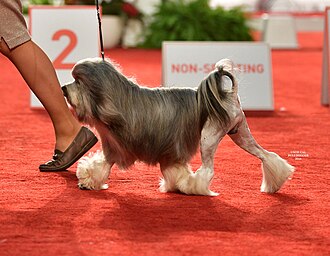
Its most striking feature is the hair: abundant, long and double-layered, with a fringe that falls over the eyes to the point that, when viewed from the front, the white of the eye is barely noticeable.
As for the color, it supports a wide variety: gold (the most common), sand, honey, black, slate gray, smoky, white and particolor.
Origin and history
The Lhasa Apso is a millennial breed born in the highlands of Tibet, in the heart of the Himalayas. Its name links the city of Lhasa, the Tibetan capital, with the word apso, of disputed etymology (it has been related to Tibetan terms for “goat’s beard” or, according to another interpretation, with the idea of “barking guardian”). For centuries he lived in palaces and monasteries like inner guard: Their mission was to detect intruders and alert with their barking to the great Tibetan Mastiffs watching outside.
In the early 20th century, some Tibetan dogs arrived in the United Kingdom from the hands of soldiers returning from the Indian subcontinent; at first they were known generically as “Lhasa terriers”.
The leap to the United States came in 1933, when the thirteenth Dalai Lama, Thubten Gyatso, gifted a pair to naturalist C. Suydam Cutting. The American Kennel Club recognized the breed in 1935 and re-located it to the Non-Sporting group in 1959.
Curiosities
- It is so often confused with the Shih Tzu that the error is common even among veterinarians.
- Its fringe is not only aesthetic: it protects the eyes from the intense sun and the reflection of the snow of its native Tibet.
- In Tibetan Buddhism, it was associated with good fortune, and it was believed to house the souls of deceased lamas.
- Despite its lap dog appearance, it was a real working dog – an alarm system with legs.
- It is one of the most long-lived domestic breeds, with specimens approaching 20 years of age.
If you are attracted to the Lhasa Apso, you may want to compare its character with that of other related breeds. Its closest “cousin” is the Shih Tzu, with which it shares Asian appearance and origin. Among the Tibetan breeds are very interesting the Tibetan Spaniel, another small monastery guard, and the imposing Tibetan Mastiff, the large dog that the Lhasa warned. And if you’re looking for another little oriental fellow with a strong personality, check out the Pekinés.
Frequently Asked Questions About the Lhasa Apso
Is the Lhasa Apso a good dog for beginners?
It may be, but with nuances. It is small, adaptable to the floor and very attached to its family, which facilitates coexistence. However, its independent and stubborn character and, above all, the maintenance of its long hair require constancy. A motivated beginner, willing to brush daily or opt for a maintenance cut, will get along well with him.
How long does a Lhasa Apso live?
It’s a very long-lived breed. The average is between 12 and 15 years old, and it’s not uncommon for well-kept specimens to exceed 18 and even approach 20. A British study from 2024 calculated a life expectancy of about 14 years, above the average for purebred dogs.
Does the Lhasa Apso shed a lot of hair or is it hypoallergenic?
It sheds relatively little hair compared to short double coat breeds, because dead hair tends to be retained in the long coat instead of falling out. This forces it to be brushed often. No dog is 100% hypoallergenic, but its hair type is usually better tolerated by sensitive people.
Is it hard to train the Lhasa Apso?
It’s not that he’s unintelligent, it’s that he’s independent and has his own criteria: he was raised to watch on his own, not to obey orders without hesitation. With positive reinforcement, short sessions and a lot of patience, he learns without problems. Punishment and boring repetition only get him locked up.
Does the Lhasa Apso get along with children?
Yes, as long as the relationship is respectful. It is playful and affectionate, but it does not tolerate being abruptly handled or disturbed when it rests. It is a more recommended breed with slightly older children who understand how to treat a small dog.
How much exercise does a Lhasa Apso need?
A lot less than a sporting dog. With one or two walks a day and a little playtime at home it covers its needs. It enjoys the activity, but is also happy accompanying on the couch. Mental stimulation is as important as physical exercise.
What’s the difference between the Lhasa Apso and the Shih Tzu?
They are often confused, even among veterinarians.[citation needed] The Lhasa Apso comes from Tibet and was bred as a sentry; it is usually somewhat larger, with a slightly longer snout and a more independent and vigilant character.
Does the Lhasa Apso bark a lot?
It has a tendency to warn: for centuries its job was to warn with powerful barks of any strange presence. It is a born interior guard. With early socialization and teaching it to be quiet to order it is controlled, but it is convenient to know that it is a dog that speaks out loud.