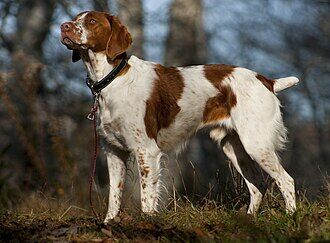
The Breton (Épagneul Breton) is a French breed of dog of the spaniel type, compact, athletic and sweet-tempered. Originally bred to hunt and collect birds in the Brittany region, it is today one of the most versatile hunting dogs and, at the same time, an exceptional family companion. It is the smallest of the show dogs and combines a fine nose, tireless energy and an enormous desire to please. If you’re looking for a sporty, intelligent and affectionate dog, the Breton deserves to be on your list.
Is the Breton for you?
The Breton is a high-energy dog designed to move around, so before you decide, be honest about the time and space you can offer him.
In favour .
- Very affectionate and close to the family.
- One of the easiest show dogs to train.
- Medium size and manageable, neither big nor small.
- Short coat and easy to maintain.
- Sociable with people and other dogs.
- Versatile: hunting, agility, obedience and company.
To be taken into account
- It needs a lot of daily exercise, not good for short walks.
- If he gets bored, he can become destructive or nervous.
- Badly suited to someone who spends a lot of time away from home.
- Their hunting instinct calls for socialization with small animals.
- He’s sensitive. The harsh treatment affects him a lot.
- He’s not the best dog for a sedentary life.
Character and temperament

The Breton has a reputation for being a gentle and sensitive dog by nature, and he’s earned it. He was bred from the beginning as an easy-to-train hunting dog, which left a clear mark on his character: He’s attentive, collaborative and always looking out for his people. It is not an independent or distant dog, but quite the contrary, it seeks contact and rarely misses the occasion for a caress or a caress.
It’s a cheerful, alert dog with an energy that doesn’t wear off easily. That vitality makes it a lot of fun when it has an exhaust valve, but it also explains why it needs routine and activity: a bored Breton is a troubled Breton. It’s well-managed, stable, balanced and very unaggressive.
It responds to the nuances of tone of voice and body language, so it quickly learns what its owner likes, but it also resents screaming and harsh corrections, which can make it withdrawn or insecure.
Coexistence: children, other pets, flat and loneliness
- With children: is excellent. It is patient, playful and tolerant, ideal for active families. As with any energetic dog, it is advisable to supervise play with the youngest to avoid pushing or scaring.
- With other dogs: is very sociable. It usually gets along well and enjoys canine company, especially if it has had good experiences as a puppy.
- With cats and small animals: relies on socialization. Its hunting instinct is strong, so it’s best to get used to it early; even so, it can go out to chase birds or rodents if it detects them.
- On the floor: possible but demanding. He needs to go out several times a day and do real exercise outside; without that, he gets frustrated. He performs much better in a house with a fenced garden.
- In the face of loneliness:‘s weakness is that it’s very attached, can’t handle long days alone and can develop separation anxiety or destructive behaviors.
Education and training
Few specimen breeds are as grateful to educate as the Breton. It is intelligent, quickly grasps what is expected of it and, above all, wants to please. That combination makes it ideal for both first-time owners and demanding dog athletes.
The key is positive reinforcement. Rewards, play, and a gentle voice work wonderfully; harsh correction, on the other hand, is unnecessary and counterproductive, because your sensitivity makes punishment block you more than it corrects you. Short, varied, and fun sessions, integrated into daily exercise, give the best results.
Start early with socialization: get to know people, dogs, environments, and noises as a puppy. Work on the call with special constancy, because its nose and instinct can take it far following a trail. If you give it a job – obedience, billing, search, agility – you’ll have a focused and happy dog.
Exercise and activity
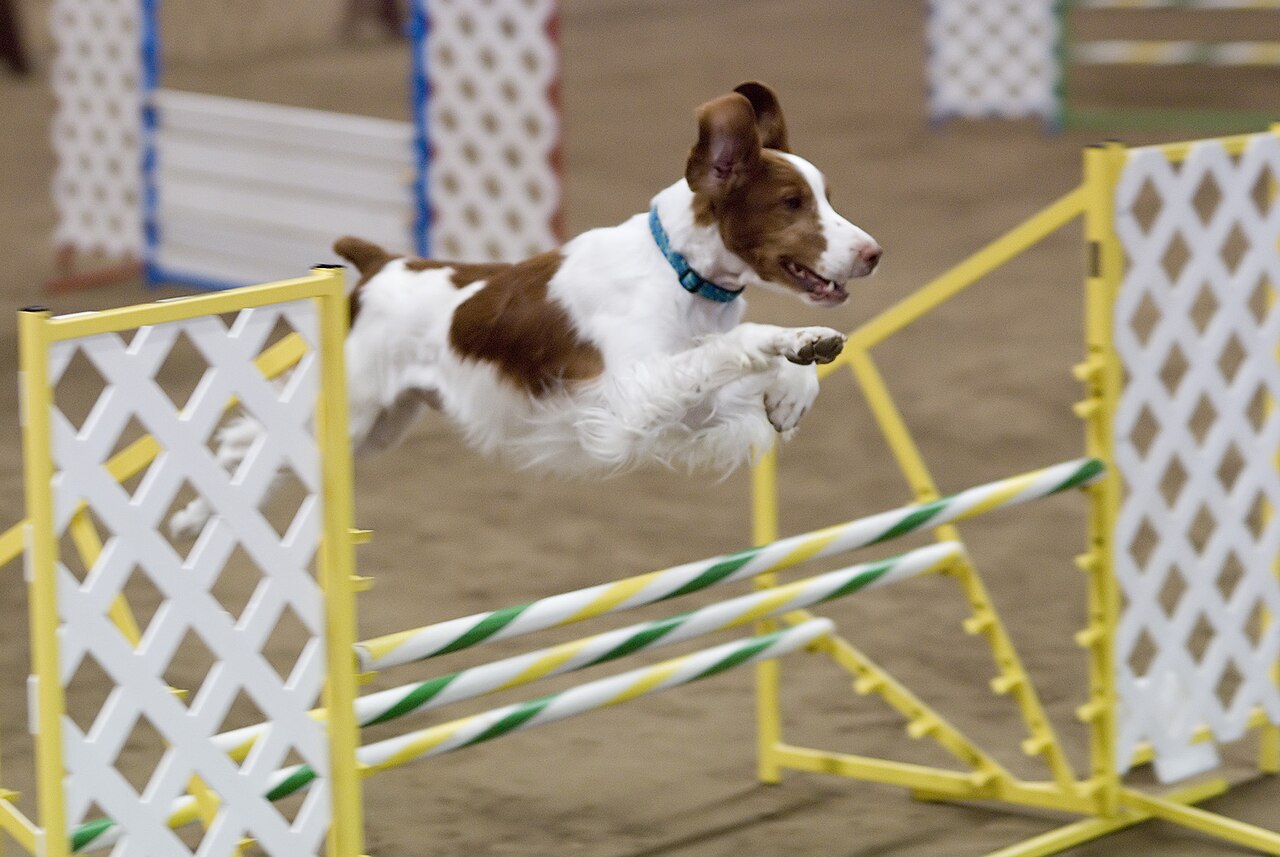
Here is the deciding factor of the breed. The Breton is a natural athlete, bred to beat the field for hours, and needs a level of exercise that many people underestimate. We are talking about at least one or two hours a day of intense activity: running, long walks, swimming, collecting or dog sports. A couple of laps around the block is not enough for him.
In addition to physical wear and tear, he needs mental stimulation. Smell games, exercise, and sports like agility allow him to burn energy and use his head at the same time, something that leaves him really satisfied. Having a fenced-in terrain where he can run in the fresh air is a huge plus.
If you meet their activity needs, you’ll have a calm and balanced dog at home. If you don’t, that unchallenged energy turns into barking, wrecking, and nervousness. The Breton is the perfect reward for active owners and a bad plan for sedentary ones.
Care: fur and hygiene
Its coat is short or medium-length, dense, flat or slightly wavy, with moderate fringes on the ears and legs.
A weekly brushing is enough to keep the mantle clean and free of tangles; during spring and autumn mowing it is advisable to increase the frequency.
Pay attention to the ears: as they fall and as a dog that gets between the weeds and water, they accumulate moisture and debris, so it is advisable to check and clean them regularly to prevent infections.
Foodstuffs
As such an active dog, the Breton needs a quality diet that supports its energy expenditure. A complete and balanced feed, appropriate to its age, weight and activity level, is the basis; specimens that hunt or play sport intensively may require more energy-dense formulas.
Although it is an athletic dog and unlikely to gain weight if exercised, overweight punishes its joints, especially considering its predisposition to hip dysplasia.
Always have fresh water available, especially on busy days, and avoid strenuous exercise right after eating.
Health and life expectancy

The Breton is, as a whole, a robust and healthy dog, with a life expectancy of around 12 to 15 years. Different studies place the average between 11 and 13 years, a very correct figure for a dog of its size.
Like all breeds, it has some predispositions that should be known. The most documented is hip dysplasia, which is why it is important to choose puppies from parents with hip tests. Cases of elbow dysplasia, epilepsy, entropy (bad eyelid position), cataracts and glaucoma have also been described.
The best prevention is to go to responsible breeders who perform health tests, keep the dog at its ideal weight, take care of the ears and follow the schedule of vaccination, deworming and veterinary checks.
Physical appearance
The Breton is the smallest of the show dogs, a detail that surprises those who see it working with the intensity of a setter. It is a dog of solid and compact constitution, athletic but never heavy, with relatively long legs that give it an elastic and light step.
It measures between 44 and 52 cm at the withers, with females in the lower part of the range, and weighs about 14 to 20 kg depending on size.
Its coat has a great variety of colors. The most common are orange and white and liver (brown) and white; orange roan and liver roan, and tricolor are also accepted.
Origin and history
The Breton takes its name from Brittany, the region of northwest France where the breed was conceived. Images of Breton-type dogs, orange and white, hunting and collecting pieces appear already in tapestries and paintings of the 17th century, although the breed as we know it was forged between the 17th and 19th centuries.
The first written and verifiable record comes from a hunting description by Reverend Davies in 1850, who spoke of small raccoon dogs that marked the piece and were excellent collectors.
The breed was officially recognized in France in 1907, when an orange and white male named Boy was registered and the first standards were drafted; that same year the first club of the breed was founded in Loudéac.
Curiosities
- It’s the smallest of the show dogs, but it covers the ground like a big one.
- There are two lines: the American, higher and faster (bred for wide terrain), and the French, smaller and working closer to the hunter.
- Some are born naturally without tails or with very short tails.
- Until 1982 its official name included the word “Spaniel”; today it is simply Brittany.
- The black and white color has been accepted in France since 1956, but is still a defect in the American variety.
If you are interested in the Breton, you probably enjoy meeting other hunting and show breeds with similar energy and character. Check out the English Springer Spaniel, another versatile spaniel; the Short-haired German Bracho, an athletic and versatile specimen; the Vizsla, equally affectionate and sporty; or the sleek Setter Inglés, a close relative in Breton history.
Frequently asked questions about the Breton
Is the Breton a good family dog?
Yes. The Breton is affectionate, balanced and very attached to its people, which makes it an excellent family dog whenever it receives the daily exercise it needs. It tolerates children well and enjoys shared activity, although it is advisable to supervise play with the little ones for its energy.
How much exercise does a Breton need?
As a hunting dog, it needs at least one to two hours a day of intense exercise: running, long walks, gambling, or dog sports.
Can the Breton live in a flat?
It can, but it’s not ideal. It adapts to a floor if it goes out several times a day and does real exercise outdoors, but it performs much better in a house with fenced-in terrain where it can run daily.
Does the Breton lose a lot of hair?
It has a short to medium coat, dense and easy to maintain; a weekly brushing (and a little more in the spring and autumn moulds) is enough to keep it in good condition.
Is the Breton easy to train?
It is one of the easiest sample breeds to train: intelligent, sensitive, and eager to please. It responds wonderfully to positive reinforcement and does not need harsh correction; in fact, harsh treatment blocks it.
How long does a Breton live?
Their life expectancy is about 12 to 15 years, and recent studies place the average at 11 to 13 years, a good longevity for a dog of their size.
Does the Breton get along with other dogs and pets?
In general, yes. It is sociable and does not conflict with other dogs. With cats and small animals it is advisable to socialize it from puppyhood, since its strong hunting instinct can be awakened by potential prey.
Why do some Bretons have short tails?
Some specimens are born naturally with a short tail (rabones), a characteristic of the breed. Others are born with a long tail that was traditionally amputated at 3-10 cm, a practice now banned in many countries where the tail is left whole.