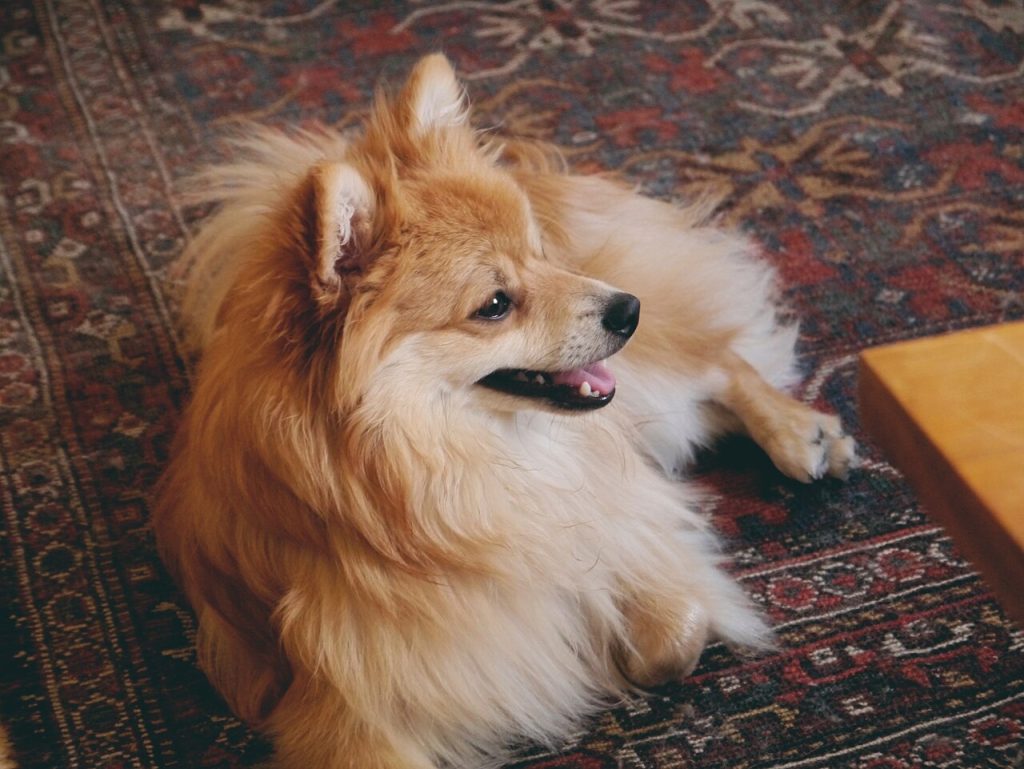
The German Spitz is one of the oldest breeds in Central Europe: a scruffy-looking Scandinavian dog with a plump coat and a coiled tail over the back that we know today in five sizes, from the imposing Wolfsspitz to the tiny Pomerania. Cheerful, alert, and very close to his family, the German Spitz brings together in one standard the farm guard dog of old and the couch companion of today. If you’re looking for a dog with character, adaptability to the floor and an unmistakable image, this guide tells you everything you need to know before you decide.
Is the German Spitz for you?

The German Spitz is a great fit for people and families who want a small or medium-sized, colorful, characterful dog that lives indoors and participates in day-to-day life. It is not an intense working dog or an extreme sportsman: its great value lies in company, cheerfulness and vigilance.
In favour .
- It adapts very well to the floor and the city.
- Affectionate, cheerful and very close to his family.
- Smart and easy to motivate to learn tricks.
- Excellent warning and surveillance dog.
- Rustic and long-lived, with few serious health problems.
- Choose your size: there are five varieties for each lifestyle.
To be taken into account
- He tends to bark; he needs boundaries since he was a puppy.
- Double coat that loosens hair and requires regular brushing.
- He can’t stand prolonged loneliness.
- He can be stubborn and suspicious of strangers.
- Dwarf varieties are fragile with small children.
Character and temperament
The German Spitz is an unassuming, lively and deeply attached to its people. Beneath its toy appearance beats the temperament of a true Nordic dog: self-confident, attentive to everything that happens around it and always ready to sound the alarm. This natural vigilance, inherited from centuries of guarding farms, makes it an excellent warning dog despite its size.
It is cheerful, outgoing, and loves to be the center of attention. With its owners it is affectionate and playful, and usually follows its owner around the house. With strangers it tends to be reserved and barking until it gains confidence, so early socialization makes the difference between a balanced dog and a suspicious one.
It also has its own stubbornness: it is smart and can get away with anything if we let it. It is not aggressive by nature, but an overprotected specimen can become grumpy or territorial. With clear boundaries from puppyhood, without giving in to everything for small and pretty, it becomes a charming and manageable companion.
Coexistence: children, other pets, flat and loneliness

With children: is affectionate and playful, and enjoys an active family. The medium and large varieties get along well with children who know how to treat it with respect; the dwarfs (Pomerania, small Spitz) are so small and have such fine bones that a rough game can injure them, so it is advisable to supervise and teach the little ones to handle it gently. Like all Spitz, he has character and does not tolerate involuntary abuse well.
With other pets: gets along well with other dogs and cats, especially if it grows up with them. Early and gradual introductions are key.
On the floor: is one of its strong points. Due to its size and homely nature, the German Spitz lives perfectly in an apartment whenever it goes out for a walk and is given company. The only nuance is the barking: if it reacts to every noise of the terrain, it must be worked so as not to disturb the neighbors.
In the face of loneliness: is a very attached dog and takes worse than others to be left alone for many hours.
Education and training
The German Spitz is intelligent and learns quickly, which makes it very grateful to train with positive methods, rewards and play. It responds wonderfully to tricks and short, fun sessions, which also come from pearls to spend mental energy.
The other face is his stubbornness: If he senses that barking or getting heavy gets him what he wants, he’ll repeat it. That’s why it’s good to be consistent, set clear standards from day one and not give in to your stuffed face. Two educational priorities stand out in this breed: socializing(so that he is not suspicious or overly barking) and control of barking, showing him a signal of silence and rewarding calmness. With patience and good humor, he’s a brilliant student.
Exercise and activity
It doesn’t need the exercise days of a working dog, but it’s also not a cushion: He’s agile, alert and likes to move. One or two daily walks and playtime provide plenty for her physical needs. The important thing with this breed is to combine exercise with mental stimulation: Smell games, interactive toys, tricks and, for the more active, initiation to agility or obedience at an amateur level.
Larger varieties (Wolfsspitz, Great Spitz) appreciate somewhat longer and more active walks; dwarves are content with less, although they still need their daily dose of movement and stimulation so as not to get bored or fat.
Care: fur and hygiene

The coat is the breed’s hallmark and its main demand for care. The German Spitz has a double coat: a dense, cotton-like inner layer that acts as insulation, and a long, smoother, rougher outer layer that forms the characteristic mane and collar around the neck. That hair stays on its own, no haircuts, but it needs brushed several times a week to avoid knots, and daily during mowing.
It changes seasonally, especially in spring and autumn, when it sheds a good amount of undercoat; a good brushing at those times greatly reduces hair per house. Occasional bathing is good (only when it is really dirty, so as not to damage the protective layer of the mantle). The rest of the hygiene is the usual: Checking and cleaning ears, cutting nails, and paying special attention to the dental hygiene, a sensitive point in small varieties, with frequent brushing to prevent tartar and loss of parts.
Foodstuffs
The German Spitz needs a complete and balanced diet, tailored to its size, age and activity level. Because it is of such different sizes, the rations vary greatly: a Wolfsspitz eats much more than a Pomeranian, which barely needs a handful of feed per day.
The main dietary risk of the breed is overweight, especially in small varieties: They’re gluttonous dogs and easy to overfeed with prizes. Being overweight overloads your joints and heart and shortens your life. Control rations, moderate rewards, and always have fresh water available. In the case of dwarf varieties, it is also advisable to monitor the sugar levels of very small puppies.
Health and life expectancy
The German Spitz is generally a rustic and healthy breed, the result of centuries of natural selection as a farm dog. Its life expectancy is around 12-16 years old in small and medium varieties, and it is not uncommon for small and well-kept specimens to outgrow it.
Nevertheless, it is useful to know some predispositions, especially in smaller varieties: dental problems and tartar accumulation, kneecap dislocation, tracheal collapse, and certain eye conditions. In larger breeds, as in other breeds, joint problems may occur. A separate chapter deserves the skin: a disorder known as alopecia areata X can cause hair loss without affecting overall health. The best prevention is to go to responsible breeders who perform health tests, keep the dog at his weight, take care of dental hygiene and not skip veterinary checkups.
Physical appearance
The German Spitz has an unmistakable silhouette: a compact and almost square body, a fox’s head with a sharp snout, small, triangular and always erect ears, dark eyes and a wakeful expression, and a bumpy tail that curls over the back.
What varies most between varieties is the size.
- Wolfsspitz / Keeshond: the largest variety, from 43 to 55 cm at the withers; silver gray coat with black shading.
- Gran Spitz (Großspitz): about 43-55 cm and around 17-18 kg; coat white, black or brown.
- For the purposes of this Regulation, the following definitions shall apply: 30 to 40 cm and about 10-11 kg; supports many colors (white, black, brown, orange, shaded gray and mixtures).
- For the purposes of subheadings 040210 and 040310: 24 to 30 cm and 3-5 kg; same range of colours.
- Pomeranian dwarf spitz (Zwergspitz): 18 to 24 cm and 1,4-3 kg; the smallest and most popular variety.
They all share the same type of mantle: long, smooth outer hair over a short, thick, cotton-like undercoat.
Origin and history
The German Spitz is one of the oldest breeds in Central Europe. The first mentions of these spitz-type dogs in German literature date back to 1450. In 1750, the naturalist Buffon described them as the ancestor of all German breeds, a reflection of how deeply rooted this breed was then. They are descended from ancient Nordic dogs from northern Europe, related to other spitz-type breeds.
They were originally bred on farms for multiple tasks: Shepherd, watch and guard the property, warning with their barks of any intruder. Over the centuries, some lines were selected in smaller and smaller sizes for other tasks, until they became small companion dogs. The dwarf variety, the Pomerania, takes its name from the region of Pomerania, on the shores of the Baltic, where the spitz gained fame as a pet and working dog. His leap into high society came from the hand of British royalty: Queen Charlotte and, above all, her granddaughter Queen Victoria popularized the small specimens, pushing the reduction in size to the tiny Pomerania of today.
Curiosities
- The FCI considers the German Spitz a single breed with five varieties; however, in some Anglo-Saxon countries the Keeshond and the Pomerania are registered as independent breeds.
- The hugely popular Pomerania is nothing more than the dwarf version of the German Spitz.
- Queen Victoria of England was a big fan: she returned from Florence with a Pomerania and contributed to making the breed fashionable throughout Europe.
- Two of the only three dogs that survived the the sinking of the Titanic were Pomeranias.
- Their coat stays without haircuts: just brushing it. Cutting off a spitz’s coat can permanently damage it.
If you are attracted to the German Spitz for its cheerful nature and spectacular coat, you may also be interested in other Nordic-type or companion breeds with personality. Check out the Samoyedo, another white and smiling spitz; the robust and lionlike Chow Chow; the versatile Caniche, also very intelligent and characteristically hairy; or the small and brave Chihuahua, ideal if you are looking for a mini-size companion.
Frequently Asked Questions About the German Spitz
How many varieties of German Spitz are there?
According to the FCI, the German Spitz is a single breed with five varieties differentiated by size and color: the Wolfsspitz or Keeshond (the largest), the Great Spitz (Großspitz), the Medium Spitz (Mittelspitz), the Small Spitz (Kleinspitz) and the Dwarf Spitz or Pomeranian Spitz (Zwergspitz).
Is the Pomeranian a German Spitz?
The Pomerania (Zwergspitz or “Dwarf Spitz”) is the smallest variety of the German Spitz within the FCI classification, with about 18-24 cm at the cross.
Does the German Spitz bark a lot?
It tends to bark. It is an alert and vigilant dog that warns of any noise or novelty, a trait inherited from its past as a farm guardian. With early socialization and teaching it a “silence” signal from puppyhood it is well controlled, but it is advisable to take this into account if you live in an apartment with nearby neighbors.
How long does a German Spitz live?
Small and medium-sized varieties usually live between 12 and 16 years, and it is not uncommon for some small specimens to exceed that number.
Do you lose a lot of hair?
Yes, it has a double coat that changes, especially in spring and autumn. It needs brushing several times a week (daily in the coat) to avoid knots and control loose hair at home.
Is he a good dog for apartments and families with children?
Yes, it is very well adapted to life on the floor due to its size and its domestic character. With children it is affectionate and playful, although very small varieties are fragile and it is advisable to supervise the game. It is an excellent companion dog as long as its tendency to bark and its need for company are taken care of.
Do you need a lot of exercise?
Less of a working dog, but more than its stuffed appearance suggests. With one or two daily walks and playtime it meets its needs. It is agile and alert, so it enjoys olfactory games, tricks and activities such as agility at the amateur level.
Can you stay home alone?
It tolerates loneliness worse than other breeds because it is very attached to its family. It may learn to stay alone for a few hours if it gets used to it gradually from puppyhood, but long and repeated periods of loneliness favor barking and anxiety. It is not the best option if you are out all day.