The Cavalier King Charles Spaniel is one of the sweetest and most balanced companion dogs in existence: small, elegant and with a look that makes you fall in love. Born in England as a slingshot of the nobility, today it is the ideal companion for families, the elderly and those looking for a loving dog that adapts to almost any home. In this comprehensive guide you will find everything you need to know about the Cavalier King Charles Spaniel before and after you have it at home: I would like to thank the Commissioner for his excellent report.
Is the Cavalier King Charles Spaniel for you?
The Cavalier King Charles Spaniel is an easy dog to love and to get along with, but it is not perfect for everyone. Before taking the step, it is advisable to look at its lights and shadows honestly, especially when it comes to health, which is its big pending matter.
In favour .
- Loving, sociable and very patient with children.
- Small size: perfect for flooring and carrying everywhere.
- He gets along great with other dogs, even much bigger ones.
- Moderate and adaptable exercise needs.
- Desirous to please, which facilitates a positive education.
- Excellent therapy dog and companion for seniors.
To be taken into account
- Genetic predisposition to heart problems (mitral valve).
- Risk of syringomyelia and other inherited disorders.
- Bad watchdog: sees all strangers as friends.
- Pursuit instinct: never loose near traffic.
- The silky coat requires regular brushing.
- He doesn’t do well with prolonged solitude; he’s very attached.
Character and temperament
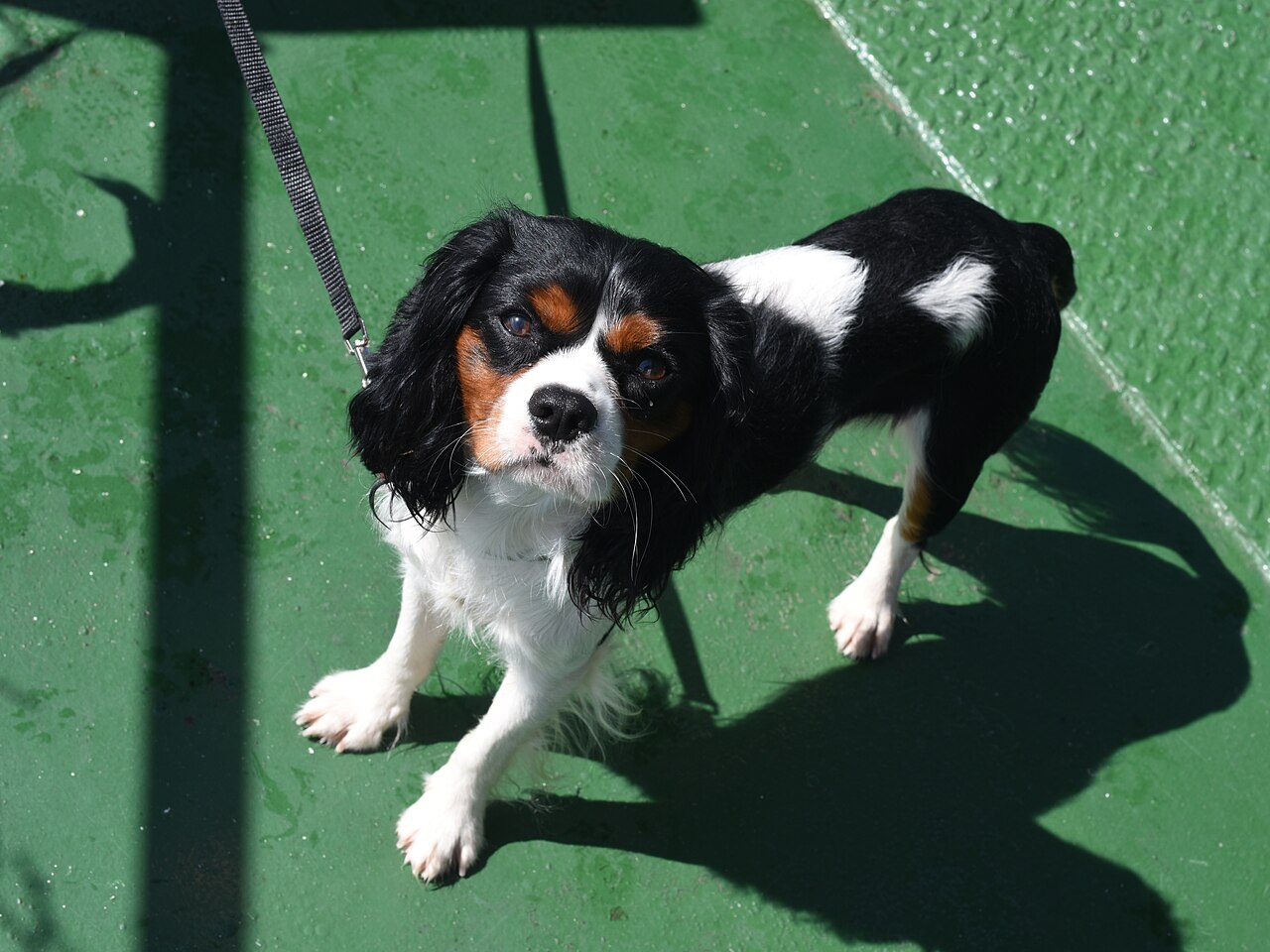
If we had to summarize the Cavalier King Charles Spaniel in one word, it would be affectionate. It is an extraordinarily affectionate, playful, patient and always willing to please dog. That combination makes it an exceptional companion for family life and explains why it has been successful as a lap dog for centuries.
It is naturally curious and enjoys play, but it is also delighted to curl up on a cushion or in your lap for hours at a time. That duality – active when it touches, calm when it can – is just what makes it so enjoyable to be around. It is not a nervous dog or overly barking; it seeks contact, companionship and caresses above all else.
As a good spaniel, it retains a mark pursuit instinct: It tends to go after almost anything that moves, including cars on busy streets. That is why it never becomes a cautious “street dog” and it is advisable to walk it always on a leash near traffic. Besides, he considers any stranger his friend, which makes him terrible as a guard dog but wonderful as a social dog. In Stanley Coren’s canine intelligence ranking, he ranks 44th, placing him in an average intelligence for work and obedience.
Coexistence: children, other pets, flat and loneliness
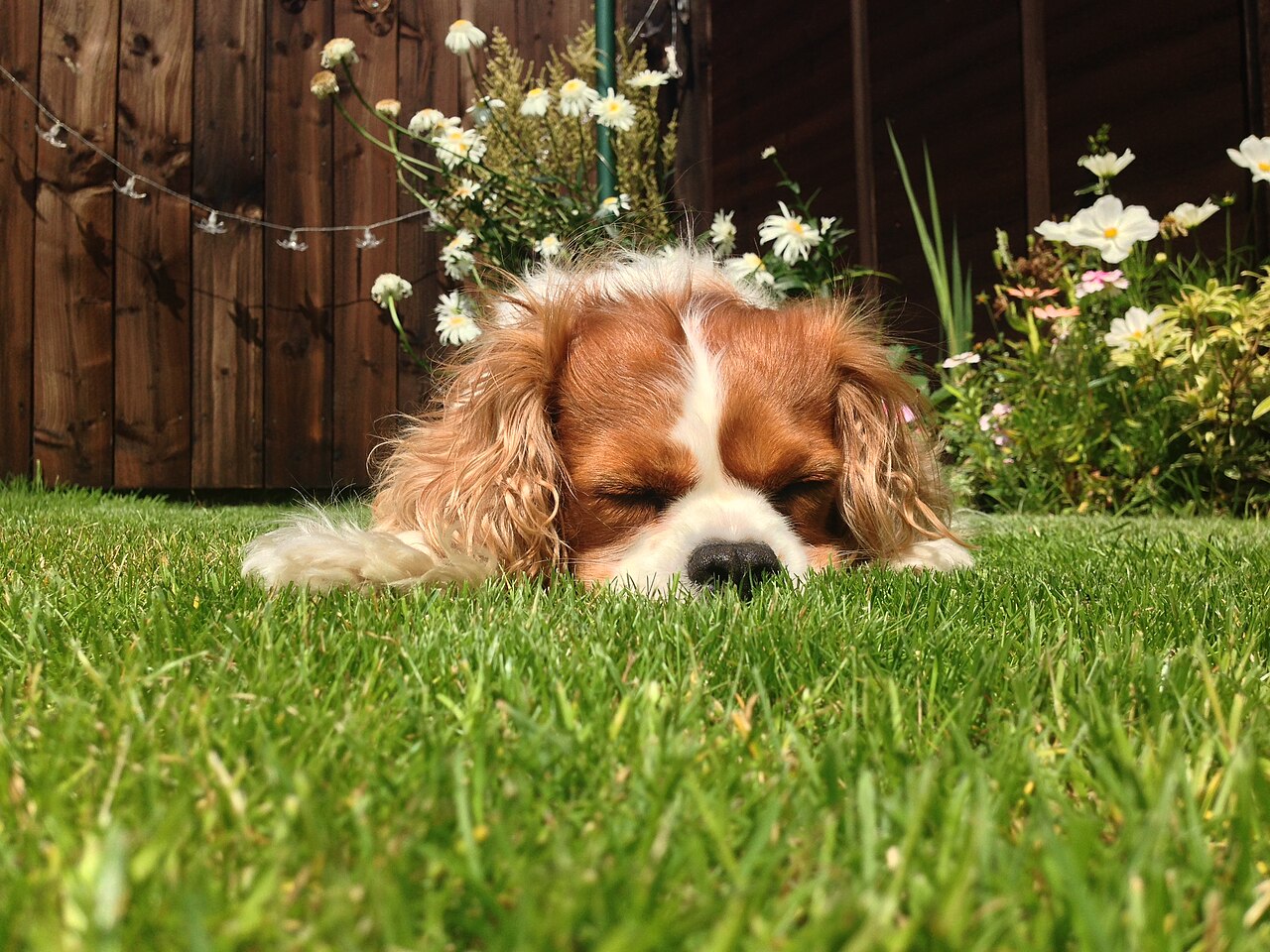
The Cavalier is one of those dogs that can adapt to almost any home and lifestyle.
- With children: is excellent. It is affectionate and very patient, which makes it ideal for families. As with any small dog, it is worth teaching the little ones to treat it with respect.
- With other dogs: is sociable by nature. It does not usually seek out a fight and relate fearlessly even to much larger dogs, so it fits well in homes with several dogs.
- Their hunting instinct can put birds and small animals at risk. However, many owners report that with socialisation and positive reinforcement, their Cavalier lives happily with hamsters, gerbils or birds.
- Its small size and moderate exercise needs make it ideal for apartment living, both in the city and in the countryside.
- In the face of loneliness: is a very family-friendly dog and doesn’t like to spend long hours alone. If you’re going to be away daily for long periods, it’s not the best choice.
Education and training
The Cavalier King Charles Spaniel is eager to learn because he loves to please his family. It is not the easiest dog in the world to compete in obedience – its intelligence is average – but its disposition and attachment more than make up for any difficulty.
The key is in the positive reinforcement: rewards, caresses and a cheerful voice. It’s a sensitive dog that comes down with harsh methods, so forget about yelling and punishing. Short, frequent, fun sessions yield much better results than long, boring ones.
Two priorities in his education: the early socialization(to keep that open and confident character) and the work of the called, precisely because his instinct for pursuit can lead him to ignore danger.
Exercise and activity
One of the great advantages of the Cavalier is the adjustable that is in its exercise needs. It is an active and sporting dog, able to enjoy long walks and to excel in tests of obedience and agility, but equally happy lying on the couch if that day touches tranquility.
In practice, a couple of daily walks and some play are enough to keep him balanced. It is not a hyperactive dog that needs miles of running, which makes it very bearable for people with a moderate pace of life or elderly.
Care: fur and hygiene
The coat of the Cavalier King Charles Spaniel is soft, silky and of medium length, with characteristic fringes on the ears, legs and tail.
- Cepillado: at least weekly to avoid knots and tangles, paying special attention to the freckles and behind the ears, where the hair is easily pinched.
- Recorte: the standard does not require cutting hair. Some owners cut the fringes of the legs, which get very dirty when walking or playing outside, but it is not mandatory.
- Orejas: Their long, hairy ears can accumulate moisture and dirt, so they should be checked and cleaned frequently to prevent infection, a common problem in spaniels.
- Ojos: The eye area should be gently cleaned regularly.
- Other hygiene: checking and trimming nails, dental hygiene and punctual baths when getting dirty complete the routine.
Foodstuffs
The Cavalier does not have exotic dietary demands, but being a small dog and prone to heart problems, taking care of his weight is essential.
Ideally, complete, high-quality food, appropriate to your size, age, and activity level, divided into two daily servings and measured quantities. It is good to control the rewards (which add up to many calories without us realizing it) and to always have fresh water available. If in doubt about the diet – or if the dog has a diagnosed heart condition – it is best to follow the recommendations of the veterinarian.
Health and life expectancy

Here’s the big “but” of the race, and we need to talk about it bluntly. The Cavalier King Charles Spaniel carries a number of serious hereditary problems stemming from a phenomenon called founding effect: All present-day Cavaliers are descended from just six dogs, so any disease present in those founding specimens was passed on to much of the breed. Their life expectancy is, according to various studies, around 9 to 14 years.
The main ailments to be monitored are:
- Patient has a history of mitral valve disease (MVD): is the most serious problem and the main cause of death of the breed. It causes heart murmurs that can worsen to heart failure. Statistically it is present in more than half of Cavaliers from the age of 5, and it is rare for a 10-year-old to have no murmurs. According to the British Kennel Club, around 42.8% of deaths in the breed are of heart origin.
- Siringomielia (SM): is a condition of the brain and spinal cord, linked to Chiari malformation, which reduces space in the back of the skull. It can range from mild discomfort to severe pain.
- Other problems: hip dysplasia, dislocation of the patella, hereditary eye disorders (cataracts, retinal dysplasia) and hearing problems.
Due to the severity of these conditions, in 2022 a court in Oslo banned the breeding of the Cavalier in Norway. The practical conclusion for anyone: always go to a responsible breeder that performs heart and health tests on the breeders, follow veterinary checks and distrust the bargains.
Physical appearance
The Cavalier King Charles Spaniel is a small and well-proportioned companion dog, with an elegant air and sweet expression.
Its most recognizable feature is the long ears, high-inserted and covered with abundant hair, along with large, dark, tender-looking eyes. The skull is flat and the snout, longer than that of its relative the King Charles Spaniel.
The breed recognizes four varieties of color:
- Blenheim: dark brown on a pearly white background, sometimes with a brown spot in the centre of the forehead, the famous “Blenheim mark”.
- Tricolor: black and white with fire marks on the cheeks, inside the ears, eyebrows, inside the legs and under the tail.
- Black and fire: black body with fire marks on eyebrows, cheeks, legs and under the tail.
- Ruby (rubí): a uniform, warm chestnut all over his body.
Origin and history
The Cavalier King Charles Spaniel is originally from Inglaterra and descends from the small companion spaniels that adored the European nobility.
The breed is closely related to King Charles II of England, a big fan of these spaniels – hence the name “Cavalier”, as the king’s supporters were known during the English Civil War. The brown and white variety was named Blenheim in honor of John Churchill, first Duke of Marlborough, who bred these dogs, and his victory at the Battle of Blenheim.
Over time, crosses with flat-snouted breeds greatly changed the dog’s appearance, giving rise to the present-day flat-faced King Charles Spaniel. At the beginning of the 20th century, a desire arose to recover the older, longer-snouted type. In 1926 the American Roswell Eldridge offered a cash prize to the best specimen of the “old type”, which encouraged several breeders. In 1928 the first club was founded and the first standard was drafted. After the severe blow of World War II – which decimated the breeding specimens – the Kennel Club finally recognized the breed in its own right in 1945 as Cavalier King Charles Spaniel. It was recognized by the American Kennel Club in 1995.
Curiosities
- The “marca Blenheim”, that brown spot in the middle of the forehead, has its own legend: it is said that Sarah Churchill, Duchess of Marlborough, pressed her thumb on the head of a pregnant bitch while waiting for news of the battle, and the puppies were born with that “lucky” mark.
- It is a breed of authentic presidential and royal dogs: it was the favorite of Queen Victoria and accompanied, among others, the British Prime Minister Margaret Thatcher and President Ronald Reagan, owner of a Cavalier Blenheim named Rex.
- It fits into the Group 9 of the FCI(companion dogs), section of English companion spaniels.
- Despite his parlor dog air, he retains a genuine spaniel instinct and enjoys tracking and outdoor exploring.
- It has been for years one of the most popular breeds in the United Kingdom (sixth in 2007) and is still very well placed in the United States.
If you are attracted to the Cavalier King Charles Spaniel because of its gentle nature and manageable size, you may also be interested in other companion breeds and friendly spaniels. Check out the classic Cocker Spaniel, the cheerful English Cocker Spaniel, the furry and affectionate Shih Tzu, and the stylish Papillon– all excellent companion dogs with their own personalities.
Frequently Asked Questions about the Cavalier King Charles Spaniel
How long does a Cavalier King Charles Spaniel live?
Their life expectancy is about 9 to 14 years, according to various studies, and is somewhat lower than the average for other small dogs because of their predisposition to heart disease, so veterinary checkups and choosing a responsible breeder make a big difference.
Is he a good dog for families with children?
The Cavalier is affectionate, patient and very sociable, which makes it ideal for children. As with any dog, it is advisable to teach the youngest to treat it with respect and supervise the first encounters.
How much exercise do you need?
It is very adaptable: a couple of daily walks and some play are enough for it. It enjoys both long walks and resting at home, so it fits well with people with a calm pace or elderly people. If it has heart problems, exercise should be moderate according to the veterinarian.
Can he live in a flat?
Perfect. Its small size and moderate activity needs make it an ideal floor dog, both in the city and in the countryside. The important thing is not to leave it alone for too many hours, as it is very attached to its family.
What health problems do you have?
The most important is mitral valve disease, the leading cause of death in the breed, followed by syringomyelia. It can also suffer from hip dysplasia, kneecap dislocation, hereditary eye and ear problems.
Is it hard to take care of your fur?
It is not complicated, but requires consistency. Its medium-length silky hair needs brushing at least weekly to avoid knots, especially in the fringes and behind the ears.
Is he a good guard dog?
No, the Cavalier is friendly to any stranger and is not at all suspicious, so he is not a guard dog.
Do you get along with other dogs and pets?
With other dogs, very well: it is sociable and does not seek conflict, even with much older specimens.