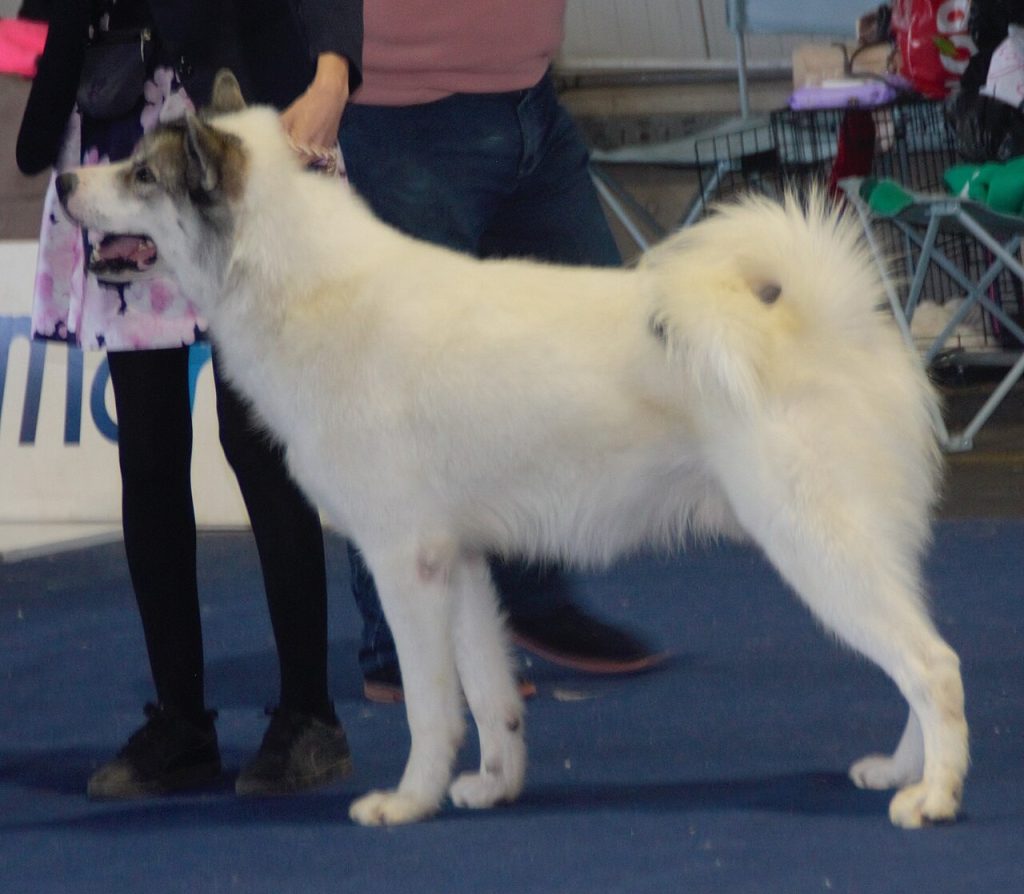
The Canadian Eskimo Dog is one of the oldest and rarest dogs in North America: A true Arctic athlete, bred for centuries by the Inuit to pull sleds, hunt seals and even face the polar bear. Robust, indefatigable and with a blizzard-proof loyalty, it’s not a race for just anyone, but for whoever can give it the cold, the space and, above all, the work it carries in the blood. Here’s the complete guide to the Canadian Eskimo Dog (also called Canadian Inuit Dog or qimmiq).
Is the Canadian Eskimo Dog for you?
Before you fall in love with its wolflike appearance, be honest: The Canadian Eskimo Dog is an arctic working dog, not an urban companion dog. Its happiness depends almost entirely on how much intense physical activity you can offer it and how cold your climate is.
In favour .
- Extreme loyalty and a deep bond to his family.
- Physical endurance out of the ordinary: tireless.
- Intelligent and, for a spitz, quite docile and trainable.
- He enjoys the cold, the snow and the outdoors like no one else.
- Ideal companion for shooting sports (mushing, canicross, skijoring).
- Rusticality and health of a little-manipulated native breed.
Against
- Huge exercise needs: not good for walking.
- Very poorly adapted to heat; prone to heat stroke.
- Very vocal: howls and ⁇ talks ⁇ , bad for sensitive neighborhoods.
- Strong prey instinct for small animals.
- Very rare and hard to come by (endangered species).
- Abundant annual mould and need for space and cold.
Character and temperament

The temperament of the Canadian Eskimo Dog is a direct reflection of its work and environment. It is a loyal, tough, brave, smart and alert dog, which develops a very close bond with its owner and gives itself to him with intense fidelity.
Historically, many dogs have had to find and hunt their own food, so they retain a prey instinct marked and a more independent and ⁇ functional ⁇ mindset than a retriever.
Another constant is its passion for the cold. It literally enjoys bad weather and often prefers to sleep outdoors in the middle of winter rather than next to the heater. It is a dog built for effort, growing up when it has a mission and shutting down (or complicating) when bored.
Coexistence: children, other pets, flat and loneliness
Its loyalty and affectionate nature make it a good companion for active families. It is robust and tolerant, although its size and energy recommend supervision with young children, simply for involuntary nudges.
With other pets. usually gets along well with other dogs, as it is a breed bred to work in packs and pull in teams.
On the floor. is not its habitat. It needs space, cold and, most of all, a huge daily burst of energy. A Canadian Eskimo Dog locked in a warm, jobless apartment is a recipe for stress, wreckage and howling.
Soledad. is a strong-bonded, pack dog, which is unable to tolerate prolonged loneliness. If it spends many hours alone and without stimulation, it will express its frustration by digging, barking, howling or escaping.
Education and training
Here comes the good news: Unlike many spitz-type breeds, known for their stubbornness, the Canadian Eskimo Dog is smart and quite docile., willing to cooperate with its guide, which makes it more trainable than its wolf-like appearance suggests.
It works very well with positive reinforcement, short and varied sessions, and a consistent and fair leader who challenges it. Early socialization – with people, dogs, noises and environments – is essential to channel its instinct and vocalization.
Traditionally, the Inuit hooked their puppies to harness as soon as they could walk, and around two months old they placed them next to adult dogs to learn from them the craft of pulling.
Exercise and activity

If you’re left with just one fact from this whole guide, let it be this: the Canadian Eskimo Dog needs a enormous amount of exercise, way above what most owners can offer. It’s not enough to walk it; it needs high-intensity work.
This need for effort and stimulation makes it ideal for shooting and endurance sports: mushing, karting and skijoring, canicross or bikejoring.
Without that exhaust valve, all that energy turns into problems: anxiety, wrecking, leaking and howling. It’s not a bad dog; it’s an elite athlete without competition. Important: intense exercise should always be done in cool temperatures, never in heat, because of its tendency to heat stroke.
Care: fur and hygiene
The coat of the Canadian Eskimo Dog is, paradoxically, easy to maintain for most of the year. It has a very thick double layer: a soft, woolly undercoat under a stiff, rough covering coat, plus a dense mane around the neck, especially conspicuous in males.
Most of the year brush once or twice a week is enough to remove dead hair and keep the coat healthy. The exception is annual change: once a year it releases the undercoat massively and, during those weeks, it needs daily brushing to prevent knots and relieve shedding.
It is not advisable to bathe it excessively or, of course, to shave it: this double layer is precisely what insulates it from the cold (and, to a lesser extent, from the heat).
Foodstuffs
As an Arctic working dog, the Canadian Eskimo Dog has an efficient metabolism and is made to get the most out of food; remember that their ancestors hunted seals and, in times of famine, pulled whatever was available.
The energy requirements vary widely: a mushing dog in winter burns an enormous amount of calories, while the same dog at rest needs much less in order not to gain weight.
If you have any questions about specific amounts, supplements or diets for sporting dogs, it is best to consult your veterinarian, who will tailor the regimen to the age, weight and activity of the animal.
Health and life expectancy
Being an indigenous breed little manipulated by extreme selective breeding, the Canadian Eskimo Dog is usually rustic and healthy. Interestingly, the modern breeding population started from a relatively high number of founders, which helped maintain genetic variability and avoid inbreeding.
Its great weakness is not an inherited disease, but the heat: its double arctic layer makes it especially prone to heat stroke. It lives best in cold climates and must be actively protected from high temperatures.
The life expectancy is usually around 12-14 years old, a remarkable figure for a dog of its size, although as it is such a sparse breed there are no large population studies.
Physical appearance

The Canadian Eskimo Dog must always transmit a powerful, athletic and imposing. image. Its physique is not designed for pure speed, but for the hard work . and endurance: it is a power shooting dog.
There is a marked sexual dimorphism: males are clearly more masculine, with the most spectacular neck mane, while females are finer-boned, smaller and often with somewhat shorter hair.
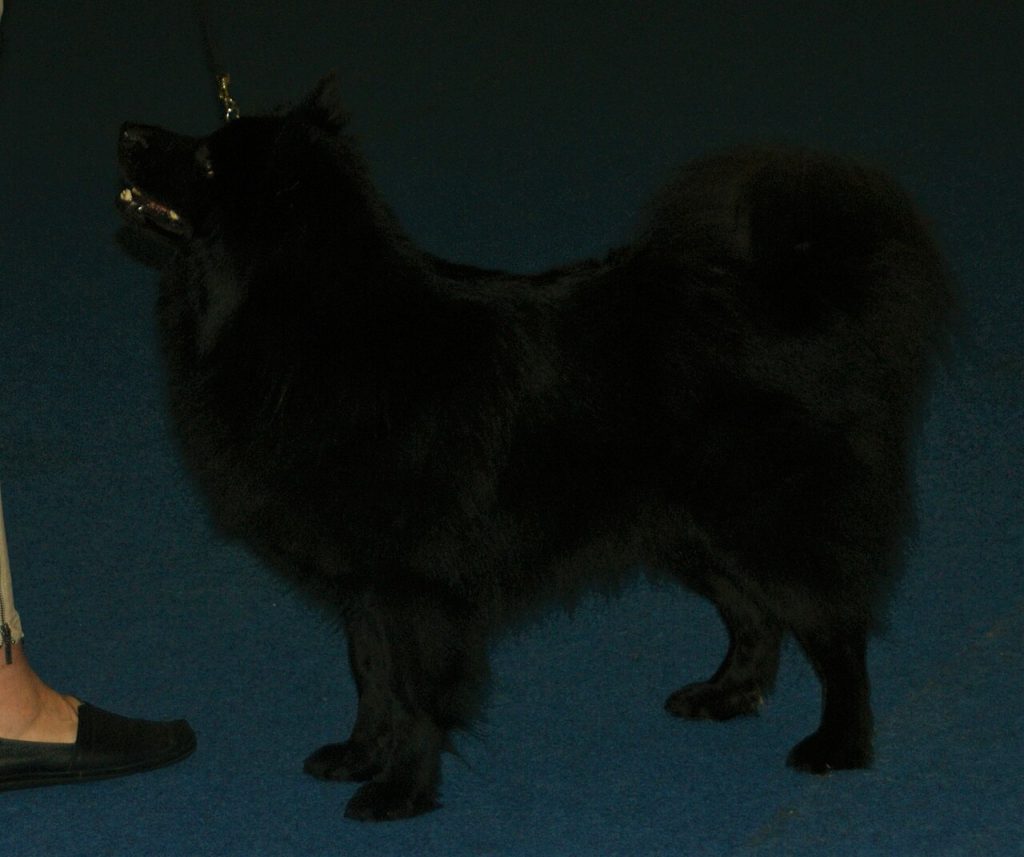
The mantle can be almost any colour, without dominating a particular pattern: solid white, white with spots of another color on the head or body, silver, black… Many white specimens have characteristic facial masks or marks. Its superficial resemblance to the wolf was so remarkable that explorers such as Charles Darwin came to suppose that it was a domesticated wolf; genetic analyses, however, have shown that has no recent wolf ancestry.
Origin and history
The Canadian Eskimo Dog is often considered the the oldest native dog in North America and the rarest surviving indigenous pedigree. Its origins can be traced back to the thule people , who arrived from Siberia around 1000 AD . C. bringing with them the dogs from which both this dog and the Greenland dog are descended. In fact, genetic studies consider both the same breed, not yet divergent enough to separate them.
For centuries it was the survival tool of the Inuit in the Canadian Arctic: He pulled sleds, he helped hunt seals — he was able to track a breathing hole from a great distance — and he even took part in the hunt for the polar bear, to the point that his guides shouted “nanuq”(bear, in Inuktitut) to encourage him to pull. Interestingly, the Inuit did not consider it another animal, but a tool essential to human existence.
In the 1920s there were 20 000 copies s in the Canadian Arctic, but starting in the 1960s the breed collapsed: The arrival of snowmobiles and the spread of canine diseases left it on the brink of extinction. Added to this was the dark episode of the slaughter of Inuit sled dogs (the what’s the matter?) by the Mounted Police between 1950 and 1970, for which the Canadian Government ended up apologizing in 2019.
Since the 1970s, foundations such as Eskimo Dog Research Foundation(1972) and breeders such as Brian Ladoon – who went on to assemble the world’s largest genetic colony – fought to save it. In 2008 only 300 purebreds was estimated . On May 1, 2000, the Nunavut territory officially adopted the ⁇ Canadian Inuit dog ⁇ (qimmiq) as a symbol animal, and since 2001 the Ivakkak race has claimed traditional mushing with Inuit musher and purebred dogs.
Curiosities
- It’s the symbol of a territory. was adopted by Nunavut as an official animal in 2000 under its Inuktitut name, qimmiq.
- He hunted polar bears. was so enthusiastic about chasing bears that his guides used the “nanuq” scream to incentivize him as he pulled the sled.
- By law, keep working. In the Northwest Territories and Nunavut, polar bear hunting must be done on foot or with dog sledding, partly for safety: canine equipment detects the bear, something that the snowmobile noise masks.
- He tricked Darwin. Its resemblance to the wolf led naturalists such as Charles Darwin to believe it was a domesticated wolf; DNA proved otherwise.
- I wasn’t chasing wolves. Despite his appearance and his bravery with bears, he howled in fear of the coming of wolves and did not chase them.
- Same dog on both sides of the sea. Genetically it is the same breed as the Greenland dog, despite its geographical isolation.
If you are drawn to the world of Nordic and sled dogs, you will be interested in other breeds with a profile similar to that of the Canadian Eskimo Dog: the tireless Siberian Husky, the elegant and sociable Samoyedo, the imposing Akita and the unmistakable Chow Chow.
Frequently Asked Questions About the Canadian Eskimo Dog
Is the Canadian Eskimo Dog a good family pet?
It can be in the right home. It is deeply loyal, affectionate and creates an intense bond with its people, but it is not a couch dog: it needs a lot of intense exercise, cold weather and an experienced owner in Nordic breeds. On a floor with no real activity it becomes frustrated and destructive and noisy.
How much exercise do you need a day?
It is a purebred sled dog that is made to work for hours. It needs high-intensity activity daily (shooting, mushing, canicross, skijoring, running) and is not content with walking around the block. Lack of physical and mental work is its main coexistence problem.
Can you handle the heat?
Bad. It has a very dense double layer designed for the Arctic and is prone to heat stroke. It lives happily in the cold – it often prefers to sleep outside in winter – but in warm climates you have to take extreme precautions: shade, water, avoid exercise in the hot hours and never leave it in the sun.
Do you get along with other animals?
With cats and small pets it is more delicate: many specimens retain a strong prey instinct because historically they had to hunt their own food.
Is it a dog that barks or howls a lot?
Yes, it’s very vocal, like most other spitz breeds, howling, moaning and “talking”, something that can be a problem with nearby neighbors. It’s part of their Nordic character and isn’t completely removed with training.
Is it hard to train?
Surprisingly, not so much. Unlike many spits, the Canadian Eskimo Dog is intelligent and quite docile and willing to cooperate. It responds well to positive reinforcement and a consistent leader. The difficulty is not obedience, but meeting its enormous need for work.
How much does your hair maintenance cost?
A little most of the year: just brush once or twice a week. The exception is the annual moult, when it drops the undercoat massively and needs brushing daily for several weeks.
Is it an endangered species?
Yes, it’s one of the rarest native dogs in the world, with an estimated 300 purebreds left in 2008, so getting a puppy is complicated and often involves waiting lists and highly specialized breeders linked to conservation programs.