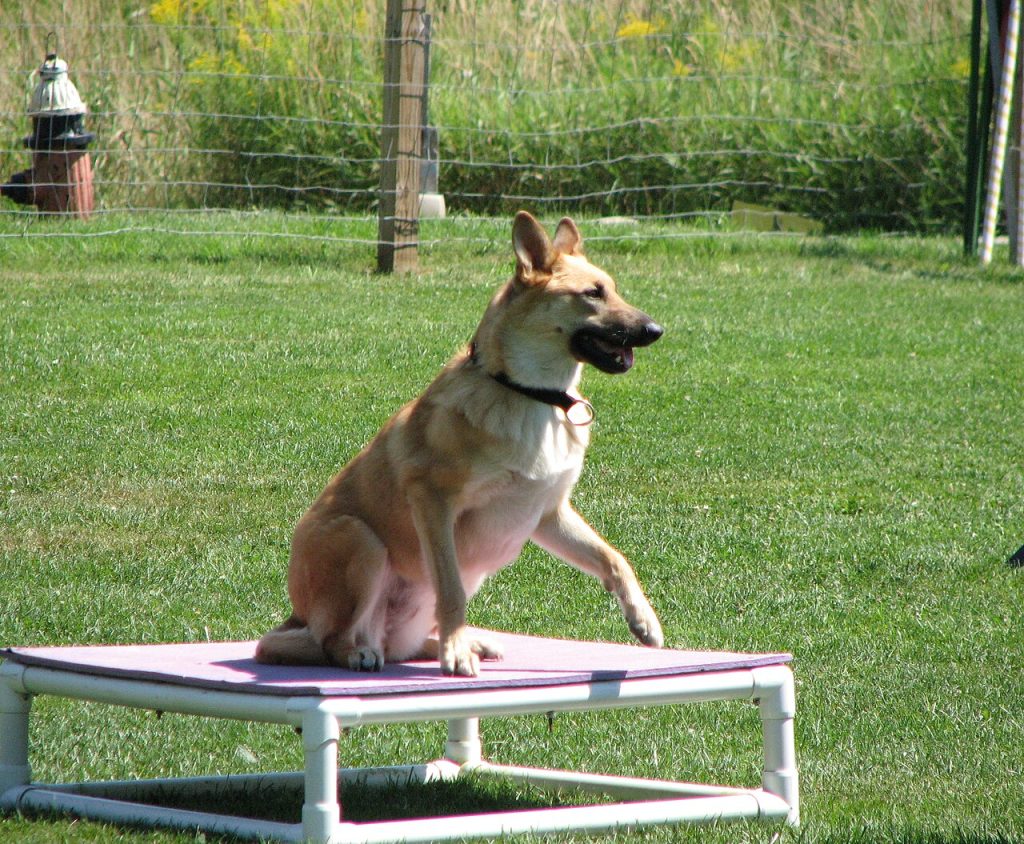
The Chinook is a rarity with capital letters: a sled dog born in New Hampshire in the early 20th century, descended from a single legendary male and today one of the rarest breeds on the planet. Hidden beneath its lion-colored coat is a tireless worker and at the same time one of the sweetest and most devoted children’s dogs in existence. If you’re looking for an athletic, well-balanced and deeply familiar companion, the Chinook deserves to be known.
Is the Chinook for you?
The Chinook is a working dog with a companion soul. It fits wonderfully with active families who want a dog that is docile, sociable, and willing to learn, but requires time, exercise, and, above all, companionship. Before you fall in love with the breed, an honest review of its lights and shadows is in order.
In favour .
- Balanced character, affectionate and not aggressive.
- Special devotion to children.
- Very trainable and eager to please.
- Sociable with other dogs; works well in a team.
- Versatile: sledding, agility, loading and rescue, obedience.
- Simple style, no need for a hairdresser.
To be taken into account
- A very rare breed: getting a puppy takes patience and a waiting list.
- Medium-high energy: needs real daily exercise.
- It sheds all year round, with strong moulds.
- He can’t stand prolonged loneliness.
- Predisposition to epilepsy and hip dysplasia on some lines.
- As a guardian, he warns little: he’s too kind.
Character and temperament

If there ‘s one word that defines the Chinook , it ‘s the balance. He was bred to pull a sled for hours side-by-side with people and other dogs, and that teamwork shaped a kind, patient and deeply social temperament. It is an affectionate and playful dog, with a particular tenderness towards children that has made it one of the most reliable family companions within shooting breeds.
Unlike many Nordic dogs, the Chinook is not independent or stubborn: it is a willing worker, eager to please and eager to learn. It wants to be with its people and participate in whatever you do. This orientation toward people makes it very malleable, but it also means that it suffers if it is left isolated.
It is also a dignified and serene dog. Some examples are somewhat reserved to strangers, but the standard is clear: a Chinook should never be shy or aggressive. This nobility, coupled with its sociability with other dogs, makes it a peaceful companion even in homes with several animals.
Coexistence: children, other pets, flat and loneliness
With children: is one of its strong points. The Chinook shows a special devotion for the little ones and is usually patient and careful. As with any dog, it is advisable to teach children to respect it and supervise the game, but few breeds of its size are so reliable with chickens.
With other pets: is gregarious and accepts other dogs well. Coexistence with cats and other small animals is viable if socialized from puppyhood, although it retains some prey instinct typical of a working dog.
On the floor: can live in an apartment as long as it is guaranteed the daily exercise it needs. It is not a barking dog or nervous of doors inside; what it does not tolerate is lack of activity.
Soledad: here’s his Achilles heel. The Chinook is built for companionship and is frustrated with long absences. If you spend many hours outdoors, he will need routines, stimulation and, if possible, companionship.
Education and training
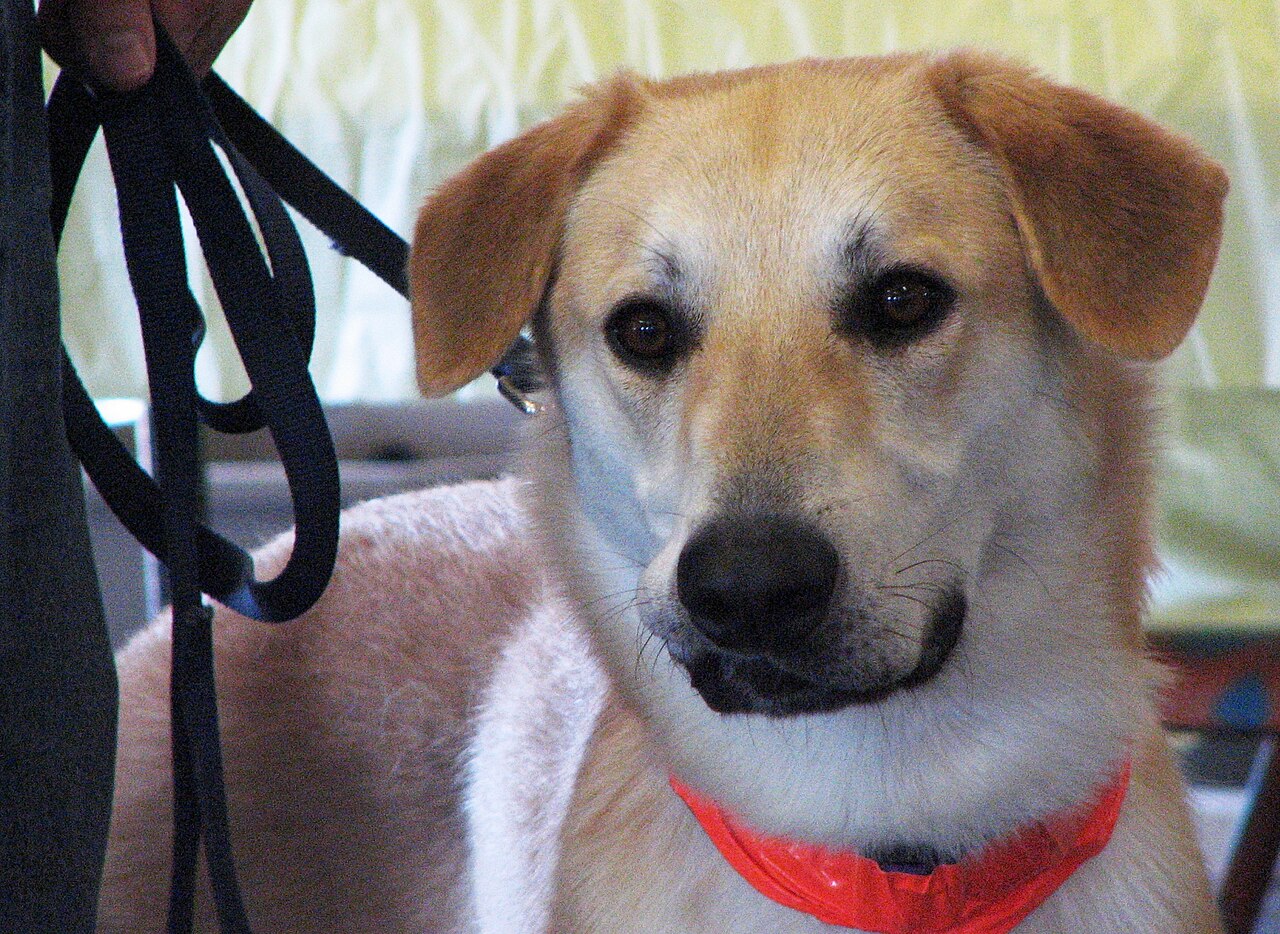
Few dogs are so easy to train. The Chinook is very intelligent, adaptable, and above all, eager to please, a combination that makes it a diligent learner. It quickly learns basic obedience and enjoys mental challenges, so it’s harder to bore it than to motivate it.
The key is the positive reinforcement: rewards, play, and a gentle voice. It’s a sensitive dog that shuts down in the face of harshness or yelling. It works on early socialization — people, dogs, noises, environments — to polish that natural reserve in front of strangers and turn it into quiet trust.
Its versatility shines as soon as you give it a job: it excels in obedience and agility, in dog-packing, in skijoring and, thanks to its sense of smell and temperament, also in search and rescue tasks.
Exercise and activity
He’s a sled dog, and you can tell. His energy level is medium-high: he needs long daily outings, play, and ideally some purposeful activity that channels his work instinct. A couple of engaging walks aren’t enough for him.
He loves activities that combine physical effort and bond with his human: hiking with a backpack, canicross, bikejoring, skijoring on snow or the classic sledding if you have access to it.
A Chinook that spends energy is a calm dog at home. One that doesn’t can become restless or destructive. Calculate at least an hour long daily activity, plus mental stimulation, and you’ll have a satisfied companion.
Care: fur and hygiene
The Chinook’s coat is a medium-length double layer, with a dense undercoat that insulates it from the cold and an outer layer of guard hair.
The exception is the seasonal seedlings of spring and autumn, when it sheds subcoat in abundance; then it is advisable to brush it daily to control the amount of hair at home and help the mantle to renew.
The rest of the hygiene is the usual routine of any dog: bathing only when necessary, checking and cleaning the ears, cutting nails and, very importantly, frequent brushing of the teeth to prevent tartar.
Foodstuffs
As a medium- to large-sized working dog, the Chinook enjoys a complete, high-quality diet tailored to its age, weight, and activity level.
Divide your food into two servings a day and watch your weight: Obesity especially plagues the joints of a race with some predisposition to hip dysplasia. Puppies of this size need controlled growth, without excess calories or calcium, to protect bone development. If you have any questions about quantities or type of diet, consult your veterinarian.
Health and life expectancy

In general, the Chinook is a rustic and healthy dog, the result of a selection for functionality. However, its very sparse genetic base makes responsible breeding and health testing fundamental. Among the hereditary problems described in the breed are epilepsy, hypoplasia of the hip and atopia(skin allergies).
cryptorchidism(non-descending testicles) is also relatively common, affecting about 10% of males.
The life expectancy handled by the AKC and breed clubs is usually placed among the 12 and 15 years, a good longevity for a dog of this size.
Physical appearance
The Chinook is an athletic and well-proportioned dog, muscular without being heavy. It measures between 53 and 69 cm to the cross and weighs 20 to 41 kg, with females at the bottom of the range and males at the top. It conveys an image of calm strength and endurance, that of a dog designed to work for hours.
Its most characteristic feature is the yellowish(tawny): clear honey to golden reddish, with no white spots. The standard values the dark markings – from intense lilac to black – on the ears and muzzle, as well as the small black markings on the inner corners of the eyes, which draw an unmistakable expression.
The head is more rectangular than that of other sled breeds, inherited from their mastiff-like ancestors. The ears have variable size, although they prefer to fall, which gives it a sweeter air than that of a husky. The tail is another seal: a well-populated sabre of hair, far from the classic curled feather of arctic dogs.
Origin and history
The story of the Chinook is summed up in a man and a dog. The man was Arthur Treadwell Walden, from Wonalancet, New Hampshire, an experienced sled driver who had worked in the Yukon. The dog was “Chinook”, a male born in 1917 who became the leader and stallion from whom the entire breed descends, and who took his name from the dog of an Eskimo guide with whom Walden had worked in the north.
To create his ideal sled dog, Walden crossed a female Greenland type dog – a descendant of Peary’s expedition leader to the North Pole, named Ningo – with a large male lion mix of Mastiff and St. Bernard named Kim. Of that litter of three puppies, named Rikki, Tikki and Tavi in homage to The Jungle Book, Rikki stood out, who would be renamed Chinook. That leader was later crossed with Belgian shepherds, German shepherds and Canadian Eskimo dogs, and his descendants crossed back with him to fix the type: He was a breeder who strongly transmitted his own qualities.
Walden brought the sport of sledding to New England, founded the New England Sled Dog Club in 1924, and was a driver and head coach on Byrd’s expedition to Antarctica in 1929. On that trip, the twelve-year-old “Chinook” disappeared while hauling supplies and was presumed dead – a legendary end.
Control of the breeding core passed from Walden to Julia Lombard and, in the late 1940s, to Perry Greene, who raised Chinooks in Waldoboro, Maine until her death in 1963. For years he was practically the only breeder, and without him the population plummeted: on In 1981 there were only eleven reproductive copies left.. Breeders from Maine, Ohio and California shared what was left and saved the breed from extinction. The Chinook gained recognition from the UKC in 1991 and, after passing through the front wings of the AKC, was admitted as a full-fledged breed in January 2013, number 176 of the club, within the working group.
Curiosities
- The Chinook is the official dog of the state of New Hampshire, an honor few races can boast.
- The entire breed is descended from a single male, “Chinook”, born in 1917.
- The three founding puppies were named Rikki, Tikki and Tavi, after Rudyard Kipling’s The Jungle Book mongoose.
- It was on the brink of extinction: in 1981 there were only eleven breeding dogs left.
- The UKC maintains a controlled breeding program to expand the genetic base: certain fourth-generation descendants may be registered as purebred Chinooks.
- Only about a hundred cubs are born a year worldwide, making it one of the rarest breeds in existence.
If you are attracted to the Chinook’s hardworking and sweet nature, you may be interested in other related breeds, either because of their past as sled dogs or because of their ancestry. Check out the Husky Siberiano and Samoyedo among the shooting Nordics, the versatile Pastor Alemán, which brought blood to the breed, and the imposing San Bernardo, present in its origins.
Frequently Asked Questions About the Chinook
Is the Chinook a good family dog?
Yes. The Chinook was bred as a sled dog, but its balanced, affectionate and non-aggressive nature makes it an excellent family companion. It is especially devoted to children and enjoys being part of the household routine. It needs to live with its people: it is not a dog to be left isolated in a yard.
How tall and how much does a Chinook weigh?
It measures between 53 and 69 cm at the withers and weighs 20 to 41 kg, depending on sex and line.
Does the Chinook get along with other dogs?
It is a gregarious and naturally team-working dog. It usually accepts other household dogs well and socializes easily if trained as a puppy. With strangers it can be reserved, but it should never be shy or aggressive.
Is it hard to train the Chinook?
On the contrary: it is one of its great virtues. The Chinook is very trainable, eager to please and eager to learn. It responds wonderfully to positive reinforcement and excels in obedience, agility, dog-packing and rescue. It avoids harsh methods: it is a sensitive dog that shuts off with abruptness.
How much exercise does a Chinook need?
It is a medium-high energy working dog: it needs daily long walks, play and, if possible, a purposeful activity (shooting, canicross, skijoring, backpacking, agility).
Does the Chinook shed a lot of hair?
Yes, it has a double layer of medium length and loose hair all year round, with two stronger moulds in spring and autumn.
Is the Chinook a rare breed?
It was on the brink of extinction: in 1981 there were only eleven breeding individuals left. Today, it is estimated that about 800 dogs are registered and only about 100 puppies are born a year worldwide, making it one of the rarest breeds in existence.
Is the Chinook recognized by the FCI?
The Chinook is recognized by the United Kennel Club (UKC) since 1991 and the American Kennel Club (AKC) since January 2013, within the working group.