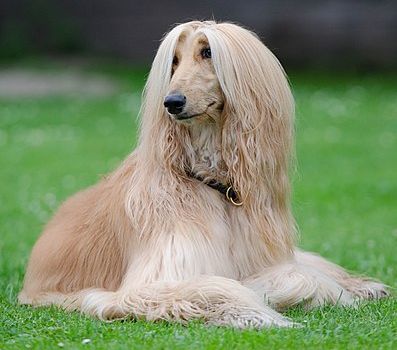
The Lebrel Afgano is one of the most spectacular dogs in existence: A mountain greyhound wrapped in a very long silky cloak, with an aristocratic demeanor and an order-proof independence. Originally from the mountains of Afghanistan, he was born to hunt by sight in impossible terrain and today he falls in love both in beauty rings and on the couch at home. Of course, behind that front-page hair is a demanding companion you should get to know thoroughly before falling in love with.
Is the Afghan Greyhound for you?
Before succumbing to its beauty, it is advisable to put on the table the good and the demanding of this breed.
In favour .
- Unique beauty and elegant demeanor that leaves no one indifferent.
- Clean and quiet inside, no excessive barking.
- It sheds little hair compared to other long breeds.
- Loving and loyal to his family, with a playful, clownish streak.
- Born athlete: enjoys running and dog sports.
To be taken into account
- The mantle requires frequent brushing; to neglect it is to mistreat it.
- Independent and not very obedient: not a dog to be ordered around.
- High hunting instinct; watch out for cats and small animals.
- He needs a lot of exercise and space to run.
- Sensitive: long loneliness and harsh methods are bad for him.
Character and temperament

If we had to sum up the Afghan Lebrel in one word, it would be worthy. He has a distant and stately, almost cat-like air, which makes him seem reserved and even aloof with strangers. It is not the dog that rushes to greet anyone by wagging its tail; it observes, evaluates, and decides. That elegance, however, coexists with a surprisingly clownish side: in confidence, in the garden or playing with his own, he turns into a joker of crazy runs and impossible postures.
It’s a independent dog up to its core. For centuries, it hunted alone, making decisions at high speed over steep terrain without waiting for anyone’s instructions, and that autonomy is part of its essence. Don’t expect it to be submissive like a sheepdog: the Afghan cooperates when it feels like it and when it feels it’s worth it, not to please.
He is also sensitive. He captures the mood of the house, resents the screaming and may close in on an unfair treatment.
Coexistence: children, other pets, flat and loneliness
The Afghan Greyhound can adapt to a wide variety of contexts, as long as its limits are respected.
- With children: is tolerant of respectful children, but does not like burdensome or abrupt games. It works best with small children who already know how to treat a dog and give him his space.
- With other dogs: usually gets along well, especially with other hares with whom it shares a racing-based playing style.
- With cats and small animals: here commands its hunting instinct. A running cat can activate the chase. With careful introductions it can coexist with domestic cats, but with rabbits, rodents or birds caution must be maximum.
- On the floor: indoors is quiet and clean, so you can live in an apartment as long as you go outside to vent every day.
- In the face of loneliness: is sensitive and enjoys company; long and repeated abandonment makes him feel bad and can generate anxiety.
Education and training
Here’s the great misunderstanding of the race. The Afghan lebrel has a reputation for being clumsy because psychologist Stanley Coren placed it at the bottom of his famous classification of obedience intelligence, among the dogs that need more repetitions to assimilate a command and that obey the first one less often. But to confuse obedience with intelligence is a mistake: The Afghan is very clever, what happens is that he is independent and uninterested in pleasing.
The recipe that works is the opposite of taxation. short, varied and funny sessions, generous positive reinforcement (valuable rewards, play, friendly voice) and zero coercive methods, which only get you shut down. Prioritize what’s really important: a good call (though never 100% with prey in sight), walking with a leash without pulls and clear rules of coexistence. Pretending a dog to compete in obedience is against its nature; accepting its autonomy and negotiating with it, on the other hand, yields great results.
Exercise and activity

Let’s not forget what’s underneath so much hair: a leopard, an athlete designed to gallop. The Afghan Lebrel needs real daily exercise, not a symbolic walk. The ideal is to combine one or two long walks with the opportunity to run at full speed in a fenced and safe area, because as soon as it senses something moving and throws itself, no human can reach it or slow it with its voice.
He especially enjoys sports that appeal to his instinct, such as the lure coursing(chasing a mechanical decoy), where he deploys all his speed and agility. A well-trained Afghan is a balanced and calm dog at home; a bored and restless one can become nervous, destructive, or stubborn. It ‘s important . Because of their hunting instinct, unfenced areas and close to traffic are a serious risk, so complete freedom should be reserved for enclosed spaces.
Care: fur and hygiene
The coat is the mark of identity of the Afghan Lebrel and, at the same time, its most demanding. That long, fine and silky hair entangles itself with astonishing ease and, if neglected, forms painful knots and loses its characteristic shine.
In practice, this means frequent brushing– several times a week at least, almost daily in very abundant hair specimens – with the right tools and preferably on slightly damp hair so as not to break it. In addition, regular baths with specific products and a good drying are necessary, because a wet, poorly brushed coat is a guarantee of knots. Interestingly, the puppy goes through a transition from baby hair to adult hair in which the tangle is triggered and many owners throw in the towel.
They complete hygiene as usual in any dog: inspection and cleaning of ears (their are long and fallen), control of nails, teeth and pads.
Foodstuffs
The Lebrel Afghani is a large but stylized dog, light in structure and low in body fat, so its diet should support its athletic musculature without making it gain excess weight. A complete and quality diet, adapted to its age, size and activity level, is usually the best basis; it is advisable to adjust the rations to a dog that is made to look slender, not stuffy.
As with all deep-chested dogs, it is prudent to split the food in two. a day instead of just one, avoid strenuous exercise just before and after eating and watch for any signs of abdominal swelling, a veterinary emergency.
Health and life expectancy
In general, it is a robust dog, with a life expectancy of about 12 to 14 years; it should be noted that a British study placed the average age of the breed at around 11 years, somewhat below the canine average.
Among the problems described are allergies and skin conditions, certain types of and cancer and hypoplasia of the hip. As a good hare, it has little body fat and is especially sensitive to anesthesia, an important data for any intervention. His deep chest makes him prone to quilothorax(accumulation of lymph fluid in the chest cavity), a serious condition that can be associated with pulmonary torsion. Laryngeal paralysis, dilated cardiomyopathy (more common in males), hypothyroidism and various eye conditions such as cataracts and progressive retinal atrophy are also described. Choosing responsible breeders who perform health tests and maintain regular veterinary checks is the best prevention.
Physical appearance

The Afghan Lebrel is a large and elongated dog. The males measure around 68-74 cm at the withers and the females about 60-69 cm, with an approximate weight of 20-27 kg which, given its height, gives a slender silhouette and never heavy.
The head is long and refined, often topped by a longer lock of hair at the top, the so-called the top-knot. Many specimens wear a dark face mask. Two traits betray him at first glance: the very long, silky hair all over the body – with a ⁇ saddle ⁇ of shorter hair on the back in many dogs – and the fine tail terminated in a peculiar ring or curl on the tip. Their large cushions, which in their land acted as shock absorbers on the rock, complete a perfect design for the mountain terrain. As for color, virtually any color is acceptable, from gold and cream to black or brown.
Origin and history
The Afghan Lebrel is one of the oldest known breeds. Genetic studies point to it as a baseline breed, predating most modern breeds that emerged in the 19th century, and closely related to the Saluki. The most widespread hypothesis is that a saluki-type hare arrived in Afghanistan through Persia and, to survive the harsh mountain climate, developed the long coat that defines it today.
In their land it was a hunting dog in sight of enormous value to the nomadic tribes, able to chase hares, foxes, gazelles and other prey over impossible terrain, in addition to helping in the surveillance of camps and livestock.
His leap to the West came at the hands of British officers returning from the region. In the United Kingdom the modern race was consolidated from two lines: The Bell-Murray, of lighter or steppe type, arrived around 1920, and the Ghazni, of more plentiful mantle and mountain type, imported from Kabul in the mid-1920s. From the mixture of the two came the Afghan we know today, with a modern standard set in 1948 and still in force. His beauty immediately made him a star of the exhibitions, winning the great contests and being recognized by all the great canine clubs. Today the FCI classifies it as Group 10 (hares), Section 1: long-haired or wavy hares.
Curiosities
- The first cloned dog in history was an Afghan Lebrel named Snuppy, born in 2005 from a scientific project in South Korea.
- Pablo Picasso revealed that his famous 1967 sculpture in Chicago’s Daley Plaza was inspired by the head of his Afghan Leprechaun, named Kabul.
- Its distinctive mantle is not an aesthetic whim: it was developed as the protection against the extreme cold of the Afghan mountains.
- Despite its reputation for being “not very obedient”, geneticists consider it one of the most primitive dogs and closest to the wolf in its genetic tree.
- He has appeared in numerous films and animated series, where his cover silhouette makes him an unmistakable character.
- It came to be called the Persian Greyhound in Victorian England, when there was still no fixed name for the breed.
If you’re drawn to the world of greyhounds and sighthounds, you’ll be interested to meet other relatives and related breeds: the sleek Saluki, its closest relative; the fast Greyhound; the agile Whippet; or the exotic Pharaoh Hound.
Frequently Asked Questions about the Afghan Greyhound
Is the Afghan Greyhound a good dog for beginners?
It is not usually the best first breed. The Afghan Greyhound is independent, sensitive and not very obedient by nature, and its hair requires a constant brushing routine. A novice but very committed to grooming and with a patient education can live perfectly with it, but it is advisable to inform yourself well before taking the step.
How much exercise does an Afghan Greyhound need?
It is an athletic hare that needs at least one or two hours of daily activity, combining long walks with the possibility of galloping in a fenced and safe area.
Is the Afghan Greyhound’s hair a lot of work?
Yes. Their long, fine, silky coat easily tangles and loses its luster if neglected. It is customary to brush it thoroughly several times a week, almost daily on dogs with a lot of hair, in addition to regular baths. It is one of the great commitments of the breed.
Does the Afghan Greyhound get along with children and other pets?
With respectful children it is usually tolerant, although it is not a particularly effusive dog and prefers not to be burdened. With other dogs it coexists well, but its strong hunting instinct makes cats and small animals that run can awaken its pursuit; early socialization helps a lot.
Is it hard to train the Afghan Greyhound?
He has a reputation for not being very obedient: Stanley Coren placed him at the bottom of his list of obedience intelligence — not that he’s clumsy, but independent and selective — he responds to positive reinforcement, to short, fun sessions, and never to hard methods.
How long does an Afghan Greyhound live?
Their life expectancy is around 12 to 14 years. A British study put the average at around 11 years. With good nutrition, exercise and veterinary checks many specimens easily exceed ten.
Can the Afghan leopard live in a flat?
Yes, as long as you get the daily exercise you need. Inside the house it’s quiet and clean, but a small floor without long walks or running makes you feel bad.
Does the Afghan Greyhound shed a lot of hair?
It loosens relatively little compared with other long-haired breeds, but instead the coat becomes dull if not brushed.