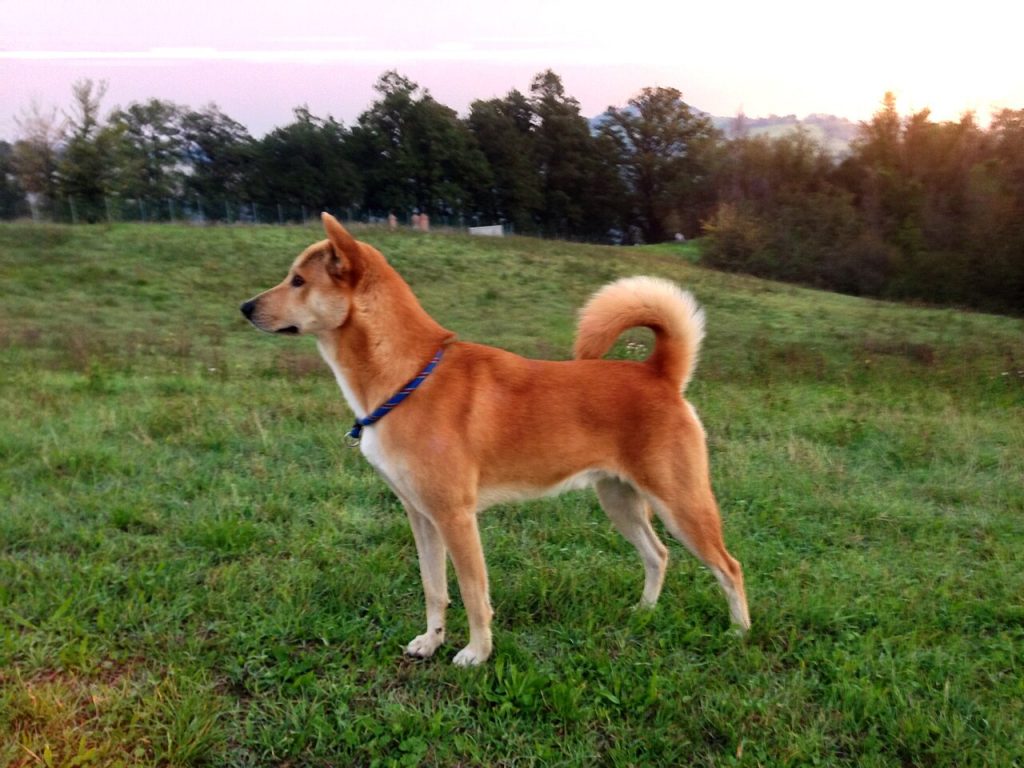
The Dog of Canaan(Canaan Dog) is the national dog of Israel: A primitive, alert, resilient, and deeply territorial medium-sized dog, descended from the pariah dogs that have lived freely in the desert of the Levant since biblical times. If you’re looking for an intelligent, healthy keeper with a strong bond with his family – and don’t mind being reserved with strangers – this ancient breed deserves a closer look.
Is the Dog of Canaan for you?
The Canaan Dog is not a dog for everyone, and that’s just what makes it special. It’s a primitive breed, with intact instincts and an independence that reminds you more of a domesticated wild animal than a modern companion dog. Before you fall in love with its fox-like look and elegant demeanor, it’s good to know what you’re up against.
In favour .
- Exceptional guard: alert, attentive and very territorial.
- High intelligence and great problem-solving ability.
- Robust and rustic health, with few hereditary diseases.
- Very clean, almost no body odor and easy to maintain.
- Intense and loyal bond with his family.
- Medium size, manageable and very weather resistant.
Against
- Distrustful of strangers: needs constant socialization.
- Barking by vigilant instinct; he must be tempered.
- Independent and stubborn: He does not obey to please.
- Instinct for pursuit and a tendency to dig.
- Not the ideal breed for first-time owners.
- It can be dominant with dogs of the same sex.
Character and temperament
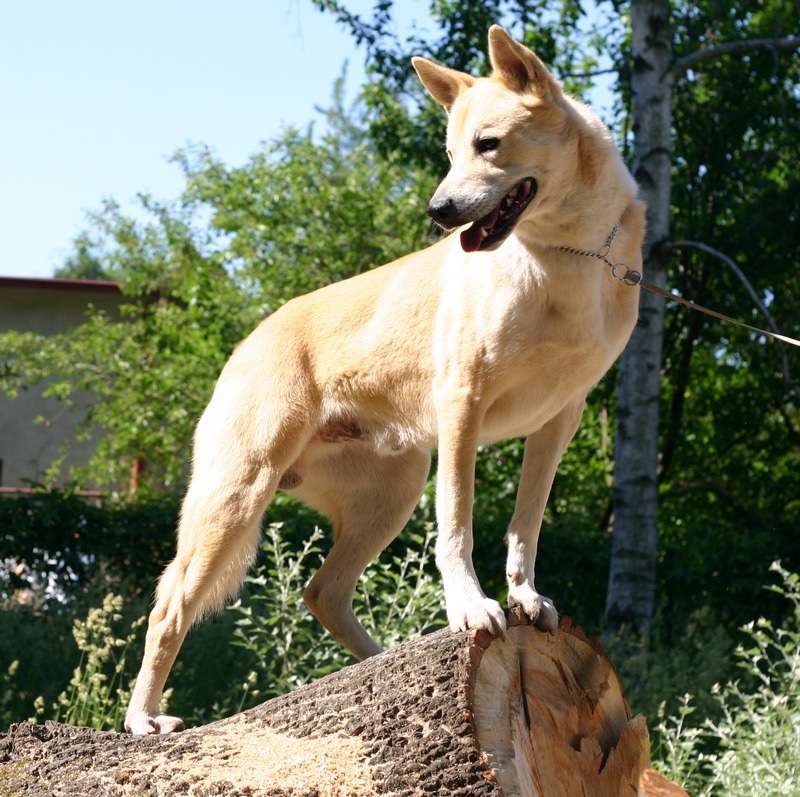
If we had to sum up the character of the Dog of Canaan in one word, it would be surveillance. It’s a dog that seems to be constantly scanning its surroundings, with its ears erect and eyes wide open, ready to react to the slightest change. This hyperconsciousness is not nervousness: It’s the legacy of thousands of years of surviving on their own in the desert, where early detection of a threat made the difference between life and death.
With his family, the Canaan develops a deep and loyal attachment to his group, which he protects with devotion. He is affectionate in his own way – not clingy – and enjoys the company of his own, though he always retains a point of independence. He is not the dog that follows you around the house asking for cuddles; he is rather the serene companion who watches from the door and comes when you need him.
It is not aggressive by nature – its instinct is to alert and deter, not attack – but it is also not the typical dog that greets visitors by wagging its tail. This natural distrust makes it a reliable watchdog, but it requires early and sustained socialization so that caution does not turn into fear or reactivity.
Coexistence: children, other pets, flat and loneliness
With children in the family, the Canaan Dog is usually patient and protective, especially if you have grown up with them. As with any dog of strong character, it is advisable to supervise play and teach the little ones to respect their spaces.
With other pets, coexistence is highly dependent on socialization. Well introduced from puppyhood, it can share a home with other dogs and cats. However, it tends to dominate with dogs of the same sex and retains an instinct for chasing small animals, inherited from its past shepherding and survival. Gradual introductions are key.
As for the floor, its medium size and cleanliness make it viable, but one must take into account its tendency to bark at every noise of the embankment: it is a point to work from the beginning if there are neighbors nearby.
The loneliness is not his strong point: he is a close-knit dog who does not like to spend long hours alone. If he is bored, he is entertained by barking, scratching or looking for a way out. He needs to feel an active part of family life.
Education and training

The Canaanite Dog is a very intelligent dog, and that is both its greatest virtue and the main challenge in educating it. It learns quickly and understands perfectly what is asked of it, but it is not a submissive breed that obeys for the simple pleasure of pleasing. It thinks for itself, evaluates whether an order makes sense and, if it does not find it, ignores it without complexes.
With such a dog, harshness is counterproductive: it responds poorly to imposition and punishment, and can close in on itself. What works is the positive reinforcement, consistency and patience. Short, varied and playful sessions keep its interest; monotonous repetitions bored it immediately.
The socializing is, without question, the most important part of its education. Exposing it from puppyhood to people, dogs, noises and different environments is what prevents its natural caution from leading to excessive distrust. It is not the breed recommended for a first-time owner: it asks someone with patience, judgment and willingness to understand how a primitive dog thinks.
Exercise and activity
The Canaan Dog has a medium-high energy level. It is not a hyperactive dog that needs to run non-stop, but it does require daily activity that combines physical exercise and, very especially, mental stimulation.
Long walks, olfactory exploration, search games, canine sports and intelligence toys are perfect for him. In fact, it is a breed that excels in disciplines such as agility, obedience, tracking, flyball and herding tests, where it can channel its instinct and quick reaction. A mentally satisfied Canaan is a quiet dog at home; a bored one, on the other hand, will find his own pursuits – and they will rarely be the ones you would like.
Care: fur and hygiene
Here the Canaan Dog is one of the most grateful dogs that exist. Its double coat – dense undercoat and rough, straight, short to medium-length outer coat – is designed by nature to withstand extreme climates and is kept practically alone. A weekly brushing is sufficient for most of the year to keep it fit.
The exception is the seasonal seedlings: twice a year it sheds abundant undercoat, and in those weeks it is advisable to brush it several times to remove the dead hair and lighten the muzzle.
The rest of the hygiene is the usual routine: checking and cleaning the ears, cutting nails when they are overgrown, and taking care of dental hygiene with regular brushing.
Foodstuffs
The Canaan Dog is a rustic and metabolically efficient dog, inherited from a past in which food was scarce and every bite had to be taken advantage of.
A feed or diet of quality, balanced and adapted at your age, weight and exercise level, divided into two daily doses in the adult, is recommended. As a breed of medium size and athletic constitution, it benefits from a good protein intake without falling into excess calories. Water is always fresh and available, especially since it comes from warm climates. If you have any questions about a particular diet, it is best to consult your veterinarian.
Health and life expectancy
One of the great advantages of the Canaan Dog is its robust health. Being a primitive breed, little modified by selective breeding and forged over centuries by the harsh natural selection of the desert, it has far fewer hereditary diseases than most modern breeds.
That doesn’t mean I’m trouble free. Like all dogs, it can suffer from conditions such as hip or elbow dysplasia, some eye or thyroid problems, although with a generally low incidence. Going to responsible breeders who test the health of the breeders, keeping up-to-date with veterinary checks, deworming and vaccinations, and taking care of your weight are the best guarantees for you to enjoy a long and healthy life.
Physical appearance

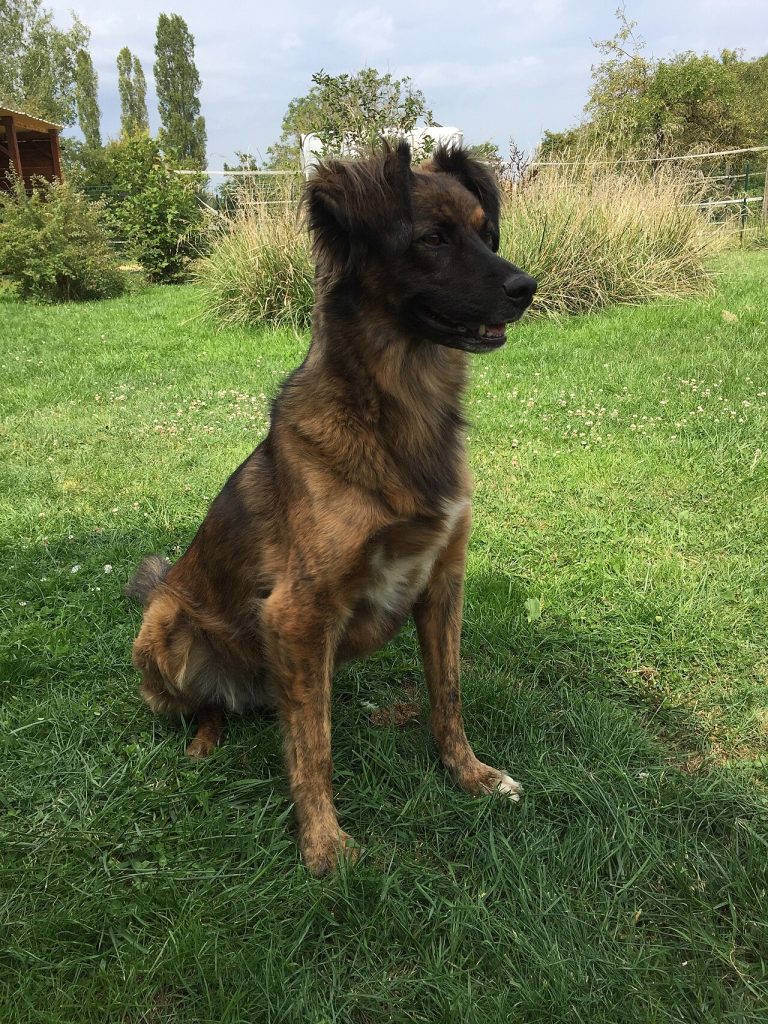
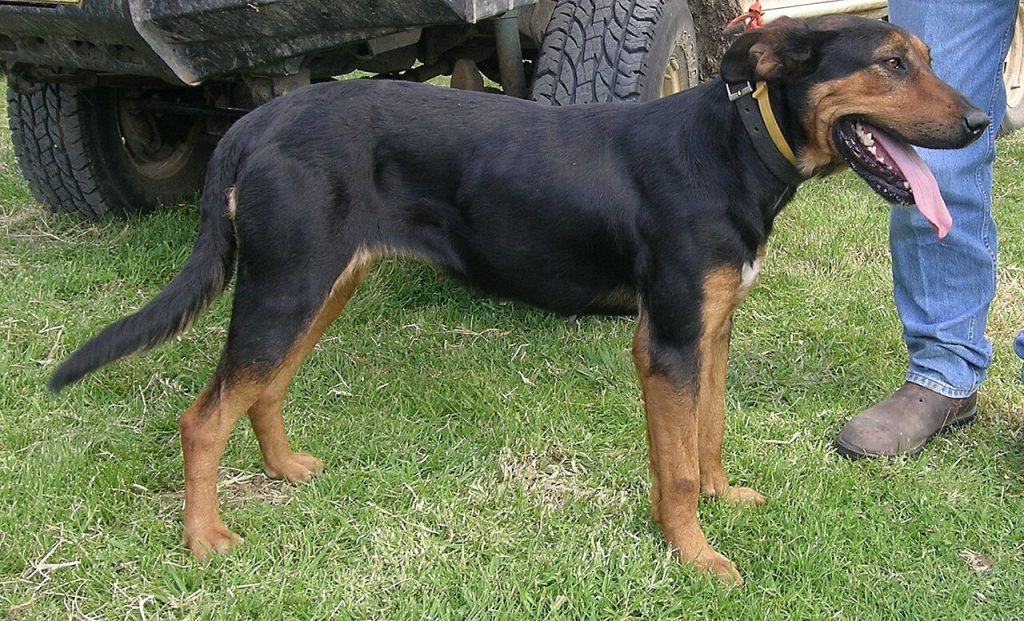
The Canaan Dog is the living image of the primitive dog: medium, square and harmonious in build, athletic and proportionate, without anything exaggerated. It transmits resistance and agility more than brute power.
Its head is coined, wedge-shaped, with erect ears with a broad base and rounded tip, and a very characteristic wakeful and alert expression.
As for the colour, it supports a great variety: from black to cream, through all shades of sand, brown and reddish, usually with small white spots, or white with color spots.
Origin and history
The story of the Canaan Dog is one of the oldest and most fascinating in the canine world. Their ancestors are the pariah dogs – semi-wild, free-living dogs – that have inhabited the Levant region for thousands of years. Excavations in Israel uncovered the Ashkelon dog cemetery, the largest in the ancient world, with some 700 skeletons of dogs anatomically very similar to present-day Canaan.
For centuries, these dogs lived free in the Negev Desert, and the Bedouins used them to guard their camps and herd their cattle. The modern breed was born in the 20th century thanks to the cynologist Rudolphina Menzel, who in the 30s captured, domesticated and began to breed these semi-wild dogs. Menzel found them extraordinarily adaptable and easy to domesticate, and trained them as military working dogs, guide dogs for the blind, and search and rescue dogs.
It was she who gave them the name “Canaan dogs” and who drafted the first standard of the breed. Official recognition came from the Israel Kennel Club in 1953 and the FCI in 1966, classifying it within the group of spitz and primitive type dogs. Today it is recognized by the world’s leading canine organizations, although it is still a small breed: It’s estimated that there are only a few thousand of them left on the planet.
Curiosities
- It’s the national dog of Israel and one of the oldest canine symbols in the Middle East.
- Their ancestors are depicted in tombs and engravings from thousands of years ago, which links them to the dogs of antiquity.
- The dog cemetery at Ashkelon, with some 700 dogs buried, suggests that these animals were venerated as sacred in Persian times.
- John F. Kennedy Jr. had a Canaan Dog named Friday, which helped give the breed visibility in the 1990s.
- To reinforce the genetic heritage, some breeders are still searching for semi-wild specimens near Negev Bedouin camps.
- Professor Menzel differentiated the Canaan from the German Shepherd by writing its standard, emphasizing its square body and primitive build.
If you are attracted to the Canaan Dog’s alertness and primitive nobility, you may want to compare its profile with that of other intelligent, guard or root-spitz breeds. Take a look at the Pastor Alemán, with whom he shares guarding and herding skills; the Akita, another primitive, loyal and reserved breed; the Husky Siberiano, also spitz-type and hardy; or the Chow Chow, equally independent and with a strong personality.
Frequently Asked Questions About the Dog of Canaan
Is the Canaan Dog a good family dog?
Yes, within its character. It is loyal and very close to its group, affectionate with its own and excellent watchdog. Of course, it is reserved with strangers and does not seek to please everyone, so it fits better in experienced families that value an independent and territorial dog more than an effusive and sociable companion with everyone.
Is the Canaan Dog aggressive?
Not naturally. It is defensive and suspicious of the unknown, barks and warns, but a well-socialized specimen is not a dog that attacks without reason. Its instinct is to alert and protect its territory, not to seek a fight. Early and constant socialization is the key so that this caution does not lead to fear or reactivity.
How long does a Canaan Dog live?
It is a primitive, rustic breed and little modified by selective breeding, which translates into a robust overall health and few serious hereditary diseases compared to many modern breeds.
Does the Canaan Dog need a lot of exercise?
It needs daily activity of medium to high level: long walks, play and, above all, mental stimulation. It is not a hyperactive dog that does not stand still, but its intelligence and past work demand tasks and challenges. A bored Canaan is entertained only by barking, watching or scratching.
Can you have a Canaan Dog on a floor?
It’s a medium-sized, clean, easy-to-maintain dog, but its watchful instinct leads it to warn of every noise, something to moderate politely if there are neighbors nearby.
Is it easy to train the Canaan Dog?
It’s very intelligent and quick to learn, but it’s not submissive or obedient to please. It thinks for itself and questions commands that don’t make sense to it. It responds to positive reinforcement, consistency, and respect; it rejects toughness. It’s not the ideal breed for anyone looking for an easy, effortlessly obedient dog.
Does the Canaan Dog get along with other dogs and pets?
With socialization as a puppy it can coexist well, although it tends to be dominant with dogs of the same sex and retains a chase instinct towards small animals due to its past of grazing and survival.
Does the Canaan Dog shed a lot of hair?
It has a double coat and sheds seasonally, with two peaks a year in which it loses abundant undercoat. The rest of the time the loss is moderate.