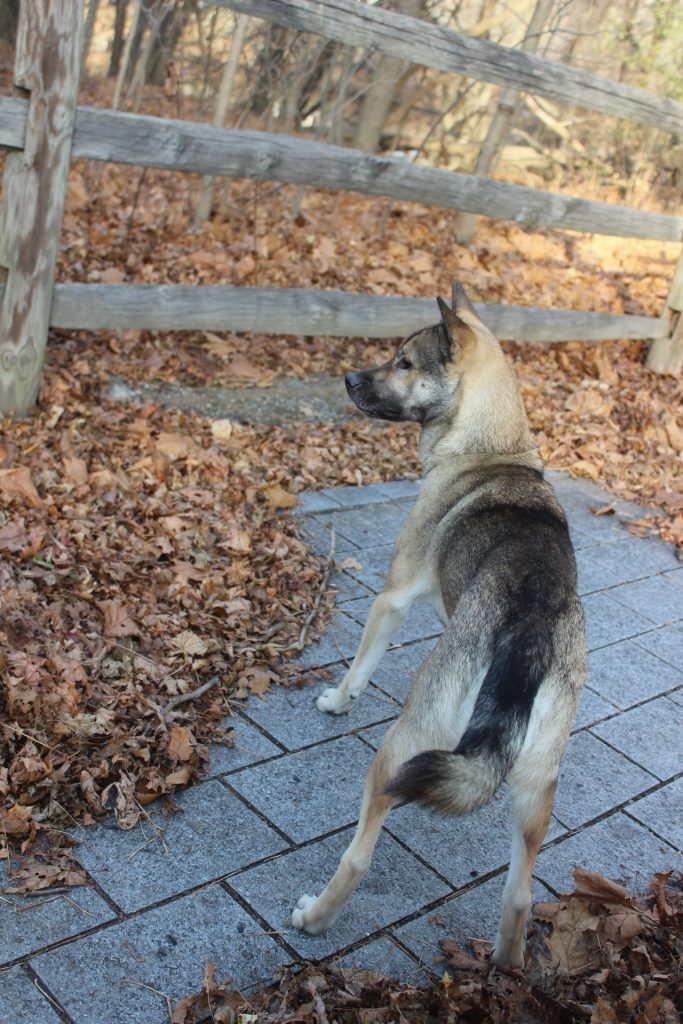
The Kishu is one of six native Japanese breeds: a medium-sized, silent, athletic and deeply loyal hunting dog, bred for centuries in the mountains of the Kii Peninsula to follow the trail of the wild boar and the deer. With its almost always white coat, upraised ears, and curled tail, the Kishu (also called Kishu Ken or Kishu Inu) is a brave and strong-willed companion, little known outside its country and reserved for anyone who understands the independent mindset of primitive Japanese dogs.
Is Kishu for you?

The Kishu is not a dog for everyone. It’s rustic, intelligent and enormously loyal to its family, but also stubborn, independent and with an unquenchable hunting instinct. He’s a good match for someone who’s looking for a quiet, clean, barking-free roommate who’s willing to invest in socializing and exercise. It doesn’t suit anyone who wants a submissive dog that’s easy to train without effort or that can get along with cats and small animals.
In favour .
- Very loyal and close to his family.
- Quiet: barely barks.
- Clean and easy to teach to take a shit.
- Rustic, healthy and low maintenance fur.
- Athletic, ideal for active living and work.
- Discreet and balanced inside the house.
Against
- Stubborn and independent – hard to train.
- Strong prey instinct (risk with small pets).
- He can be combative with other dogs if he’s not socialized.
- Reserved or shy with strangers.
- He needs daily exercise and mental stimulation.
- Very rare breed: hard to find.
Character and temperament
The Kishu has the mentality typical of primitive Japanese dogs: He’s brave, confident and deeply devoted to his people, but he doesn’t seek to please for the sake of pleasing. It is usually especially fond of one member of the family, although a well-socialized specimen can range from reserved to open-minded depending on its character. With strangers he tends to be aloof or even shy, without reaching for unwarranted aggression.
He’s a watchful dog. He likes to watch what is happening around him and often looks for an elevated point from which to keep everything under control, a trait that betrays his mountain hunter background. He’s smart and quick to learn, but he’s also stubborn and willful: He will do things if he sees a reason, not out of blind obedience. Inside the house it is quiet and quiet; the energy is reserved for the outside.
Coexistence: children, other pets, flat and loneliness

With the children of his own family the Kishu usually gets along well, especially if he has been raised with them; he is loyal and protective.
With other dogs it can coexist if it socializes well from puppyhood, but it is not automatic: it can become combative with dogs that do not respect its boundaries or when it feels frustrated.
As for the floor, the Kishu adapts if given enough exercise, although it appreciates a house with a fenced garden where it can move around.
Education and training
Training a Kishu requires patience and consistency. It is intelligent and capable of learning a lot, but its independence makes it unresponsive to meaningless repetition and harsh methods, which only get it shut down. Positive reinforcement works, short and varied sessions, and motivation to collaborate.
The early socialization is non-negotiable: exposing him from puppyhood to people, environments, noises and other dogs makes the difference between a balanced adult and a reactive one. It’s also a priority to work on call and prey instinct management, because a loose Kishu that detects a prey will stop listening. It’s easy to teach to do your laundry and very clean by nature, which makes the domestic part easier.
Exercise and activity
The Kishu is an athletic, tough dog that needs real daily exercise, not a token walk. It’s good for long walks, leash races, and most of all, having a job or activity that takes up its mind and body. It’s bred to accompany the hunter for hours on end on rough terrain, and that energy is still there.
Activities such as canicross, tracking, barn Hunt, lure coursing, obedience, rally or agility fit very well with their intelligence and strong work impulse, and also strengthen the bond with their owner, which is the key for a Kishu to yield.
Care: fur and hygiene
Its coat is short, straight and rough, with a dense undercoat; the outer hair repels dirt well, so even wet or muddy it is easily cleaned. A weekly brushing is enough most of the year to remove dead hair and keep the coat healthy.
The exception is moved: the Kishu sheds its undercoat once or twice a year in abundance, and in those weeks it is advisable to brush it daily to prevent the hair from getting wet.
Foodstuffs
The Kishu has no exotic dietary requirements: a complete and quality diet, adjusted to its age, weight and activity level, suits it well.
The point to keep in mind are the allergies. It is a breed with a certain tendency to food allergies and skin, so if itching, digestive problems or skin conditions appear, it is advisable to review the diet with the veterinarian and, if necessary, resort to food of limited ingredients.
Health and life expectancy

The Kishu is a fairly healthy and rustic breed, with fewer problems than many more popular breeds, although the available data is limited by how sparse it is. Their life expectancy is around 11 to 13 years. According to health databases such as the Finnish KoiraNet, it appears to be less prone to joint deformities than its Japanese sister breeds, with a majority of hips rated as dysplasia-free; elbows are the joint with the least favourable ratings and are worth watching.
More than structural problems, in Kishu the allergies and autoimmune or skin conditions stand out: dermatitis, allergic responses to grass or mites, and some cases of Addison’ s disease or hypothyroidism. They’re not usually fatal, but they may require lifelong treatment. Persistent pupillary membranes and, less commonly, entropy (requiring surgery) or juvenile cataracts are described in the eyes. Breeding programs recommend testing of eyes, thyroid, dentition and joints.
Physical appearance
The Kishu is a medium-sized, well-proportioned, compact and athletic looking dog. It measures between 43 and 55 cm to the cross and weighs approximately 14 to 27 kg.
The coat is short, straight and rough, with dense undercoat and fringes on the cheeks and tail. The most common and preferred color is the white, which historically helped the hunter distinguish the dog from the prey; the standard also supports solid layers in red, sesame and, in some records, black and fire. The nose is black, although flesh-colored noses are tolerated in white specimens. Taken together, it conveys strength, agility and an attentive and noble expression.
Origin and history
The Kishu River takes its name from the ancient Kishu region, now divided between Mie and Wakayama prefectures, on the Kii Peninsula. It descends from native medium dogs and has been used since prehistoric times for hunting wild boar and deer in mountainous and demanding terrain. A local legend has it that the first jaguar dog, Kishu’s ancestor, was a wolf cub from Honshu given to a hunter who took pity on a wounded wolf; hence, many Kishu still bear the word “wolf” in their name.
The breed was classified in the 1930s by breeder Haruo Isogai, who divided native Japanese dogs into three sizes; the Kishu fell into the middle group. It was standardized in 1934 from area dogs and, that same year, was declared living natural monument of Japan. Interestingly, at first about 70 percent of the specimens were non-white, but the popularity of a predominantly white line extended that gene and made the Kishu the predominantly white breed we know. Its main registries are the Japan Kennel Club and, above all, the Nihon Ken Hozonkai (NIPPO), custodian of the original standard.
Curiosities
- It is the purebred native Japanese breed most commonly used for hunting wild boar today.
- The traditional hunting method is called “a rifle, a dog”: a single hunter and his Kishu stalk the wild boar silently.
- It was declared a living natural monument of Japan in 1934, a distinction it shares with other Japanese breeds.
- In 2023 the AKC moved it from the Working group to the Hound group to better recognize its role and history.
- Like the Shiba, it hunts silently – stalking prey instead of barking.
- He appears in the manga by Yoshihiro Takahashi (Ginga: Nagareboshi Gin, Ginga Densetsu Weed), where several characters are Kishu portrayed as skilled fighters.
If you are attracted to the Kishu’s primitive, quiet, and loyal nature, you may want to compare it with other Japanese breeds and dogs of marked instinct: the Akita, a close relative and also a natural monument of Japan; the Husky Siberiano, another independent and athletic dog with Nordic roots; the Chow Chow, with its distance from strangers; or the versatile Samoyedo, with its white coat and hardworking spirit.
Frequently Asked Questions About Kishu
Is the Kishu a good dog for beginners?
It is not the easiest choice. The Kishu is intelligent but very independent and strong-willed, with a marked hunting instinct. A first-time owner can pull it through if he commits to early socialization, constant positive training and enough exercise; without that dedication, its stubbornness and prey drive become a problem.
Does Kishu bark a lot?
No. Like the Shiba, the Kishu tends to be quiet: it stalks its prey without barking instead of announcing it. It warns when something is worth it, but it is not a barking dog, which is convenient in everyday life.
Do you get along with children and other animals?
With children he has been raised with, yes, and is usually loyal and protective of his family. With other dogs he can coexist if he socializes well as a puppy, although he can become combative with dogs that do not respect his boundaries. With cats or other small pets his strong prey instinct makes him risky, unless he is raised with them as a puppy.
How long does a Kishu live?
It is a rustic and fairly healthy breed, with fewer joint problems than other related Japanese breeds, although allergies, autoimmune conditions and some eye problems are monitored.
Does Kishu shed a lot of hair?
It has double coat and loose hair noticeably once or twice a year, in the moults.
Can he live in a flat?
It can adapt to a floor if given enough daily exercise and mental stimulation, but is more comfortable in a house with a fenced-in garden. It needs regular walks and runs on a leash; it is not a dog to be locked up without activity.
Is the Kishu a rare breed?
Yes, it is a very rare breed. It has been considered a living natural monument of Japan since 1934 and even there its numbers are in decline. Outside Japan it is hard to find and is listed as a Foundation Stock breed in the American Kennel Club.
Can Kishu be left alone for too long?
It’s not ideal. It’s a dog that bonds intensely with its family, often with a specific person, and needs company and activity. You tolerate loneliness better if it has prior exercise, enrichment toys, and isn’t left alone for too many hours at a time on a regular basis.