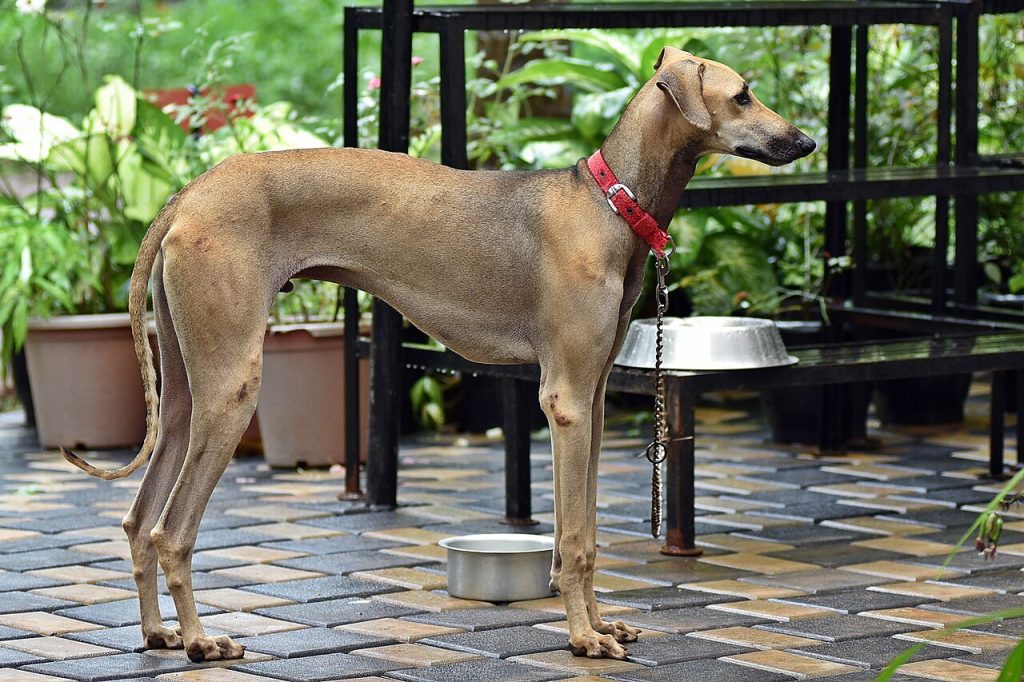
The Chippiparai is a hare native to southern India, bred for centuries in the state of Tamil Nadu to run in the open field behind the hare and other smaller game. Slim, light and austere in elegance, the Chippiparai combines the classic greyhound silhouette with a reserved character and almost exclusive loyalty to its owner. It is one of the most intelligent Indian dogs and at the same time one of the least known outside its homeland: A rustic, quiet, fast breed that asks for space to run and a person to surrender to.
Is the Chippiparai for you?
The Chippiparai is not a dog for everyone. It is a hunting hare with a strong instinct for pursuit, a need for a career and an intense but selective attachment to its family.
In favour .
- Smart and very easy to read: you learn fast if you trust yourself.
- Clean, short-haired and almost odorless; very little maintenance.
- Quiet and quiet at home: little barking.
- Loyal to the end; strong bond with its owner.
- Rustic and hardy, with few known health problems.
- A good watchman is discreet: he warns and distrusts the stranger.
To be taken into account
- Strong prey instinct: difficult to release near cats or small animals.
- He needs to run every day; he is not content with short walks.
- Reserved and single-owned: not a dog “for everyone”.
- Sensitive to cold and moisture because of his fine, low-fat hair.
- Independent: obeys out of trust, not submission.
- Very rare outside of India; hard to find and socialize well.
Character and temperament
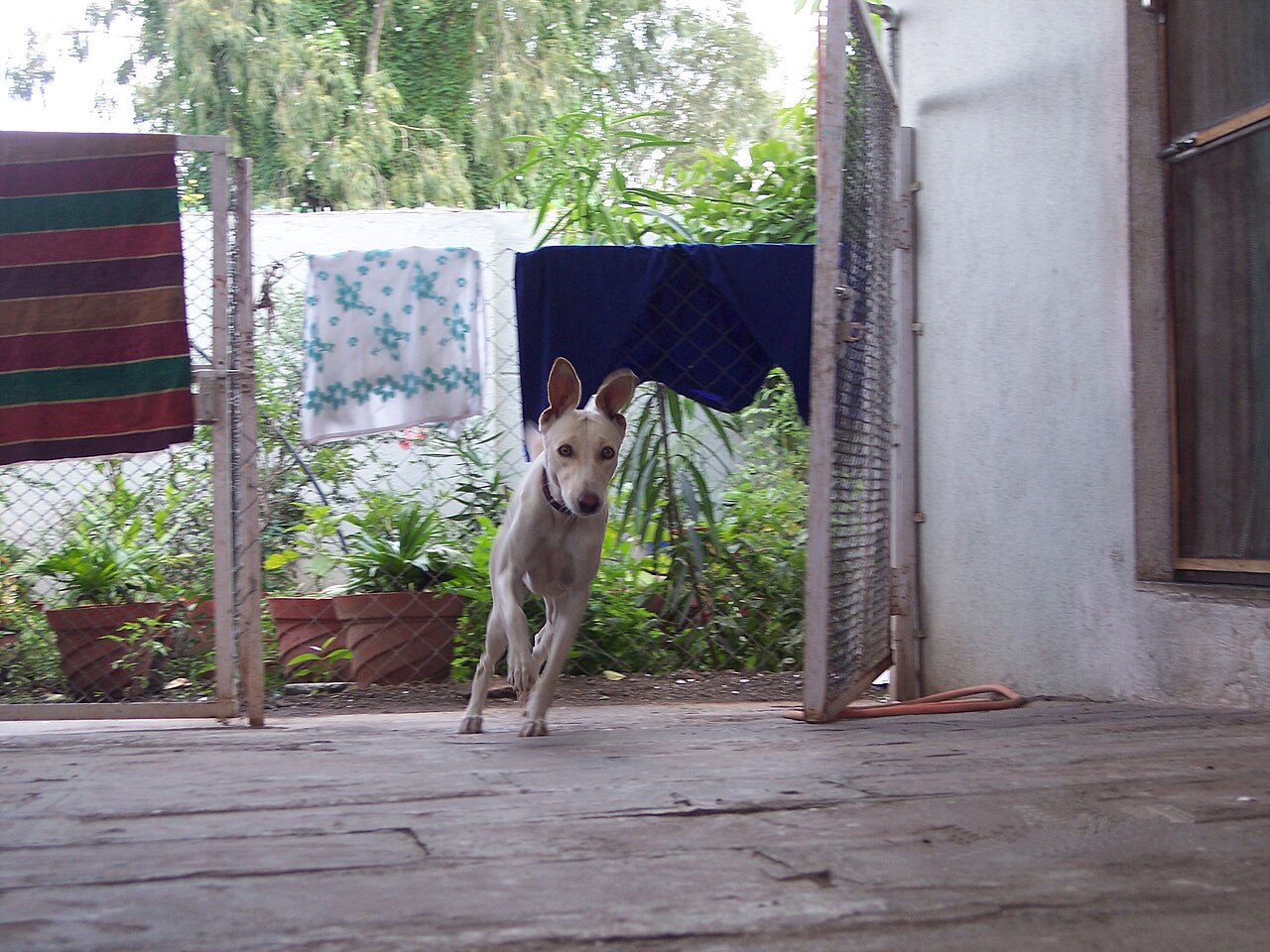
If we had to summarize the Chippiparai in one word, it would be devotion. This breed is famous for picking a person and turning on them. In their land, it is said that a Chippiparai rejects food and caresses from anyone other than their caretaker, and while that sounds like legend, it reflects their nature well: A one-owner dog, deeply attached and uninterested in pleasing strangers.
It is also one of the indigenous Indian dogs considered the most intelligent and docile. We are not talking about the servile docility of a companion dog, but about an alert and resolute mind, able to learn at the first glance what makes sense to him. That intelligence goes hand in hand with a point of independence: The Chippiparai thinks for himself, assesses the situation and decides. He who seeks a dog that obeys for obedience’s sake will be frustrated; he who seeks a companion who cooperates because he trusts will find an exceptional ally.
On a day-to-day basis it’s surprisingly quiet. Indoors it tends to be quiet, quiet, and discreet, far from the nervous image many associate with greyhounds. It barks little and only when there is reason, making it a reliable warning dog without falling for the empty bark. That domestic calm contrasts with the burst of energy and concentration he shows as soon as he senses a dam or an open space to run.
Coexistence: children, other pets, flat and loneliness
With children. Well socialized, the Chippiparai is patient and affectionate with the children in his family, although his reserved nature makes him prefer calm treatment to abrupt games.
With other pets. Here is your biggest challenge. The Chippiparai has been bred to hunt hares and smaller game, and that chase instinct remains intact. He usually gets along well with other dogs, especially if he grows up with them, but cats, rabbits, or rodents activate his hunting impulse easily. You can live with a cat if you have been raised with it since it was a puppy, but you should never rely on 100% or leave it alone without knowing the dog well.
Due to its size and, above all, its need for running, On the floor. is not the ideal candidate for a small flat. It can live in an apartment if it receives intense daily exercise, because at home it is quiet, but it shines in homes with fenced garden or easy access to open and safe spaces where to stretch your legs.
Soledad. Its intense bond with its owner has a B-side: it does not tolerate prolonged loneliness. A Chippiparai that spends many hours alone and without expending energy can become anxious or destructive. It is a dog for whom you can dedicate time and company, not to leave parked all day.
Education and training
Raising a Chippiparai is an exercise in trust, not coercion. Its intelligence makes it learn quickly, but its sensitivity and independence punish any harsh method: the hard hand does not subdue it, it closes it. Positive reinforcement, consistency and a relationship based on mutual respect are the only path that works with this breed.
The early socialization is the key piece. As a dog naturally wary of strangers, it needs to expose itself from puppyhood to people, noises, surfaces, other dogs and varied environments so that that caution does not lead to shyness or reactivity. The more people it knows as a child, the more balanced it will be as an adult.
The great workhorse is the called. Like a good hare, as soon as something moves away its brain goes into hunting mode and the rest of the world disappears. Working the call from a puppy, with prizes of high value and in controlled environments, is essential; still, it must be assumed that in open areas without fences safety is never guaranteed one hundred percent. Its learning ability, demonstrated by the fact that in India it has been trained as a police dog, is enormous when well motivated.
Exercise and activity
The Chippiparai is, first and foremost, an athlete. Its body is designed for speed and explosive sprints, and it needs to discharge that energy daily to be balanced. It is not satisfied with a couple of short walks: it asks for a real race, ideally the opportunity to gallop deeply in a safe space.
Ideally, combine daily walks with free-running sessions in fenced areas, chase games like lure coursing(race after a decoy), which reproduces your natural hunting instinct, and some mental work. He’s an all-or-nothing dog: He sprints hard for a few minutes and then slumps to rest on the couch for hours. This alternation between intense activity and deep rest is very characteristic of hares.
Be careful about exercising during the hottest hours – although it is a warm-weather dog, overexertion in the sun is not good – and protect its puppy joints by avoiding jumping and jogging until it is fully developed.
Care: fur and hygiene
In the maintenance section, the Chippiparai is a gift. Its hair is very short, thin and attached to the body, which translates into minimal care: a weekly brushing with a glove or a soft pig brush is enough to remove the dead hair and keep the skin healthy.
Bathing should be occasional, only when it is really dirty, so as not to dry out its skin. As with any dog, it is advisable to take care of the basic routine: checking and cleaning the ears, brushing the teeth regularly and cutting the nails when they do not wear out on their own.
The delicate point is your sensitivity to cold. Their fine hair, thin skin, and low body fat make them easily cold. In cold or humid climates – very different from the dry heat of Tamil Nadu – you will need a coat for winter walks and a warm, moist place to sleep, since your slender body is also not well cushioned to lie on hard surfaces.

Foodstuffs
The Chippiparai is a dog of light build and dry musculature, and its feeding should respect that athletic silhouette. The golden rule with hares is that they should be seen and noticed: the line of the last ribs slightly marked and a defined waist are a sign of a correct weight. Overweight is especially harmful in a dog designed to run.
The most sensible thing to do is to offer them a quality feed or diet, appropriate to their age, weight and activity level, divided into two daily servings. As with other deep-breasted breeds, it is advisable to avoid strenuous exercise just before and after eating to reduce the risk of gastric torsion. Because of their slender physique and active metabolism, many need rations a little more generous than their weight suggests when they work or run a lot, always making sure that they are neither too thin nor too fat.
Health and life expectancy
One of the great advantages of low-handled native breeds, such as the Chippiparai, is their robustness. Having been bred for generations for its functionality and resistance in a demanding climate, it is a rustic dog with remarkable overall health and without the long list of inherited diseases that drag many highly selected breeds. Its life expectancy is around 12 to 15 years, a high figure for a dog of its size.
Having said that, it shares with other hares some peculiarities that are worth knowing. Their cold sensitivity demands protection in cold climates. As with greyhounds, their greater sensitivity to anesthesia must be borne in mind because of their low body fat, something that any veterinarian with experience with hares will take into account. Its thin skin and lack of padding make it somewhat more prone to scratches and superficial injuries when running on hard terrain. And, as with any deep-breasted breed, gastric torsion is a risk to be prevented with good feeding habits. Regular veterinary checks and good antiparasitic prevention complete the picture of an otherwise healthy and long-lived dog.
Physical appearance
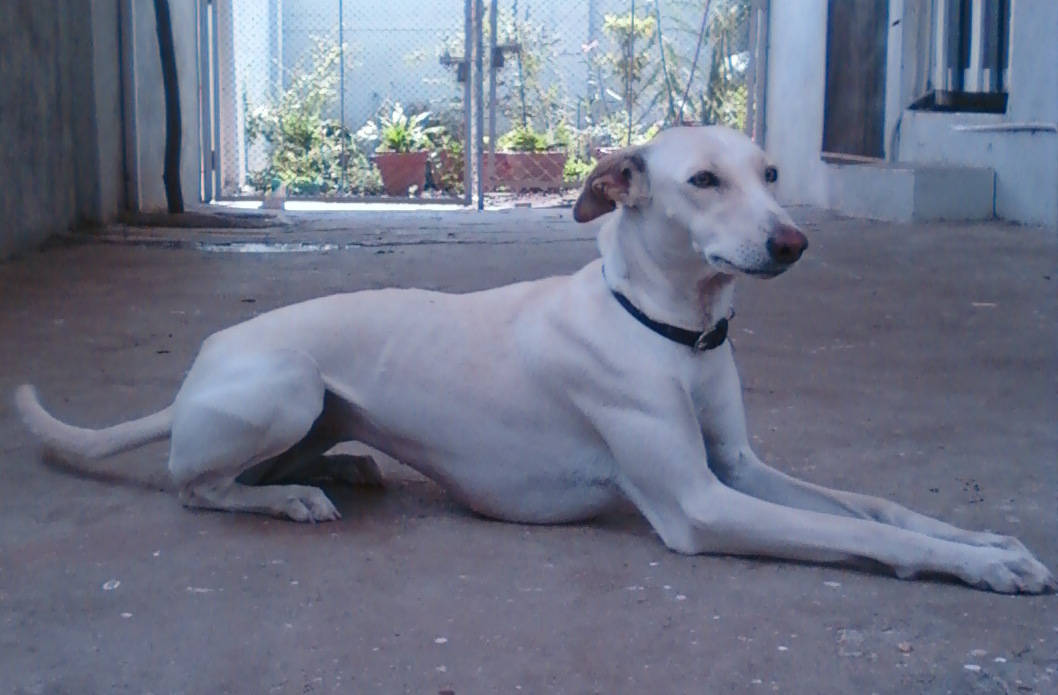
The Chippiparai is the living image of the greyhound: clean lines, streamlined and aerodynamic body, and that stamp of functional elegance built for speed.
It has long legs, deep chest, reclined belly and a flexible back that curves slightly over the back, typical of galloping dogs. The head is long and narrow, with a sharp snout, dark and expressive eyes and fine ears that hang folded backwards. The tail is long, thin and curved. The set transmits lightness, resistance and a contained power.
The most characteristic and frequent color is the white, often silver, although fawn, brindle, silver gray, reddish and white combinations are also seen.
Origin and history
The Chippiparai originates from South India, specifically from the state of Tamil Nadu. Its name derives from the locality of Chippiparai (Sippipparai village, in the taluk of Vembakottai, Virudhunagar district), and the breed is historically associated with the regions of Virudhunagar, Tirunelveli, Thenkasi, Thoothukudi and Madurai, where it is still concentrated today.
It is considered a descendant of the Salukis, the ancient hares of the Middle East, which explains its kinship with the world’s large greyhound family. He was a prestigious dog: It was raised and maintained by the royal families and the zamitars(noble landowners) of South India, who prized it as a status symbol and as an elite hunter. Its traditional function was the hunting of smaller game – especially the hare – chasing it at sight and at high speed through the open and arid terrain of the region; some sources also mention its use against larger pieces such as the deer or wild boar.
Like many native Indian breeds, the Chippiparai went into decline when fashions and imported breeds displaced local dogs, and became endangered. In recent decades, various recovery efforts in Tamil Nadu – including recognition by the Kennel Club of India – have helped preserve it. It is not recognised by the FCI, and outside India it remains a very rare breed, known especially to hare and primitive dog enthusiasts.
Curiosities
- A one-owner dog. Their reputation for refusing food and caresses from anyone other than their caretaker is one of the breed’s hallmarks and a reflection of their extreme loyalty.
- From hunter to cop.‘s intelligence and docility have allowed it to be trained as a police dog in India, an unusual destination for a hunting hare.
- A born sprinter. is one of the fastest dogs in India; the very names of many photos of the breed boast of the top speeds reached by its specimens.
- This is Saluki blood. Its origin links it to one of the world’s oldest greyhound lineages, the Salukis of the Middle East.
- Local treasure. It is considered part of the canine heritage of Tamil Nadu, along with other indigenous breeds such as the Kanni or the Rajapalayam.
If you are attracted to the bearing and character of the Chippiparai, you will be interested in meeting other hares and athletic dogs of similar temperament. Take a look at the Greyhound, the quintessential greyhound and the fastest dog in the world; the sleek and delicate Whippet, a smaller and more manageable version; the independent and charismatic Akita, another dog with a strong bond with its owner; or the versatile Vizsla, athletic and very close to his family.
Frequently Asked Questions about Chippiparai
Is the Chippiparai a good family dog?
Yes, in the right home. It is loyal, quiet at home, and affectionate with its family, but its reserved nature, its intense hunting instinct, and its need for exercise make it more appropriate for active people who can devote time, space for running, and careful early socialization to it.
How much exercise does a Chippiparai need?
He needs daily walks plus free runs in safe, fenced areas. He’s a sprinter who sprints hard and then rests, so he doesn’t settle for gentle walks: he asks for the opportunity to gallop to be balanced.
Can you live with cats or other small animals?
Its prey instinct is very strong because of its past as a hare hunter. It can tolerate a cat if raised with it from puppyhood, but it should never be trusted completely or left alone without supervision, and coexistence with rodents or rabbits is highly discouraged.
Does the Chippiparai bark a lot?
No, it’s a naturally quiet dog that barks little and only when there’s a reason. That discretion, coupled with its distrust of strangers, makes it a good warning dog without falling into constant barking.
How long does he live and how is his health?
It is a rugged and hardy breed, with a life expectancy of about 12 to 15 years. It has few known hereditary problems, although it shares with hares the sensitivity to cold and anesthesia, and it is advisable to prevent gastric torsion with good feeding habits.
Is it easy to train?
It’s very intelligent and it learns fast, but it’s also independent and sensitive, and it responds to positive reinforcement and a relationship of trust, not harsh methods.
Where did the Chippiparai come from?
It is an indigenous hare of the state of Tamil Nadu, in southern India. It takes its name from the town of Chippiparai (Virudhunagar district), descends from the Salukis and was bred by the royal families and noble landowners of the region for hunting.
Does the Chippiparai feel cold?
Yes, its short, fine hair, thin skin, and low body fat make it sensitive to cold and moisture, and in cold climates it needs shelter for winter walks and a warm, soft bed to sleep in.