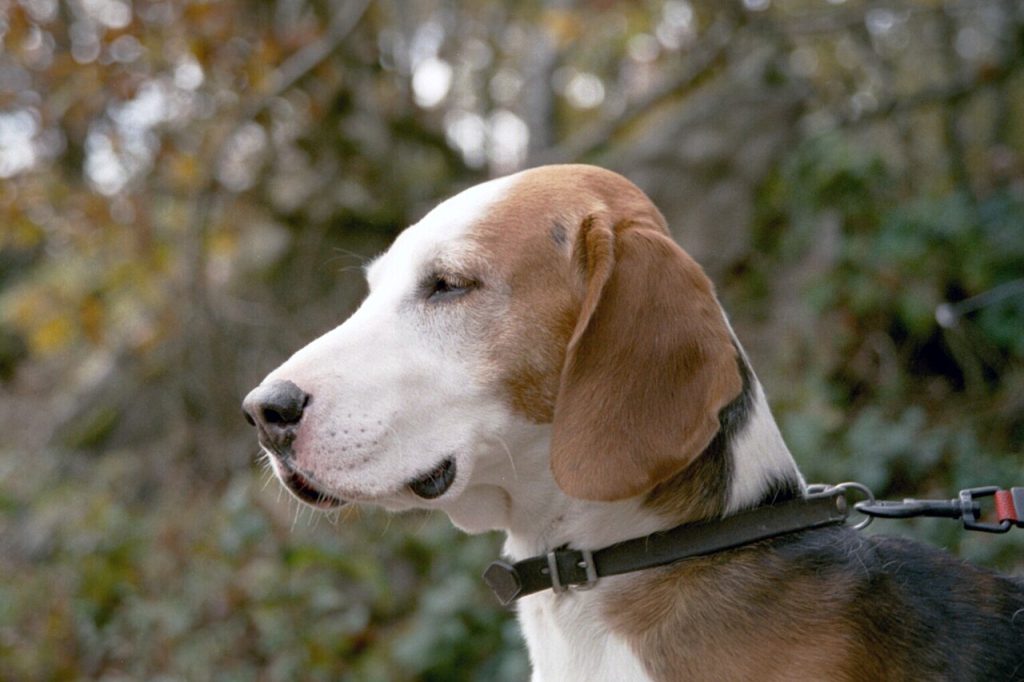
The Braco Alemán(in German Deutsche Bracke, and in English German Hound) is a tracking hound originating from Westphalia, in Germany, bred for centuries to follow the trail of big and small game with a tireless nose and a voice that does not shut up. Recognized by the FCI with the number 299, it is a dog little known outside its country, almost exclusively working, but of affectionate temperament that can become a great companion for those who understand and respect its strong hunting instinct.
Is the German Braco for you?
Before you get carried away by its pretty tricolor coat and sweet look, it’s good to be clear what the German Shepherd is: a purebred hunting dog, not a couch potato. It thrives with active families, with access to the countryside and willing to give it olfactory work. In a small apartment and with long hours of solitude, however, it will suffer. These are its lights and shadows.
Points in favour
- Affectionate and attached to his family; the German club itself recommends that he live at home, not in the kennel.
- Sociable with other dogs due to her pack origin.
- Healthy, rustic dog, without a long list of documented hereditary pathologies.
- Extraordinary nose and stamina – an ideal companion for sport tracking and hunting.
- Medium-to-small size and short hair with very low maintenance.
Points to Consider
- Very strong hunting instinct: unreliable with cats and small animals.
- Very barking; he gives voice over the trail, which can annoy the neighbors.
- He needs plenty of exercise and stimulation; he gets frustrated if he gets bored.
- Independent and stubborn following a scent: the call is its weak point.
- Rare breed outside Germany; hard to find and with few breeders.

Character and temperament
The German Shepherd combines two faces that may seem contradictory and that, in fact, are the reflection of a well-balanced working dog. On the one hand, it is a tenacious, persistent hunter with a powerful predatory impulse; on the other, it is a loving and sociable dog that enjoys human company.
The German source of the breed describes it as a very persevering tracker with a good sense of direction. That persistence is its great virtue in the field: once it catches a trail, it does not let go. In day-to-day life it translates into a determined, curious dog with a nose always on the go, which investigates every corner of the environment and follows any interesting smell to the end.
It is well documented that it benefits from living with family rather than being isolated in a kennel, which says a lot about its need for social bonding. It is not a nervous or shy dog: it is sought for a stable, courageous and balanced character, typical of a hound that must work in a pack and often away from its guide.
Coexistence: children, other pets, flat and loneliness
With children:‘s tolerant and sociable nature makes it, in general, a friendly dog with the smallest of the house, always under supervision and with proper socialization from puppyhood.
With other dogs:, when used in packs, usually gets along well with congeners and enjoys canine company.
With cats and small animals:‘s greatest limitation is that its hunting instinct is so strong that it can chase cats, rabbits, rodents or birds on impulse alone.
On the floor: is not its ideal habitat. It needs space, frequent outings, and vent. It can live in a flat if compensated for by lots of exercise, but its tendency to bark and its energy make a house with access to land clearly preferable.
In the face of loneliness: is a dog who wants to be with his people. Spending long days only makes him feel bad and can lead to boredom, excessive vocalization and destructive behaviors.

Education and training
Educating a German Shepherd is an exercise in patience and consistency. It is an intelligent and very capable dog, but also independent and stubborn, a trait shared with most hounds. When its nose detects something interesting, its ability to pay attention to the guide suddenly decreases: that is why the call (to return when asked) is the biggest challenge of its training.
It works much better with positive reinforcement, short, motivating sessions, and calm, steady guidance than with hard methods. Early socialization with people, dogs, and diverse environments is critical to channeling their character. Harnessing their instinct in your favor (olfactory games, tracking tracks, sports mantrailing) is the best way to have a cooperative and mentally satisfied dog.
It is advisable to work from puppy self-control and management of frustration, as well as accustom him to the long leash in areas where he can not go loose safely, given his impulse to go out after any trace.
Exercise and activity
This is a non-negotiable area. The German Shorthaired Pointer is a hunting dog with remarkable endurance, bred to travel great distances following tracks for hours. The breed club estimates that at least 1,000 hectares of land is needed to hunt with a pack, a figure that illustrates well its enormous need for movement.
For a dog that doesn’t hunt, that translates into long, daily walks, opportunities to run in safe areas and, above all, a lot of olfactory work: tracking, searching, nose games. Pure physical exercise is not enough; it also needs to wear out the head. A well-trained German Shepherd is a balanced dog; a bored one seeks his own amusement, and it is rarely the one you would want.
Care: fur and hygiene
As for the maintenance of the coat, the German Shepherd is one of the simplest dogs. Its hair is short, hard, flat and moderately rough to the touch, almost pig-like, with little shine; it is thinner on the head and ears, and longer and harder on the belly and thighs.
The point that does deserve attention are the ears: long, heavy and falling, attached to the head, tend to retain moisture and dirt, so they should be checked and cleaned regularly to prevent infection. As with any dog, it completes the routine with nail trimming (strong and black or ivory), dental hygiene, and pad checking, especially if working in the field.
Foodstuffs
As an active and muscular dog, the German Shepherd benefits from a high-quality diet, with a good intake of animal protein that supports its muscle mass and energy expenditure.
It is advisable to divide the food into two daily servings in the adult and avoid overweight, which punishes his joints and reduces his agility. In working dogs that make intense efforts, no feeding should be done just before or just after vigorous exercise. Ideally, consult your veterinarian about the amount and type of food according to age, weight, and activity, and always keep fresh water available.

Health and life expectancy
The German Shepherd is, on the whole, a rustic and healthy dog. No specific diseases or claims of extraordinary health have been documented for the breed, which puts it far from other more widespread and over-selected breeds with long lists of hereditary pathologies. Their working breed status, little exposed to mass aesthetic breeding, has helped to maintain a functional population without major known structural problems.
This does not mean that it should be neglected. Like any dog with long, drooping ears, it is wise to monitor the ears to prevent otitis. Keeping up-to-date vaccination, internal and external deworming and regular veterinary checkups, along with proper weight and regular exercise, is the best policy for him to enjoy a long and active life, in line with that of other dogs of his size.
Physical appearance
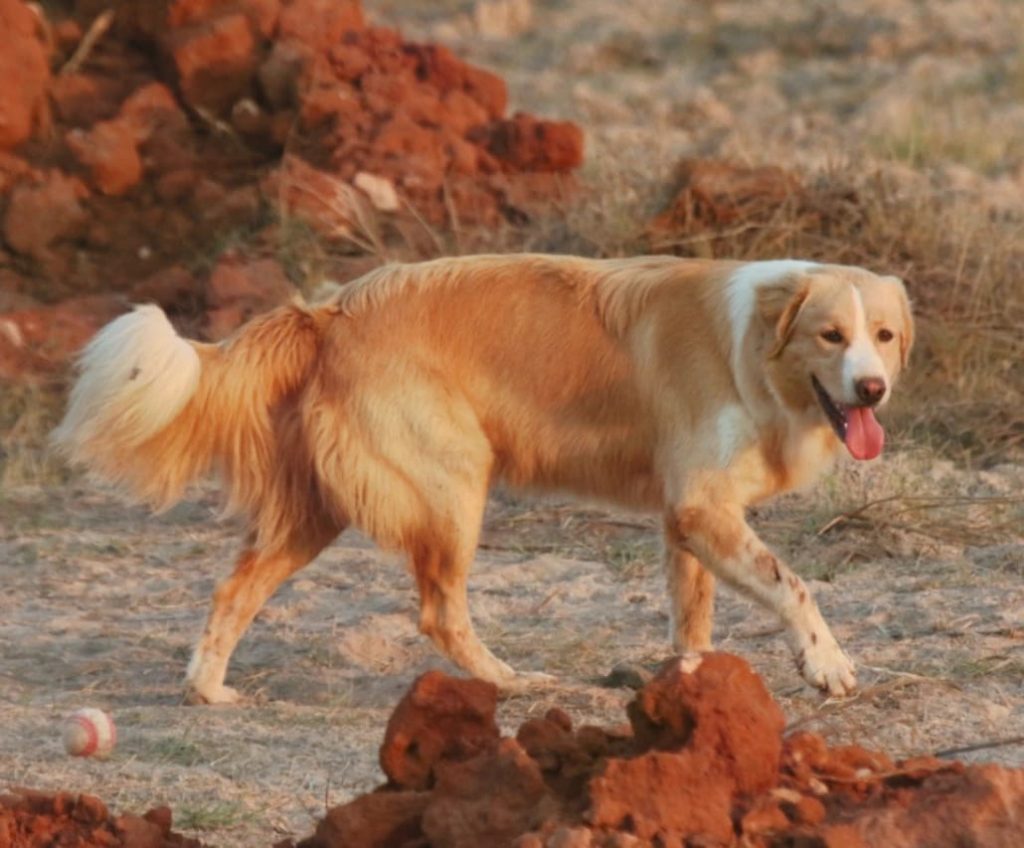
The German Shepherd is a small-to-medium sized hound, 40 to 53 cm at the withers, of elegant appearance and light but muscular. Its body is slightly elongated, rectangular in shape, supported on legs not too long, with slightly bulbous hindquarters and well muscled. The head is long and somewhat narrow, with a relatively wide skull, barely bulbous, slightly stooped, and a muzzle neither too long nor too pointed; the truffle may be black or red.
Its ears are long, heavy, of high and wide insertion, attached to the head and with a rounded tip. The eyes, clean, of dark brown iris to lighter, give a friendly expression. The tail is of medium length, narrows towards the tip and is carried horizontally or fallen, more provided with hair at its lower edge.
The breed’s hallmark is its tricolor coat: a base that goes from red to yellow with a black coat, topped by Bracke’s white markings (white hock, chest, legs, collar and tail tip, plus a streak on the head).
Origin and history
The German Hound is the result of the unification of the old hounds (Bracken) of northwestern Germany, very particularly of the region of Westphalia. In 1896 the Deutschen Bracken Club was founded in Finnentrop, which grouped all local types from Bracke and which in 1911 moved to Olpe. Around 1900, those regional varieties (known by names such as Olpe Bracke, Sauerländer Bracke or Westphalian Bracke) were merged into a single breed, officially designated Deutsche Bracke.
It was the first Bracke to be registered as a distinct breed, in 1900, and the Fédération Cynologique Internationale recognized it with the number 299, within Group 6 (tracking dogs or hounds), section 1.3 (small hounds). In the Anglo-Saxon world, only the United Kennel Club of America recognizes it, within its group of hounds. It is still, above all, a hunting dog rarely seen outside Germany.
Their history is linked to two forms of hunting. The oldest, inherited from Celtic tradition, was practiced on horseback following dogs. Already in the 16th century the Brackade appeared, a modality that dispensed with horses and large kennels and used firearms: The hounds were tenaciously following the piece as they gave voice, communicating to the hunter their position and the type of prey. Hence the tradition, still alive today, of using hunting horns to communicate with the herd.
Curiosities
- Its root, Brack, is an old sub-German term for a coastal swamp periodically flooded by salt water, related to the English brackish(salt).
- The white markings on the mantle have their own name: they are called bracke’s marks(Bracken-Abzeichen).
- The German Shorthaired Pointer is a close relative of the Westphalian Dachsbracke (FCI 100) and the Swedish Drever or Dachsbracke (FCI 130), both derived from crossing shorthaired pointers with dachshunds.
- The Central European Bracke family also includes the Alpenländische Dachsbracke from Tyrol (FCI 254), the Tiroler Bracke (FCI 68) and the Finnish Finnenbracke (FCI 51).
- It is a breed so closely linked to Germany that many specimens sold as German Braco outside the country come from smaller registries with little documentation: it is advisable to research well the origin of the dog before buying it.
If you are attracted to the world of hounds and tracking dogs, you may be interested in other breeds with a prodigious nose and friendly character such as the Beagle, the Basset Hound or the imposing Bloodhound. Weimaraner
Frequently Asked Questions about the German Braco
Is the German Shepherd a good companion dog or is it only good for hunting?
The German Hound is, first and foremost, a tracking dog bred in Germany to work on the trail of deer, hare and fox. Outside his native country, he’s hardly seen as a parlor pet. That said, the German Kennel Club itself emphasizes that it is loving and benefits from living with the family rather than in a kennel. It may be an excellent companion for an active home that gives you the exercise and olfactory work your instinct demands, but it does not fit well into a sedentary life.
How tall and how much does a German Braco weigh?
It is a medium-sized hound, with a height of 40-53 cm at the withers; according to the standard, males do not exceed 50 cm and females 45 cm. It is a light and muscular dog, with a slightly elongated body (rectangular) and legs not too long, so it is not a heavy dog despite its energy.
What color is the German Braco?
The typical mantle is tricolor: red to yellow base with a black cape (mantle) and the characteristic white marks called Bracke’s marks: white snout, chest, legs, collar and tail tip, plus a white stripe on the head.
Does the German Shepherd bark a lot?
Yes, it is a very vocal dog, and this is part of its function. During hunting (the so-called Brackade) it follows the trail by emitting sustained barking that communicates to the hunter where it is and what kind of piece it is chasing.
Do you get along with children and other dogs?
Being a pack dog, it is usually sociable and tolerant with other dogs and balanced with children, always with early supervision and socialization.
How much exercise does the German Braco need?
Many. It is a working dog with remarkable endurance and great tracking ability. It needs long walks, running and, above all, olfactory activity that makes it use its nose. The breed club describes hunting in packs with a minimum of about 1,000 hectares of land, which gives an idea of its need for space.
Is it easy to train?
It is intelligent, very persistent and has a good sense of direction, but it is also independent and stubborn when following a trail, a common trait in hounds. It responds well to positive reinforcement and consistent guidance, although the call is its weak point: as soon as it catches an interesting smell it can disconnect. Early and consistent education is key.
Do you have serious health problems?
No specific diseases or claims of extraordinary health have been documented for this breed. It is a rustic working dog, without the table of hereditary pathologies of other more widespread breeds. As with any dog with long and droopy ears, it is advisable to monitor the ears and keep veterinary checks, vaccination and deworming up to date.