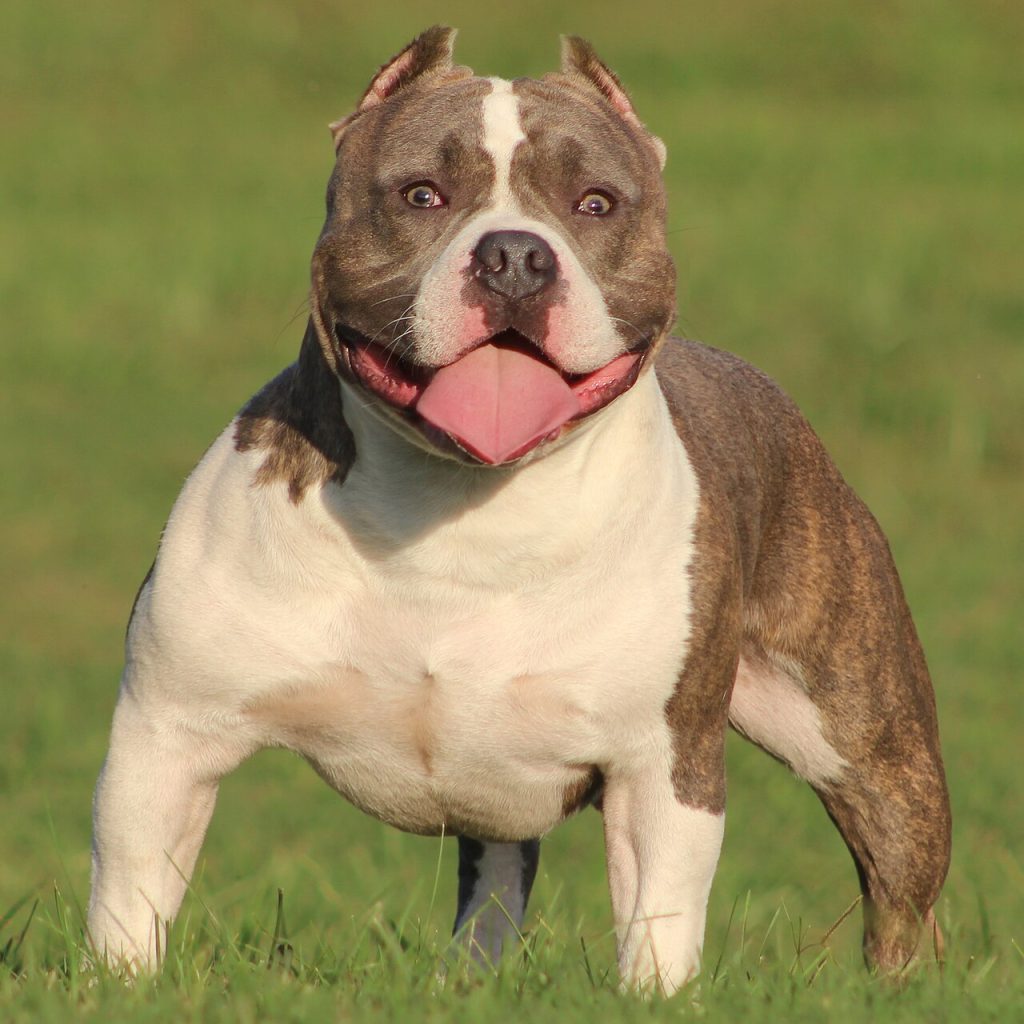
The American Bully is a modern breed, born in the United States at the end of the 20th century with a very specific goal: to get a companion dog that looks powerful and muscular but is of a balanced and family-oriented nature. Behind this intimidating image is, in most well-bred and socialized dogs, a calm, sociable dog who is very attached to his own. It is good to know them well, for they are a breed that is both misunderstood and demanding in terms of responsible parenting.
Is that American Bully for you?
The American Bully can be an excellent companion for those looking for a loyal, affectionate, and imposing-looking dog, but it demands an involved owner, consistent with education and aware of the legal responsibilities surrounding the breed. He’s not a “buy and forget” dog: Its strength and recent popularity have made it a victim of many irresponsible offspring, so choosing the right breeder and committing to socialization makes all the difference.
In favour .
- Very close to his family and usually affectionate with children.
- Short coat that barely needs maintenance.
- Intelligent and eager to please, he responds well to positive reinforcement.
- He adapts to living on the floor if he gets daily exercise.
- Moderate energy: at home it is usually quiet and “couch dog”.
To be taken into account
- Their temperament is highly dependent on upbringing, genetics, and socialization.
- Considerable force: requires safe driving and early education.
- Specific legislation in several countries (variety XL is banned in the UK).
- Tendency to hip, elbow, skin or breathing problems depending on the line.
- Opportunistic breeders abound; you have to select carefully.
Character and temperament

The breed standard pursues, first and foremost, a stable companion dog. Breeders deliberately selected the bulldog’s noble and calm temperament along with the American Staffordshire Terrier’s loyalty, and worked to reduce the “gameness” – the fighting instinct toward other dogs – that defines their terrier-type ancestors. The result, in a well-bred dog, is an affectionate, self-assured dog deeply attached to his human family.
It’s best to be honest: In the American Bully, more than in almost any other breed, the character of the adult depends on his breeding line and how he was raised. A puppy with good genetics, socialized and guided with patience, usually develops into a balanced companion who behaves like a lap dog inside the house. On the other hand, a poorly bred, poorly socialized or problematic breed may be difficult to handle. Aggression towards people is expressly criminalized in the standard and should never be considered “normal” in the race.
Coexistence: children, other pets, flat and loneliness
With his family, the American Bully is usually a tolerant and patient dog, one of the reasons why he has gained a reputation as a good companion for children.
The relationship with other animals is more nuanced. It comes from ancestors with instinct towards other dogs, so early and continuous socialization is key to a good canine coexistence. Many specimens live without problems with other pets when they grow up together, but it is advisable to present them calmly and not give anything for granted.
It adapts well to life on the floor, as it tends to be quiet indoors, as long as its walks and daily activity are covered. It is not a dog made to spend long days alone: it is very sociable and, if left too long isolated, can develop boredom and anxiety.
Education and training
The American Bully is intelligent and loves to please, which makes their training easier if approached from positive reinforcement. Rewards, play and perseverance work much better than toughness, which only breeds distrust in a dog of this power. Education is not optional: Given its size and strength, a Bully must learn from puppyhood to walk correctly on a leash, to control bite in play, and to respond to basic commands.
Socialization is the most profitable investment a dog owner can make. Positive exposure to people, dogs, noises, and different environments during their first few months lays the foundation for a confident and balanced adult. Obedience classes and, if possible, the accompaniment of an educator with experience in bully-type breeds help to channel their energy and confidence well.
Exercise and activity
Although not created for work, the American Bully is an athletic dog that needs to expend energy daily. A couple of good walks, playtime and some physical exercise maintain its musculature and mental balance. Many specimens enjoy strength dog sports such as the weight pull(weight pulling) or the flirting pole, which harness its power in a controlled and fun way.
The bully’s heavy and compact constitution, especially in the most extreme varieties, makes it poorly tolerate heat and prolonged intense exercise. The ideal is moderate and regular activity, avoiding the hours of the most heat and the demands of a resistance dog.
Care: fur and hygiene
The American Bully has a short, smooth, body-clinging coat that only needs a weekly brushing to remove the dead hair and keep it shiny. It is a dog that likes cleanliness and bathes only when necessary, without excess to avoid drying its skin.
It is advisable to pay attention to the folds of the face and nose in the most brachycephalic specimens: they must be kept clean and dry to avoid irritation. The rest of the hygiene is the usual and therefore not less important: periodic inspection and cleaning of the ears, nail cutting and, above all, a good dental hygiene routine, which many owners neglect.
Foodstuffs
Because of its large muscle mass, the American Bully needs a high-quality diet, with adequate protein intake to sustain and maintain its musculature.
Weight control is essential: Overweight is especially bad for joints that already bear a lot of the strain of being overweight. Measure your rations, moderate your prizes, and make sure your body is athletic and not obese. Since digestive problems have been reported in some of the breeds, any sensitivity or change in diet is best advised by consulting a veterinarian and making the transitions gradually. Fresh water always available.
Health and life expectancy
As it is a young breed, health information is still limited and it is advisable to avoid both alarmism and idealization.
Among the problems described are hip and elbow dysplasia, impaired digestion, and breathing difficulties in the shorter-snouted specimens. A form of congenital ichthyosis – a skin disorder – similar to that seen in the American Bulldog has also been documented. In the case of the XL variety, the British Veterinary Association itself has pointed out that a certain degree of hip dysplasia is part of the characteristics associated with the type. That is why it is essential to go to breeders who do health checks on breeders and who do not prioritize extreme traits over animal welfare.
The specific life expectancy is not well established in the literature due to the recent nature of the breed; as a companion dog of its type, it is in the usual range of medium-sized molossos.
Physical appearance

The American Bully conveys, by its own standard, “an impression of great strength for its size”. It is a compact dog, with a muscular and heavy body, thick bone and a bulky, square head that is its hallmark. The neck is strong and arched, the breast broad and deep, and the back short; the extremities, robust and well slumped. The ears can be cut or natural, and the tail, cut in proportion to the body, is sharpened toward the tip.
The coat is short, shiny and attached to the body, and any color is allowed; the blue (grey) coat with a white spot on the chest is the most common. One of the peculiarities of the breed is that it is divided into varieties according to the height at the cross. The officers are the Standard(males 43 to 51 cm; females 40 to 48 cm), the smaller Pocket(males 36 to 43 cm; females 33 to 40 cm), the larger XL(males 51 to 57 cm; females 48 to 54 cm) and the Classic, which shares the height of the Standard but with a less exaggerated structure and is closer to the original Pit Bull/Amstaff type. Weight is not a standard criterion – it is classified by height – so it varies greatly from specimen to specimen.
Origin and history

The American Bully is a very recent breed. Its development began in the United States during the 1980s, and most of its aesthetic and behavioral definition was completed in the 1990s. It started from the American Pit Bull Terrier and, above all, from lines of American Staffordshire Terrier, to which were added other breeds of bulldog type – English Bulldog, American Bulldog, Olde English Bulldogge and, according to some sources, French Bulldog or even mastiffs – to get that characteristic mass and bone.
Breeder David Wilson and his breeder Razor Edge popularized in the mid-1990s robust, bulky-headed and often blue-coated specimens, nicknamed “bully style”. Alongside them emerged other famous foundation lines, such as Gottiline and Greyline, which marked the direction of the race. In 2004 the American Bully Kennel Club (ABKC) was founded, today the main club of the breed, and in 2013 the United Kennel Club (UKC) officially recognized it. However, the major international federations – the FCI, the American Kennel Club or the British Kennel Club – do not recognize it as an independent breed.
Its rapid expansion has also brought controversy. The XL variety, which arrived in the UK around 2014-2015 and became popular during the pandemic, was implicated in several serious attacks, which led the British Government to include it in its legislation on dangerous dogs and to ban its breeding and sale. Other countries, such as Germany, Ireland, Turkey and the United Arab Emirates, also maintain restrictions. That is why it is important to check the regulations in your country and community before purchasing a copy.
Curiosities
- Despite its imposing appearance, it was conceived as a companion dog, not a working or guard dog.
- The ABKC recognizes four official varieties (Standard, Pocket, XL and Classic), but the UKC only supports the Standard size.
- There are unofficial types outside the standard, popularly called “Micro”, “Exotic” or “XXL”, not recognized by the clubs.
- Until one year old, all specimens are displayed as Standard; then they are separated by variety of size.
- Many Bullies excel in strength sports such as the weight pull, while at home they behave like authentic couch dogs.
If you are attracted to the American Bully’s combination of strength, faithfulness, and balanced character, you may be interested in other molosoid-root or bulldog-type breeds, such as Bulldog Inglés, one of its ancestors; the ever-joyful Bóxer; the imposing Cane Corso; or the noble and protective Rottweiler.
Frequently Asked Questions About the American Bully
Is the American Bully a dangerous dog?
It is not dangerous by nature: the standard criminalizes aggression towards people and was bred as a companion dog. However, it is a strong dog whose character depends a lot on genetics, socialization and education, so it demands a responsible owner.
Is the American Bully the same as the Pit Bull?
The American Bully is a distinct breed, developed from the American Pit Bull Terrier and the American Staffordshire Terrier crossed with bulldog-type breeds. It is more compact, heavier and bulkier in head, and was selected to reduce fighting instinct and enhance companion temperament.
How many types or varieties of American Bully are there?
The ABKC recognizes four official varieties according to height: Standard, Pocket (smaller), XL (larger) and Classic (lightweight).
Do you get along with children and other pets?
With his family he is usually affectionate and patient, and has earned a reputation as a good companion for children, always under supervision.
How much exercise do you need?
Moderate energy: a couple of good walks a day and some play or strength sports are enough. Intense exercise with heat should be avoided, because their heavy build and, in some types, their short snout make them poorly tolerate high temperatures.
Is it hard to take care of your fur?
On the contrary, it is very simple. Its short and sticky hair only needs a weekly brushing and occasional baths. It is advisable to monitor the facial folds in the most brachycephalic specimens, in addition to ears, nails and teeth.
Is the American Bully banned?
It depends on the country. The XL variety is banned in the UK, and there are restrictions in Germany, Ireland, Turkey or the United Arab Emirates.