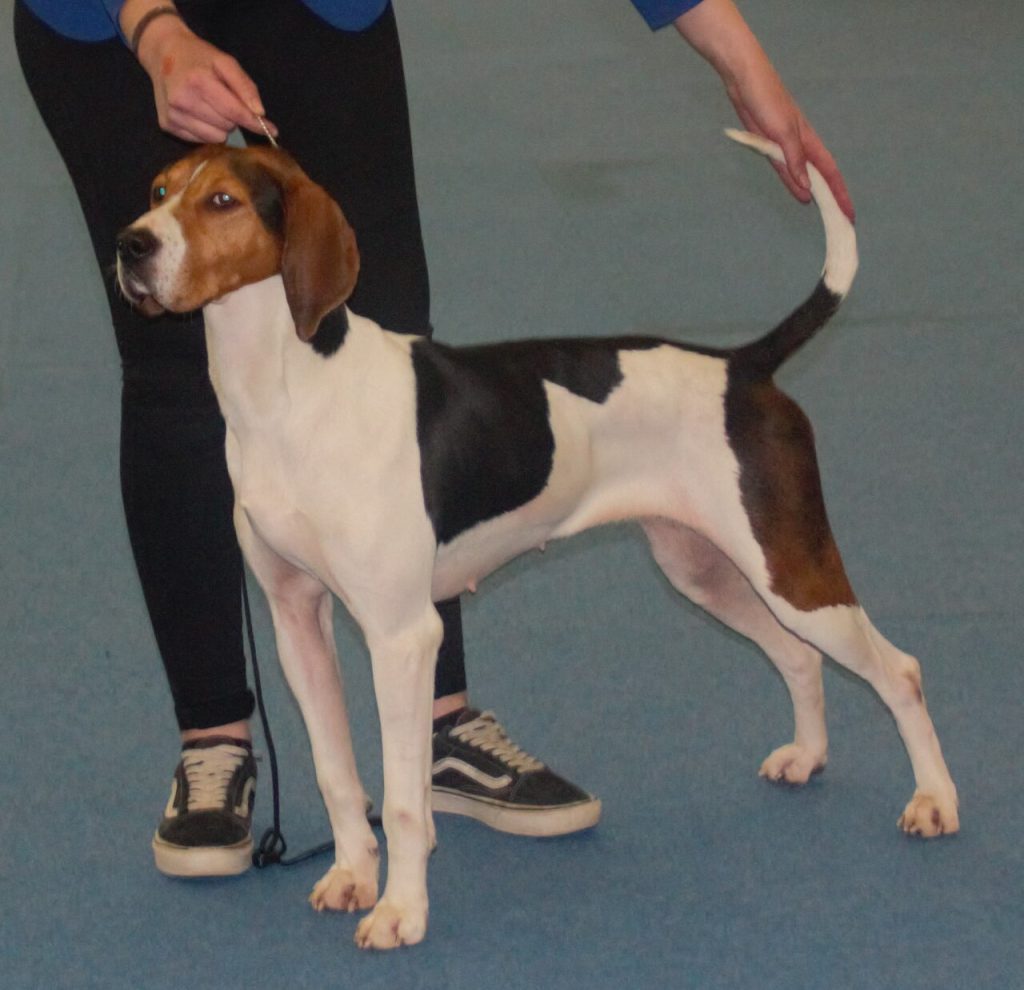
The Treeing Walker Coonhound is an American hound of inexhaustible energy, prodigious nose and thunderous voice, bred to follow the trail of the raccoon and corner it on top of a tree. Elegant, fast and surprisingly affectionate at home, it is the hunting dog par excellence of the American South, but requires an active owner to understand its nature as a hunter before making it a couch companion.
Is the Treeing Walker Coonhound for you?
Before you fall in love with that hound face and those velvety ears, let’s be honest: the Treeing Walker Coonhound is an endurance athlete with a hunting engine that never completely shuts down. It does its best in the hands of active people, with space and patience. These are its lights and shadows.
In favour .
- Loving, balanced and very sociable with people and other dogs.
- Good with children and tolerant by nature.
- Athletic, resistant and ideal companion for running, hiking or dog sports.
- Smart and with a spectacular sense of smell for tracking games.
- Short coat with minimal maintenance.
- A rustic breed, long-lived and with no major hereditary problems.
Against
- He needs a lot of daily exercise; he gets frustrated if he doesn’t get it.
- Very powerful barking and howling, designed to be heard from a distance.
- Strong hunting instinct: follow a trail and forget about you.
- The cordless call is his big weakness.
- It’s not the best choice for small apartments or sedentary people.
- He can suffer if he spends too many hours alone.
Character and temperament

The Treeing Walker Coonhound has a dual personality that surprises those who only know it as a hunting dog. On the trail is relentless, intense and strategic: He concentrates on the scent with absolute determination and warns with that clear, resonant voice that made him famous. At home, however, it is a calm, sensitive, comfort-loving dog, able to melt on the couch after a day of exercise.
He is affectionate, self-assured, and greatly enjoys human company. He loves interacting with his family and rarely shows shyness or nervousness. As a good hound, he has a balanced temperament and is difficult to alter: It’s not a dog that jumps to a minimum or gets aggressive easily. That nobility makes him a pleasant companion, provided his need for movement is respected.
The other side of the coin is its independence. It’s been selected for generations to work away from the hunter, making decisions on its own based on what its nose tells it. That means that when something smells interesting, your voice goes into the background. It’s not bossy or bad manners: it’s just a dog doing what it was bred to do.
Coexistence: children, other pets, flat and loneliness

With children: is a breed usually described as good and affectionate with children. Its tolerant character and playful energy fit well into a dynamic family, although it is advisable to supervise games with the youngest due to its size and enthusiasm.
With other dogs: shines especially here. Having been bred to hunt in packs, it enjoys the company of other dogs and usually integrates easily in households with more than one.
With cats and small animals: must be approached with caution. Their hunting instinct for smaller prey is strong, so early socialization is key. Many specimens learn to live with the family cat if they grow up together, but an unknown rodent, rabbit or cat may awaken the hunter they carry inside.
On the floor: is not its ideal habitat. It can adapt if you guarantee it plenty of exercise and mental stimulation, but its powerful barking and tendency to express itself loudly can become a problem with neighbors. A house with a well-fenced garden (better high, because it is an escapist and climber) suits it much better.
Soledad: is a sociable dog that does not do well with prolonged loneliness. If it spends too many hours alone and inactive, it may become bored, bark incessantly or look for ways to escape in search of olfactory adventures.
Education and training
The Treeing Walker Coonhound is intelligent and quick to learn, but there is a trick to training it. It responds wonderfully to positive reinforcement, especially if food is in the way, and detests harsh methods: it is a sensitive dog that closes in on abruptness. Consistency, patience, and short, fun sessions yield much better results than excessive firmness.
Its biggest challenge is the nose. As soon as it catches a trail, it goes into “hunting mode” and stops listening. So, the call back and life without a leash in open areas are its most difficult subjects: no matter how well trained it is, there is always the risk that it will be shot out after a smell. Many owners choose to release it only in fenced enclosures and work the call with long security.
Socialization from puppyhood – with people, dogs, noises, and different environments – is essential for him to grow up balanced, and because all his motivation revolves around smell, tracking games and searching activities are the best educational tools: they channel his instinct, tire his mind, and strengthen your bond.
Exercise and activity

This is the point that makes or breaks coexistence. The Treeing Walker Coonhound is a working dog with extraordinary resilience: it was bred to chase prey for hours over rough terrain, and that machinery needs to be worn every day. We’re talking about one to two hours of intense exercise daily at a minimum.
It loves to run, and is an excellent companion for those who practice running or hiking. It also excels in canine sports that combine smell and effort, such as mantrailing, trail trials or canicross.
Equally important is mental exercise. A Treeing Walker Coonhound that is only physically tired but gets bored may keep getting into trouble. Food-hunting games, olfactory puzzles, and nose work leave it satisfied in a way that no walk can match. A tired dog, in body and mind, is a calm dog at home.
Care: fur and hygiene
In terms of maintenance, the Treeing Walker Coonhound is most grateful. Its hair is short, fine, smooth and shiny, and it only needs a weekly brushing to remove the dead hair and keep it shiny. The moult is moderate, nothing that a regular brushing does not control. The baths, only when it gets really dirty after its adventures in the countryside.
Where you really need to pay attention is in the ears. Those long, sloping, low-slung ears that give it so much charm also retain moisture and heat, the perfect environment for infections. They should be checked and cleaned regularly, especially after getting wet or walking through weeds. Complete the routine with nail trimming when necessary and good dental hygiene.
Foodstuffs
As an athletic, high-energy dog, the Treeing Walker Coonhound needs a high-quality, high-protein diet that maintains its activity level. The exact amount depends on its weight, age, and actual exercise: a full-time hunting dog does not eat the same as a family member who goes out for an hour a day.
As a good hound, it is a voracious and highly motivated food dog, which is great for training but requires monitoring rations and prizes so that it does not gain weight. Divide your food into two servings a day, always have fresh water available – especially after exercise – and adjust the amounts according to your body shape. If you have any questions about his diet, your vet is the best reference.
Health and life expectancy
The Treeing Walker Coonhound is a remarkably healthy and rustic breed, the result of generations of work-oriented rather than aesthetic selection.
It does not carry a long list of serious hereditary diseases, but like any breed, some points are worth bearing in mind. Your drooping ears predispose you to otitis and infections, hence the importance of checking them. Like any active, deep-chested dog, it is worth monitoring its weight and joints, and keeping up with veterinary checkups, vaccinations, and deworming. A life of plenty of exercise, good nutrition, and regular check-ups is the best recipe for healthy old age.
Physical appearance
The Treeing Walker Coonhound is a medium to large sized dog, with athletic and elegant lines that convey speed and endurance.
It has a broad skull, a long snout, and long, dangling ears that frame a sweet, dark-eyed expression. Its legs are straight and end in compact, almost cat-like feet, made to cover terrain without getting tired.
Its hallmark is its coat: short, fine, shiny hair in a tricolor pattern – white with black spots and fire, the most prized – or bicolor (black and white, or fire and white).
Origin and history
The Treeing Walker Coonhound is a genuinely American dog, with roots that sink into the English foxhound. Their story begins when foxhounds imported to Virginia and Kentucky became the basis of a line of hounds known as Walker Hounds, in honor of the breeders who developed it. They are credited, along with George Washington Maupin, with the selection work that shaped the breed in the 19th century.
The most famous episode in its history is that of Tennessee Lead, a stolen dog of black and fire color and unknown origin that in 1852 crossed with the Walker line.
Initially recognized by the United Kennel Club in 1905 as part of the English Coonhound, it eventually separated as its own breed. The United Kennel Club officially recognized it as an independent breed in 1945, and the American Kennel Club took much longer: it did not do so until January of 2012, when it became the 174th breed recognized by the association.
Curiosities
- Its name says it all: treeing means “corner in a tree”. Its specialty is chasing raccoons and other prey and keeping them trapped high in a tree, warning with its voice until the hunter arrives.
- Their howl changes in tone depending on the phase of the hunt: it is a clear barking over the trail that turns into a short, repeated “chop” when the prey is already in the tree.
- It is the most popular hound in raccoon hunting competitions (coon hunts) in the United States, thanks to its combination of speed and intelligence.
- Although it specializes in medium-sized and tree-dwelling prey, its speed is such that it is sometimes used to track deer, bobcats, cougars, and even bears.
- It is affectionately nicknamed “the people’s dog” because of its sociable and simple temperament off the hunting ground.
If you are attracted to this tireless hound, you may be interested in other breeds with a tracking spirit or high energy such as the Beagle, the Bloodhound, the Basset Hound or the versatile Dálmata.
Frequently Asked Questions about the Treeing Walker Coonhound
Is the Treeing Walker Coonhound a good family dog?
Yes, as long as the family is active, affectionate, tolerant, and gets along well with children, but it needs plenty of exercise and patient training. In a sedentary home or with little time, it becomes frustrated and develops annoying behaviors such as barking or running away after a trail.
How much exercise do you need a day?
It was bred to chase prey for hours in the woods, so a short walk around the neighborhood isn’t far enough.
Can you have it on one floor?
It is not the ideal breed for a small floor, but it can adapt if you guarantee it that daily exercise and mental stimulation.
Does the Treeing Walker Coonhound bark a lot?
It is a very vocal breed. Its characteristic howl is designed to be heard for miles when it corner a prey in a tree. At home it uses it when it is bored, excited or has picked up an interesting smell. With exercise and obedience work it is controlled, but silent it will never be.
Is it easy to train?
It’s smart and it learns fast, but it’s also independent and very nose-guided. It responds wonderfully to positive reinforcement and food, although as soon as it catches a trace, it stops listening to you.
Do you get along with other dogs and cats?
With cats and small animals it depends on early socialization; its hunting instinct is strong, but many specimens learn to live with the house cat if they grow up together.
How long does a Treeing Walker Coonhound live?
It is a rustic and healthy breed, without a long list of serious hereditary problems, although it is advisable to monitor drooping ears and maintain a proper weight with exercise and good nutrition.
Does your coat need a lot of maintenance?
Very little. She has short, fine, shiny hair that only requires weekly brushing and occasional bathing. She lets her hair down moderately. What does require regular attention are her long, dangling ears, which hold moisture and need to be checked and cleaned to prevent infection.