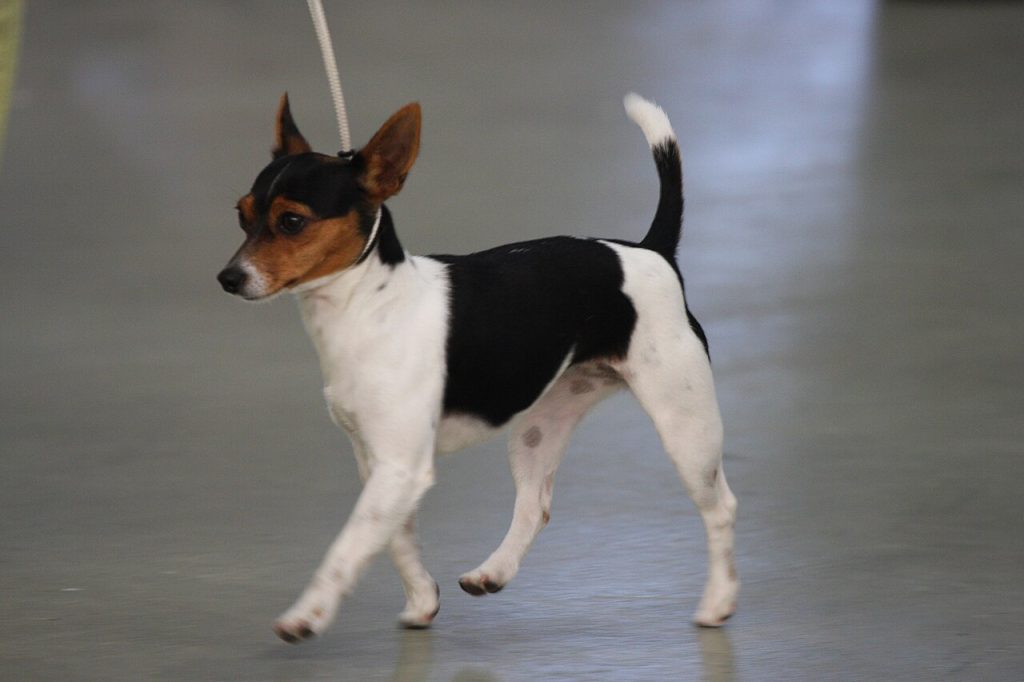
The Tenterfield Terrier is a small, fast and alert Australian terrier, bred for over a century to hunt rats, rabbits and other vermin on farms in the Australian outback. Compact, short-coated and expressive, it combines the tenacious temperament of a true working terrier with a loyalty and affection that make it a magnificent family companion. Outside Australia and New Zealand it is hardly known, but in its homeland it is quite a rural classic with plenty of character for its size.
Is the Tenterfield Terrier for you?

The Tenterfield Terrier is a dog that is easy to keep but demanding of company and encouragement. It fits wonderfully with active people who want a small, smart and brave companion, and who can dedicate daily walks and playtime to it. It is not the best option for those looking for a quiet dog who spends many hours alone or who hardly needs activity.
In favour .
- Small and manageable size, ideal for floor or house
- Minimum maintenance short coat
- Very loyal, affectionate and attached to his family.
- Smart and easy to motivate in training
- Healthy and long-lived if it comes from good breeding
- Excellent rodent hunter and alarm dog
To be taken into account
- Very hard to get out of Australia.
- He needs daily exercise and mental stimulation
- She may bark a lot if she’s bored or alert.
- Prey instinct: beware of small pets
- Prolonged loneliness is not good for her.
- Terrier character: needs clear boundaries
Character and temperament
The Tenterfield Terrier is, first and foremost, a working terrier, and that marks its character. It is alert, courageous and full of energy, with that very typical terrier mix of audacity and affection. It was bred to go into burrows, chase prey and endure long days on the farm, so it has courage, endurance and a remarkable determination for its size.
At home he becomes a devoted companion. He is very attached to his family, enjoys human companionship, and seeks to participate in everything that happens around him. He’s alert and curious, always on the lookout, which makes him a good warning dog: It rarely misses a noise or an unexpected visitor. Such vigilance, if well channeled, is a virtue; if unchecked, it can lead to excessive barking.
Its intelligence and eagerness to please make it a responsive dog. Australian breeders point out that it responds very well to positive reinforcement, caresses and praise, without needing to rely on food rewards to get good results.
Coexistence: children, other pets, flat and loneliness

With children:‘s small size, short, clean hair and loyal temperament make it especially suitable for homes with children.
With other pets: usually gets along well with other dogs and even cats with which it is bred from a puppy. However, it is a natural hunter: it does not distinguish between a pet and a small pet such as a hamster, reptile or rodent, so it should never be left alone with small animals. With large dogs it is confident and sociable, without size complex.
On the floor: adapts perfectly to urban life as long as it receives enough exercise and companionship.
Soledad: is a sociable dog that does not like to spend many hours alone. Lack of companionship and stimulation can translate into boredom, barking and destructive behavior. It is a dog for people or families who can integrate it into their daily life.
Education and training
The Tenterfield Terrier is intelligent and quick to learn, which greatly facilitates its education. The key is positive reinforcement: praise, caresses, and play work wonderfully with this breed, which is eager to please its people. Short, varied, and fun sessions yield better results than long, repetitive routines.
Early socialization is essential. Exposing a puppy to different people, dogs, noises, and environments helps to shape a balanced adult and to lessen the tendency to bark excessively. It is also advisable to work from the beginning on the response to the call, because its prey instinct can lead it to run after a cat, bird or rodent.
As a good terrier, it has character and can be stubborn if it does not find clear boundaries. It is not about toughness, but consistency: stable rules, patience and a firm but kind guide. Well-oriented, it shines in obedience and enjoys activities such as tracking, in which it has already proven its worth.
Exercise and activity
Don ‘t let her size fool you . The Tenterfield Terrier is an athletic, fast and agile dog, bred for work. He needs moderate daily exercise, combining walks, controlled running, and games that allow him to expend energy. With enough activity, he becomes a calm and balanced companion at home; without it, he tends to get bored and channel his energy into barking and mischief.
In addition to physical exercise, it appreciates mental stimulation. Olfactory games, interactive toys, and small training challenges keep its mind active. Its history as a tracking dog and scavenger dog makes it especially skilled in activities that involve searching, chasing, and solving.
Care: fur and hygiene

One of the great attractions of the Tenterfield Terrier is its ease of maintenance. Its coat is short, thin and smooth, without abundant undercoat, so it hardly requires work. A weekly brushing is enough to remove the dead hair and maintain the shine, and baths are only needed occasionally, when it gets dirty.
The rest of the care is the usual for any small dog: checking and cleaning the ears to prevent infections, cutting the nails regularly and taking care of dental hygiene with frequent brushing, since small breeds are prone to mouth problems.
Foodstuffs
As a small and active dog, the Tenterfield Terrier needs a quality feed, balanced and adjusted to its size, age and activity level. A feed formulated for small breeds, with a good proportion of protein and healthy fats, is usually a good choice.
It is advisable to monitor the weight: although it is an athletic dog, excesses and pecking can lead to overweight, which overloads the joints. It is preferable to measure the rations and use the rewards with moderation, better as a point resource than as the basis of the diet. Fresh water always available and, if there is any doubt about quantities or special diets, consult with the veterinarian.
Health and life expectancy
The Tenterfield Terrier is, as a whole, a rustic and healthy breed, the result of a generation-long selection oriented to work and endurance rather than aesthetics.
The best-documented health problem is congenital hypothyroidism, associated with a mutation in the R593W gene. One study identified this mutation in all affected dogs and in 31% of clinically healthy specimens, indicating a significant presence of carriers. Fortunately, a specific genetic test has been developed that makes it possible to detect carriers and plan crosses to avoid affected puppies. That’s why it’s so important to go to responsible breeders to do this test.
As a small, long-lived dog, with proper care – a balanced diet, exercise, veterinary check-up, dental hygiene, and daily vaccination – the Tenterfield Terrier usually enjoys a long life, in line with other small terriers.
Physical appearance
The Tenterfield Terrier is a small, well-balanced dog with fine and harmonious musculature, which transmits agility and liveliness. It shares many traits with the Australian Miniature Fox Terrier, from which it originated.
One of their hallmarks is the oval foot, a rare trait among small breeds. The coat is always short and fine, and the standard supports three colour combinations on a white base: black and white, fire and white, and tricolor (black, fire and white). The tail can be long or short; there are examples with a natural short tail (bobtail), and in many countries amputation is prohibited, so today it is common to see them with the entire tail. In terms of size, it ranks among the small Australian farm terriers, agile and light, bred to creep into narrow spaces.
Origin and history
The Tenterfield Terrier is a genuinely Australian breed, although its roots are British. The story goes that their ancestors arrived with the first European settlers who sailed from Portsmouth, in southern England: Small terriers, scavenger hunters, boarded to control rats and mice on board. These dogs were joined by the smaller Fox Terrier litters, selected for their maneuverability for hunting and sometimes crossed with other small breeds.
By the late 19th century, a type of dog known as the Miniature Fox Terrier – the popular “Mini Foxies” – was already well established in rural Australia as a game hunter and family companion. By the 1920’s, it had become commonplace in urban homes. The name “Tenterfield” does not exactly indicate its place of origin: It comes from one of the many towns in northern New South Wales where these terriers were bred, a town famous in Australian history for Tenterfield’s speech on independence from Britain.
The current name was proposed in the 1990s by gardening television presenter Don Burke, and was adopted when renaming one of the clubs of the then Fox Terrier Miniature. Since then, the Tenterfield Terrier and the Miniature Fox Terrier have developed along different paths, with their own standards, until they consolidated as distinct breeds despite their kinship and often being confused.
Curiosities
- Its name is a tribute to the town of Tenterfield, linked to the history of Australian independence and the famous “Tenterfield Saddler”, immortalized in a song by the artist Peter Allen.
- The breed’s name was suggested by a television personality, presenter Don Burke, in the 1990s.
- It is related to the American Toy Fox Terrier, the Jack Russell Terrier, the Rat Terrier and the Miniature Fox Terrier, all descended from the ancient Fox Terriers.
- It is so little known outside of Oceania that many dog lovers have never seen one in person.
- There are specimens with naturally short tails (bobtail), a trait that appears spontaneously in the breed.
- Thanks to its sense of smell and tenacity, it has excelled in tracking tests, beyond its original role as a scavenger.
If you are interested in terriers and small dogs, smart and with character, you may want to know other related breeds. For its size and terrier spirit you have the popular Yorkshire Terrier; if you are looking for a small companion with energy, the Chihuahua is another classic; among dogs sausage hunters stands out the Dachshund; and if you like intelligent and hardworking dogs, do not miss the Border Collie.
Frequently Asked Questions about the Tenterfield Terrier
Is the Tenterfield Terrier a weird dog?
Yes, outside of Australia and New Zealand it is a very little known breed. In its country of origin, however, it is a popular dog with a long tradition as a scavenger hunter and farm companion.
Are you confused with the Miniature Fox Terrier or the Toy Fox Terrier?
The Tenterfield Terrier shares origin with the Australian Miniature Fox Terrier (“Mini Foxie”) and bears resemblance to the American Toy Fox Terrier. Although for decades they were considered the same type of dog, the Tenterfield has developed as its own breed with its own standard since the 1990s.
Is he a good dog for families with children?
In general, yes. It is loyal, affectionate and manageable in size, qualities that make it suitable for homes with children. Like any active terrier, it is advisable to supervise play with the youngest and teach children to respect their rest times.
How much exercise do you need?
It needs moderate daily exercise: walks, play and mental stimulation. It is a small but athletic and alert dog, bred to work; without sufficient activity it may become bored and barking or restless. It is not a permanent couch dog.
What is its coat like and how much hygiene does it require?
The mantle is short, thin and smooth, of very easy maintenance. A weekly brushing and occasional baths are enough. It sheds little hair and does not need a hairdresser.
What health problems does the Tenterfield Terrier have?
It is a generally healthy breed, but congenital hypothyroidism associated with a mutation in the R593W gene has been documented.
Where did the name “Tenterfield” come from?
The name was popularized in the 1990s by television presenter Don Burke, when he renamed one of the clubs of the then Fox Terrier Miniature.
Does he adapt to living in a flat?
Yes, as long as its needs for exercise and companionship are met. Its small size fits well on a floor, but it is an alert dog that may bark at noises and does not do well in prolonged solitude. With daily walks and mental stimulation it is an excellent urban companion.