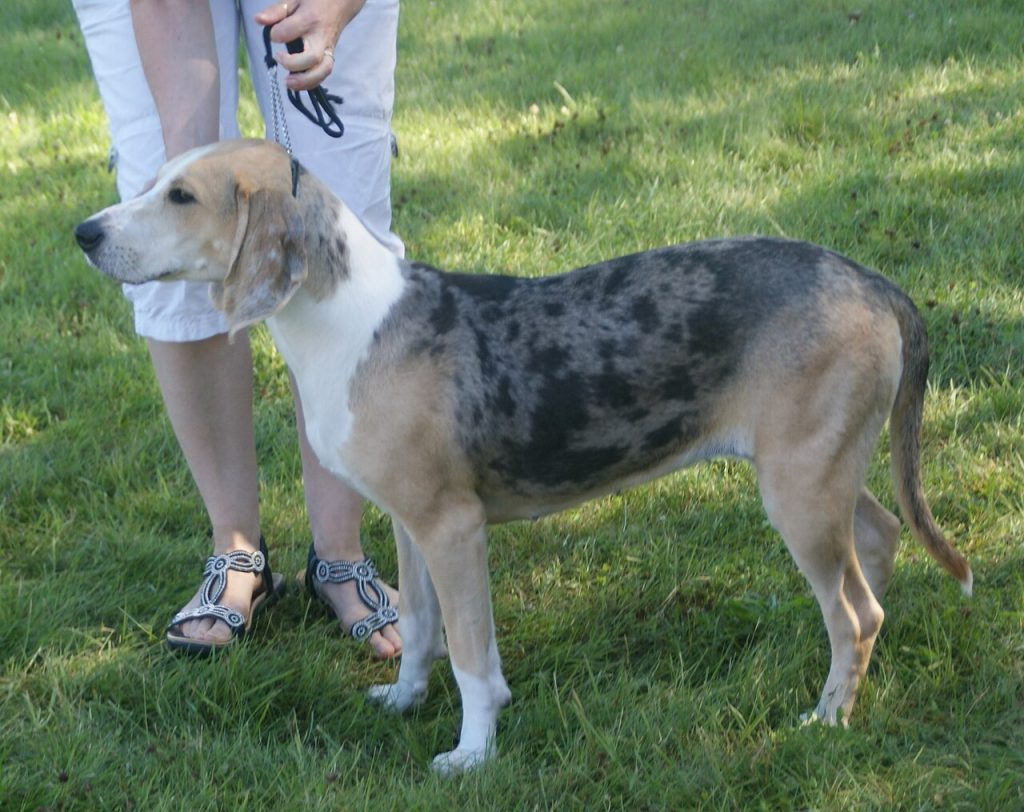
The Dunker Hound(known in its country as Dunker or norwegian hunter) is a medium-sized tracking dog originally from Norway, bred in the early 19th century to chase hares by smell.
Is that the Hound of Dunker for you?
The Dunker Hound is a wonderful dog in the right hands and a source of trouble in the wrong ones. Before you fall in love with its jasper coat, ask yourself an honest question: Can you give it the physical and mental exercise of a hunting dog every day? If the answer is yes, you will have a balanced, loving, hardworking companion. If not, almost any other breed will fit better.
In favour .
- Friendly, sociable and non-confrontational.
- Extraordinary sense of smell and great resistance to field work.
- Smart and easy to educate with positive reinforcement.
- Rustic and healthy in well-bred lines.
- Discreet at home: barely barks if he’s well exercised.
To be taken into account
- Very high need for exercise; not fit for sedentary life.
- Strong tracking instinct: tends to follow smells and ignore the call.
- Deafness risk linked to the jasper mantle gene.
- Very rare breed; hard to find outside Scandinavia.
- It gives voice when following a trail during the hunt.
Character and temperament

The Dunker Hound brings together two souls that coexist without conflict: that of the tireless hunter and that of the quiet housemate. In the field it is a robust, determined dog with a huge range of action; it follows a trail with total concentration and maintains the effort for hours. At home, on the other hand, it is relaxed, friendly and not problematic, as long as it has burned energy before.
It is a dog of a balanced nature, not prone to aggression and very people-oriented. He enjoys the company of his family and considers himself a good house dog when offered the activity that his body and head demand. That ‘s the key to his whole character: The Dunker is not a quiet “factory” dog, but an athlete who becomes calm when he is satisfied. Depriving him of exercise is the quickest way to bring out the worst in him: boredom, restlessness and undesirable behaviour.
Coexistence: children, other pets, flat and loneliness
With children:‘s gentle and patient nature makes it a good companion for families with children.
As a pack dog, With other dogs: usually gets along well with other dogs and appreciates canine companionship.
With other pets: is a hunting dog with a highly developed prey instinct; coexistence with cats, rabbits or other small animals can be complicated and requires early socialization and a lot of head.
On the floor and in the solitude: is not his natural environment. He can adapt to a house with a garden or even an apartment if he gets a lot of exercise, but he does not tolerate isolation and long days in solitude.
Education and training

The Dunker Hound is an intelligent dog and is considered easy to train when working with positive reinforcement, for example through clicker training. It quickly learns meaningful tasks and especially enjoys olfactory work, which connects directly to its original purpose.
The big challenge is not their ability, but their motivation. When he catches an interesting trail, his hound instinct can impose obedience, so the call (the “here”) must be intensively trained and greatly reinforced from puppyhood. Socialization should begin early, using high-value rewards and avoiding harsh methods, which turn off a dog so sensitive to teamwork. Patience and constancy yield far more than imposition.
A practical recommendation: channel your sense of smell with search games, home trails, and, if possible, nose sports. A Dunker who has “a job” is a polite dog; one who is bored will seek his own entertainment.
Exercise and activity
If you remember just one thing from this article, let it be this: the Dunker Hound needs a lot of exercise. It was bred to cover long distances chasing hares by smell, and it’s one of the few harehounds able to work on thick snow in the middle of winter. That resistance doesn’t go away because it lives on a couch.
You need at least daily vigorous exercise: Long walks, running, exploration and, above all, activities that put your intelligence and your nose to work. Mental stimulation is as important as physical stimulation; a bit of tracking tires a hound more than a monotonous walk. By his strong instinct, open areas must be safe or worked with a lot of call before releasing him, because a trail can take him far away.
Care: fur and hygiene

The maintenance of the Dunker Hound is simple. Its coat is straight, hard, dense and not too short, a functional coat designed to protect it from cold and weeds. A weekly brushing is enough to remove the dead hair and keep the coat healthy; in moulting seasons it is advisable to increase the frequency.
He doesn ‘t need frequent baths . Only when it gets really dirty. The rest of the hygiene is the usual routine of any hunting dog: checking and cleaning hanging ears to prevent infection (especially after going out in the field), cutting nails, monitoring pads and hair between the fingers, and maintaining good dental hygiene. After each day of activity, it is advisable to inspect it for ticks, spikes or wounds.
Foodstuffs
As a medium-sized working dog with high energy expenditure, the Dunker Hound needs a complete and balanced diet, adjusted to its actual activity level.
Split food into two daily servings, avoid being overweight – especially in less active dogs – and take a break around meals to reduce the risk of digestive problems. Adjust the amount and type of food to age, weight and exercise load, and consult your veterinarian if you have any questions about a particular diet.
Health and life expectancy
The Dunker Hound is a rustic breed and, in general, robust and healthy, the result of its origin as a working dog selected for functionality.
The first is the hypoplasia of the hip, which appears occasionally, as in many medium and large sized breeds. The second, more characteristic, is deafness, linked to the jasper mantle gene: It has been reported that a significant percentage of dogs may have impaired hearing in one or both ears, a problem that is triggered when two Jasper dogs are crossed. That’s why it’s essential to go to responsible breeders who do hearing tests and plan head crossings.
Regarding life expectancy, there is no widely published official figure for the breed; as a reference, well-kept medium-sized hounds usually live around 12-15 years.
Physical appearance
The Dunker Hound is a medium-sized dog, of athletic build and harmonious proportions, neither heavy nor excessively light.
The head is noble and elongated, with a flat-parallel skull and snout, well-defined stop, and clean cheeks; the truffle is black and broad-shouldered. The eyes is round, large, and dark, although the jasper gene may lighten them or result in blue eyes.
The body features a long neck without a paw, oblique shoulders, straight front limbs, a level upper line, and a wide, muscular back.
Its most distinctive feature is the coat: straight, hard and dense hair, in the characteristic black or blue jasper (“blue marbled”, a merle variant) combined with pale fire and white spots.
Origin and history
The breed owes its name to Wilhelm Dunker, a Norwegian who at the beginning of the 19th century set out to create a harehound capable of hunting guided by smell and not by sight.
The result was a methodical tracker, designed to chase hares for hours over any terrain, including snow. Over time it was consolidated as a Norwegian national breed, recognized by the FCI within Group 6 (hound-type dogs and similar breeds), in the medium-sized hounds section. Despite his worth, he never became popular outside his homeland: Today it’s still a basically Norwegian dog.
Curiosities
- It’s a Scandinavian rarity. is a very rare breed: most specimens live in Norway and Sweden, and it is estimated that around 150 puppies are born a year worldwide.
- A snow hunter. is one of the few hare hunting dogs capable of working on thick snow during the winter, a feat few breeds match.
- It’s a marble cloak. Its blue jasper is not only aesthetic: it comes from the merle gene, the same one that brings beauty to the mantle and, at the same time, requires a careful offspring for its relationship with deafness.
- Baptized with a last name. Few breeds literally bear the surname of their creator; the Dunker is one of them.
- He’s a close relative. shares history and family airs with another Norwegian hound, the Hygenhound (Hygenhund), which arose in a similar hunting context.
If you are attracted to the Dunker Hound for its smell and its passion for tracking, you will be interested in other hounds and hunting dogs with a similar character. Check out the Beagle, another expert on hares and rabbits; the unmistakable Basset Hound; the legendary Bloodhound tracker; and, among the hunting dogs par excellence, the stylish Pointer.
Frequently Asked Questions about the Dunker Hound
Is the Dunker Hound a good family dog?
Yes, within the proper context. It is a friendly, balanced, non-confrontational dog that gets along well with people of all ages. The condition is key: It needs a lot of activity and, in its native Norway, it is considered a good family dog especially when its hunting instinct is also given a go. A sedentary family that leaves him locked up without stimulation won’t get the best version of him.
How much exercise does a Dunker Hound need?
It is a tracking dog with an enormous range of action when working, bred to chase hares for hours, even over thick snow. It is not satisfied with a short walk: it requires intense daily exercise, long walks, tracking and games that put its nose and head to work.
Does the Dunker Hound bark a lot?
Outside of hunting, no. If it’s well-trained, it rarely barks at home. The story changes when it follows a trail: like a good hound, it then gives voice to warn of the piece. A Dunker who barks insistently in daily life is almost always a dog that lacks exercise or mental stimulation.
Is it easy to train?
It is an intelligent dog and is considered easy to train when using positive reinforcement, for example the clicker. It responds well to the work of smell and to tasks with meaning. The challenge is not intelligence, but motivation: when it catches a trail, its instinct can do more than obedience, so it is advisable to reinforce the call a lot and work with patience.
What health problems does the Dunker Hound have?
It’s a rustic breed and generally healthy, but there are two things to watch out for. Occasional hip dysplasia, and more frequently deafness, is associated with the jasper mantle gene (merle); in poorly controlled breeding, high percentages of individuals with impaired hearing in one or both ears have been reported. That is why it is essential to go to breeders who test the hearing and avoid crossing two jasper specimens with each other.
Does the Dunker Hound adapt to living in a flat?
It’s not his ideal environment. He can live on the floor if he gets a lot of daily exercise, but he’s a field, hunting and space dog. In an urban household without enough activity he tends to get bored, gain weight and develop undesirable behaviors. He fits much better with active, rural or hunting families.
How tall and how much does a Dunker Hound weigh?
It is a medium-sized hound. The males measure between 50 and 55 cm at the withers and the females between 47 and 52 cm. The weight is around 16 to 18 kg, with an athletic and functional constitution more than heavy.
Is it a common breed?
No, it’s a very rare breed. The vast majority of specimens are in Norway and Sweden, and it’s estimated that they give birth to about 150 pups a year. Outside of Scandinavia it’s very hard to see, so getting one usually involves contacting Norwegian breeders.