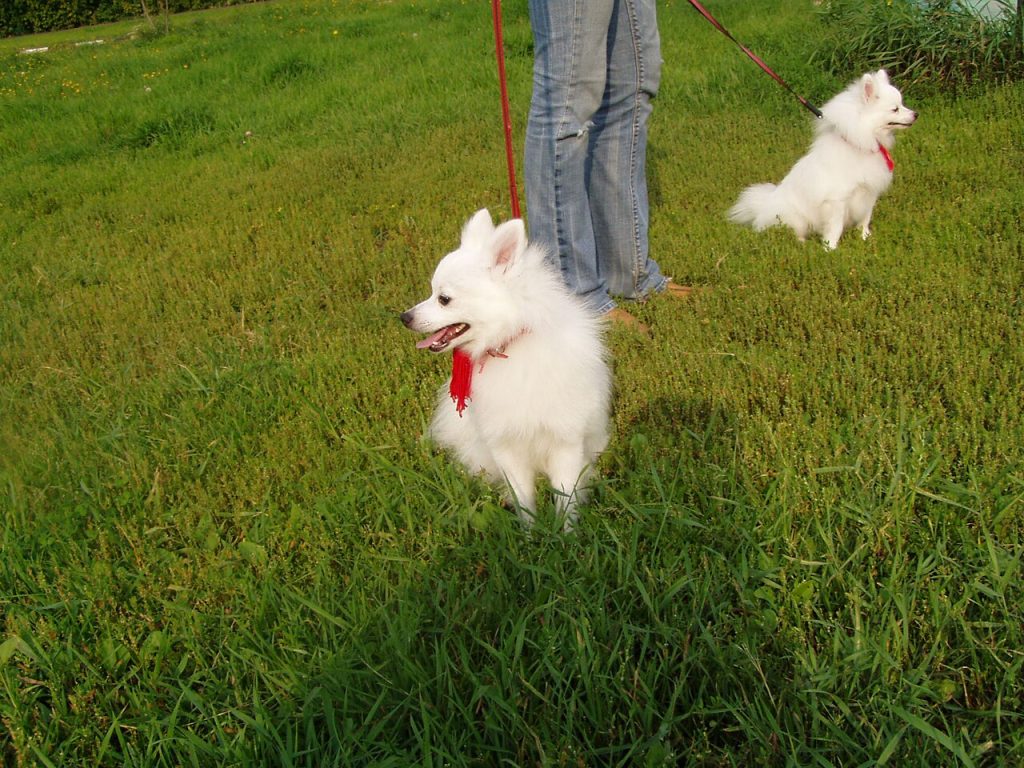
The Volpino Italiano is a spitz-type dog originating from Italy, small, snow-white (although there are also red and black) and with a huge character inside a tiny body. Descended from the ancient European spitz and a close relative of the pomerania, this “Italian hornet” was a guardian of couriers and shepherds in Tuscany and Lazio, was on the brink of extinction and today remains a rare gem. If you’re looking for an alert, loyal, vigilant family companion, the Italian Volpino deserves a thorough introduction.
Is the Italian Volpino for you?

Before you fall in love with that fox face, be honest: The Italian Volpino is a dog with a marked personality. It is an exceptional companion for those looking for a small, attached and alert dog, but its tendency to bark and its demanding coat do not fit everyone. This is a quick snapshot of its pros and cons.
Points in favour
- Small size, ideal for flat and urban living.
- Very close and loyal to his family.
- Smart and sharp, he learns easily.
- Excellent warning and surveillance dog.
- Rustic and long-lived breed (14-16 years).
- Cheerful, playful and full of positive energy.
Points to Consider
- It barks a lot: we have to educate the warning early.
- Long coat that requires frequent brushing.
- Territorial character: needs early socialization.
- Rare breed, hard to find and on a waiting list.
- You can become dependent if you spend a lot of time alone.
- Hereditary predisposition to eye disease.
Character and temperament
Don’t be fooled by its size: the Italian Volpino has a determined, energetic, and courageous temperament that weighs just four or five pounds. It is a cheerful and playful dog, deeply attached to its owners, to the point of becoming their shadow around the house. This devotion to family is its most characteristic trait and what makes it such a good companion.
Along with this attachment, there is a strong vigilant instinct. The Volpino is territorial, always alert and alert to any strange noise or movement, and will not hesitate to warn with barking when something goes wrong.
It is also a dog of remarkable intelligence. It quickly grasps routines, understands the mood of its owners and enjoys games that make it think.
Coexistence: children, other pets, flat and loneliness

With children: The Volpino is affectionate and playful, and usually enjoys the company of the smallest in the house.
With other pets: gets along well with other dogs and animals when it has been socialized since puppyhood. Its territorial nature can make it challenging to unfamiliar dogs despite its size, so calm and gradual introductions make the difference.
On the floor: is a dog perfectly adapted to apartment life. It does not need large spaces and is content with its daily walks. The only great nuance is the barking: in a building with neighbors, controlling when and how much it barks is essential for a peaceful coexistence.
In the face of loneliness: here is its Achilles heel. Its intense attachment makes it unable to bear long absences and it may develop separation anxiety if left alone for many hours.
Education and training
The Italian Volpino is intelligent and quick to learn, but it also has its point of independence and stubbornness so typical of the spitz. The combination calls for an education based on positive reinforcement, patience and, above all, constancy. Short, varied and fun sessions work much better than long, monotonous repetitions, which bore him immediately.
Two fronts concentrate almost all the work. The first is the control of barking: as a born warning dog, you have to teach him from a puppy when it is right to warn and when he should be quiet, rewarding silence instead of scolding the barking. The second is early socialization, key to softening his territorial character and accepting naturally to people, dogs and new situations.
He avoids harsh methods, which are counterproductive in such a sensitive and attached dog, which responds much better to praise and rewards than to excessive firmness.
Exercise and activity
Despite its energy, the Volpino is not a dog of great physical demands. With one or two daily walks and playtime at home or in the garden it covers its needs abundantly. It is an active and curious animal that loves to run, chase toys and participate in everything the family does.
More important than the amount of exercise is mental stimulation. Their intelligence demands entertainment: interactive toys, olfactory games, and small obedience challenges keep them balanced and prevent boredom, which in this breed often translates into barking and mischief.
Care: fur and hygiene

The coat is the mark of the Volpino’s identity and also its most demanding care. It has a double, long, abundant and very curly hair, which separates from the body giving it that cotton ball appearance. To keep it healthy and without knots it is advisable to brush it several times a week, and even daily in the seasonal moult periods, more intense in spring and autumn.
Interestingly, it doesn’t need scissor cuts: the standard values natural hair, so the work focuses on brushing, not shearing. Bathing should be punctual, only when the dog is really dirty, so as not to damage the natural protective coat of the coat.
The rest of the hygiene is the usual in a small dog: checking and cleaning the ears, brushing the teeth regularly to prevent tartar (frequent in small breeds) and cutting the nails when they do not wear out on their own.
Foodstuffs
As a small, long-lived dog, the Italian Wolfhound needs a quality diet tailored to its size, age and activity level. A specific feed for small breeds, with a crochet adapted to its jaw, or a balanced diet supervised by a veterinarian, meet its needs without complications.
Control of the quantity is important: being a heavy dog, a small excess of food or prizes is immediately translated into overweight, which punishes its joints and its general health.
Health and life expectancy
The Italian Volpino is, as a whole, a rustic, healthy and remarkably long-lived breed, with a life expectancy that is usually in the 14 and 16 years range.
The best-documented health issue is primary lens dislocation(LPP), an inherited eye disease that affects many breeds and can cause pain and even blindness if left untreated.
In addition to this, regular monitoring of small dogs is advisable: dental care to prevent tartar, weight control and regular veterinary checkups.
Physical appearance
The Italian Volpino is a miniature spitz of almost square silhouette, with a body as long as high. It is a small dog that does not exceed 30 centimeters at the cross approximately, with a weight of around 4 or 5 kilograms. Its bearing is proud and compact, with a fox’s head, erect triangular ears and vivid and expressive eyes that give it a wakeful look.
Its most striking feature is the tail curled over the back and, above all, the mantle: long, dense and separate from the body, with a thick hair collar around the neck that resembles a mane. In terms of color, the classic is the pure white, followed by the intense red and the black; the updated standard also tolerates other colors. That fluffy coat and that lively stuffed air are an essential part of her charm.
Origin and history
The Volpino is a dog with very ancient roots. Its strain belongs to the European spitz, the same family that gave rise to the Pomeranian and the German spitz.
During the 18th and 19th centuries it was a common dog in Tuscany, where it was known as Cane of Florence(Florence dog) and served as a guardian to carriage drivers and shepherds, and in Lazio, where it received the name Cane of the Quirinale. In 1888, Queen Victoria of the United Kingdom, during a visit to Florence, took with her several dogs of the spitz or pomerania type, a testimony to the appreciation that the breed aroused.
The first Italian Volpino standard was drafted by the Italian Kennel Club in 1913, and the International Kennel Federation fully recognized it in 1956. However, by the 1960’s the breed had all but disappeared and was on the brink of extinction. A few specimens were located in 1968 and records resumed in 1972, beginning a slow recovery. Today it’s still a minority race: In Italy, between 2011 and 2019, an average of about 160 puppies were registered per year.
Curiosities
- Its name literally means “zorrito”(from it ‘s back ., fox in Italian), for its resemblance to this animal: sharp head, erect ears and curled tail.
- It is a very close relative of the Pomeranian and the German spitz, with which it shares common spitz ancestors.
- In ancient Rome and until recent times it accompanied the couriers: it slept on the cargo and warned with barking if someone approached, a perfect sentry despite its size.
- It was so close to extinction that in 1968 only a few locatable specimens remained; its recovery is a small story of canine rescue.
- Unlike other long-haired breeds, its coat is not trimmed or sculpted – it is valued as completely natural.
If you are attracted to this small, quick-witted spitz, you may be interested in other breeds with a lively temperament or a Nordic air. You may discover the spectacular Samoyedo, another white spitz with an abundant coat; the unmistakable Chow Chow of Asian origin; the hardy Husky Siberiano, a sleigh spitz par excellence; or the lively Yorkshire Terrier, another small and brave companion ideal for floor life.
Frequently asked questions about the Italian Volpino
Does the Italian Volpino bark a lot?
Yes, it tends to be quite barking. Its guardian instinct and alert nature lead it to warn of any noise or novelty. This is one of the reasons it has historically been used as a warning dog. With early socialization and obedience work it can be moderated, but it is advisable to count on it, especially on the floor.
Is he a good dog to live on?
Yes. Its small size and strong attachment to the family make it suitable for apartments, provided it receives daily walks and company. The main point to watch in an apartment is the tendency to bark: educating the warning from a puppy avoids conflicts with neighbors.
How long does an Italian Volpino live?
As a small, rustic dog, with good nutrition, moderate exercise, and regular veterinary checkups, it usually remains active well into old age.
Does the Italian Volpino shed a lot of hair?
It has a long and abundant double coat that sheds continuously and with more intense seasonal moulting in spring and autumn.
Do you get along with children and other pets?
With proper socialization, it is a good companion for families with children, always under supervision due to its small size.
Is it easy to educate?
He is very intelligent and learns quickly, but he is also determined and somewhat independent. He responds well to positive reinforcement and to short and varied sessions. Consistency is key: controlling the barking and reinforcing the call are the two main fronts of his education.
How much exercise does the Italian Volpino need?
It needs moderate activity: one or two daily walks plus games at home or in the garden are enough to keep it balanced.
What health problems does the breed have?
The best documented hereditary problem is primary lens dislocation, an eye disease that can cause pain or blindness. Acquiring the puppy from a breeder who performs eye tests reduces the risk.