The Bóxer is one of those dogs that gives everything: Muscular and athletic on the outside, but affectionate, clownish and eternally puppy on the inside. Born in Germany as a working and guard dog, today it is above all a loyal and protective family companion. In this comprehensive guide you’ll find everything you need to know before sharing your life with a boxer: character, coexistence, education, exercise, care, health and their curious history.
Is the Boxer for you?
The Boxer is a high-energy dog, very attached to its people and with a strong guarding instinct. It fits wonderfully into active families that spend time at home and enjoy daily exercise; instead, it suffers when it is left alone for many hours or asked to be a quiet couch dog.
In favour .
- Extraordinarily loyal and attached to his family.
- Excellent with children: patient, playful and protective.
- Good guardian by nature, brave and wary of strangers.
- Short hair and minimal maintenance.
- Cheerful, funny and eternally young in spirit.
- Very versatile: company, guard, canine sports, therapy.
To be taken into account
- He needs plenty of daily exercise and mental stimulation.
- Loneliness is bad for him – it can be boring and destructive.
- Strong head: requires constant and positive education.
- It’s brachycephalic: sensitive to heat and intense exertion.
- Predisposition to serious health problems (heart, cancer).
- It can be abrupt in play and dominant with other males.
Character and temperament
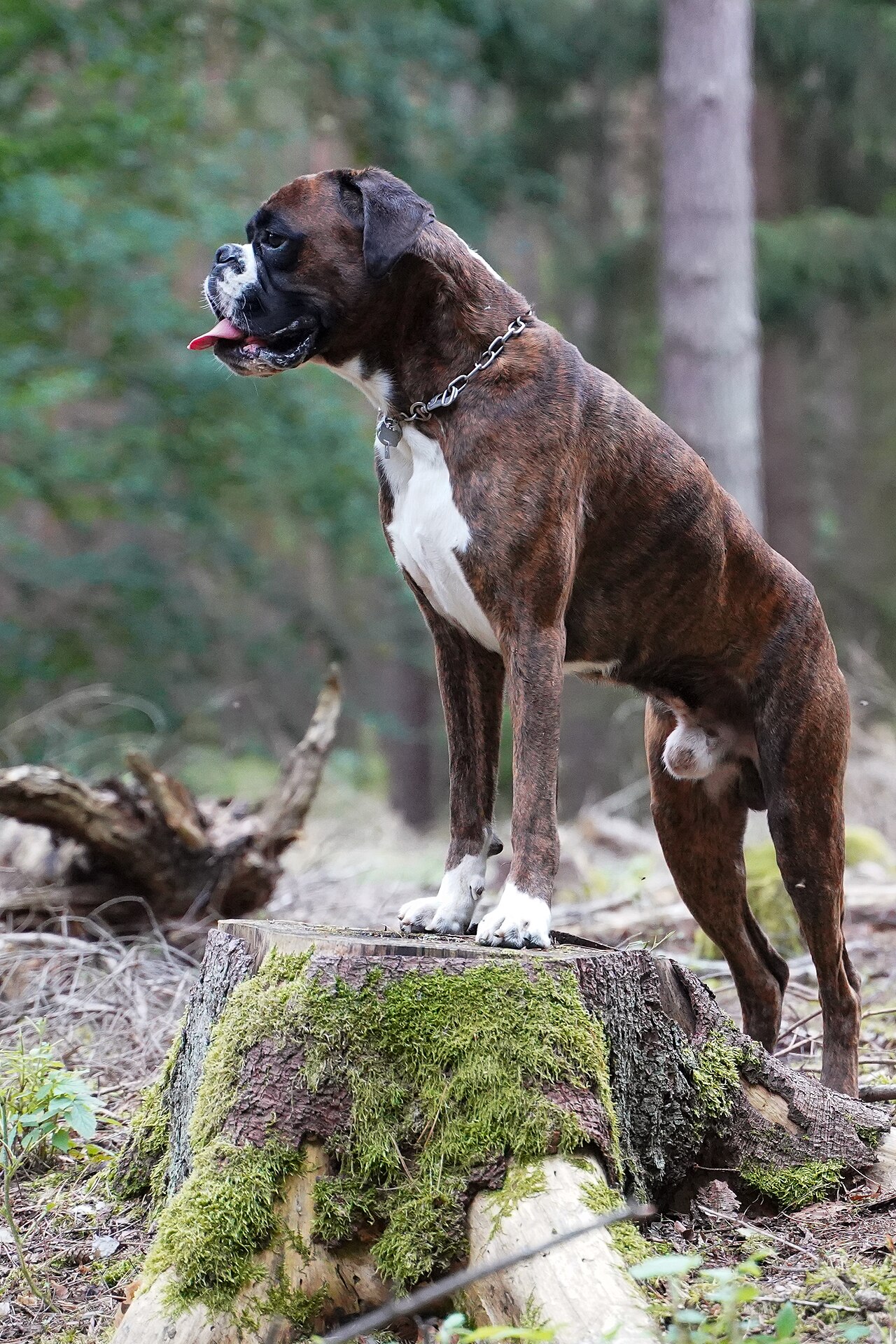
If we had to sum up the Boxer in one word it would be family. It is a dog faithful to the bone, vigilant and deeply connected to the people with whom it lives. It combines two seemingly contradictory souls: that of the tireless clown who wants to play at all hours and that of the serious guard who transforms as soon as he perceives a threat to his own.
In day-to-day life it is balanced, sociable and of a cheerful character. With its family it is affectionate, sensitive and sometimes surprisingly theatrical: it is not uncommon for it to “speak” with soft growls, to jump out of pure happiness or to lean on its hind legs to “box” with the front ones, a gesture that, according to one theory, gave the breed its name.
With strangers it is naturally reserved and suspicious, without being an aggressive dog by default. The well-bred and socialized Boxer does not seek conflict, but defends its people with courage and remarkable power if it believes they are in danger.
Coexistence: children, other pets, flat and loneliness
- With children: is one of its great virtues: patient, playful and protective, tolerates the traits of the little ones well and rarely gets tired of playing.
- With other dogs: usually gets along well with dogs and is tolerant of puppies and small dogs. Tensions may arise with other adult males of the same sex, especially if not well socialized.
- With other pets: retains some hunting instinct inherited from the Bullenbeisser, so coexistence with cats or other small animals is easier if they grow together from puppyhood.
- On the floor: can live perfectly in an apartment as long as it is taken out for walks several times a day and gets enough exercise.
- In the face of loneliness: is its weak point. The Boxer needs company; if it spends many hours it only gets bored and behaviours such as nibbling, scratching or barking appear. It is not the ideal breed for someone who is out all day.
Education and training
The Boxer is intelligent and eager to please, but also has a reputation for being “headstrong”. The key is to start early, be consistent, and always use positive reinforcement.
Socialization during the first few months is the most important investment you will make. Positive exposure to people, other dogs, noises, and different environments builds a safe and fearless adult. It is also good to channel their energy and guarding instinct early with clear and consistent rules, because a bored or leaderless Boxer tends to make his own decisions.
It matures slowly: mentally it remains a playful puppy for several years, which makes training very fun but requires patience.
Exercise and activity
We’re dealing with an athlete. The boxer needs to expend his energy daily to stay balanced, healthy and free of problem behaviors. A good guideline is several outings a day that add up to about an hour and a half of activity, combining walks, play and mental work.
He loves to run, chase balls and dog sports like agility or obedience, where his agility and willingness to collaborate shine. Going for a run or riding a bicycle may be ideal, with one important caveat: It is not tolerant of heat and prolonged exertion. Avoid strenuous exercise in the middle of the day in summer to prevent heatstroke and respiratory problems.
Care: fur and hygiene
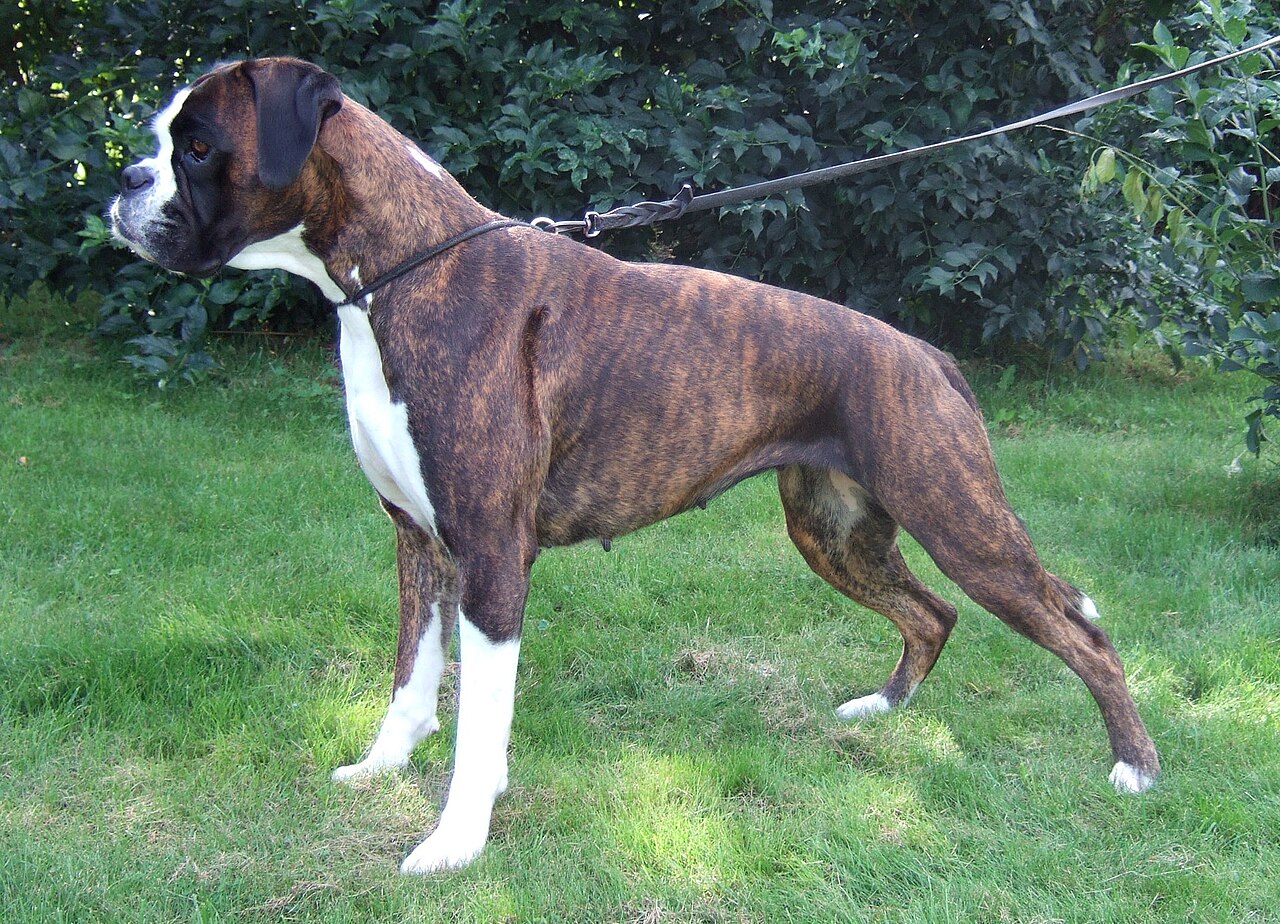
One of the great advantages of the Boxer is the low demands it makes on grooming. Its hair is short, smooth and attached to the body, so a weekly brushing is enough to remove the dead hair and keep the mantle shiny.
He needs few baths, only when he gets really dirty. He does need to pay attention to the small creases on his face and nose, keeping them clean and dry to avoid irritation. He completes the routine with regular nail trimming, cleaning his ears and, very importantly, dental hygiene.
As a short-haired, low-fat dog, the Boxer is sensitive to extreme temperatures: it gets cold in winter (a coat on walks helps) and chokes on heat.
Foodstuffs
The Boxer is a muscular and active dog, so it needs a high-quality diet, rich in protein and adjusted to its age, weight and exercise level. The amount changes greatly throughout its life: the growing puppy and the adult athlete do not eat the same, and the control of rations is essential for it to develop its musculature well without getting fat.
Because of his anatomy and his tendency to twist his stomach, it is highly recommended that he eat two meals a day instead of one, that he not eat anxiously, and that he not do strenuous exercise just before or after eating. Fresh and clean water should always be available, especially as it is sensitive to heat. If you have any questions about the particular diet or possible food allergies, consult your veterinarian.
Health and life expectancy
The Boxer’s life expectancy is around 10-12 years, although studies vary: some work in the UK, Denmark and Germany places it at around 10 years. It is, unfortunately, a breed with several important genetic predispositions, so choosing a responsible breeder who does health testing makes a big difference.
The most relevant problems to be monitored are:
- Cancer and tumors: is the leading cause of death in the breed; Boxers have a notable predisposition to developing various types of cancer.
- Cardiopatías: highlights aortic stenosis and boxer’ s arrhythmogenic cardiomyopathy(ARVC), a heart disease typical of the breed.
- Dysplasia of the hip and joint problems.
- Hipotiroidismo and endocrine disorders.
- Gastric dilation and torsion(tinnitus or “bloat”), a serious veterinary emergency.
- Digestive problems as ulcerative histiocytic colitis, sometimes called “Boxer’s colitis”.
- Eye problems as the entropy or indolent corneal ulcer (“Boxer’s ulcer”).
- Sensitive skin and allergic dermatitis.
Regular veterinary checkups, weight control, heat stroke prevention, and a good vaccination and deworming schedule help your Boxer live longer and better.
Physical appearance
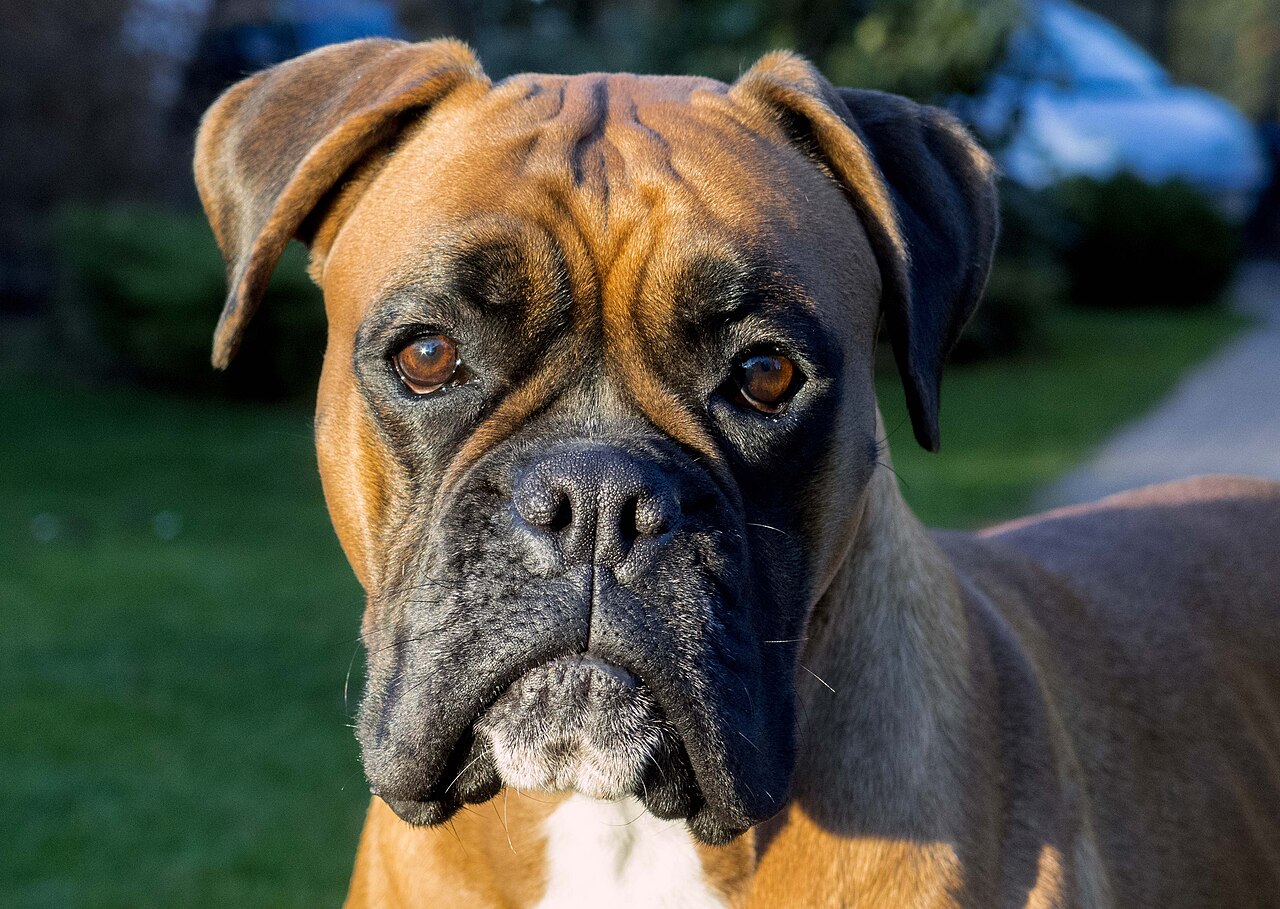
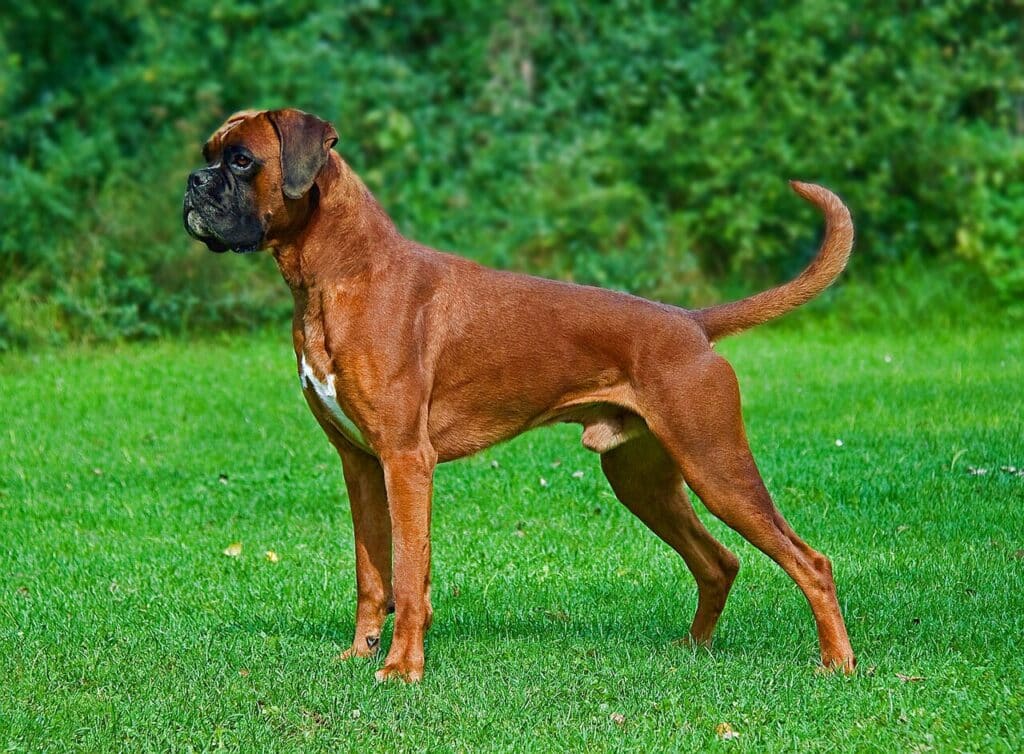
The Boxer is a medium to large-sized dog with a square build, strong bones and very marked and elastic musculature. It conveys an image of nobility, power and elegance in equal parts.
Its most distinctive feature is its head: brachycephalic skull, flat and broad snout, prognathic lower jaw (the famous “inverted bite”) and a characteristic black mask on the face.
The two recognised colours are lemonade(in its tones from golden to mahogany or reddish) and triggered(dark stripes on a lionside background), with or without white spots called flash.
Origin and history
The Boxer is a German breed developed in the late 19th century. Its direct ancestor is the Bullenbeisser(literally “bull biter”), a molose type hunting dog used for centuries to hold large prey such as wild boar, bear or deer, to which was added the blood of the Bulldog imported from England.
The modern story begins in Munich. The German George Alt crossed a female brought from France, Flora, with a local dog, and from that line descended Flocki, the first Boxer inscribed in the German book of origins after winning an exhibition in 1895-1896. A female, This is von der Passage ., is considered the mother of the breed. In 1895 the first club was founded in Munich, the Deutscher Boxer Club, which published the first standard in 1904.
During the First and Second World Wars the Boxer was used as a military dog: Courier, porter, guard and attack dog. The Second World War almost brought the breed to extinction, but dedicated breeders such as Friederun and Philip Stockmann, of the dom from breeder, kept it alive. After the war, soldiers returning home popularized the Boxer around the world as a companion, exhibition and guard dog. Today it belongs to Group 2 of the FCI (molosoids, dogo type) and the working group of the main canine clubs.
Curiosities
- The name “Boxer” would have to do with his habit of playing standing on his hind legs “boxing” with the forelegs, although there are several theories about its origin, some related to the Bavarian term Boxl.
- The Boxer is considered one of the progenitors of the Guatemalan Dogo and the extinct Cordoba fighting dog.
- It has given rise to fashionable crossbreeds such as the boxer (with labrador) or the boxita (with akita), although these hybrids generate controversy.
- It became one of the most popular breeds in the world: in 2013 it was the seventh most registered breed in the United States.
- About 20-25% of Boxers are born with white spots covering much of the mantle; these “White Boxers” are at greater risk of deafness and sunburn.
- The first Boxer Champion recognized by the American Kennel Club, in 1915, was named Dampf from Dom.
If you are interested in the Boxer, you may also want to learn about other breeds with which it shares roots or guarding characteristics. Take a look at the English Bulldog, one of its direct ancestors; the imposing Bullmastiff; the elegant German dog; or the intelligent and athletic Dóberman, another large guard dog of German origin.
Frequently Asked Questions About The Boxer
Is the Boxer a dangerous or aggressive dog?
By nature the Boxer is not an aggressive or vicious breed. It is an instinctive, loyal and courageous guardian, but balanced with its family. With good socialization from puppyhood it distinguishes perfectly between a visit and a real threat.
How long does a Boxer live?
Their life expectancy is around 10-12 years, with studies putting it at around 10 years. Adequate nutrition, controlled exercise, prevention of heat stroke and regular veterinary checkups help to lengthen and improve their lives.
Is Boxer good with kids?
Yes, it is one of his greatest virtues. He is patient, playful and protective with children, and rarely gets tired of playing. It is advisable to supervise the games because, out of pure enthusiasm, he can be abrupt with the little ones without malice.
How much exercise does a boxer need?
It is a high-energy dog that needs plenty of daily exercise: several outings that add up to about an hour and a half between walks, play and mental stimulation.
Can the Boxer live in a flat?
It is an indoor dog, very attached to its family, preferring to be indoors rather than isolated in a yard or garden.
Does the Boxer shed a lot of hair and how much care does he need?
It needs minimal maintenance. It has short and moderately loose hair all year round; a weekly brushing is sufficient. It needs few baths, care of facial folds, nail trimming, ear cleaning and regular dental hygiene.
What health problems does the Boxer have?
It is prone to cancer (its main cause of death), heart disease such as aortic stenosis and Boxer’s arrhythmogenic cardiomyopathy, hypothyroidism, hip dysplasia, gastric torsion, histiocytic colitis and eye and skin problems.
Why are some Boxers white and what does that imply?
About 20-25% of Boxers are born with white spots covering more than one-third of the mantle. They are not albinos: they are genetically lion- or tiger-colored with excess white. They have a higher risk of sunburn and a percentage (about 18%) may be deaf in one or both ears.