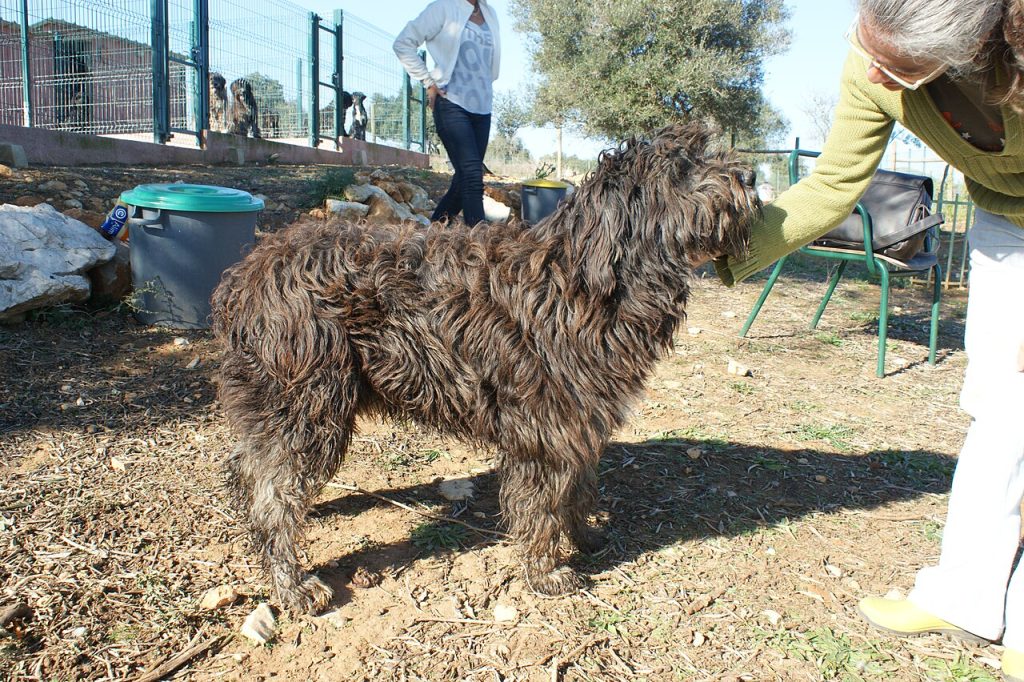
The Barbados is third. is a shepherd and guard dog native to the island of Terceira, in the Portuguese archipelago of the Azores. Rustic, balanced and deeply attached to its family, it is one of the most unique and unknown dog breeds in Europe: An Atlantic mountain boyer who today earns his living as a loyal companion. If you’re looking for a medium-sized, active, sociable dog with a fascinating island history, the Barbado da Terceira deserves a thorough introduction.
Is Barbados the third for you?
The Barbado da Terceira is a working dog turned into a companion, and that sets its profile: it needs an active family that gives it exercise, contact and something to occupy its head with. In return, it offers loyalty, cheerfulness and an unusual nobility. Before you look for one, honestly assess whether you fit in with its pros and cons.
In favour .
- Very close and loyal to his family.
- Smart and easy to learn.
- Balanced, cheerful and friendly at home.
- Rustic and weatherproof.
- Good goalie without being a free-for-all.
- Sociable with children when socialized well.
To be taken into account
- He needs a lot of physical and mental exercise.
- Very rare breed: difficult to find and breed.
- His boyar instinct may cause him to graze or control movement.
- Voluntary character: requires guidance and constancy.
- It’s not a dog to live isolated in a yard.
- The long coat requires regular brushing.
Character and temperament

The temperament is probably the best of the Barbado da Terceira. Official and breeder descriptions define it as an intelligent, affable, cheerful, sweet (meaty) and very loyal dog to its owner, with a marked will of its own.
That combination of affection and character has a clear root: For centuries it was a boyar who decided alone, in the countryside, how to drive and gather the cattle. Hence his remarkable initiative and self-confidence, which make him an alert, attentive, and fearless companion. He’s not a nervous dog or barks for no reason, but he’s vigilant: He warns of the strange and takes his role as house keeper seriously.
In everyday life, it is an expressive, communicative and very people-oriented dog. It enjoys company, seeks contact and gives itself to its family, but retains that point of autonomy that should be channeled with education and activity.
Coexistence: children, other pets, flat and loneliness
With children: The Barbado da Terceira is usually a tolerant, playful and protective dog with the little ones of the house. Its medium size and its cheerful character make it a good playmate, always with the supervision and mutual respect that any dog deserves.
With other pets: is a cattle herding dog, and if socialized as a puppy, it will get along well with other animals. It may show a tendency to “control” the movement of other dogs or small pets – an echo of its boyar instinct – but it is not aggression, but a desire to organize the scene.
Floor and solitude: can live on the floor as long as it receives plenty of daily exercise, but its ideal place is a house with terrain to move around. What it does not tolerate well is prolonged solitude: it is a dog that needs bonding and companionship, and isolated or without stimulation it can become bored, frustrated and develop undesirable behaviors.
Education and training
Educating a Barbado da Terceira is, in general, a thankful task. The Portuguese Caniculture Club itself emphasizes its “easy teaching”, that is, its ease of learning, and breeders agree that it is a dog that enjoys collaborating with its guide.
The recipe works best with positive reinforcement: rewards, play and friendly voice. It responds poorly to harshness, because it is a sensitive dog that does not need pressure to get involved. Its only delicate point is the stubbornness derived from its initiative: if it perceives that the rules are negotiable, it will try to impose its criteria.
The early socialization is fundamental: early exposure to people, other dogs, noise, city and countryside builds the balanced adult that this breed can become. As a working dog, it is grateful to have “duties”: obedience, tricks, scent work or herding give it the purpose its head needs.
Exercise and activity

There are no shortcuts here: the Barbado da Terceira is a real boyar dog, bred to drive and gather cows – even wild cattle – through the uneven terrain of Terceira for long days. That heritage requires a good dose of daily exercise.
It is an agile, dynamic and resilient dog that excels in activities where it can use both body and head at the same time: agility, obedience, tracking, mantrailing or, of course, shepherding if you have access to it. It is not enough for him to walk around the block; he needs to expend energy and, above all, to think. A Barbadian with his exercise dose covered is calm and manageable at home; a bored one, on the other hand, will find a way to entertain himself, and not always to your liking.
Care: fur and hygiene

The coat of the Barbado da Terceira is long, dense and wavy, with an abundant undercoat that protects it from the Atlantic, humid and windy climate of the Azores.
The ideal is a thoroughly brushed two or three times a week to avoid knots and remove dead hair, paying attention to the areas that are most entangled: characteristic beard under the jaw, ears, armpits and hindquarters. Bathrooms are reserved for when you really need them, with specific dog shampoo. He completes his hygiene with regular checkups of his ears (his abundant hair retains moisture), nail trimming, and a good dental routine. In spring and autumn seedlings it is advisable to intensify brushing.
Foodstuffs
Like any medium and active dog, the Barbado da Terceira needs a complete and balanced diet, adapted to its age, weight and level of exercise.
It is wise to adjust the ration to your actual expenditure – a working or exercising animal will need more energy than one with a quiet life.
Health and life expectancy
The Barbado da Terceira is, above all, a rustic and functional dog, the result of generations of natural selection and working in a demanding environment.
As it is a formally young breed with a very small population, no large health studies or official longevity figures have yet been published. For its size and type, it is reasonable to expect a life expectancy in the line of other medium-sized sheepdogs, around 12 to 14 years, always as an indicative estimate and not as a confirmed data. As with any medium-sized working dog, it is advisable to monitor joint health (hip and elbows), the condition of the ears for its abundant hair and keep up to date vaccinations, deparasitisation and veterinary checks. Working with responsible breeders who control the population and avoid inbreeding is key in such a minority breed.
Physical appearance
The Barbado da Terceira is a medium, solid and well muscled dog, with a rustic and harmonious image. The body is slightly longer than high, which gives it a compact and athletic appearance. The males measure between 52 and 58 cm at the cross and the females between 48 and 54 cm, with an average close to 55 cm; the weight is around 25-30 kg in males and 21-26 kg in females.
Its most distinctive feature is the coat: long, plump and wavy, with thick undercoat. The hair is especially thick on the head and, above all, under the jaw, where it forms the characteristic beard that gives the breed its name (“bearded”). As for color, it supports a wide palette: yellow, grey, black, lilac and wolf, in light, common or dark shades, with or without white spots on the breast, belly, legs or tail. The set conveys the image of a field dog, balanced, agile and prepared for work.
Origin and history
The history of Barbado da Terceira is inseparable from the island of Terceira, in the Azores. The breed descends from the dogs that settlers and visitors brought to the archipelago from the beginning of their settlement, in the 15th century, especially those with aptitude for cattle management. In the isolation of the island, these dogs were shaped into an agile and hardy herder, capable of driving and gathering cattle – including wild cattle – and also acting as a guard.
For centuries it was a functional dog, known locally but without formal recognition. The situation changed from the 1990s onwards, when several studies were carried out on the population – in collaboration with the Clube Português de Canicultura, the Direcção Regional de Agricultura de Terceira and the University of the Azores – culminating in its formalization as a breed. In in November 2004, it was officially recognized by the Clube Português de Canicultura and the Direcção-Geral de Veterinária de Portugal, making it the tenth Portuguese purebred dog recognized by the CPC.
A 2005 census counted 222 specimens, and that same January a monographic exhibition was held in Terceira with 73 participants. Today there are two associations of the breed – one in Terceira itself and another in mainland Portugal – and a small nucleus in the United States, where since 2021 it is included in the Foundation Stock Service of the American Kennel Club.
Curiosities
- Its name literally means “third beard”: the beard under the jaw is its hallmark.
- It is one of the most recent Portuguese dog breeds to obtain official recognition: the tenth recognized by the Portuguese Caniculture Club.
- He was bred to handle even wild cattle, the semi-wild cattle of the island, which says a lot about his bravery and agility.
- With just a couple of hundred specimens counted in its beginnings, it is a genuinely rare breed and a treasure of the Azorean heritage.
- Despite its hard-working past, today it stands out as a companion dog for its sweet, family-like nature.
If you are attracted to the profile of the Barbado da Terceira – a medium-sized, intelligent, family-friendly herding dog – you may also be interested in other herding breeds with which it shares energy and skills. Border Collie Pastor Australiano Pastor Alemán Collie
Frequently Asked Questions about Barbados da Terceira
Is the Barbado da Terceira an officially recognized dog?
Yes, but regionally. The Clube Português de Canicultura recognized it as a breed in November 2004 and the Direcção-Geral de Veterinária de Portugal also admitted it that year. To date the FCI (Federação Cinológica Internacional) still does not recognize it.
How tall and how much does a Barbado da Terceira weigh?
It is a medium-sized dog. The males measure between 52 and 58 cm at the withers and the females between 48 and 54 cm, with an average around 55 cm. The weight is around 25-30 kg in males and 21-26 kg in females.
What color could his coat be?
The coat is long, abundant and wavy, with dense undercoat. The colours allowed are yellow, grey, black, lions (purple) and wolf, in light, common or dark tones.
Is he a good family dog?
Yes. Although born as a working dog, its affectionate, cheerful, and very attached nature to its owner has made it an excellent companion. It is sociable and affectionate at home, but it needs daily exercise and mental activity to be balanced.
Do you need a lot of exercise?
It comes from a boyar dog accustomed to driving cattle for hours, even wild cattle. It needs at least one or two long walks a day plus play, sniffing work or canine sports. A bored Barbadian tends to look for homework on his own.
Is it easy to educate?
Yes. It is an intelligent and willing dog that loves to collaborate, and the Portuguese Caniculture Club itself highlights its “easy teaching” (simple learning). It responds very well to positive reinforcement. It is advisable to socialize it early and give it clear rules, because its initiative can become stubbornness if it is not guided.
How much care does your hair need?
A thorough brushing two or three times a week is enough to keep the mantle healthy and avoid knots, especially on the beard, ears and hindquarters.
Is this a rare breed?
Yes, it is very rare even in Portugal. A 2005 census counted only 222 specimens and today the population is still small, concentrated on the island of Terceira and mainland Portugal, with a small core in the United States. Outside there it is very difficult to find.