Gastric torsion: the urge to kill in hours and how to prevent it
Your dog eats dinner as usual, goes out into the garden, and, half an hour later, starts walking around restlessly, drooling, trying to vomit, and nothing comes out. His stomach’s starting to swell. What appears to be a simple packaging may be gastric torsion, one of the most brutal veterinary emergencies in existence: Without treatment, a healthy dog can die in a matter of hours.. The good news is that recognizing the early signs and applying a few preventive measures completely changes the outcome.
In this guide, I’ll tell you, without dramatization but without sweeteners, what exactly gastric torsion in dogs is, why it kills so fast, which breeds are in the crosshairs, and what you can do from home to reduce your risk.
What is gastric torsion and why is it so serious
Gastric torsion, known technically as gastric valve dilation (GDV) or simply “bloat”, occurs in two phases that are usually chained together. First, the stomach becomes dilated by filling up with gas, food and liquid without being able to empty. Then, that swollen stomach broken on its own(the volvulus), sealing both the entrance and exit. From there, nothing can come out: Not the gas, not the food, not the air that the dog swallows when it gasps in pain.
It’s not just the stomach. As it rotates and expands, it compresses veins as big as a cave, cutting off the return of blood to the heart. The dog enters shock, the stomach wall begins to die from lack of irrigation, the spleen (which is attached to the stomach) also suffers and deadly heart arrhythmias can appear. That’s why people talk about an emergency that kills in hours: It’s not an Internet exaggeration, it’s the actual timeline of a picture that combines blockage, circulatory shock and tissue necrosis.
According to The American College of Veterinary Surgeons (ACVS), overall mortality is around 15% with treatment, but various veterinary sources place the range between 10% and 30%, and up to 38% when arrhythmias are already present at the time of diagnosis.
Symptoms: How to Recognize It in Minutes
Gastric torsion usually appears in the form of suddenly, often in the hours following a copious meal or drinking a lot of water at once.
- Unproductive arcades: tries to vomit again and again but nothing comes out, or just foamy drool.
- Swollen and tense abdomen, especially on the left side, which can drum if you hit it gently.
- Worry and Anxiety: can’t find posture, gets up, lies down, walks from side to side.
- Excessive drooling for not being able to swallow.
- Abdominal pain: complains when touching the belly or adopts the “prayer posture” (front legs on the ground and rear raised).
- Shortness of breath, pale gums, weakness and, at an advanced stage, collapse.
If your dog is a large breed and you see arches without vomiting + bloated belly + restlessness, it acts as if it’s twisting until a vet says otherwise. It’s one of those cases where a scare and a false alarm is much better than being late.
What to do (and what NOT to do) when suspicious
The key word here is speed. Gastric torsion is not cured at home or with home remedies. Your only job is to save time by getting to a veterinary center with surgical capacity as soon as possible.
What to do
- Call the emergency vet. as you prepare for departure and warn them you suspect gastric torsion, so they’ll be ready for you.
- Move the dog now., without waiting to see if it passes. Although it seems to improve a little, the volvulus does not resolve itself.
- Stay calm and avoid moving it abruptly.; if it’s too big, ask for help to lift it between two people.
What NOT to do
- No give him water or food “to come down”.
- No try to make him throw up or put anything in his mouth.
- No gives you human antacids, oils and no forum tricks.
- No wait until the next morning or until your usual clinic opens: find the nearest 24-hour emergency service.
At the hospital, the team will stabilize the dog with intravenous fluid therapy, it will decompress your stomach.(with a probe or puncturing the wall to release gas) and, once stabilized, take it to surgery to reposition the stomach and fix it.
High-risk breeds and dogs
Gastric torsion mainly affects dogs with big and giant with deep and narrow chests(high chest and compressed to the sides). This shape of the chest gives more room for the stomach to move and turn.
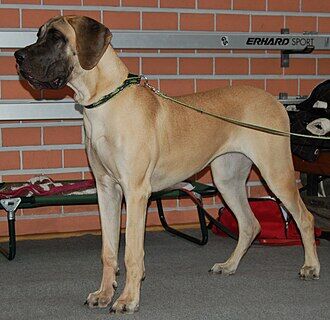
- The Gran Danés tops almost every list: it is estimated that dogs over 45 kg can have a lifetime risk of close to 20%.
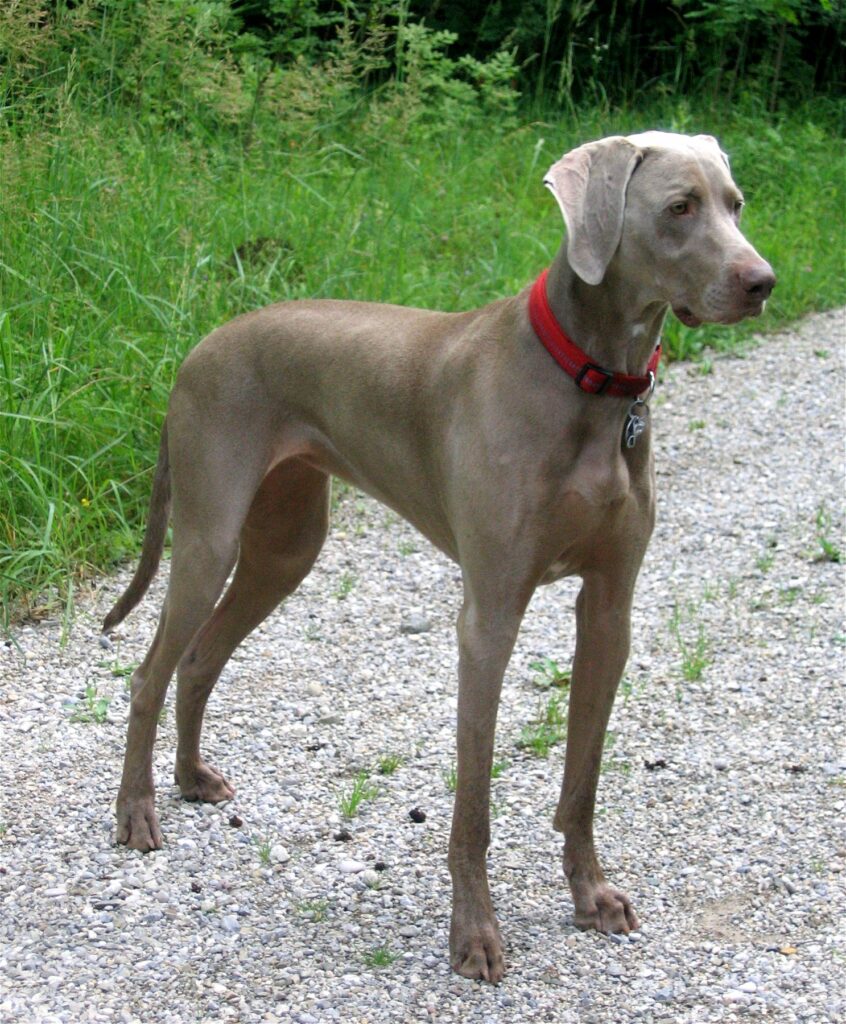
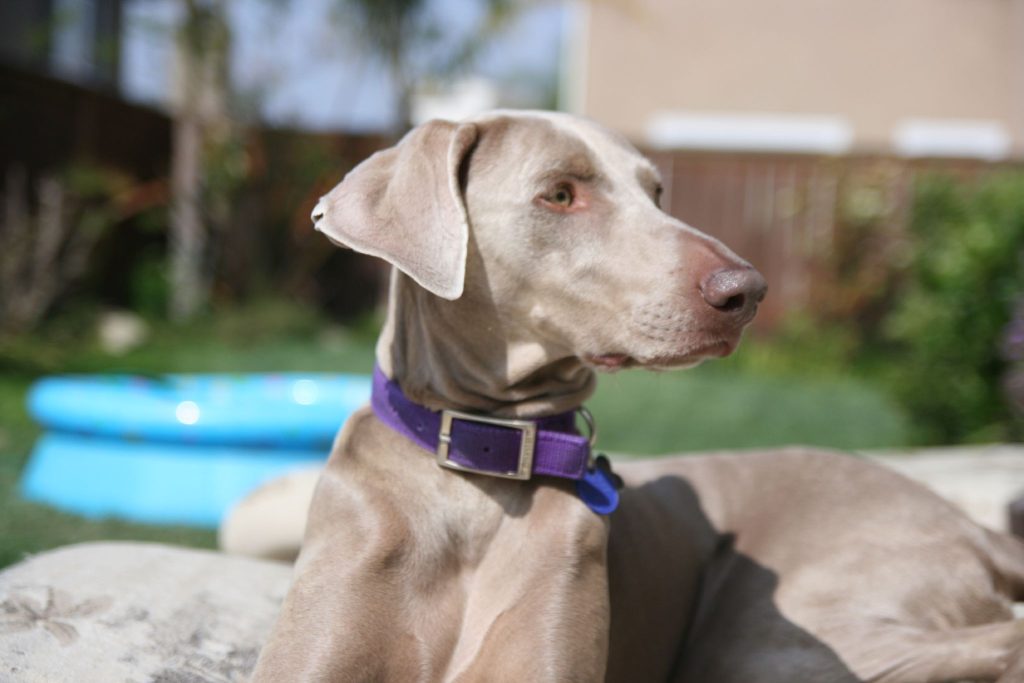
- The Weimaraner, another deep-chested, highly predisposed classic.
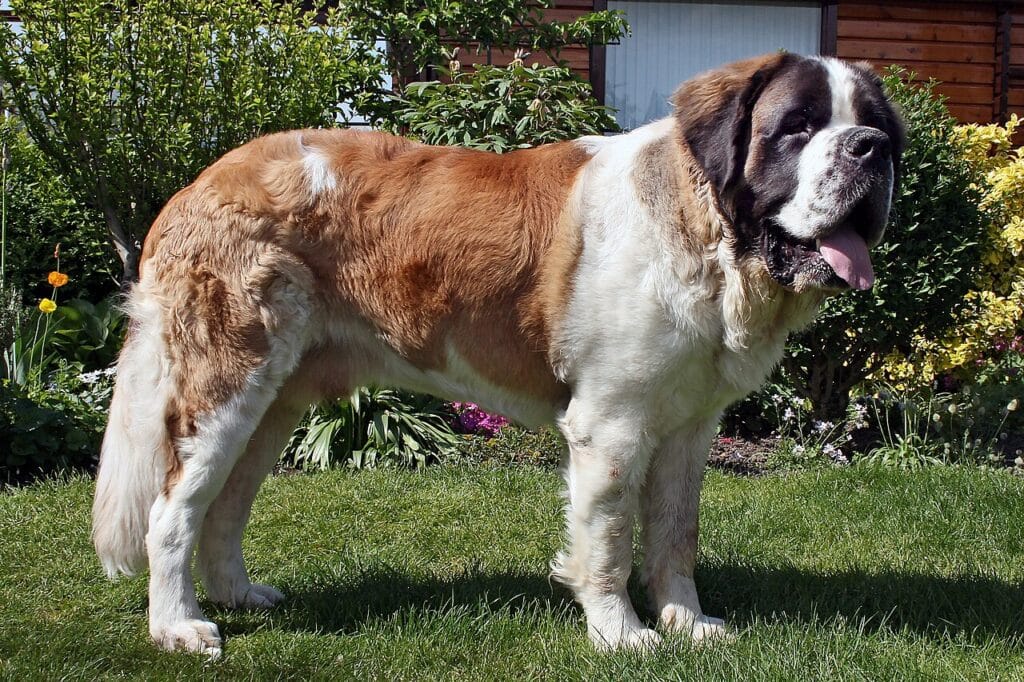
- The San Bernardo and other giant breeds with large thoracic wings.
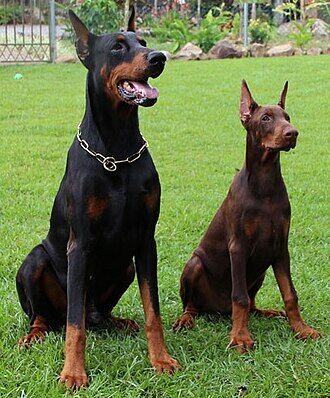
- The Dóberman, with its characteristic high and narrow chest.
- The Gordon Setter and the Irish Setter round out the “top 5” from several studios; and also feature the Big Poodle, Basset Hound and Bóxer.
Note: just because your dog is large doesn’t mean it’s going to get a twist, and just because it’s small doesn’t make it 100% immune (although the risk in mini breeds like the Chihuahua is very low).
Causes and risk factors
The exact cause of why a stomach decides to rotate on a particular day is still not entirely clear, and that’s where it pays to be honest: there are statistical associations, not absolute certainties.
| Factor | Why It Affects |
|---|---|
| Deep and narrow chest | The main anatomical factor; it leaves room for the stomach to move. |
| Eating only one big meal a day | Overload and dislocate the stomach at once. |
| Eat too fast | Inhale more air (aerophagy) with food. |
| Older age | The ligaments that hold the stomach together relax with age. |
| Relatives with torsion | There is a clear genetic component; the risk increases if a direct relative has had it. |
| Nervous or fearful temper | Stress and anxiety are associated with more cases. |
| Thin constitution | Very thin dogs are overrepresented compared to normal-weight dogs. |
One controversial point that deserves honest mention: For years the elevated feeder was recommended for large breeds, until a well-known Purdue University study (2000) suggested just the opposite, that high feeding troughs may increase risk. Subsequent studies did not reproduce that finding, so today the evidence is contradictory. When in doubt, many veterinarians prefer not to raise the feeder unless there is a specific medical indication. If your dog uses one for any other reason, discuss it with your veterinarian.
How to Prevent It – Practical Tips
There’s no way to eliminate the risk 100% without surgery, but you can reduce it considerably. with simple habits, especially if you live with a predisposed race:
- Break the food into 2-3 servings a day. instead of a single large one.
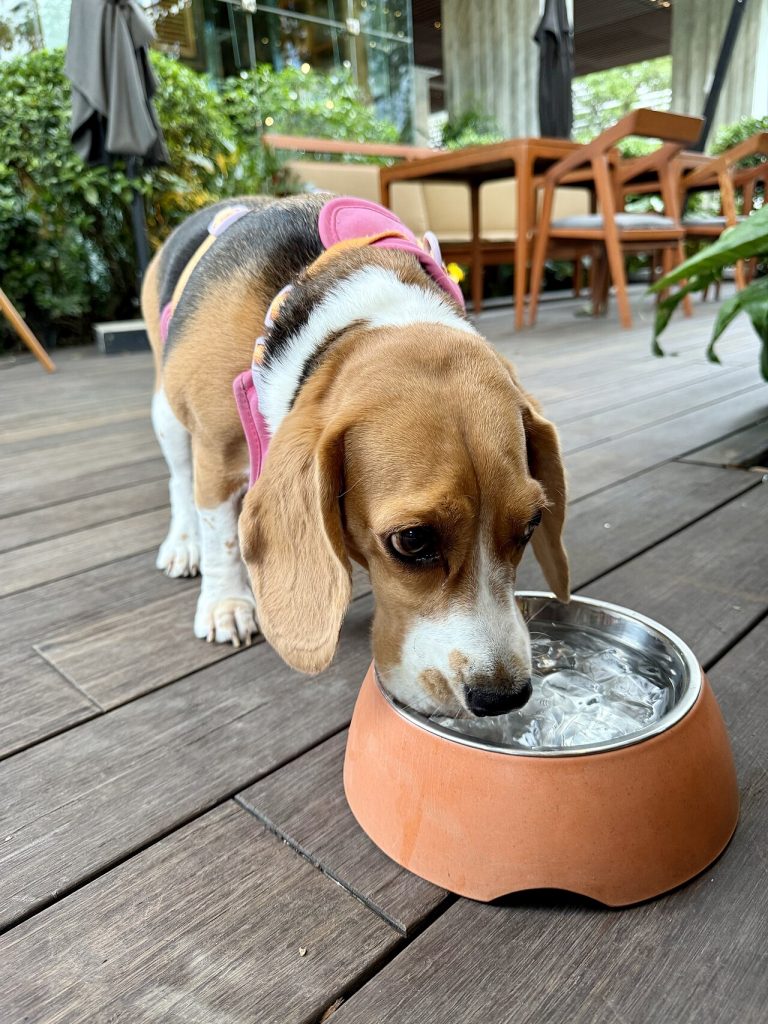
- Stop the eater.: use anti-volatility feeders (with reliefs) or distribute the ration on an olfactory carpet so that it does not swallow.
- Avoid strenuous exercise from an hour before to 1-2 hours after eating, no running or jumping on a full stomach.
- Control the water: better water available in small amounts than a whole bucket at once after exercise.
- Reduces stress at meals: if you have several dogs and they’re competing for the plate, feed them separately and calmly.
- Gradual changes in diet and, if your dog is at risk, discuss with your veterinarian whether a specific formula is suitable.
- Meet your dog.: learn where your emergency clinic is 24 hours a day and keep your phone handy.
None of these suggestions replace the veterinary criteria, but together they make a difference and are inexpensive to implement.
Gastropexy – The Surgery That Avoids It
The most potent preventative measure is prophylactic gastropexy: a surgery in which the stomach wall is attached to the abdominal wall so that cannot rotate. Eye, it does not prevent the stomach from dilating (simple “bloat” can still occur), but it prevents the volvulus, which is the part that actually kills.
The data are convincing: without gastropexy, the reoccurrence after a first torsion can exceed the 70%, while with the fixation low to very small figures.
In dogs of very high-risk breeds (such as Gran Danés), more and more veterinarians raise preventative gastropexy before anything happens, often using sterilization and with minimally invasive techniques (laparoscopy). It is not an automatic decision: you have to assess breed, age, family history and lifestyle with your veterinarian. But for certain breeds it is a conversation worth having.
Common Mistakes That Increase the Danger
- Waiting “to see if it passes”. In torsion, waiting is what kills.
- Mistaking it for a simple stuffing or choking and give him water or food.
- Let him run right after he eats., especially after a large ration.
- Ignoring the unproductive arcades thinking that “he just wants to puke”.
- Not knowing where the emergency vet is and waste valuable minutes looking for him in the middle of a crisis.
- Believing a young, healthy dog is safe: torsion appears suddenly, even in dogs in good shape.
Frequently Asked Questions
How long do I have if my dog has gastric torsion?
Very little. There is talk of a window of about 1 to 3 hours before the picture becomes critical, although it may go faster. There is no room to wait: as soon as you suspect, go straight to the veterinary emergency room. Survival largely depends on how quickly the dog is stabilized and operated.
Can gastric torsion be cured at home?
No, there is no home remedy to resolve a gastric volvulus; the stomach is physically rotated and can only be repositioned with decompression and surgery. Any attempt to treat it at home (provoking vomiting, giving water, antacids) wastes vital time and can make things worse.
Do elevated feeders cause torsion?
The evidence is contradictory. A landmark study (Purdue, 2000) suggested that high feeders increased risk in large and giant breeds, but subsequent research did not confirm this. In the face of doubt, many veterinarians recommend not raising the feeders unless medically indicated.
What breeds are most at risk for gastric torsion?
Large, deep-chested giant breeds, with the Great Dane at the head, followed by the Weimaraner, St. Bernard, Irish Setter and Gordon, Doberman, Great Poodle, Basset Hound and Boxer, among others.
Does preventive gastropexy work?
Yes, very much. Gastropexy fixes the stomach so that it cannot rotate and drastically reduces the risk of volvulus and its recurrence (which without surgery can exceed 70% after a first twist).
Can I prevent it with food alone?
The diet helps to reduce the risk (splitting the food into several servings, curbing binge eating, avoiding exercise after eating), but does not eliminate it. The only measure that prevents the stomach from turning almost completely is gastropexy.
This article is for informational purposes only and does not replace the opinion of a veterinarian.