Cuidado de los ojos del perro: limpieza, legañas y señales de alerta
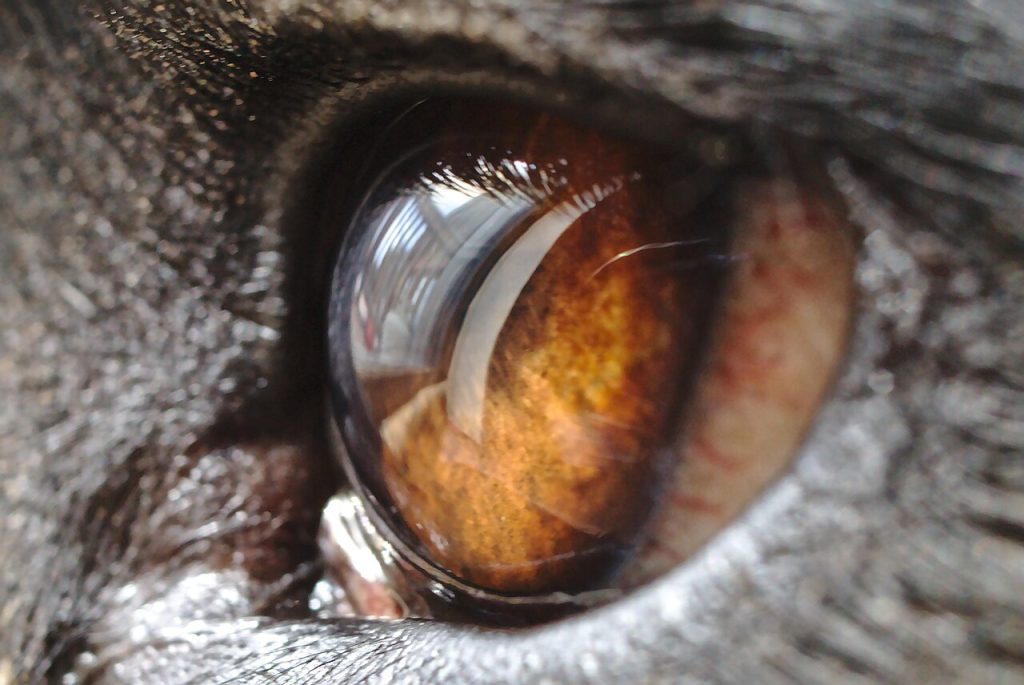
Your dog’s eyes tell you a lot of things, and knowing wiping your dog’s eyes correctly is one of those basic care that makes the difference: It prevents irritation, allows you to spot problems early, and, in some breeds, can literally save your vision. In this step-by-step guide, we explain how to do it right, what spots are normal and what aren’t, and what signs warn you to stop what you’re doing and go to the vet.
How to Clean Your Dog’s Eyes Step by Step
The routine is simple and will not take you more than two minutes. The key is to do it with the right material and without haste, especially the first few times, until your dog gets used to it.
- Wash your hands. You’re going to be working on a very sensitive area that’s easy to contaminate.
- Prepare the material: sterile physiological serum (0.9% saline solution, no additives) and sterile gases.
- Choose a quiet time. After a walk or when you’re relaxed, hold your head gently, not forcibly.
- Soak the gauze in whey and pass it gently from the lacrimal (the inner corner of the eye) out, in a single pass.
- If the wood is dry and sticky, do not pull it: hold the wet gauze for a few seconds to soften it and then pull it out without dragging.
- Use a new gauze for each eye. If one eye has an incipient infection, reusing the same gauze is the fastest way to infect the other.
- Prize at the end. A reward and a few caresses make the next cleaning easier.
How often? Depends on the dog. For many, a quick check-up a couple of times a week is enough; dogs with prominent eyes, flat snout, or heavy tears appreciate a daily cleaning. The important thing is that the observation is daily: looking at your dog’s eyes every day allows you to detect changes as soon as they appear.
What to wear and what not to wear
This is where people make the most mistakes, often with all the good intentions in the world.
- Sterile physiological serum(monodose or bottle, 0,9% and no added preservatives): this is the option recommended by veterinarians for cleaning and irrigation.
- Sterile gases or a clean, soft compress.
- Manufacture in which the value of all the materials used does not exceed 30% of the ex-works price of the product, useful for day-to-day and periocular areas.
And what i ‘m not . you should use:
- Algodón: releases fibers that stick to the eye and irritate it.
- Oxygenated water, alcohol or soaps: damage to the cornea and the skin of the eyelid.
- Human eyelashes(antihypertensives, decongestants, etc.): some contain active ingredients dangerous for dogs.
- Essential oils and home remedies without veterinary support.
- Manzanilla: It deserves special mention because it is the most widespread home remedy in Spain. Although it has been used all its life, today most veterinarians advise against it: an infusion is not sterile, it can carry vegetable residue and there are dogs that develop allergic reactions just on the most delicate tissue. The physiological serum is just as cheap, sterile and risk-free. If you still want to use it, consult your veterinarian first.
Woodpeckers – What Is Normal and What Is Not
The spots are a mixture of mucus, dry tear, dead cells, and particles that the eye expels. A small amount upon awakening, light or reddish brown, is completely normal: it is the result of reduced blinking during sleep. The problem begins when they change color, quantity, or texture.
| Type of secretion | What it usually indicates | What to do |
|---|---|---|
| Small light or dark spots on awakening | It ‘s normal . | Routine cleaning |
| Clear tear and watery spot | Mild irritation such as dust, wind, pollen, allergy | Physiological serum and observation; if it persists for days, veterinarian |
| Yellow or greenish discharge, thick | Infection likely (bacterial conjunctivitis) | Veterinarian as soon as possible, don’t wait |
| Recurrent thick white-grayish mucus | Possible dry eye (dry keratoconjunctivitis) | Veterinarian: needs chronic diagnosis and treatment |
| Discharge with blood or after a blow | Trauma, foreign body, ulcer | Veterinary emergency |
One rule that never fails: yellow or green discharge is never normal. It indicates pus, and eye infections can damage the cornea in a short period of time. And another: if in addition to the eyeball the eyeball is red, closed, or the dog scratches it, the problem is not the eyeball, it’s the eyeball.
Tear Spots – Why They Arise and How to Treat Them
These reddish-brown markings under the eyes, so visible in white-capped dogs, have a name: tear stains. They are caused by porphyrins and their derivatives, a molecule with iron that the body eliminates, among other ways, through tears. When the tear overflows and wet the hair continuously, the porphyrin is oxidized with light and colors the hair of that characteristic oxide tone.
In most cases, there’s no disease behind it: This is pure anatomy. Many small dogs have narrow tear ducts or eyelids that cause the tear to spill into the face instead of draining into the nose (what veterinarians call an epiphore). Nevertheless, the veterinarian should rule out treatable causes the first time: clogged ducts, rubbing eyelashes, entropy or an infection.
To keep them at bay:
- Daily cleaning of the serum and gauze area: if the hair is not chronically wet, the stain will not be fixed.
- Short hair around the eyes, trimmed by a canine hairdresser or with red-tipped scissors and very carefully.
- Dry the area after drinking or urinating.
- Patience with already dyed hair: the old stain doesn’t “wipe off”, it disappears when clean new hair grows.
Be wary of miracle anti-stain products, especially those containing over-the-counter antibiotics (such as tilosine) – using them on your own contributes to bacterial resistance and can mask a real problem.
Warning signs: when to go to the vet
Eye problems in dogs share a treacherous feature: they get worse fast.. A corneal ulcer treated on the first day may heal within a week; the same ulcer, three days later, may have deepened and become seriously complicated.
- Squeezed or closed eye(blepharospasm): In a dog, winking sustainedly means pain, not a tick.
- Intense redness of the conjunctiva or the white of the eye.
- Turbid, bluish or whitish cornea of sudden appearance.
- Yellow, green or bloody discharge.
- He rubs his eye with the leg or against the floor or the furniture.
- Pupils of different sizes or they don’t respond to light.
- A red lump in the inner corner of the eye: probably a “cherry eye” (prolapse of the third eyelid gland).
And there’s a scenario that’s immediate emergency, also in the early morning: eye suddenly red, cloudy, hard or protruding beyond normal, with obvious pain or sudden loss of vision. It can be acute glaucoma, and high intraocular pressure can destroy vision irreversibly in a matter of hours. When in doubt, call a veterinary emergency service: with eyes, arriving early is everything.
Breeds at higher risk of eye problems
All dogs need an eye exam, but some breeds play at an anatomical disadvantage and need a stricter routine.
Brachycephalic breeds: large eyes, small orbits
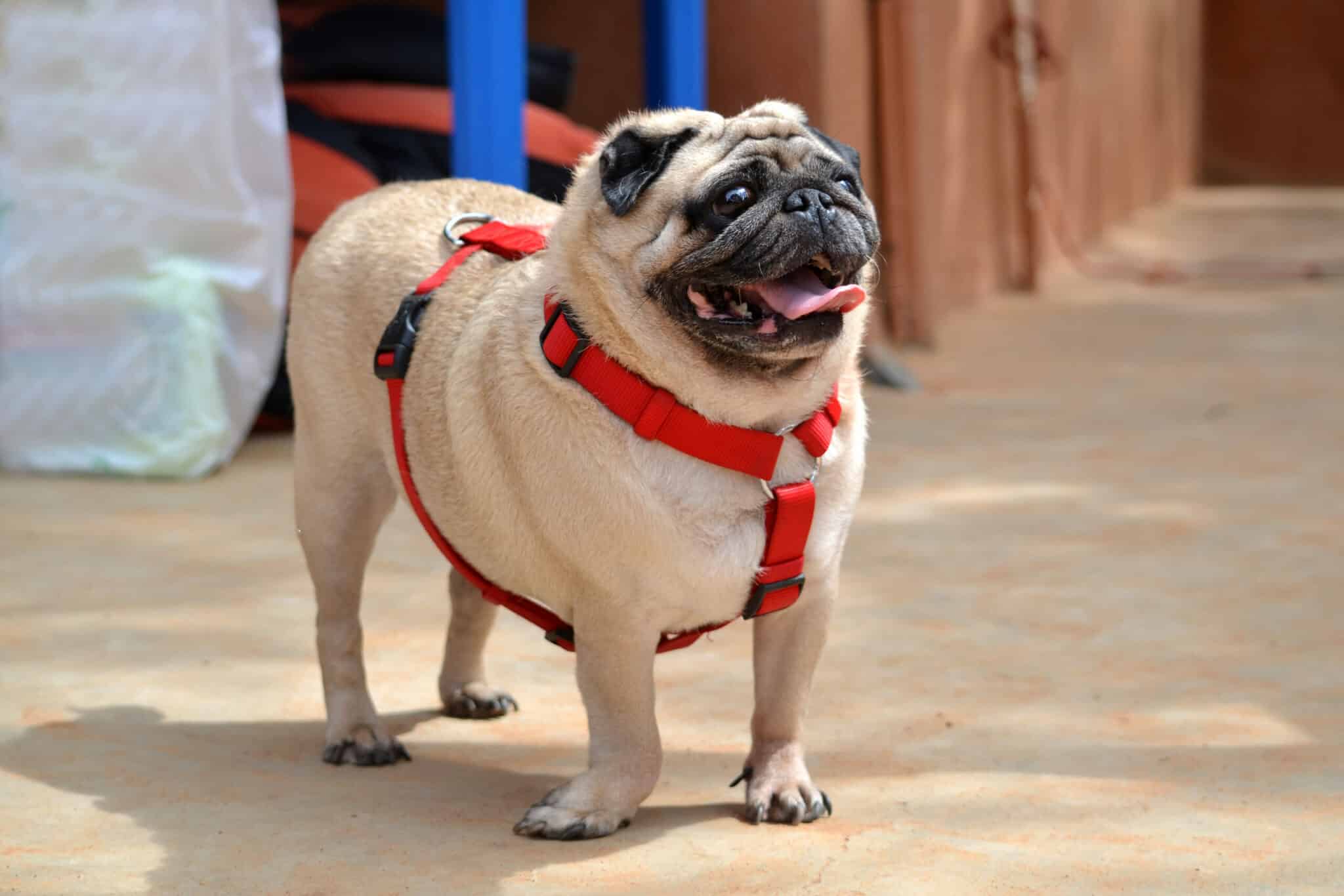
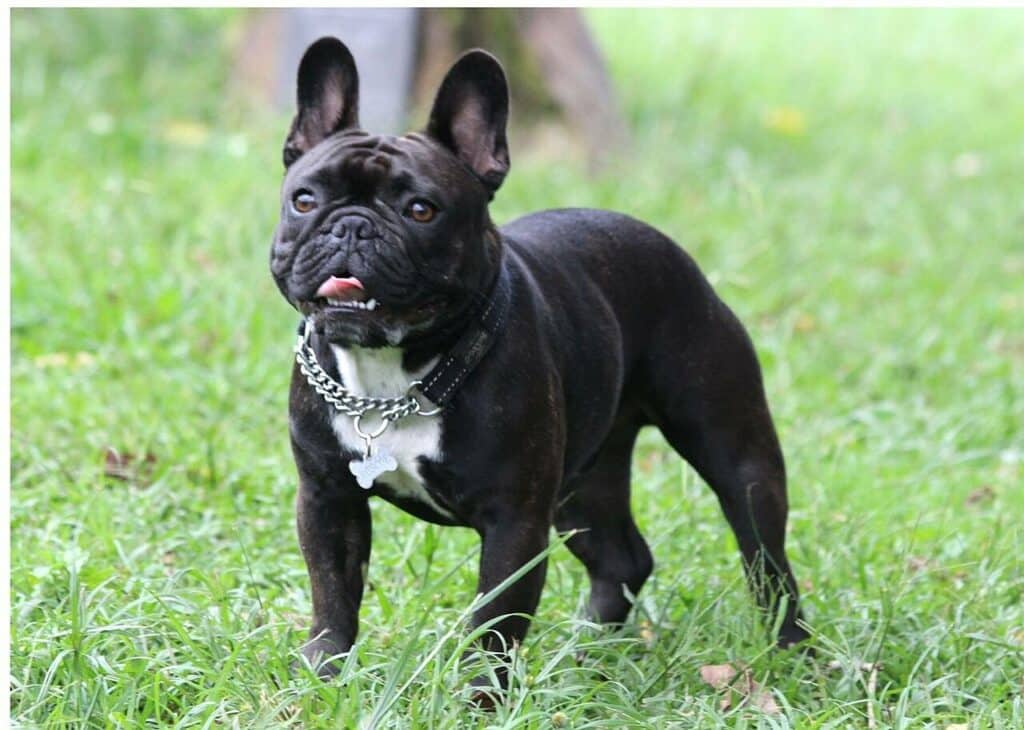
Flat-snouted dogs such as the Carlino, Bulldog Francés, Shih Tzu or Pekingese have shallow orbits and prominent eyes, with less eyelid protection. Many do not even close their eyes completely when they blink, so the cornea is less lubricated and exposed to rubbing, scratching, and nasal folds. Studies on the so-called brachycephalic eye syndrome show that these breeds have a much higher risk of corneal ulcer than other dogs (up to ten times higher in some jobs), and to top it off, their cornea is less sensitive, so they show pain later. If you live with one: daily cleaning, not a day late for a squinting eye, and very careful with abrupt games at face height.
Small, light-skinned breeds – the queens of the tear patch
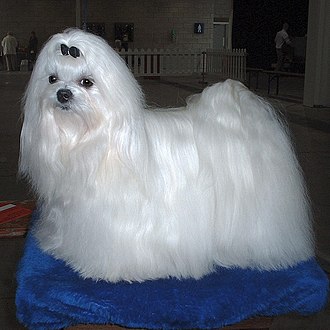
Bichón Maltés or Caniche combine anatomical tearing with white hair that reveals every drop: they are the typical candidates for porphyrin stains.
Other predispositions to know
Cocker Spaniel appears recurrently among breeds predisposed to glaucoma, dry eye and eyelid problems, and breeds with freckled or long facial hair need regular haircuts so that the hair does not touch the cornea.
Common Mistakes to Avoid
- Pulling dry logs in the cold, pulling on the hair and eyelid skin.
- Use the same gauze for both eyes: if there’s an infection, you end up spreading it.
- Cleaning with chamomile, tap water or baby wipes instead of sterile physiological serum.
- Put a human eyeliner on it “that looks great on you”: may worsen the picture or be toxic.
- In veterinary ophthalmology, waiting is the most expensive mistake.
- Cutting hair around the eye with sharp-pointed scissors and the awake, nervous dog: one sudden move and you have an emergency.
- Stick your head out the car window.: wind at that speed parches the cornea and throws particles at the eye.
Frequently Asked Questions
How often should a dog’s eyes be cleaned?
Depending on the dog, most dogs need to be cleaned once or twice a week when litter accumulates. Brachycephalic breeds, those with prominent eyes, and those with abundant tears or tear stains benefit from daily cleaning with physiological serum and sterile gauze.
Can I wipe my dog’s eyes with chamomile?
It is not recommended. Although it is a widespread traditional remedy, an infusion is not sterile, it may contain plant remains and some dogs develop allergic reactions in the eye tissue. Veterinarians recommend sterile physiological serum at 0.9%, which is cheap, safe and designed exactly for that.
Is it normal for my dog to have nightmares in the morning?
Yes, a small amount of light or reddish brown discharge upon awakening is normal: during sleep less blinking and the eye accumulates debris. It is no longer normal if the discharge is yellow or green, very abundant, smelly, or accompanied by redness, pain or squinting.
How do I get the brown spots under my dog’s eyes?
First, rule out a medical cause (clogged tear duct, badly implanted eyelashes, infection) with your veterinarian. Next, the strategy is consistent: daily cleaning with serum and gauze, short hair around the eyes and always dry area. Dyeed hair does not fade: the stain disappears as new undyed hair grows.
Can I use human eyeliner on my dog?
Some human eye drops, such as anticoagulants, contain active ingredients that can be harmful to dogs, and using the wrong eye drops can aggravate the problem (e.g., corticosteroids on a corneal ulcer).
When are leeches a veterinary emergency?
If the discharge is yellow, green or bloody, or if the dog’s eye is closed or crossed, very red, cloudy or constantly rubbed, it is an immediate emergency, even in the early morning, if the eye suddenly appears hard, protruding, bluish or the dog loses vision: it may be an acute glaucoma and there are few hours to save the eye.
This article is for informational purposes only and does not replace the diagnosis of a professional.