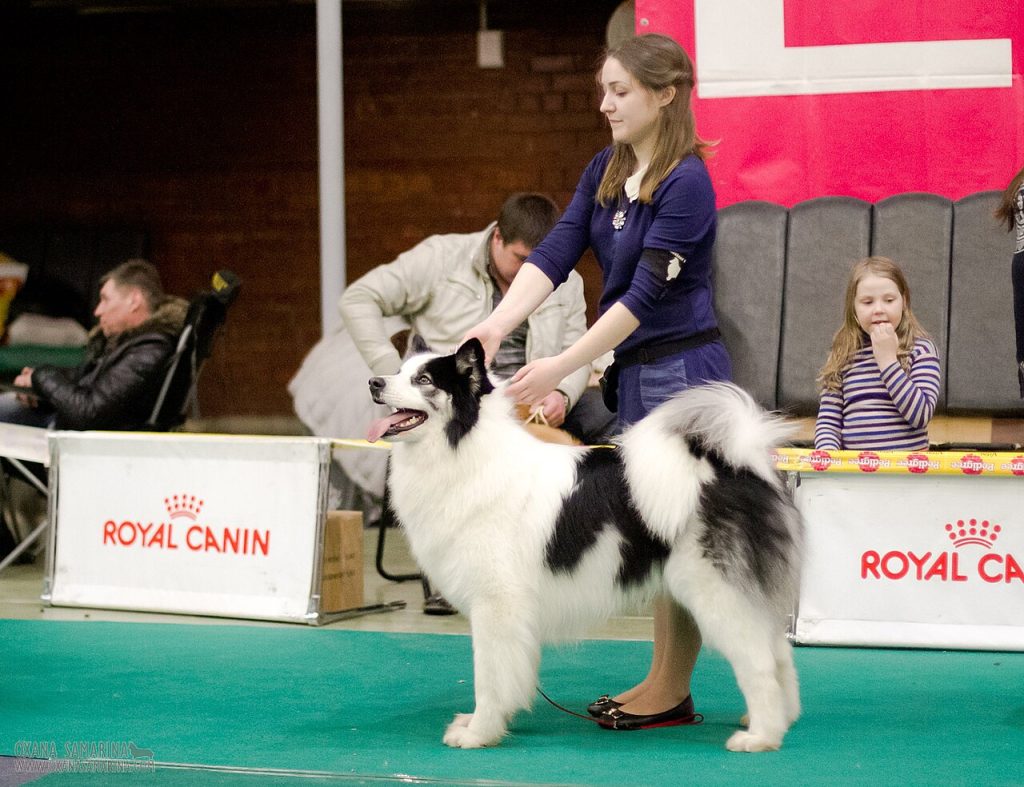
The Laika of Yakutia(Yakutian Laika or Sakha yta, “Yakuto dog”) is a Nordic sled dog native to the Republic of Sakha, in northeastern Siberia. Rustic, tireless, and surprisingly affectionate, he was for millennia the indispensable companion of the Yakut people in pulling sleds, hunting, and keeping livestock in one of the most extreme climates on the planet. Today it is a rare and officially recognized breed, ideal for anyone looking for a balanced, sociable working dog with an unusual endurance capacity.
Is the Laika from Yakutia for you?

The Yakutia Laika is a northern working dog, with all the good and demanding that entails. It thrives comfortably in active, athletic or rural families, which can give it hours of exercise and not leave it alone for too long. In return, he offers a sweet, very sociable and loyal character, unusual for such a tough dog. It’s not the best choice for sedentary households, people who spend the day outside or who are looking for a quiet carpet dog.
In favour .
- Very affectionate and sociable with people and other dogs.
- Extraordinary endurance and energy – perfect for sports and mountains.
- Kind and patient with children if well socialized.
- Rustic and healthy, adapted to the most extreme cold.
- Smart and willing to collaborate with his people.
To be taken into account
- He needs a lot of daily exercise; he gets frustrated without activity.
- It sheds a lot of hair, with intense shedding twice a year.
- Hunting instinct: caution with small animals.
- It suffers in hot climates from its dual polar mantle.
- It is communicative: it can howl and “talk” if it is bored.
- Rare breed outside Russia: hard to find.
Character and temperament
The Yakutia Laika’s hallmark is the combination of hardness for work and softness for coexistence. It is a dog of amazing endurance, able to work from morning to night, but with people it is affectionate, close and balanced. The Yakuts described him as an irreplaceable helper and, at the same time, a life partner: Even the poorest Yakuto, said a 19th-century chronicler, had at least one dog.
He’s sociable by nature. It was bred to work in packs pulling sleds, so cooperation is part of its DNA and it’s rarely a dog that conflicts with its fellows. With strangers it is friendly if it has been socialized; however, it maintains a strong defense instinct against predators, inheritance of the nights guarding the camp and cattle. Well-behaved, gentle with humans and brave in the face of threat, a highly prized combination.
As a good Nordic, he has his own personality and likes to understand why things happen. He is not stubborn because of rebellion, but independent because of selection: a dog who in Siberia had to make decisions on his own. That makes him respond much better to bonding and motivation than to imposition.
Coexistence: children, other pets, flat and loneliness

With children: is usually an excellent family dog. It is kind, patient and enjoys company; its energy fits well with active children, always under regular supervision and teaching the little one to respect the animal.
Its origin as a team shooting dog makes it tolerant and gregarious; it coexists well in homes with several dogs.
With other pets: has a remarkable hunting instinct, so cats, rodents or birds can arouse their interest in prey.
On the floor: possible, but not ideal. It can adapt to a floor if it receives a lot of exercise and company, although it feels fuller with access to the outdoors and space to move.
Soledad:‘s weakness is that it is a pack dog, very attached to its people, and has a hard time with prolonged loneliness. If it stays alone for long hours it tends to get bored, howl and look for ways to release energy. It is not a breed for someone who spends all day outside.
Education and training
The Yakutia Laika is intelligent and quick to learn, but needs an education based on bonding, coherence, and positive reinforcement. As an independent dog, it obeys not out of submission but out of trust: rewards, play, and motivation work much better than toughness, which only gets it to close.
Early socialization is key. The sooner you get to know people, dogs, noises, and different environments, the better you’ll manage your guarding instinct and your hunting impulse. It’s best to work on call and impulse control from a puppy, because a dog with so much initiative and smell will tend to follow trails if it doesn’t have a solid response to the order to come back.
It responds wonderfully to work-oriented training. Giving it a “task” – shooting, purposeful obedience, searching – channels its energy and strengthens the bond. Boredom, on the other hand, is its worst enemy: a Laika from Yakutia without stimulation will invent its own entertainment, almost never the one we would like.
Exercise and activity
We are dealing with a long-distance runner. The Laika from Yakutia was selected to pull sleds for whole days in the snow, so its need for exercise is high. A couple of short walks are not enough: it requires intense and varied activity daily, combining physical effort and mental stimulation.
It is an ideal companion for shooting sports such as canicross, bikejoring, skijoring or mushing, for which it is literally designed. It also enjoys hiking, trail running and long mountain climbs. Without a way to expend all that energy, frustration, howling and destructive behaviors appear.
In hot climates, you need to adapt your exercise: reserve the effort for cooler hours, ensure shade and water, and completely avoid intense activity in the hottest hours.
Care: fur and hygiene

The coat of the Yakutia Laika is its great sign of identity and its main maintenance task. It has two layers: a straight covering hair and a dense woolly inner coat that insulates it from the polar cold. It requires brushing several times a week to avoid knots and distribute the protective grease, and brushing daily during spring and autumn moults, when it releases the undercoat in curls.
It is not advisable to shave it except for veterinary indications: the double coat also protects it from the sun and heat, and shaving it can alter its thermal regulation and hair regrowth.
The rest of the care is customary for any healthy dog: checking and cleaning the ears, cutting the nails when they do not wear out on their own, brushing the teeth regularly, and monitoring the pads, especially if working or running on hard or icy terrain.
Foodstuffs
As an active working dog, the Yakutia Laika needs a complete, high-quality diet tailored to its activity level, age, and physical condition.
The wise thing to do is to choose a balanced diet, divide the food into two servings a day for the adult, and avoid strenuous exercise just before and after eating, a reasonable precaution in deep-breasted and highly active dogs. Weight should be monitored: Although it is an athletic dog and difficult to fatten if exercised, overweight punishes its joints. When in doubt about quantities, type of diet or supplements, it is best to consult a veterinarian, especially in growing puppies and working dogs.
Health and life expectancy
The Yakutia Laika is a rugged, hardy breed, forged by centuries of natural selection in a harsh environment, resulting in generally robust health. His life expectancy is about 10 to 12 years. Even so, as any race can exhibit hereditary predispositions: Hip and elbow dysplasia and some eye conditions are among those that responsible breeders control through health testing.
The best prevention is to go to serious breeders who test the breeders, keep vaccinations and deworming up to date, watch weight and activity, and do regular veterinary checks. Remember, too, that it was a breed on the brink of extinction – with only about 3,000 specimens in 1998 – so the genetic base is limited and responsible breeding is especially important.
Physical appearance
The Yakutia Laika is a medium-sized dog, strong and compact in build, well proportioned and with a musculature designed for endurance rather than pure speed.
Its most striking feature is the double and abundant coat, with a very dense woolly inner coat, which can be presented in a wide variety of colors and combinations, often with spots on a white background. Many specimens show light or even blue eyes, and even heterochromia (each eye a color), something very appreciated in the breed. The crowded tail is usually curled up over the back, and the triangular, erect ears complete the typical Nordic expression, attentive and kind.
Origin and history
The Yakutia Laika comes from the Republic of Sakha (Yakutia), in northeastern Siberia, one of the coldest inhabited regions in the world. In Sakha language it is called Sakha andta, “Yakuto dog”. It’s not a recent fad: archaeological remains linked to these dogs and to sleds and harnesses go back thousands of years, with radiocarbon dating to around 7,800 – 8,000 years ago, making it one of the oldest known sled dogs.
For the Yakuto people, he was a versatile and indispensable animal: He pulled sleds, hunted mammals and birds, helped with cattle and reindeer and guarded the camp. The first scientific descriptions came at the end of the 18th century, with geographical studies of the north; in 1896, the ethnographer Vatslav Seroshevsky, in his work The yakutos, already distinguished between guard and hunting dogs and coastal sled dogs, and stressed that even the most humble yakuto owned at least one dog.
Between the 1940s and 1990s the breed was on the brink of extinction: Mechanization of the Arctic, declining hunting for fur, collectivization of livestock and the arrival of diseases have drastically reduced their numbers to a low of about 3,000 in 1998. From there he embarked on a recovery effort that stabilized the breed. It is recognized by the Russian Kennel Club and the FCI, and since 2017 is listed in the AKC’s Foundation Stock Service, which in 2024 transferred it to its Miscellaneous group.
Curiosities
- Its native name, Sakha andta, literally means “Yakuto dog” in Sakha language.
- It is one of the oldest documented sled dogs: there are associated remains up to 7,800 – 8,000 years old, and even more remote indications in the region.
- Unlike most Russian Laika, which are primarily hunting dogs, the Yakutia Laika is primarily a sled dog that retains hunting and herding skills.
- He often has blue eyes or heterochromia (one eye of each color), a highly valued trait.
- It was so close to extinction that, in 2017, two specimens were cloned as part of efforts to preserve the breed; in 2020 one of the cloned dogs had a litter of seven pups.
- It is estimated that only about 200 individuals are dedicated exclusively to hunting; most are all-purpose dogs.
If you are attracted to the Yakutia Laika for its combination of Nordic stamina and friendly character, you may also be interested in other sledding and working breeds with which it shares energy, sociability or polar mantle. Husky Siberiano Samoyedo Akita Chow Chow
Frequently Asked Questions about the Yakutia Laika
Is the Yakutia Laika a good dog for beginners?
It can be if the owner has time, daily activity and a desire to socialize and educate from a puppy. It is not a difficult dog to deal with, it is affectionate and sociable, but its energy, its work instinct and its need for companionship require constancy.
How much exercise do you need a day?
It is a sled dog bred to work from sun to sun in Siberia, so it needs at least one or two long hours of daily activity between walks, running, play and mental stimulation. It loves shooting sports (canicross, bikejoring, mushing) and mountain outings.
Do you get along with children and other dogs?
Yes. Well socialized it is kind and patient with children and usually gets along very well with other dogs, since it was bred to work in packs pulling sleds. With small animals you have to be careful because of their hunting instinct; coexistence with cats works better if they grow together.
How much hair does the Laika of Yakutia shed?
It has a dense double coat designed for extreme cold, so it must be brushed several times a week and daily during moulting.
Can you live in a flat or in warm climates?
It can live on the floor if it gets plenty of exercise and does not stay alone for too many hours, but it is not its ideal environment. Its double coat is designed for the polar cold, so in hot climates extreme precautions must be taken: shade, fresh water, walks in cool hours and never strenuous exertion at noon in summer.
Is it a healthy breed?
In general, it is a rustic and resistant dog, the result of centuries of natural selection in a very harsh environment. Its life expectancy is around 10 to 12 years.
Does the Yakutia Laika howl or bark a lot?
It is a communicative dog, like many Nordic breeds: it can howl, moan and “talk”, especially if it is bored or left alone. With enough exercise and company it tends to be balanced, but it is not the quietest breed in the world.
Is it an officially recognized breed?
It is recognized by the Russian Kennel Club and the International Kennel Federation (FCI), and since 2017 is part of the Foundation Stock Service of the American Kennel Club (AKC).