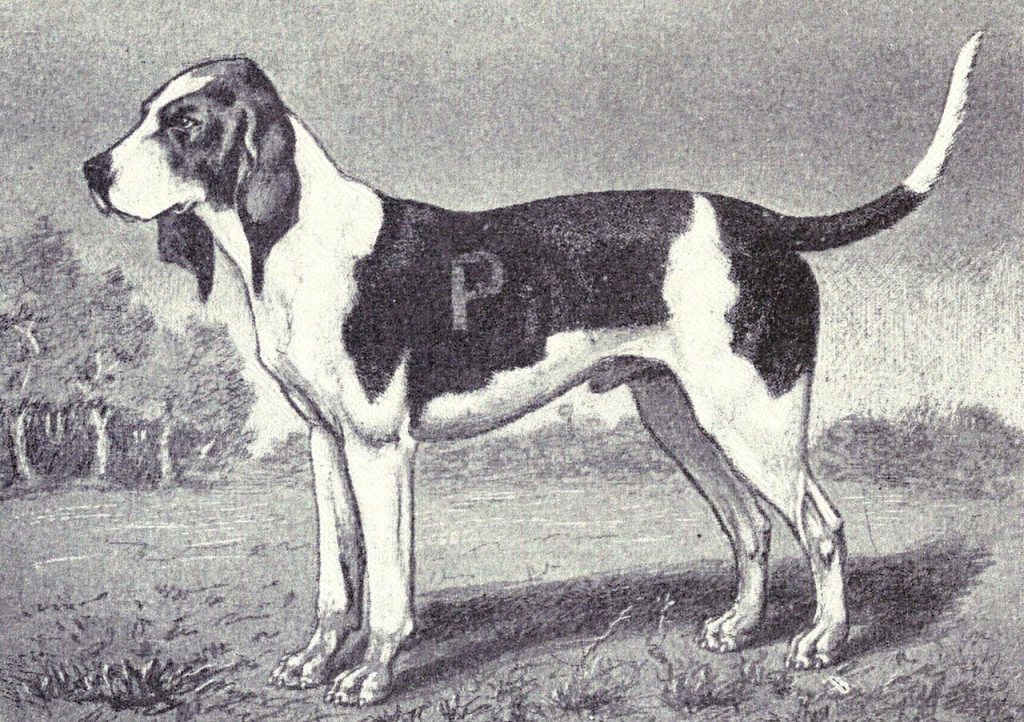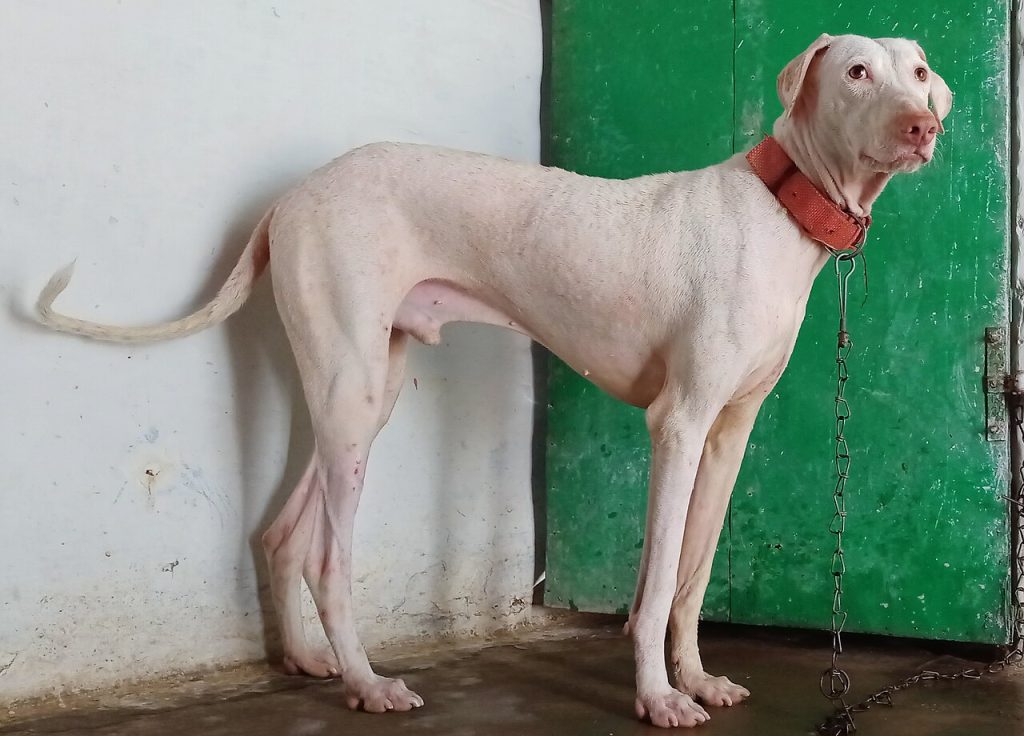
The Rajapalayam is an imposing white hare from southern India, bred for centuries in Tamil Nadu to hunt wild boars and guard the estates of royalty.
Is the Rajapalayam for you?

The Rajapalayam is not a dog for just anyone. It is a large, athletic and independent guard-rabbit, with a strong instinct for protection and a strong reserve against strangers. It shines in the hands of one who is looking for a loyal, watchful, and unsociable companion to everyone, and it can be difficult for one who expected a docile, sociable, and manageable dog. Before you fall in love with his white print, be honest about what it means to live with him.
Points in favour
- Extreme loyalty and a strong bond with his family.
- Excellent guard and alarm dog, very territorial.
- Rustic breed, healthy and low maintenance coat.
- It tolerates heat and warm climates very well.
- Elegant, athletic and tough over long distances.
- Long for his size (about 12 years).
Points against
- Reserved or suspicious of strangers and other dogs.
- Strong hunting instinct towards small animals.
- Independent: not a race for beginners.
- He needs plenty of exercise and space; the cold makes him uncomfortable.
- Rare outside India: hard to find and socialize.
- It requires early and firm socialization to avoid overprotection.
Character and temperament
The temperament of the Rajapalayam can be summed up in two words: loyalty and vigilance. With his family he is affectionate, quiet at home and deeply attached, to the point of becoming the shadow of the reference person. That devotion has its counterpart: He’s a one-horse dog, distrustful of strangers and a determined defender of his territory. He doesn’t bark for a bark, but when he does, you have to take him seriously.
He was selected for two demanding tasks – autonomously hunting wild boar and guarding property – and both left their mark on the character. Hence their independence, their courage in the face of dangerous prey and their ability to decide for themselves without waiting for orders. He is not a submissive or servile dog; rather, he is a proud companion who respects those who earn his trust. Well-socialized individuals are balanced and self-assured; poorly socialized individuals can become overly suspicious or domineering.
Coexistence: children, other pets, flat and loneliness

Niños: with the children of his own family, raised alongside them, is usually tolerant and protective. Nevertheless, it is a large and reserved dog; coexistence must be supervised and the little ones must be taught to respect their time.
Other pets:‘s strong prey instinct allows cats, rabbits or very small dogs to activate their hunting impulse if they have not grown up with them. With other dogs of the same sex it tends to be dominant. Coexistence works much better when it shares a home from puppyhood and with careful socialization.
Floor and solitude: is not a floor dog. It needs space, preferably a house with fenced terrain, and plenty of exercise. It does not tolerate prolonged loneliness: it is a breed that wants to be with its people and that, bored or neglected, may develop excessive guarding behaviors or destructiveness.
Education and training
Raising a Rajapalayam requires patience and consistency. She’s smart, but also independent: easily learns what motivates him and disconnects from meaningless repetition. Early socialization – with people, noises, environments, and other animals – is the most important investment you can make, because it softens their natural reserve and prevents overgrowth problems in adulthood.
It responds well to positive reinforcement, short and varied sessions, and calm and firm leadership. Hardness is counterproductive: such a proud and sensitive dog shuts down or becomes suspicious if treated abruptly.
Exercise and activity
The Rajapalayam is a hunting hare built for endurance rather than sprinting. It is not a pure sprinter, but it is tireless and steady over long distances, capable of tracking and chasing prey over complex terrain and even through water. That whole engine needs output: at least one or two daily long walks and the possibility of running freely in a safe and fenced space.
To the physical stimulus must be added the mental. Tracking games, olfactory work and obedience exercises keep his mind occupied and channel his energy. A Rajapalayam who spends body and head is a quiet dog at home; one who is bored finds his own “tasks”, almost always on the basis of obsessive surveillance or disorder.
Care: fur and hygiene
In terms of maintenance, the Rajapalayam is one of the most grateful dogs out there. Its hair is single, short and thin, with no undercoat, so it barely needs more than a weekly brushing to remove the dead hair and keep the skin healthy.
The point to watch is the skin. Being white and fine-haired, it is sensitive to the sun and mites: the scabies sometimes attributed to it is not a breed defect, but the result of mites that are prevented with veterinary hygiene and control. Protect it from the intense sun, check ears and pads, and keep deworming up to date. With the basics – brushing, nails, teeth and parasite control – it looks impeccable.
Foodstuffs
As a large, athletic and active dog, the Rajapalayam needs a quality diet, rich in protein and adjusted to its actual level of activity.
As it is a large breed with a deep chest, it is advisable to divide the food into two servings a day and avoid intense exercise just before and after eating, as a precautionary measure against digestive problems typical of large breeds.
Health and life expectancy

The Rajapalayam is a rustic and generally very healthy native breed. Having been bred for centuries for work and with little aesthetic manipulation, it carries fewer hereditary blemishes than many large Western breeds.
The most characteristic health problem is related to color: Specimens born with blue or whitish eyes are usually deaf people, by the same genetic mechanism associated with white fur. That’s why responsible breeders don’t breed with deaf dogs and look for golden or brown eyes and pink nose. Their clear, fine skin also demands attention from mites and the sun. With daily deworming, veterinary control and sun protection, it is a sturdy, low-maintenance dog.
Physical appearance
The Rajapalayam is a large and sleek hare, more muscular and stronger bone than most sighthounds, but with the same deep chest and the same silhouette that conveys speed. The males measure around 65 to 75 cm to the cross and weigh between 30 and 45 kg.
Its most unmistakable feature is the milky white, sometimes with slight purple markings, accompanied by the characteristic pink nose. The eyes go from golden to brown, and the ears drop in the shape of a button. The hair is short, thin and single-layered. On the move, he runs a double-suspension, elastic, lightweight trot, which many compare to the elegant gallop of a racehorse. Everything about it evokes both power and finesse.
Origin and history
The Rajapalayam takes its name from the town of Rajapalayam, in Virudhunagar district, in the Indian state of Tamil Nadu. It is one of the indigenous breeds of South India, also known as Polygar Hound or “Indian Ghost Hound” for its white silhouette. Historical observers place its organized breeding in the times of the nayak dynasty, the main royal house of Tamil Nadu, when it was already distinguished among some fifty canine breeds in the subcontinent.
For centuries, the inhabitants of the region used it to store crops, livestock and harvests, and to hunt wild boars autonomously. Their warrior fame was recorded in the polygraph wars and in the campaigns of the Carnatic region (end of the 18th and beginning of the 19th century), where it is said that these dogs came to face the cavalry by biting and knocking down horses. Over time, the pure Rajapalayam was reduced to small, isolated nests in southern Tamil Nadu and was on the brink of extinction.
To reverse this, in 1980-81 a breeding unit was set up in Saidapet (Chennai) dedicated to native breeds such as the Rajapalayam, Combai, Kanni and Chippiparai. The Kennel Club of India promoted the “Save the Rajapalayam” project, and in 2005 the Indian postal service dedicated a commemorative stamp to him along with other native breeds. Today it remains a symbol of Tamil Nadu, even employed as a guard dog by the Indian Army.
Curiosities
- It’s a seal dog. In 2005, India issued a commemorative postage stamp of the Rajapalayam (value 15 rupees), along with three other native races.
- It’s a double hunter. is a rarity among hares: it hunts both by sight (as sighthound) and by smell (as scenthound), and acts both as a harassing and grappling dog.
- “Sweet ghost”. Its nickname Indian Ghost Hound comes from its milky white fur, which in the penumbra gives it an almost spectral appearance.
- From royalty to the army. Raised by the Nayak nobility, today the Indian Army trains it as a guard dog, even in areas like Kashmir.
- Riding a horse. Its double-suspension trot resembles that of a racehorse galloping on its back.
- Superviviente. was on the verge of disappearing and has returned thanks to breeding and awareness programs in Tamil Nadu.
If you’re attracted to the Rajapalayam for its hare-like demeanor, loyalty, and guarding instinct, you may be interested in other breeds with character, elegance, or protective vocation. Greyhound Whippet Vizsla Doberman
Frequently Asked Questions about Rajapalayam
Is the Rajapalayam a dangerous dog?
He’s not a dangerous dog by nature, but he’s a serious, territorial watchdog who was bred to hunt wild boars and protect farms. With his family he is loyal and affectionate; with strangers and other dogs of the same sex he may be suspicious or dominant. The difference between a balanced Rajapalayam and a problematic one is in early socialization and an owner who knows how to lead without harshness. It’s not a recommended breed for anyone looking for a dog that’s docile and sociable with everyone.
How long does a Rajapalayam live?
The Rajapalayam is a rustic and long-lived breed for its size: it usually lives around 12 years, and many well-kept specimens reach or exceed that age.
Are the white Rajapalayam with blue eyes deaf?
Often, yes. Puppies born with blue or whitish eyes are usually deaf due to the same genetic mechanism linked to the white coat that affects other breeds. A deaf dog can have a perfectly happy life, but serious breeders should not breed with deaf specimens. The ideal is a golden- or brown-eyed and pink-nosed Rajapalayam.
Does the Rajapalayam adapt to living in a flat?
It is not their ideal environment. It is a large, athletic dog with guard and hunting instincts that needs space, intense exercise and a long daily walk. It can live in a large floor if it is guaranteed several hours of activity a day and a very committed owner, but fits much better in a house with fenced terrain in warm or temperate weather.
Is the Rajapalayam good with children?
With the children of its own family it is usually tolerant and protective if it has been raised with them and has been well socialized. Nevertheless, it is a large, strong and reserved dog, so coexistence must always be monitored and children must be taught to respect their space.
Does the Rajapalayam take the cold well?
No. It has a unique, short, fine coat, no undercoat, designed for the heat of southern India and the tropics. It suffers from very cold climates and needs shelter and shelter if it lives in areas with harsh winters. Instead, it tolerates heat much better than most large breeds.
Is it easy to train the Rajapalayam?
It is an intelligent and independent dog, more than obedient. It learns quickly what interests it, but it was bred to hunt and decide for itself, so it is not submissive like a hardworking shepherd. It needs a constant owner, with positive reinforcement and clear limits from puppyhood. It is not a breed for beginners.
How much exercise does a Rajapalayam need?
It needs at least one or two long daily outings, with opportunities to run in a safe and fenced space, in addition to mental stimulation. A bored and unspent Rajapalayam can become destructive or develop excessive guarding behaviors.