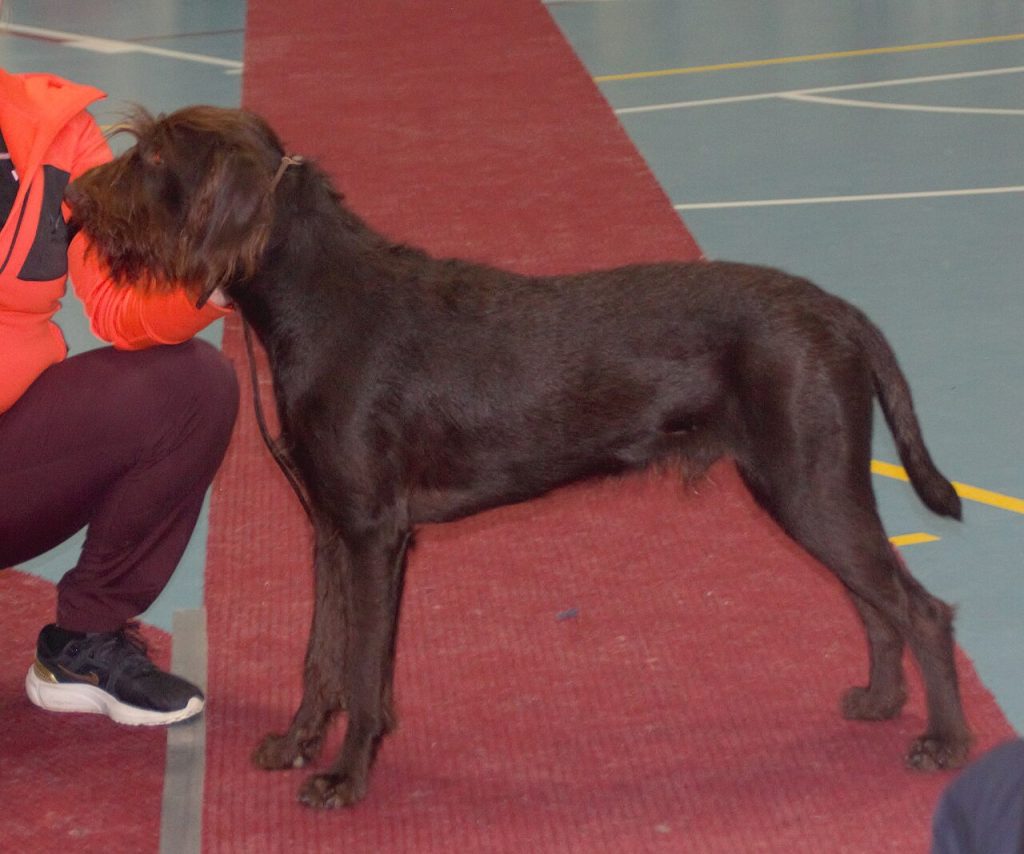
The Pudelpointer is one of those dogs that almost no one knows on the street and yet hunters have on an altar. Born in Germany in the late 19th century from the deliberate crossing between the poodle (Pudel) and the English pointer, it is a versatile hunting dog up to the marrow: It tracks, samples and collects both on land and in water, with a head so cold it learns almost anything. If you’re looking for a quiet couch companion, the Pudelpointer isn’t your dog; if you want an intelligent athlete to live the outdoor adventure with you, few are as complete.
Is the Poodlepointer for you?
The Pudelpointer is a working dog bred to perform in the field, not a reconverted companion dog. Before you fall in love with its pattern, you should be honest about what it needs: plenty of exercise, an active owner and a task to do. These two boxes summarize who fits in and who doesn’t.
In favour .
- Extremely versatile: samples, tracks and snakes on land and water.
- Very intelligent and extremely willing to learn, easy to train.
- Hard coat that barely changes and needs little maintenance.
- Balanced and affectionate at home when he’s spent his energy.
- Robust and healthy thanks to a brood focused on function, not aesthetics.
Against
- Very high exercise needs: not good for a short walk.
- He becomes bored and frustrated if he lacks daily physical and mental stimulation.
- Strong hunting instinct: he can go after pieces if he’s not polite.
- Rare and difficult to obtain breed; almost always breeders specialized in hunting.
- Not recommended for small apartments or sedentary owners.

Character and temperament
The Pudelpointer inherits the best of its two ancestors and this mixture defines its character. From the poodle it takes the intelligence, docility and that almost comical passion for water; from the English pointer, the hunting impulse, an excellent smell and sample instinct. The result is a dog awake, very hardworking and with a desire to please that make it an ideal workmate.
On a day-to-day basis, he’s a balanced and calm dog indoors, as long as he’s been able to let go of his motor. He is not nervous or barking for no reason, but he is constantly aware of what is going on around him. He’s sensitive to the tone of his guide: It responds much better to reinforcement and coherence than to harsh methods, with which it tends to close. He builds a close and loyal bond with his family, and he is usually affectionate and kind once he has earned their trust.
It is worth remembering that it is, first of all, a versatile hunting dog. That essence conditions everything else: it needs a purpose. A Pudelpointer with work – hunting, canine sport, tracks, contribution collections – is a happy and very manageable dog; one without stimulus can become restless, destructive or difficult to manage.
Coexistence: children, other pets, flat and loneliness
With the family the Pudelpointer is affectionate and patient, and usually gets along well with children, especially if he grows up with them and the relationship is supervised while he is a puppy and has not yet measured his strength.
With other dogs it tends to be sociable, especially if it socializes from a young age. The delicate point are small animals: their marked instinct for hunting and sampling makes cats, rodents or domestic birds able to arouse their interest in prey.
As for the floor, it’s not their natural habitat. You can live in an apartment if – and only if – you get several hours a day of real exercise outside the home, but you thrive much more with access to a garden or rural environment. About loneliness, he can’t stand to be alone for long hours: It’s a close-knit dog that, bored and uncharged, develops problematic behaviors. It fits with families who are present and active, not with households who spend the day out.
Education and training
This is where the Pudelpointer shines. Its intelligence and enormous willingness to please place it among the easiest hunting dogs to train: it catches quickly, retains well, and enjoys working side by side with its guide.

The correct method is positive reinforcement, consistency and short, varied sessions. He ‘s a sensitive dog . harshness or punishment turn it off and deteriorate the relationship. He starts early with socialization – people, dogs, noises, environments – and with the basics of obedience, and channels his instinct into concrete tasks as soon as possible: charges, searches, leads. In Germany the breed is not even allowed to breed if the specimen does not pass field and water work tests, a sign of how much fitness for training and work is part of its DNA.
The key for the owner is to understand that this dog needs mental work in addition to physical work. A Pudelpointer that just runs but doesn’t think remains unsatisfied. Canine sport, advanced obedience, dummies, mantrailing or directly hunting keep his head busy and his behavior in order.
Exercise and activity
If there’s one thing that’s non-negotiable in this breed, it’s exercise. The Poodlepointer is a high-energy athlete bred to spend whole days working in the field, and that endurance needs to be satisfied. We’re talking about a lot more than a couple of laps around the apple: it needs free running, exploration, swimming, and purposeful activity, every day.
Ideally, you should combine intense physical exercise with activities that involve your sense of smell and instinct: collections, searches, tracking games, swimming (which he adores because of his poodle heritage) and, of course, hunting for those who practice it. A dog that discharges well is a balanced dog at home; one that doesn’t accumulates frustration and pays for it with furniture, the garden or its own stability. Due to its level of demand it fits perfectly with sports owners and those who do hiking, canicross or field work.
Care: fur and hygiene
One of the great practical advantages of the Pudelpointer is its low-maintenance coat. It has a hard, stiff and dense hair – rough to the touch – that protects it from water, weeds and cold while working, and it also changes very little.
Like all dogs with droopy ears and fond of water, it is advisable to check and dry their ears well after swimming to prevent otitis, in addition to the routine care of nails, teeth and eyes.
Foodstuffs
As a medium-sized, athletic and very active dog, the Pudelpointer needs a high-quality diet, rich in protein and adjusted to its high energy expenditure, especially in the hunting season or intense training. Ration should be tailored to the age, weight, actual activity and metabolism of each dog; a dog that works long hours requires much more feed than one at winter rest.
As a general guideline, divide food into two servings daily and avoid strenuous exercise just before or after eating to reduce the risk of gastric torsion, something to watch for in deep-breasted dogs. Always keep fresh water available and monitor your body condition: Although it is a healthy breed and not prone to overweight if it gets the exercise it needs, excess weight always punishes joints and health. When in doubt about the quantity or type of feed, it is best to consult your veterinarian.
Health and life expectancy
The Pudelpointer has a reputation for being a robust and healthy dog, and it’s no accident: The breed has been bred from the beginning to prioritize function and performance in the field over aesthetics. This philosophy, coupled with their breeders deliberately avoiding the recognition of large exposure records so as not to separate the breed into a line of beauty and a line of work, has helped to maintain a functional genetic basis and to limit the hereditary problems associated with breeding by appearance.
Still, no dog is safe from danger. As with many medium and large breeds, joint health should be monitored, and as with any water-loving dog with droopy ears, ear infections should be prevented. Regular veterinary checkups, vaccinations, deworming, and good exercise and weight management are the best policies. With this care, the Pudelpointer usually enjoys a life expectancy of about 12 to 14 years, which is about the average active dog.
Physical appearance
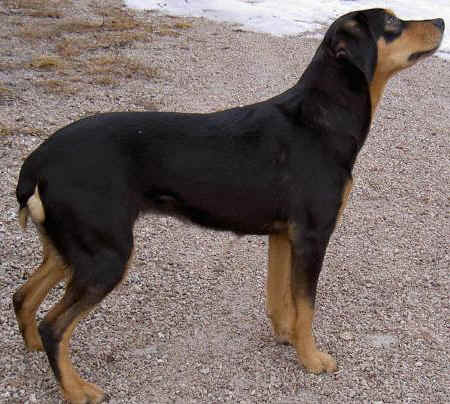
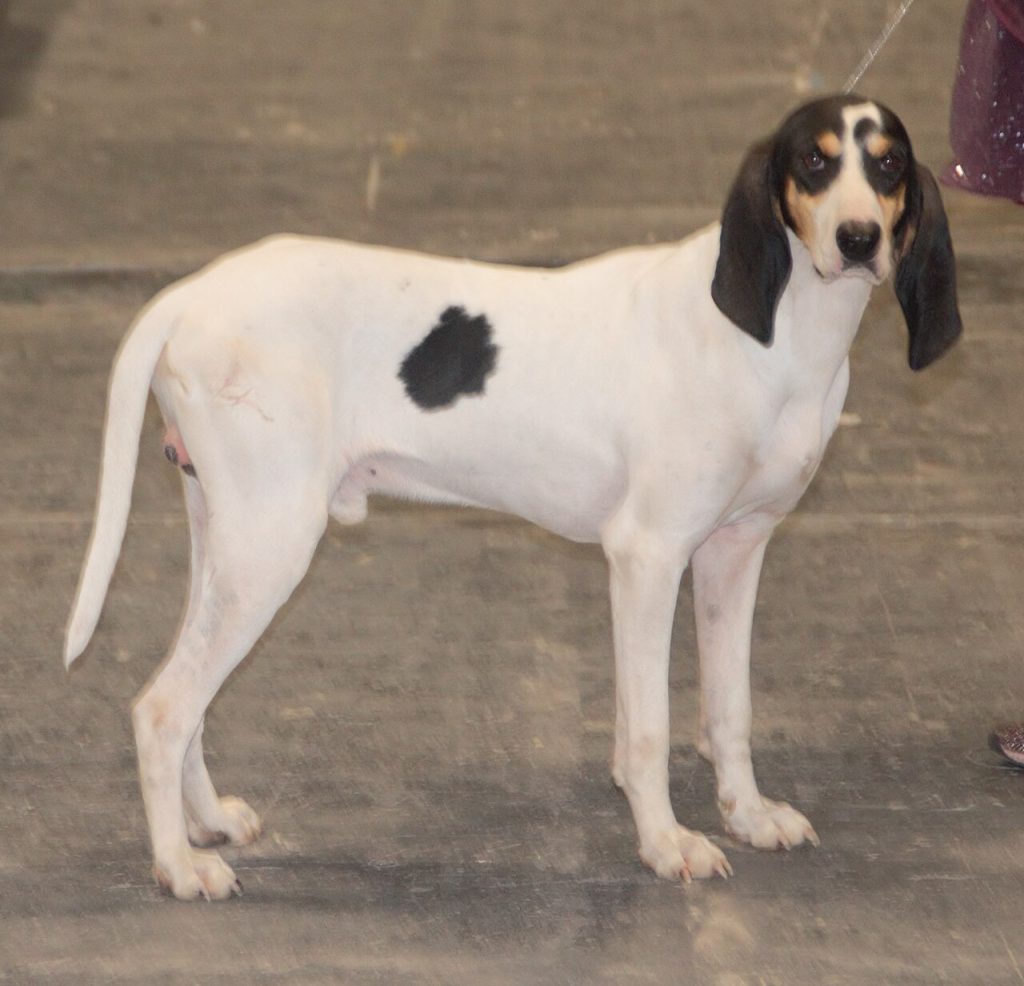
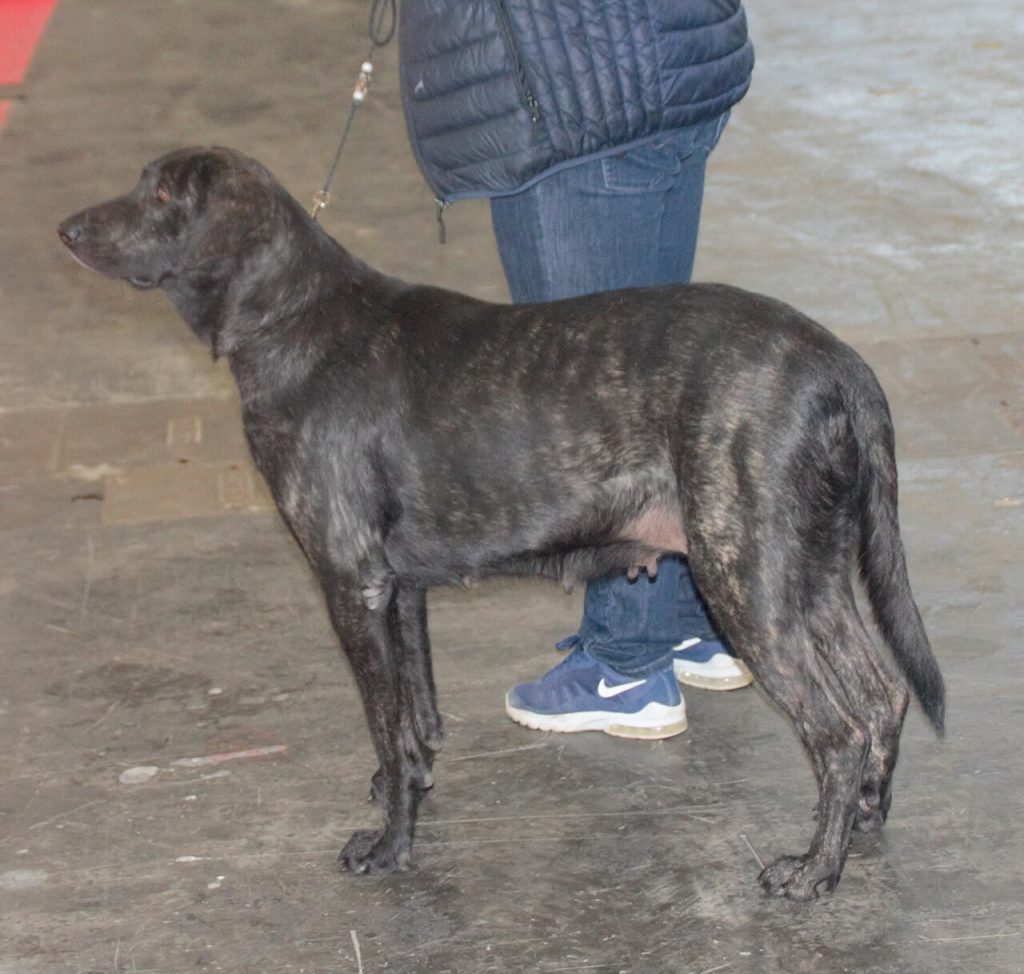
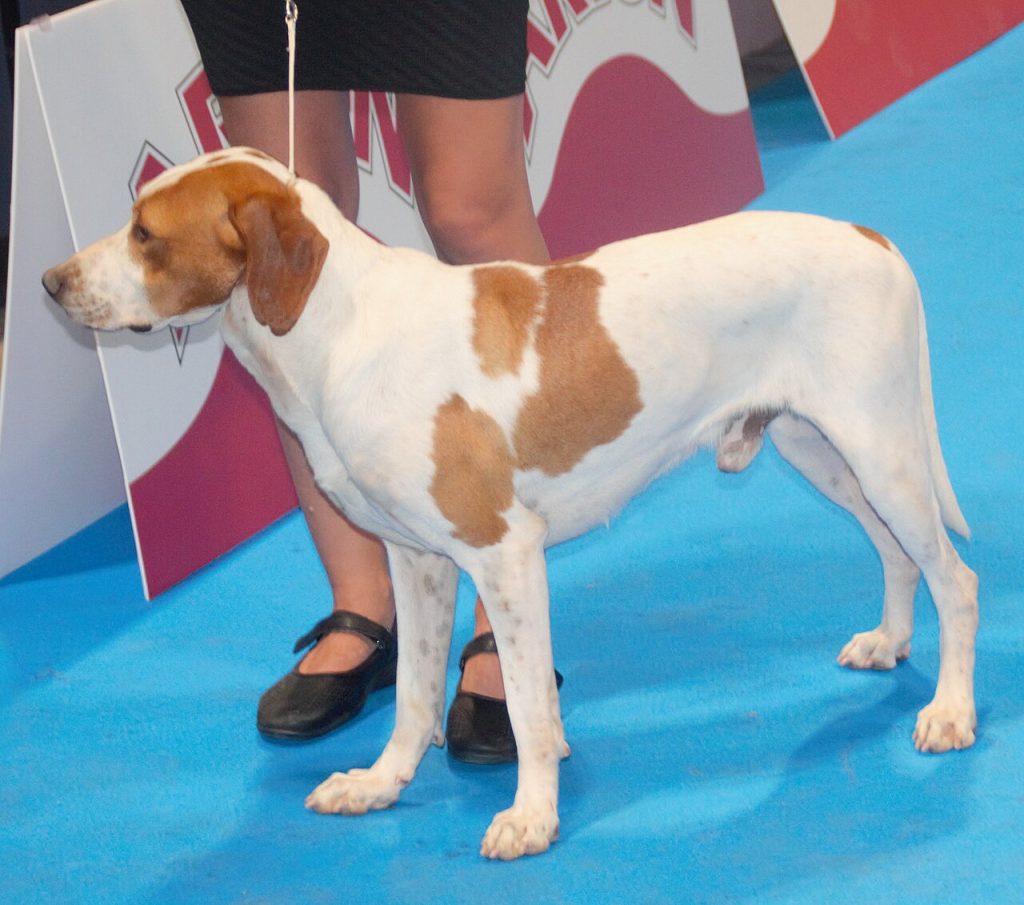
The Pudelpointer is an athletic and well-balanced dog, of medium to large size, with a construction that transmits resistance and work capacity without falling into exaggeration.

Its most characteristic feature is the mantle: Hard, stiff and dense, rough in texture, designed to protect you at work and barely loosens hair. Typical colors are liver (brown) and brown, and occasionally black. He usually wears marked eyebrows and often a beard, a noble and expressive air inherited from his poodle ancestor, with drooping ears and an attentive and intelligent gaze. It is a dog that seeks to impress not by its beauty but by its functionality, and it is precisely in that sobriety that much of its charm lies.
Origin and history
The story of the Pudelpointer begins in Germany in 1881, when Baron von Zedlitz – known in the hunting world by the pseudonym “Hegewald” – set out to create the perfect versatile hunting dog: One capable of tracking, displaying and charging, and working as smoothly on land as on water. To achieve this, he crossed the two races that combined the qualities he was looking for: the poodle, for its intelligence, docility and love of water, and the English pointer, for its hunting instinct, its sense of smell and its firmness in the sample.
The founding stallion was Tell, an English pointer that belonged to Kaiser Frederick III, and the original female was Molly, a hunting poodle owned by Hegewald himself. As poodle genetics became more dominant, many more pointers were needed to balance the mix: During the first thirty years of work about 11 poodles and about 80 pointers were used until the desired type was fixed.
The breed arrived in North America in 1956 from the hand of Bodo Winterhelt, whose breeding farm Winterhelle was the breed’s base on the continent and who kept watch over the standard until his death in 2018. In 1977 Winterhelt founded the Pudelpointer Club of North America in Canada. Interestingly, the breed never became popular in the United States in part because its own breeders have actively avoided recognition by the American Kennel Club, convinced that such recognition would put the focus on form above function and could divide the breed into an exhibition line and a working line.
Curiosities
- Its name is literal: “Pudel” means poodle in German and “pointer” is the English pointer.
- The founding stallion, Tell, belonged to none other than Kaiser Frederick III of Germany.
- In Germany, a specimen cannot be bred unless it passes field and water tests: the function rules the pedigree.
- Its breeders deliberately refuse AKC recognition so as not to turn it into a “beauty dog” and preserve its hunting instinct.
- Although it has “poodle” in its name and in its blood, its hard hair and very short muzzle make it look completely different from the show poodle.
- It remains a rare and little-known breed outside of the hunting world, where it is considered one of the most complete versatile dogs in existence.
If the Pudelpointer’s profile has conquered you but you want to compare it to other high-energy hunting and working breeds, take a look at the Vizsla, the Weimaraner, the English Pointer which is part of its own genetics and the always aquatic Caniche (Poodle), the other ancestor of the breed.
Frequently Asked Questions about the Pudelpointer
Is the Pudelpointer a good family dog?
Yes, it is affectionate, balanced, and usually gets along well with children, but it only fits in active families that can give it plenty of exercise and companionship.
How much exercise does a Poodlepointer need?
Many: It is an athletic hunting dog that requires several hours a day of intense activity, with free running, swimming and olfactory work.
Does the Poodlepointer shed a lot of hair?
No, their hard, dense coat sheds very little, so a weekly brush is all it takes.
Is it easy to train the Poodlepointer?
It is one of the easiest hunting dogs to train due to its intelligence and enormous willingness to please. It responds very well to positive reinforcement and coherence, and closes with harsh methods.
How long does a Poodlepointer live?
With good care, veterinary checkups and weight control and exercise, it usually enjoys a life expectancy of an average active dog, around 12 to 14 years.
Can he live in a flat?
It can, but it’s not ideal. It only works if you get several hours a day of real exercise outside the house. It thrives much better in a garden or in a rural setting, with an active owner.
Do you get along with cats and other pets?
With other dogs it is usually sociable if socialized early, but its strong hunting instinct allows cats, rodents and birds to arouse its interest in prey.
Why is it such a little-known breed?
Because it was never popularized outside of the hunting world and its breeders have deliberately avoided the recognition of large exposure records to preserve its function.