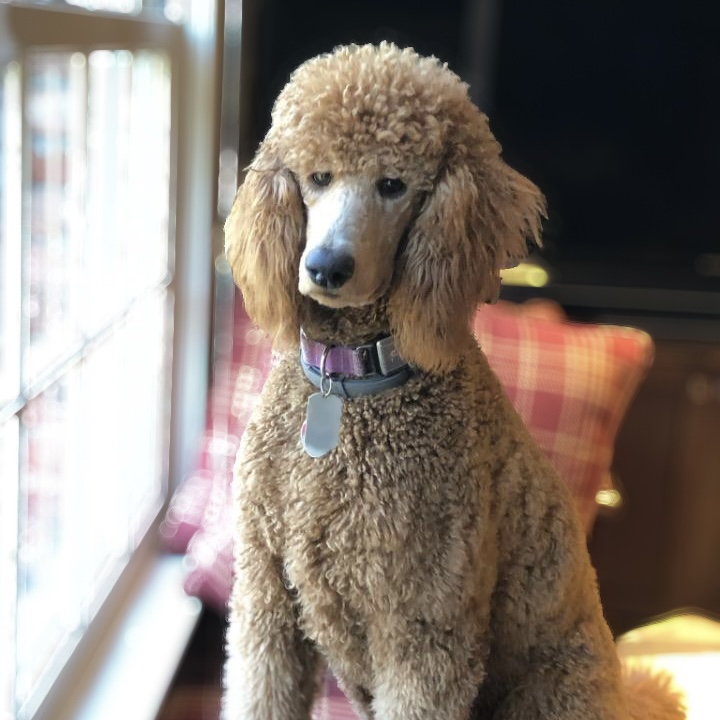
The Poodle is one of the most intelligent and versatile dogs in existence: A former water collector turned first-rate family companion. Beneath its curly coat and elegant look is an athletic, sociable dog eager to learn. It comes in four sizes – large, medium, dwarf, and toy – so it fits both in a house with a garden and on a floor. If you’re looking for a buddy who’s alert, caring and doesn’t shed a lot of hair, the Poodle deserves to be on your list.
Is the Poodle for you?
Before you fall in love with its fur, you should know what it means to live with a Poodle. It is a dog that gives a lot, but also asks for its share: daily mental stimulation and constant hair maintenance. Here is the honest summary to decide.
In favour .
- High intelligence: learns commands and routines with astonishing ease.
- It sheds very little hair, making it one of the most tolerated breeds by sensitive people.
- Four sizes to choose from: suits small apartments or houses with a garden.
- Very sociable and affectionate, he spends time with his family and usually gets along well with children.
- Athletic and athletic: brilliant in obedience, agility and search games.
To be taken into account
- The coat requires frequent brushing and hairdressing every 4-8 weeks: it has a cost.
- He needs a busy mind; he’s bored and can only become barking or destructive.
- He has a hard time with prolonged loneliness. He’s a very attached dog.
- The dwarf and toy varieties are delicate and carry problems typical of small breeds.
- So clever that he learns even in the mornings: without clear rules, he takes you by measure.
Character and temperament
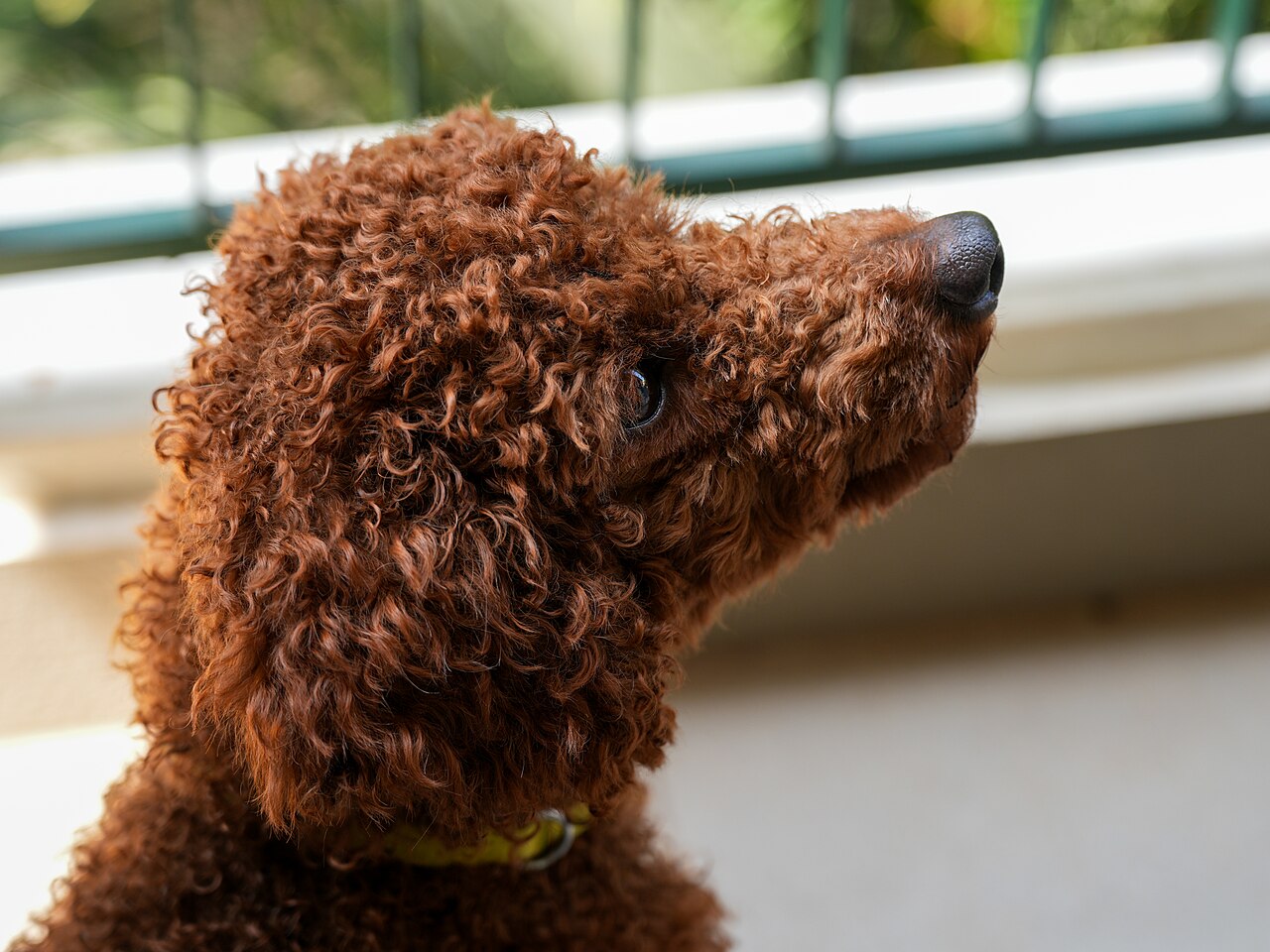
If there ‘s one word that defines the Poodle it ‘s you got it.. In Stanley Coren’s well-known classification of canine intelligence, it ranks second among more than a hundred breeds, behind only the Border Collie. That means it understands new commands in very few repetitions and obeys the first one with very high reliability. That ability to “read” people is what has made him a circus star, service dog, and competition partner.
But intelligence is not everything: The Poodle is also cheerful, playful and deeply sociable. He enjoys human company to the point of following his favorite person from room to room. He is not an independent dog who is content to be in the garden; he wants to participate in family life. That sensitivity makes him very receptive, but it also explains why he suffers when left alone for too many hours.
It is methodical and energetic, attentive to everything that happens around it. It usually warns of visitors, although it is not an aggressive guardian: shyness and aggressiveness are considered serious defects in the breed.
Coexistence: children, other pets, flat and loneliness
- With children: is excellent. It is patient and playful, ideal for families. With small sizes it is advisable to choose the large or medium sizes, more robust than the toy, and teach children to respect the dog.
- With other pets: gets along well with other dogs and usually accepts cats if he grows up with them.
- On the floor: perfectly viable, especially in medium, dwarf and toy varieties.
- In the face of loneliness: is its weak point. It does not tolerate long days in solitude and may develop separation anxiety, barking or destructive behavior. If you spend many hours outdoors, it needs routines, activity toys or company.
Education and training
Training a Poodle is one of the great pleasures of owning this breed: it learns so quickly that the challenge is not to teach it, but to keep it interested. It responds wonderfully to positive reinforcement– prizes, play and praise – and is demotivated by harsh or repetitive methods. Short, varied and fun sessions give better results than long and monotonous ones.
Start as a puppy with socialization: getting to know people, dogs, noises, and different environments so that he grows up safe. Working early on the tolerance to being alone in small doses, to prevent separation anxiety. And setting clear rules from the start: A Poodle is so smart that if you let it, it will learn to manipulate the situation in its favor.
Because of its ease and willingness to please, it excels in obedience, agility, rallying and olfactory tests.
Exercise and activity
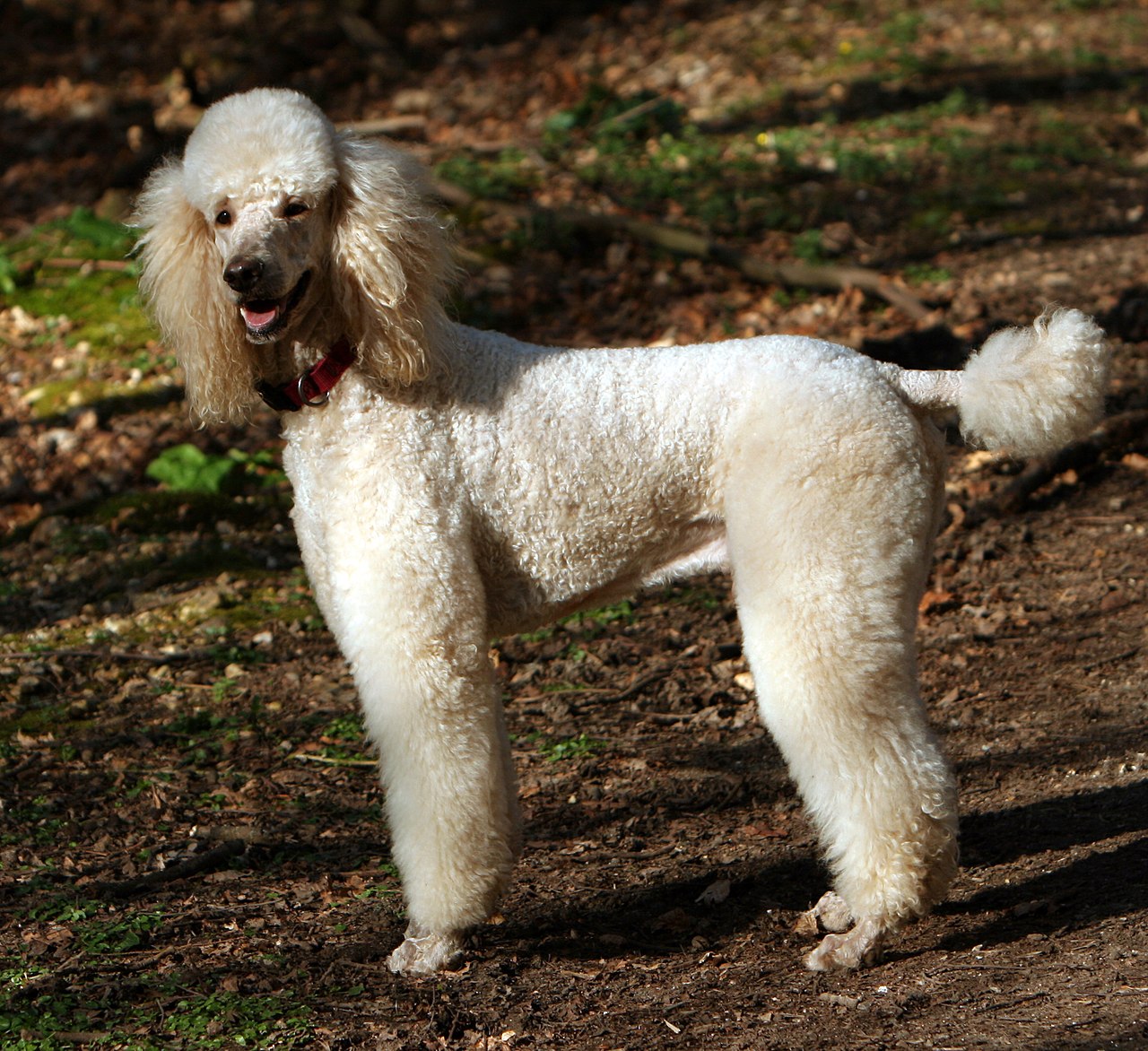
Don’t be fooled by the haircuts: underneath the Caniche is an athletic dog with water hunter roots. It needs daily physical exercise and, above all, mental stimulation. At least two good walks a day plus playing time; the large and medium varieties appreciate running, long walks and dog sports.
It loves the water – its collecting instinct is still very much alive – and many specimens swim with real passion. Search and bring games, food puzzles and trick training are as important as walking: a Poodle that is only physically tired but mentally bored will eventually seek entertainment on its own, usually at your expense.
The toy and dwarf versions require fewer miles, but equal mental activity, adjusting the intensity to the size and age of the dog, avoiding strenuous exercise in full-grown puppies.
Care: fur and hygiene
The coat is the great commitment of this breed. The Poodle has a curly and dense hair that hardly falls off – hence its reputation as a low-allergenic breed – but precisely because it does not come off, the dead hair gets tangled and forms knots easily.
There’s a lot of cuts. Exhibition cuts (Continental, Continental American, Scandinavian or puppy cuts) meet strict standards, but most families opt for sporty and practical cuts, shorter and easier to maintain. Interestingly, those famous pom-poms of the classical court were not a whim: They protected the joints and vital organs from the cold when the dog swam, leaving the rest of the body light.
In addition to hair, watch three sensitive points: ears (prone to otitis, it is advisable to check and dry them well), eyes (which can tear) and teeth, especially in small sizes.
Foodstuffs
The Poodle does not have exotic dietary needs, but it is advisable to adapt the ration to its size and activity level, which vary greatly between a toy of less than 5 kg and a large one of more than 25 kg. A complete and quality food, with good protein intake, covers its needs at each stage: puppy, adult and senior.
Divide the food into two daily servings (for small puppies, preferably three) and stick to the recommended amounts to avoid overweight, a frequent problem because it is a smart dog that knows how to ask. The dwarf and toy varieties are prone to obesity and dental problems, so moderate rewards and care for the texture of the food are recommended. Always have fresh water available and check with your veterinarian for any adjustments, especially if skin allergies are common in the breed.
Health and life expectancy
The Poodle is, on the whole, a long-lived dog. The average life expectancy of the breed is around 12 to 15 years, and small varieties tend to live longer than large ones: Toys and dwarfs often exceed 14 years of age, and specimens have been documented to have reached very advanced ages. A recent study in the United Kingdom placed the average longevity of the breed at about 14 years, above the average for purebred dogs.
Like all breeds, it carries certain hereditary predispositions that should be known:
- Piel: sebaceous adenitis (inflammation of the skin glands) is one of the most characteristic ailments, along with skin allergies, fur problems and external otitis.
- Ojos: cataracts, progressive retinal atrophy (PRA), glaucoma and entropy, especially in small sizes.
- Hormonas: has a tendency to Addison’ s disease, hypothyroidism and Cushing’ s syndrome.
- Large varieties: hip dysplasia and, like other deep-chested dogs, risk of gastric torsion.
- Toy and dwarf varieties: kneecap dislocation, tracheal collapse and dental problems typical of small breeds.
The best prevention is to choose a responsible breeder who performs genetic and health testing of the breeders, keeps veterinary checks up to date and monitors weight, skin and ears.
Physical appearance
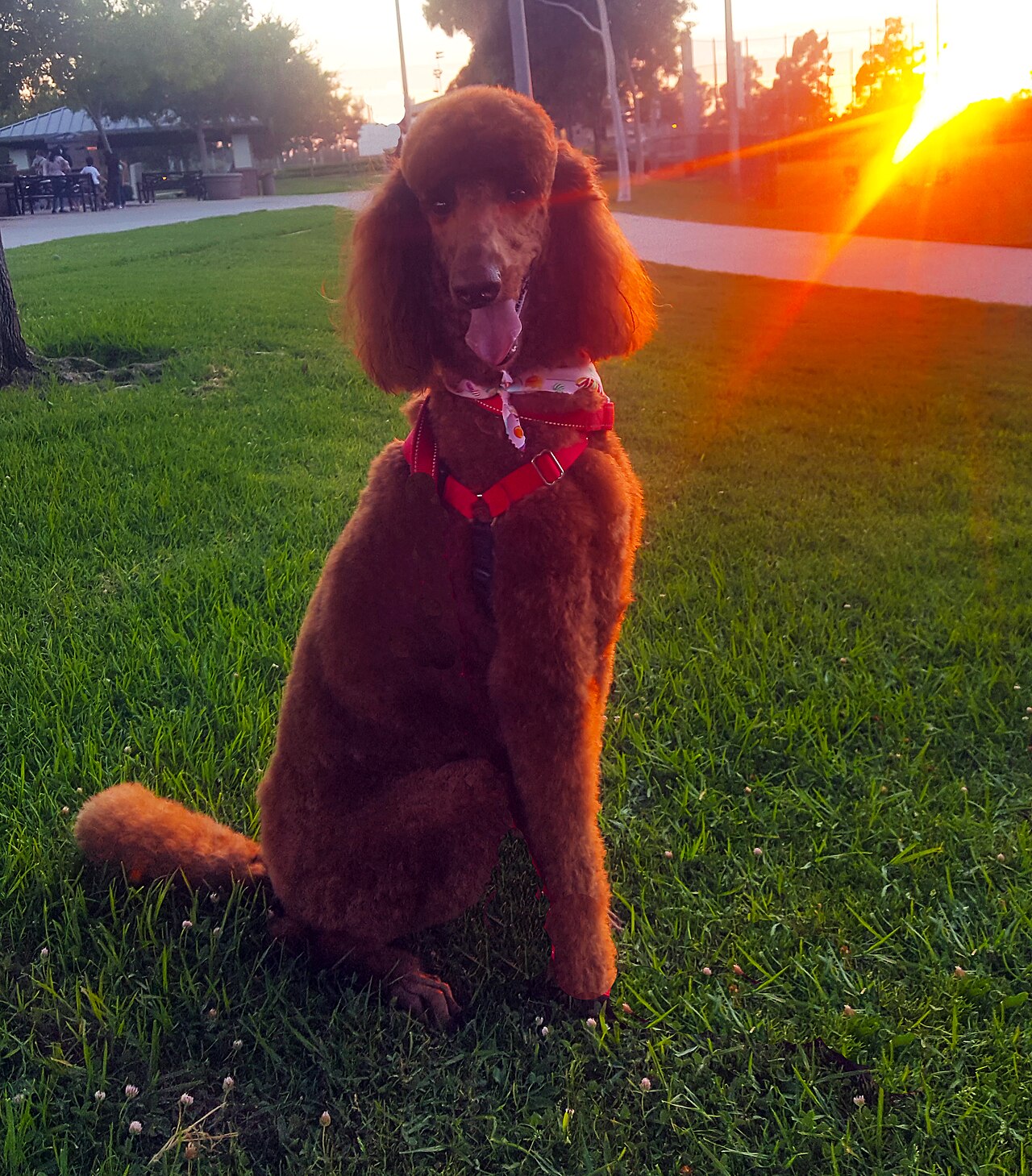
The Caniche is an elegant and well-proportioned dog, with a distinguished build and a characteristic curly coat.
- Grande (estándar): about 45 to 60 cm, the original variety, from which the others descend.
- Mediano: between 35 and 45 cm.
- Enano (miniatura): between 28 and 35 cm.
- Toy: below 28 cm, without losing proportions or showing signs of dwarfism.
Weight accompanies size: from approximately 6 to 7 kg for a toy to more than 20 kg for large specimens. The head is thin and elongated, with an elegant snout, dark almond-shaped eyes, and long, sloping ears on either side. The coat supports many colors, always smooth in the main registers: black, white, brown, gray, silver, apricot and red, among others. The tail, historically amputated, is now increasingly kept intact according to the legislation of each country.
Origin and history
The origin of the Poodle is disputed between several countries. Most experts place its birthplace at Alemania, where it would have emerged in the Middle Ages as a water dog from similar ancestors to the French Barbet. In fact, its German name, Pudel, is derived from a word meaning “to splash”, a clear clue to its original function. The FCI and a minority of cynologists, on the other hand, officially recognize Francia as the country of origin, and some also point to Russia.
Whatever his birthplace, his work is clear: he was a water collector who recovered the fallen prey that fell into lakes and rivers, such as ducks and geese.
From the 16th century onwards, it gained fame for its beauty and intelligence, and became commonplace in circuses, works of art, and European courts, including that of Louis XVI of France. Later, breeders reduced their size to create first the miniature variety and, already in the 20th century, the toy, perfect as companion dogs. The British Kennel Club recognized it in 1874 and the American Kennel Club in 1886. Since the mid-20th century it has become one of the most popular breeds in the world: was the most recorded in the United States between 1960 and 1982.
Curiosities
- It is considered the second smartest dog of the world according to Stanley Coren’s obedience ranking.
- The famous “lion cut” is not purely aesthetic: it was born to make the dog swim better by protecting joints and organs from the cold.
- Its German name Pudel comes from “to splash”; the French Caniche derives from dogs(foot, female of the duck), for its work collecting waterfowl.
- It has accompanied armies since the 17th century; Napoleon even wrote about the faithfulness of the Poodle of a grenadier that did not separate from the body of its owner.
- There is the “cordelé” variety of hair, with Rasta-type strings similar to those of the Komondor or the Puli.
- The term “poodle” is even used as a political epithet in English to describe one who meekly follows another: proof of how much the breed is part of popular culture.
If you’re attracted to the Poodle for its low-allergen hair, intelligence, or elegance, you may be interested in other breeds with a similar profile. Among the water and curly-haired dogs, Lagotto Romagnolo and Portuguese Water Dog stand out, both water cousins of the Poodle. Bichón Frisé Bichón Maltés
Frequently Asked Questions About the Poodle
Does the Poodle shed a lot of hair?
The Poodle sheds very little hair because its curly coat retains dead hair instead of releasing it into the environment, so it is usually better tolerated by sensitive people. There is no 100% hypoallergenic dog, but the Poodle is among the most recommended breeds in that sense.
How long does a Poodle live?
The average life expectancy is around 12 to 15 years. Small varieties (toy and dwarf) tend to live longer than large ones, often exceeding 14 years, while the large Poodle is usually somewhat below. Good care, proper weight and veterinary reviews help to achieve that longevity.
How many poodle sizes are there?
Four: large or standard (about 45-60 cm), medium (35-45 cm), dwarf or miniature (28-35 cm) and toy (less than 28 cm).
Is he an easy dog to train?
Very much. It’s the second most intelligent breed according to Stanley Coren’s ranking and it learns commands with very few repetitions. It responds wonderfully to positive reinforcement and enjoys training. The only nuance is that, being smart, it also learns in the mornings, so it’s best to set clear rules from puppyhood.
Is Poodle good with kids?
Yes, it is patient, playful and very sociable, which makes it an excellent family dog. With small children it is preferable to choose the large or medium varieties, more robust than the delicate toy, and always teach the little ones to treat the dog with respect.
How much exercise does a Poodle need?
It needs at least two good walks a day, play and, very importantly, mental stimulation (searching games, puzzles, tricks). Large and medium varieties appreciate canine sport; small ones need less distance but equal mental activity.
How often do you have to take him to the hairdresser?
Their curly hair grows continuously and forms knots easily, so maintenance is one of the main commitments (and costs) of having a Poodle.
Does the Poodle bark a lot?
It usually warns of visitors and noises, but it is not a compulsive barker if it is well exercised and accompanied. Excessive barking usually occurs from boredom, lack of stimulation or separation anxiety, as it is a very attached dog that does not tolerate prolonged solitude.