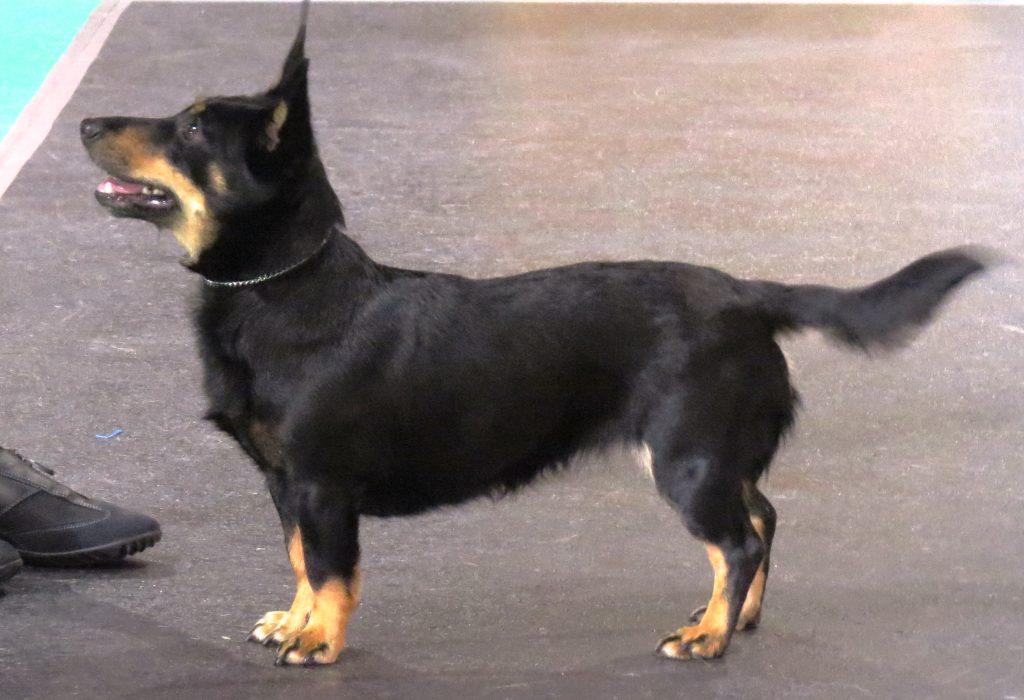
The Lancashire Heeler is a small, robust and surprisingly long-lived dog, born on farms in north-west England as a boyer and rat-hunter.
Is the Lancashire Heeler for you?
The Lancashire Heeler is a pocket-sized working dog. It is ideal for active people who want a small but characterful companion, willing to learn tricks, go for walks and participate in canine games and sports. It is not the best choice if you are looking for a quiet dog that spends the day sleeping or that tolerates long hours of solitude without protest.
In favour .
- Very healthy and long-lived.
- Small and adaptable, for a flat or a house.
- Very smart and eager to learn: enjoy the training.
- Loving and very close to his family.
- Little hair to maintain, simple grooming.
To be taken into account
- Energy and working dog head: he needs occupation.
- He tends to bark and warn of everything.
- Instinct to bite heels and chase.
- He doesn’t like prolonged loneliness.
- Rare breed: finding a puppy from a serious breeder is hard.
Character and temperament

The standard used by the American Kennel Club describes the Lancashire Heeler as a “brave, cheerful and affectionate to its owner” dog, and that sums up his personality well. He is an alert, self-confident dog with a huge desire to please, which makes him a fun and participatory companion in everyday life. He is very attached to his family and wants to be where his people are, following you from room to room.
From his farm past he retains an alert and vigilant temperament: It’s a dog that warns, that watches and that reacts quickly to stimuli. That vibrancy has a kind face – it learns at full speed – and another that must be channeled: If he is bored, he may become barking, stubborn or invent his own entertainments. He’s affectionate but not stupid; he knows what he wants and he’s got a little terrier point that gives him a spark.
Coexistence: children, other pets, flat and loneliness
With the children in the family it is usually affectionate and playful. It is, of course, convenient to take into account its boyer instinct: it can try to “drive” the little ones by giving them a touch on the heels, something that is corrected by educating the game and supervising. With respectful children it is a great companion for its manageable size and energy.
With other dogs it usually gets along well, especially if it is well socialized. With cats it can coexist without problems if it grows up with them, but its mouse origin makes it chase rodents and small animals; it is not the best neighbor for loose hamsters or rabbits.
As for the home, it adapts perfectly to a floor thanks to its size, as long as it goes out daily and has stimuli. What it tolerates the worst is the prolonged loneliness: it is a very attached dog that, if it spends too many hours alone and bored, tends to bark or seek out its energy in undesirable ways.
Education and training
This is where the Lancashire Heeler shines. It’s an extremely intelligent dog and highly motivated by food and play, which makes it easy to learn and genuinely enjoy working sessions. With positive reinforcement, short and varied sessions, it absorbs commands, tricks and routines at a surprising rate.
His independent side and his terrier spark call for constancy: If you give him space, he will also learn the “bad” habits (barking for attention, opening things, getting away with it). socializing, control of barking, and a reliable called command are good to work from a puppy, because their chase instinct can lead them to run after a cat or rodent. It’s a race that’s grateful to have “a job”: tricks, obedience, sniffing games or dog sports.
Exercise and activity
Don’t be fooled by its size: the Lancashire Heeler is an active dog that needs to expend body and head. With about 45 to 60 minutes of daily exercise – walking, playing and running – plus a little mental stimulation it is satisfied. It loves agility, the flyball, sports obedience and search and trace games, activities in which its intelligence and agility shine through.
The key with this breed is to combine the physical with the mental: a dog that just walks but doesn’t think gets bored the same. Smell games, stuffed toys, tricks sessions and solving challenges are as important as exercise. Well stimulated, at home it’s a calm and balanced dog.
Care: fur and hygiene
The Lancashire Heeler’s coat is double, with a rough and smooth outer coat and an inner coat that keeps it dry in any climate; in winter it can develop a slight mane around the neck.
As with all breeds, the ears must be checked and cleaned, the toenails must be cut regularly and the dental hygiene must be cared for with brushes or specific products.
Foodstuffs
As a small, active dog, the Lancashire Heeler needs a complete, high-quality diet tailored to its size, age, and activity level. A high-end feed for small breeds or a balanced diet supervised by a veterinarian covers their needs well. Since it is a good eater and highly motivated by food, it needs monitoring of quantities to avoid overweight, which especially punishes a dog with a long body and short legs.
Divide your daily allowance into two portions, keep fresh water available at all times, and discount your workout treats – which will be plentiful for this breed – from the total.
Health and life expectancy
The Lancashire Heeler is a notably healthy and long-lasting breed. A large British study from 2024 attributed to it an average life expectancy of 15.4 years, the highest of all breeds analysed, compared to the average of 12.7 years for purebred dogs and 12 for crossbreeds.
Their weak point is several hereditary eye conditions. The three most relevant are abnormality of the Collie’s eye, primary lens dislocation– caused by an autosomal recessive mutation of the ADAMTS17 gene, for which DNA testing exists – and persistent pupillary membranes. In addition, like other small breeds, it may suffer from dislocation of the kneecap. The best prevention is to go to responsible breeders who perform eye and genetic testing on the breeders, and maintain regular veterinary checks.
Physical appearance

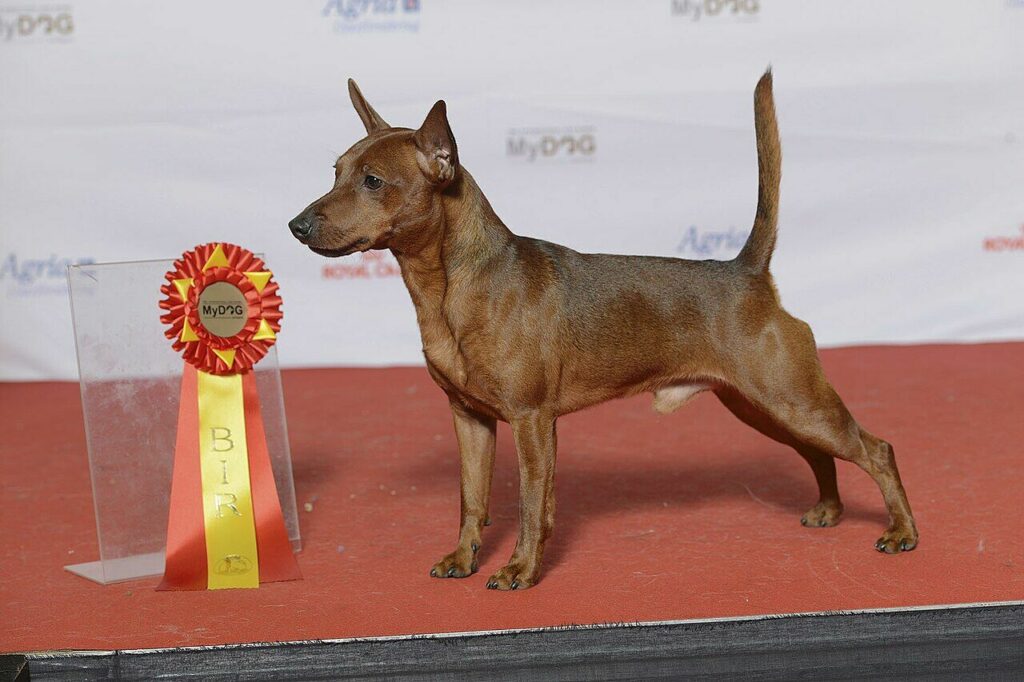
The Lancashire Heeler is a small, compact and slightly longer than tall at the withers. It measures between 25 and 30 cm at the withers and weighs around 5,9 to 8,2 kg, with a strong and agile constitution that betrays its working origin.
The head is proportionate, with an alert and awake expression, and the ears are usually held erect. The coat, short and double, is black and fire in the classic variety, with characteristic cinnamon marks on the snout, eyebrows, chest and legs; the Kennel Club also recognizes the liver and fire variety, of a warm chocolate hue. It is a dog that transmits liveliness and solidity to equal parts.
Origin and history

The Lancashire Heeler owes its name to the English county of Lancashire, where it has had more than one hundred and fifty years working as a versatile farm dog, capable of both hunting rats and driving cattle by gently nibbling on the heels of cattle – hence the English term heeler, “the one who goes to the heels”. It is generally accepted to be descended from the Welsh Corgi and Manchester Terrier, a cross that explains both its short, elongated body and liveliness.
The race was on the verge of extinction. In the early 1960s, Gwen Mackintosh began breeding specimens and, along with other enthusiasts, founded the Lancashire Heeler Club in 1978, which set the standard and opened a registry. The British Kennel Club recognized the breed in 1981. Despite this, their numbers remained very low: in 2006 the Kennel Club declared it vulnerable native breed(less than 300 annual registrations); that year 173 specimens were registered and in 2007 only 146. The FCI included it among the breeds provisionally accepted in 2016 and the American Kennel Club officially recognized it in 2024, the year of its debut at the National Dog Show.
Curiosities
- When happy, the Lancashire Heeler can spread your lips imitating a human smile, a very characteristic gesture of the breed known as the “Smile of the Heeler”.
- It is one of the more long-lived than you know dogs: it led the 2024 British study on life expectancy with an average of 15.4 years.
- Its name, heeler, describes its way of working cattle: biting the heels of cattle to steer them, just like other heeler boyars.
- Despite its history and international recognition, it remains a rare and protected breed as a vulnerable native heritage in its native UK.
- It is believed that the Welsh Pembroke Corgi is related to this breed, something that is appreciated in its low, elongated silhouette.
If you are attracted to this quick-witted, long-lived mini-boyer, you may be interested in other breeds with a similar profile: the hardworking, family-oriented Pembroke Welsh Corgi, its close relative; the tireless Border Collie, another learning machine; the versatile Pastor Australiano, ideal for dog sports; or the sleek, agile Shetland Shepherd, a small shepherd with great intelligence.
Frequently Asked Questions about the Lancashire Heeler
Is the Lancashire Heeler a good dog for beginners?
It can be if the owner is steady and active. It is small, healthy and very close to its family, but retains a lot of energy and mental acuity of a working dog: He gets bored, he learns tricks on his own, and he can become a barker or a heel biter if you don’t give him time. A first-time dog engaged in walks, play, and some daily exercise gets along just fine; someone looking for a quiet couch dog probably doesn’t.
How long does a Lancashire Heeler live?
It is one of the longest-living breeds known. A large British study from 2024 calculated an average life expectancy of 15.4 years, the highest of all the breeds analyzed, well above the average of 12.7 years of purebred dogs. With good nutrition, veterinary control and adjusted weight, many specimens exceed 15 years.
What colours can the Lancashire Heeler be?
The classic and most common color is black and fire. The British Kennel Club also recognizes the liver and fire variety (a chocolate hue with cinnamon marks). Both share the same pattern of fire spots on the face, chest and legs.
Does the Lancashire Heeler bark a lot?
It tends to be vocal. It comes from an alert farm dog that warned of anything, so it barks at noises, visitors or when bored. It is not an uncontrollable barking, but it is advisable to teach it from a puppy a command to be quiet and give it enough mental activity so that it does not bark out of frustration.
Do you get along with children and other pets?
Yes, it is generally affectionate and playful with the children of the family, although due to its boyar instinct it may try to shepherd the smaller ones by touching their heels; it is advisable to supervise and educate the game.
How much exercise do you need a day?
It is a small but very active dog: it needs about 45-60 minutes a day of walking, more play and mental stimulation. It greatly enjoys training, agility, olfactory work and searching games. Cover that dose, at home it is quiet; without it, it will look for occupation on its own.
Can the Lancashire Heeler live on one floor?
Yes. Due to its size it adapts well to a floor as long as it is taken out daily and given activity. What does not suit it well is prolonged loneliness or lack of stimulation: if it spends many hours alone and bored it may bark or develop destructive behaviors. It is a dog that wants to be with its people.
What health problems are more common in the breed?
It is a healthy and very long-lived breed, but has a predisposition to several hereditary eye conditions: Collie eye anomaly, primary lens dislocation (linked to an ADAMTS17 gene mutation) and persistent pupillary membranes.