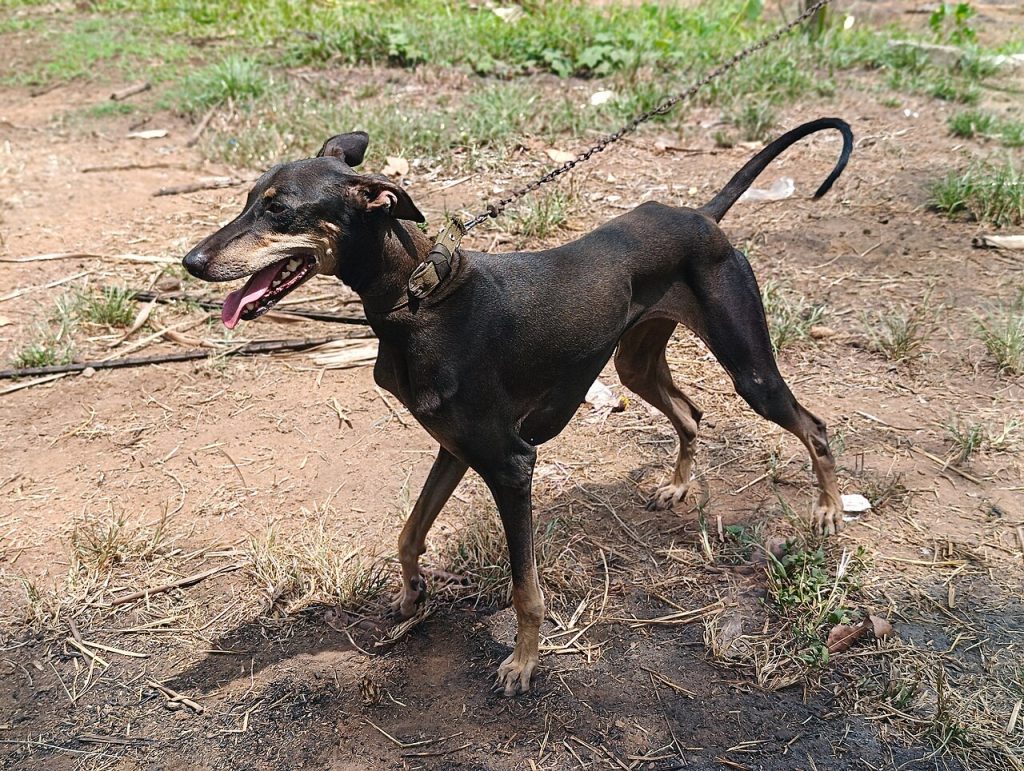
The Kanni is a sighthound native to South India, bred for generations in the villages of Tamil Nadu to hunt racing hares. Slim, swift, and deeply loyal, this purebred dog combines the silhouette of a greyhound with a reserved, territorial character. It is a rare breed, almost unknown outside its region of origin, and still closely linked to rural life and traditional hunting. If you’re looking for an athletic companion, discreet and of absolute fidelity, the Kanni has a lot to tell you, provided you can give him the space and exercise he needs.
Is the Kanni for you?
The Kani is not a dog for any household. It is a working hare, bred for running and hunting, with an intense bond to its family but a shy temperament with strangers. Before considering living with one, it is advisable to be honest about what it offers and what it demands. Here is an honest summary of its lights and shadows.
In favour .
- Extraordinary loyalty to his family; he’s a one-household dog.
- Athletic and fast: reaches 60 km/h, a pleasure for those who enjoy dog sport.
- Very short hair, minimal maintenance and almost no smell.
- A natural guardian of the territory despite its medium size.
- Smart and easy to train when he trusts his guide.
- Rustic and long-lived, with a life expectancy of 14 to 16 years.
Against
- It’s not made for living on the floor or in the city: it needs space and freedom.
- Strong hunting instinct; dangerous to release near small animals.
- Reserved and suspicious of strangers, he requires early socialization.
- Very rare breed outside Tamil Nadu: almost impossible to find in Europe.
- It thinks for itself when chasing prey; it does not always obey from a distance.
- He needs a lot of daily exercise, he doesn’t settle for short walks.

Character and temperament
The Kanni has a character that surprises those who expect a hare to be a cold or distant dog. Inside the house he’s sweet, quiet and deeply attached to his own. Outside, it becomes: is shy of strangers and keeps alert, observing before acting. Such timidity is not fear but prudence; the same dog that hides behind its owner’s legs from a stranger will defend its home without hesitation if it senses a real threat.
It is a dog of almost obsessive loyalty. In its native Tamil Nadu it is known as the “maiden’s beastmaster”, a nickname that sums up its devotion: traditionally black and fire specimens were given to newly married brides as protectors. The name Kanni means “pure” in Tamil, in reference to its purity of heart and unwavering fidelity.
In work, however, the Kanni shows another facet: it thinks independently. When chasing a hare, it does not wait for orders, it makes decisions on the fly. This autonomy, admirable in hunting, forces its guide to build a solid relationship of trust to have a response outside the hunting context.
Coexistence: children, other pets, flat and loneliness
With children: The Kanni is usually patient and affectionate with the children of his own family, with whom he forms a close bond. His shyness makes him avoid conflict rather than seek it out.
With other pets: is a hunter by nature, with a strong instinct to chase hares and small animals. It can coexist with other dogs, especially if it grows up with them, but cats, rabbits or small birds activate its instinct and coexistence is risky.
On the floor: is not its medium. The Kanni needs its own space and territory to patrol; experts agree that it is not adapted to urban life.
Soledad: is not a dog to be left alone for many hours: it needs company and participation in home life.

Education and training
The Kanni is described by its breeders as an easy-to-train dog: intelligent, attentive and eager to please the person in whom it trusts.
The key is trust. With such a sensitive dog, harsh methods are counterproductive: it shuts down, becomes more shy, and loses connection. Positive reinforcement, patience, and consistency yield much better results. Early socialization is essential to soften its natural distrust of strangers and to help it learn to handle new situations without stress.
A nuance has to be assumed: when the hunting instinct goes off, the Kanni thinks for itself. No matter how well-behaved it is, recovery (returning to the call) in the presence of prey is its weak point.
Exercise and activity
We’re dealing with an endurance and speed athlete, the Kanni, who was bred to run after hares across the countryside, using sight, smell and a double-suspension stride reminiscent of a cheetah.
Ideally, free-running sessions on wide, safe terrain, long walks, and games that stimulate his pursuit instinct in a controlled manner, such as lure coursing, make him an exceptional runner who enjoys intense physical exertion because of his light but muscular body, large heart, and enormous flexibility of his spine.
A couple of short walks a day isn’t enough. Without enough exercise, this hare isn’t in his element. Whoever adopts a Kani must commit to offering him real activity, the kind that makes him stretch his legs to the bone.
Care: fur and hygiene
Luckily, the Kanni is one of the simplest to maintain. Its coat is short, thin and attached to the body, so a weekly brushing with a glove or a soft brush is enough to remove the dead hair and keep the mantle shiny. It barely gives off a smell and does not need frequent baths: one every several months or when it gets really dirty is enough.
Like all dogs, it requires routine care: checking and cleaning the ears, cutting the nails when they do not wear out on their own, and taking care of dental hygiene with regular brushing.
Foodstuffs
In its traditional environment, the Kanni feeds on a very simple diet: millet, corn, sorghum (jowar), rice husks with milk or curd, and animal foods.
In a modern household, the recommendation is a quality feed or a balanced diet suitable for a medium-sized sporting dog, with a good intake of lean protein to maintain its musculature without excess fat. His slender constitution is natural: The slightly marked ribs and recessed abdomen are part of the breed standard, not a sign of thinness. He adjusts his rations to his high activity level and divides the food into two servings to take care of his digestion.
Health and life expectancy
The Kanni is an indigenous breed, bred naturally for centuries by functional rather than aesthetic selection.
His life expectancy is long for a dog his size: between 14 and 16 years. As with all lean-skinned hares, it is advisable to monitor cold sensitivity and protect the skin from bumps and scratches during the race. Regular veterinary checks, deworming, daily vaccination and good nutrition are the best guarantees of a long and healthy life. Being a rare breed, there are few systematic health studies, so prevention and common sense are the best tools.

Physical appearance
The Kanni is a medium-sized, elegant-looking, unmistakably athletic-looking greyhound, featuring a straight upper line and a reclined abdomen, the classic greyhound silhouette made for speed.
The head is straight, with strong jaws, golden eyes and black truffles. The ears are medium-sized and flat, and can be carried upright, dropped or half-dropped depending on the specimen. The tail is semi-curved.
The name “Kanni” is strictly reserved for the black and fire and black and sabre varieties; solid-colored specimens are registered as Chippiparai, although some experts consider these to be distinct breeds. The coat is short and supports a wide variety of tones with its own Tamil names: brown with black, lions (Santhana Pillai), light red (Sevalai) to dark red (Karum Sevalai), cream, white (Mayila Pillai), red with white or pale gray (Sambal), among others.
Origin and history
The Kanni originates from southern Tamil Nadu, at the southernmost tip of India. Its breeding grounds are in the villages of Tirunelveli, Virudhunagar and Thoothukudi districts (Tuticorin), where it has been bred for generations as a coursing dog to hunt hares.
Her name, which means “pure” in Tamil, alludes to her purity of heart and faithfulness. The nickname “guardian of the maiden” originates from the custom of giving black puppies and fire to newly married brides as protectors, a tradition that eventually fixed that color as the “true” Kanni in the local culture. The Kennel Club of India (KCI) registered the breed with two names: Kanni for the black and fire specimens and Chippiparai for the solid colored ones.
It is a sparsely spread indigenous breed, closely tied to rural life and at risk from the loss of traditional hunter-gatherer customs.
Curiosities
- The Kanni can reach the 60 km/h, placing it among the fastest dogs of its size.
- Its double-suspension gallop and the flexibility of its spine are comparable to those of the cheetah.
- His name means “pure” in Tamil, in honor of his pure-hearted loyalty.
- He was given to brides as a guardian: hence his nickname “guardian of the maiden”.
- The different colors have poetic Tamil names: Paal Kanni, Seng Kanni, Karung Kanni, Parukki, Semmarai…
- Kanni and Chippiparai share a common origin, and it is still debated whether they are the same race or two distinct ones.
- While hunting, it obeys almost imperceptible hand signals from its guide.
If you are attracted to the temperament of this Indian hare, you may be interested in other breeds of similar morphology or character. You can discover the elegant and fast Greyhound, the European archetype of the hare; its lighter and more compact version, the Whippet; the tireless tracker Beagle; or the versatile hunting dog Vizsla, another strong athlete of great endurance and bond with his family.
Frequently asked questions about the Kanni
Is the Kani a rare breed?
It is a hare native to southern India, found almost exclusively in the villages of Tamil Nadu. Outside its region of origin it is virtually impossible to find, making it one of the rarest and most unknown dog breeds in the world.
What does “Kanni” mean?
It means “pure” in Tamil language. The name was given to it for its loyalty and the “purity of heart” attributed to it. It is also known as the “guardian of the maiden” for the custom of giving it as a gift to newly married brides.
Is he a good family dog?
With his own family he is extraordinarily loyal, affectionate and protective, and is usually patient with the children at home. He is shy with strangers and is not made for living on the floor or staying alone for long hours, so he fits better into active rural homes.
How long does a Kanni live?
Between 14 and 16 years, a remarkable longevity for a medium-sized dog.
Do you get along with cats and other pets?
It can coexist with other dogs, especially if it grows up with them. However, it has a very strong hunting instinct towards hares and small animals, so coexistence with cats, rabbits or birds is risky and requires great caution.
How much exercise do you need?
It is a working hare that can reach 60 km/h and needs to run daily in wide and safe spaces. Short walks are not enough for it: without real exercise it develops frustration and behavioural problems.
What’s the difference between Kanni and Chippiparai?
The Kennel Club of India registers the black and fire (and black and sword) as Kanni and the solid-colored as Chippiparai. They share origin and type, and some experts consider them the same breed while others have them as two distinct.
Is it hard to train?
Not particularly: it is intelligent and responds well to positive reinforcement and confidence. Its weak point is the call when it chases a prey, when it thinks for itself. Early socialization and long leash work are key.