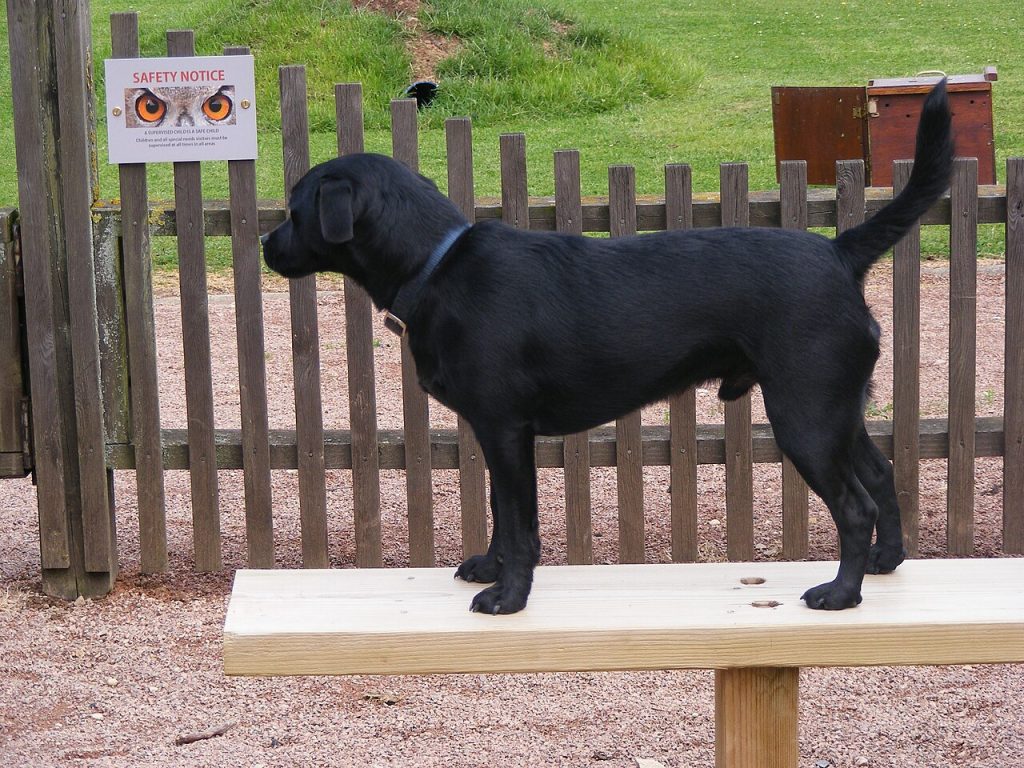
The Patterdale Terrier is one of the hardest working and most determined terriers in existence: A small, compact dog with endless energy, born among the rocky hills of the Lake District, in northwest England, to face the fox head-on. Under its simple appearance lies a courageous, tenacious and intense character that makes it an extraordinary companion for active owners, but also a challenge for those looking for a quiet dog. In this comprehensive guide we go over everything you need to know about the Patterdale Terrier before deciding if it’s the breed for you.
Is the Patterdale Terrier for you?

The Patterdale Terrier is not a dog for everyone, and that’s precisely where its honesty lies. It’s a pure working terrier, with little selection for exhibition or sedentary living, which means its nature is that of a tireless hunter. Before you fall in love with its character, you should be realistic about what it means to share your life with it.
In favour .
- Brave, self-confident and with an enormous loyalty to his family.
- Small and compact: fits well in many homes.
- Low-maintenance coat and generally rustic and healthy breed.
- Intelligent and quick-witted, he learns quickly what motivates him.
- Ideal companion for very active people, hiking and dog sports.
To be taken into account
- High energy – needs hours of exercise and stimulation every day.
- Very strong prey instinct: complicated with cats and small pets.
- Stubborn and independent; can defy education.
- Tendency to dig, bark and run away if bored.
- Not the best choice for first-time owners who are sedentary.
Character and temperament
If we had to summarize the Patterdale Terrier in one word, it would be intensity. This dog was selected for generations for its courage and determination in the face of prey capable of defending itself, and that temperament is still very much present in its character. Puppies are usually bold and confident even beyond their abilities, and that courage accompanies them throughout life.
It’s a cheerful, playful, deeply family-bound dog that enjoys human company and wants to be in the middle of the action. At the same time, it retains a strong independence: He thinks for himself, makes decisions and doesn’t wait for orders when something awakens his instinct. That combination of attachment and autonomy is typical of the working terrier and explains why it is so captivating and demanding in equal parts.
Their energy threshold and drive to chase are elevated, which can make socialization difficult if not worked on from a puppy. A well-bred, exercised, and constantly guided Patterdale is a balanced, caring, and hugely amusing companion; a boring, boundless one can become noisy, destructive, and difficult to handle.
Coexistence: children, other pets, flat and loneliness

With children: The Patterdale Terrier usually gets along well with older children who know how to respect the dog, and its playful energy fits in with active families. With very young children it is advisable to always supervise, because its intensity and direct character do not tolerate rough handling well. Early socialization and clear rules for the whole family are essential.
With other pets:‘s greatest limitation is that its prey instinct is very strong, so coexistence with cats, rodents, rabbits or birds requires great caution and, in the best case, having raised them together from puppies.
On the floor:‘s small size makes it suitable for a floor, but its energy does not. It can live in small spaces as long as it goes out often and expends both body and head. Without enough exercise, a floor quickly becomes a scene of barking and destruction.
Soledad: is an attached dog who does not take long absences well. It is advisable to gradually get him used to being alone, leave him activity toys and, above all, ensure that he arrives tired to those moments of solitude.
Education and training
The Patterdale Terrier is intelligent and quick to learn, but it is also stubborn and independent, so its education requires method, patience, and a lot of perseverance. It responds wonderfully to positive reinforcement: high-value food rewards, play, and enthusiasm motivate it far more than imposition, which only gets it to shut down or stand up.
It is essential to start early with socialization, exposing it in a controlled manner to people, dogs, environments and various stimuli to soften its natural intensity.
Channeling your mental energy through olfactory games, playful obedience, or dog sports not only educates – it prevents much of the behavior problems associated with boredom.
Exercise and activity
This is the point that makes or breaks a Patterdale Terrier’s coexistence. It was bred to cover steep, rocky hillsides for an entire day of hunting, in cold, humid, windy weather, and that endurance remains intact. It needs plenty of daily physical exercise – ideally an hour or two – combined with mental stimulation.
He enjoys long walks, hiking, racing, pick-up and drop-off games, and especially activities that activate his sense of smell and tracking instinct. Canine sports such as agility, canicross or nose games are perfectly suited to their temperament and give them a healthy way to discharge their motor. A Patterdale who gets enough exercise is quiet at home; one who doesn’t will seek his own entertainment by digging, barking, or running away.
Care: fur and hygiene

In terms of care, the Patterdale Terrier is one of the most grateful dogs. Its coat can present three varieties according to the standard: smooth (short and very sticky), half-thick or broken (longer on the body, with some beard on the muzzle) and hard (longer on the whole body, including face and ears).
Maintenance is simple: a weekly brushing is sufficient to remove dead hair and keep the coat healthy; in hard hair varieties an occasional stripping may be appropriate. It does not need frequent bathing, and it is best to reserve it for when it is really dirty so as not to dry out the skin. As with any dog, the ears must be checked and cleaned, the teeth brushed regularly, and the nails trimmed carefully.
Foodstuffs
As a small but extremely active dog, the Patterdale Terrier needs a high-quality, high-protein diet tailored to its actual energy expenditure. The amounts vary according to age, weight, activity level, and diet type, so it is wise to start with the recommendations of a good range of feed or a plan designed by the veterinarian and adjust according to the dog’s body condition.
The standard rule is very visual and useful: In a fit Patterdale you should be able to feel the ribs without seeing them with the naked eye. It’s a dog that tends to be muscular, so it may weigh more than it looks. It is good to divide the ration into two daily servings, control the rewards (especially if they are used a lot in training) and monitor the weight, because being overweight harms both your performance and your joint health.
Health and life expectancy
The Patterdale Terrier is a rustic and generally healthy breed, precisely because it descends only from terriers used for work and was selected for functionality and not for appearance.
As with all breeds, preventive medicine should be kept up to date: vaccination, deworming, regular veterinary checks and good dental hygiene. His work instinct prompts him to crawl into holes, burrows, and rough terrain, so it is not uncommon for him to accumulate small scratches or scars; the work standard itself asks not to penalize such marks. Monitoring ears, skin and general condition after field trips is a good habit.
Physical appearance
The Patterdale Terrier is a hard, active, compact-looking and well-balanced terrier, neither coarse nor brittle. Its height at the cross ranges approximately from 25.5 to 38 cm, with a weight always proportional to the height. A key detail of its morphology is the chest: As a dog designed to follow prey through tunnels and narrow crevices, it should not have a breast too large; in fact, the traditional reference is to be able to embrace it with both hands.
The head transmits force and keeps proportion with the body, with a snout neither square nor short and a bite in scissors (although the pincer is accepted). The ears are folded (“buttoned”), the neck muscular, and the legs straight and bony. Accepted colors are black, red (ranging from cinnamon to rusty), chocolate and black and fire; chocolate specimens have the characteristic brown or reddish nose. Some white on the chest and feet is admitted.
Origin and history
The Patterdale Terrier owes its name to the town of Patterdale, in the Lake District of Cumbria, in north-west England, south of Ullswater Lake. It is a type of fell terrier, the hill terrier (“fells”), and its roots go back to 18th century northern terriers, with the Old English Terrier (the original black terrier) and the now extinct Northumberland Pit Terrier among its ancestors.
Although the fell terrier was known since the 18th century, the Patterdale as such began to spread in the early 1950s thanks to breeders such as Cyril Breay, master and hunter, and Frank Buck. Later, during the 1960s, Brian Nuttall continued to refine the breed by crossing specimens of the best lines. The current Patterdale is believed to be descended from the dogs bred by Breay.
The breed was forged in a demanding environment: steep and rocky hills, cold and humid climate, and an economy based on sheep farming, where the fox was seen as a predator. There, where the rocky terrain made it impossible to dig, a dog was needed that could drive out or face the fox in the crevice itself. The Patterdale gained a reputation as an extraordinarily tough and functional dog. In the United States it was recognized by the United Kennel Club on January 1, 1995, although it is still not recognized by the American Kennel Club or the FCI.
Curiosities
- It is sometimes called Old English Terrier or simply Fell Terrier, names reflecting its origin among the English hills.
- Chocolate-colored specimens have a brown or reddish nose, officially known as red nose(“red nose”).
- It is considered more of a working terrier “type” than a closed breed, resulting from the mixing of several UK native terriers.
- The working standard specifically asks not to penalize scars and marks: they are signs of a dog doing its job.
- The two-handed breast rule ensures that the dog can follow its prey through very narrow gaps.
- The use of “tough” dogs for fox hunting in this way was restricted in England and Wales by the Hunting Act 2004.
If you are attracted to the temperament of the Patterdale Terrier, you may be interested in other working, energetic and intelligent terrier breeds, such as the tireless and bright Border Collie; the versatile Beagle, another great-smelling hunter; the lively Yorkshire Terrier, a terrier of British origin; or the intelligent Poodle, if you are looking for energy with low-shedding fur.
Frequently Asked Questions about the Patterdale Terrier
Is the Patterdale Terrier a good dog for beginners?
It’s not the easiest option. The Patterdale Terrier is a working terrier with a strong prey energy and instinct, and he needs someone who understands the terrier temperament, who is consistent with the rules, and who can offer him plenty of daily exercise. An active, knowledgeable, seasoned first-time owner can get along just fine with him, but those looking for a quiet, manageable dog should value other breeds.
How much exercise does a Patterdale Terrier need?
It was bred to cover rocky slopes and chase foxes for hours, so it requires at least one to two hours a day of combined physical and mental activity: long walks, intense play, sniffing, and obedience work. A Patterdale that does not expend its energy tends to become noisy, destructive, or digging.
Does the Patterdale Terrier get along with children?
With older children who know how to respect the dog it usually works well, because it is brave, playful and very active. With very young children it is advisable to monitor always: its intensity and its low threshold of tolerance to abrupt handling can generate tension. The key is early socialization and teaching the child to interact calmly.
Can a Patterdale Terrier live on one floor?
Yes, as long as it is guaranteed the exercise and stimulation it needs. Size is not a problem, but its energy is: in a flat you have to compensate with long and frequent outings. It is also advisable to work on tolerance to loneliness and control the barking, because it is a warning dog.
Does the Patterdale Terrier bark a lot?
It tends to be vocal and alert, something typical of working terriers. It is not a meaningless barker, but warns of stimuli and may insist if bored or frustrated. With sufficient exercise, socialization and self-control work, barking is kept at reasonable levels.
How long does a Patterdale Terrier live?
It is a rustic and generally healthy dog, bred for generations under functional criteria. Its life expectancy is usually around 11 to 14 years when it receives good nutrition, exercise and preventive veterinary care.
Can the Patterdale Terrier be carried with cats or other pets?
It is delicate. Its prey instinct is strong and it was selected to face wildlife directly, so coexistence with cats, rodents or small pets requires great caution and, if possible, raising them together from puppyhood.
Is the Patterdale Terrier recognized by the FCI?
The Patterdale Terrier is not recognized by the International Kennel Federation (FCI) nor by the American Kennel Club nor by the British Kennel Club.