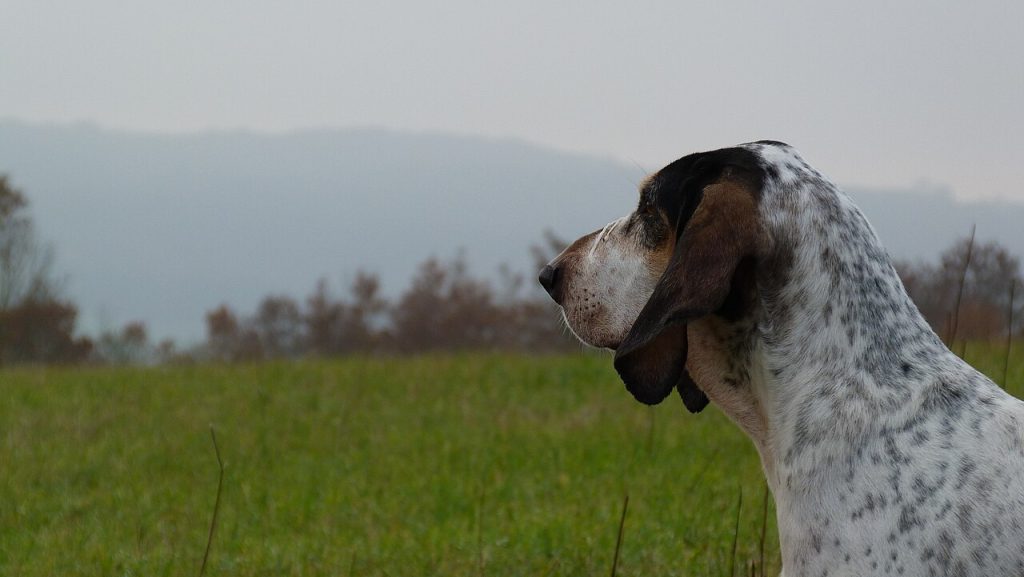
The Gascón Saintongeois is one of the great hounds of France: An elegant, hardy, distinctive-voiced tracking dog, bred for generations to hunt in packs following the trail with its nose glued to the ground. It comes in two varieties – the Grand, for larger game, and the Petit, more versatile – and retains a noble, sociable, and deeply industrious character. If you’re attracted to a rustic, athletic dog with hunter-gatherer roots, here’s the complete guide to the Gascon Saintongeois: temperament, coexistence, care, health, history and everything you need to know before you share your life with him.
Is the Gascon Saintongeois for you?

The Gascon Saintongeois is not a dog for everyone, and that is precisely why it is good to be honest before falling in love with his image. He is, first and foremost, a hound: An animal selected for centuries to run, track and bark while chasing a lead. Outside of that context, he is still a loving and balanced companion, but he needs your exercise and encouragement in return for how much he is willing to give. It fits wonderfully with hunters, rural families, sportsmen and people with time and space; it doesn’t fit well with someone looking for a quiet dog on the couch.
In favour .
- Noble temperament, sociable and without gratuitous aggression.
- Excellent with other dogs: a pack dog by nature.
- Very tough, rustic and with few documented health problems.
- Extraordinary smell and melodious voice, a pleasure for the hunter.
- Short hair and easy to maintain.
To be taken into account
- Very high exercise requirement: not a floor dog.
- Strong and frequent barking when crawling or bored.
- Very strong hunting instinct: the call is never 100% reliable out in the open.
- Independent when following a trail; not a dog of blind obedience.
- Rare breed outside France: hard to find.
Character and temperament
The Gascon Saintongeois has the classic character of the great French hound: Balanced, sociable and hardworking, with a quiet nobility that only ignites when a trail shows up. At home it is affectionate and serene, attached to its people, without the nervousness of other hunting breeds. In the countryside it is transformed: He concentrates on the track, barks with that deep, characteristic voice and displays relentless determination.
It’s a dog designed to work in groups, so sociability is part of its essence. It is not usually dominant or conflicted with other dogs, and its standard temperament rejects both excessive aggressiveness and extreme shyness (both considered defects in the breed). Of course, their olfactory independence is real: When the nose rules, the Gascon Saintongeois stops listening to you, and you have to take it as part of the package.
Coexistence: children, other pets, flat and loneliness

With children: is a tolerant and well-bred dog, who usually gets along well with the little ones in the house if he grows up with them and is well socialized.
With other dogs: here shines. bred to live and hunt in packs, lives with other dogs with an enviable naturalness. in fact, many specimens are happier with another dog than alone.
With other pets: the hunting instinct is intense. cats and small animals of one’s own household can accept them if bred with them from puppyhood, but any small animal moving outside the house will activate its chase impulse. caution.
Floor and solitude:‘s weakness is that it is not an apartment dog and does not tolerate prolonged solitude. It needs space, long outings and companionship; locked up and inactive, it barks, becomes frustrated and may develop destructive behaviors.
Education and training
Educating a Gascon Saintongeois requires understanding what kind of dog it is. It is intelligent and willing to collaborate, but it carries the independence typical of the hound: it thinks for itself, especially when there is an interesting smell in the middle. Positive reinforcement works much better than imposition; with harshness it closes, with patience and motivation it yields.
The absolute priority is the call, worked from a puppy and in controlled environments, knowing that in the open field it will never be infallible. Sessions should be short, varied and clearly rewarding. Early socialization with different people, dogs and environments reinforces their balanced character. Do not look for obedience of display: find a functional partner who understands the rules of the home and enjoys cooperating with you.
Exercise and activity
This is the decisive chapter. The Gascon Saintongeois is a long-distance athlete, with a slender, muscular body, long legs and a stamina designed to gallop for hours following a trail.
Ideally, you should be able to run, explore and work on your sense of smell every day. long walks, running, hiking and, above all, trail running activities that channel their instincts. For a hunter, hunting itself is the best exercise. For an active family, mantrailing, search games, canicross, or any sport that combines physical exertion and mental stimulation are worthwhile. A well-exercised Gascon Saintongeois is a calm and happy dog at home; a sedentary one will be noisy and frustrated.
Care: fur and hygiene

Aesthetically, it is a low-maintenance dog. Its hair is short, dense and attached to the body, so a weekly brushing is enough to remove the dead hair and keep the coat shiny. It does not need a hairdresser or frequent baths: washing it when it is really dirty is enough.
The critical point is the ears: Long, fallen and stuck to the head, they retain moisture and dirt, which makes them prone to infection, especially in dogs working in the field. Regular checking and cleaning is essential. Complete the routine with cutting your nails when they don’t wear out on their own, periodic dental hygiene and a pad and skin inspection after each mount or trail day.
Foodstuffs
As a high-energy, athletic dog, the Gascon Saintongeois needs a high-quality diet tailored to its level of activity.A dog that hunts or exercises intensely requires more energy and protein than one with a quieter lifestyle, and the diet must be adapted to each season: it does not eat the same in the middle of a hunting season as it does at rest.
The prudent thing is a balanced feed or diet of good range, divided into two daily intakes to promote digestion, and avoid intense exercise right after eating for the risk of gastric torsion typical of deep-breasted dogs. Watch the weight: an overweight hound loses agility and joint health. When in doubt about specific amounts or diets, it is best to consult your veterinarian.
Health and life expectancy
The Gascon Saintongeois is a rustic and functional breed, little affected by aesthetic breeding, which translates into a robust overall health and in the absence of large hereditary problems widely documented.
Health care focuses more on their lifestyle than on racial pathologies. long and sloping ears calls for surveillance for the risk of otitis. Like any large and active dog, it is advisable to take care of the joints and the weight to prevent locomotor problems, and be attentive to the gastric torsion for its deep chest. Field dogs also require rigorous deworming and checking of ticks, wounds and pads after each outing. With regular veterinary checkups and daily vaccinations, it is a healthy, long-lived dog.
Physical appearance
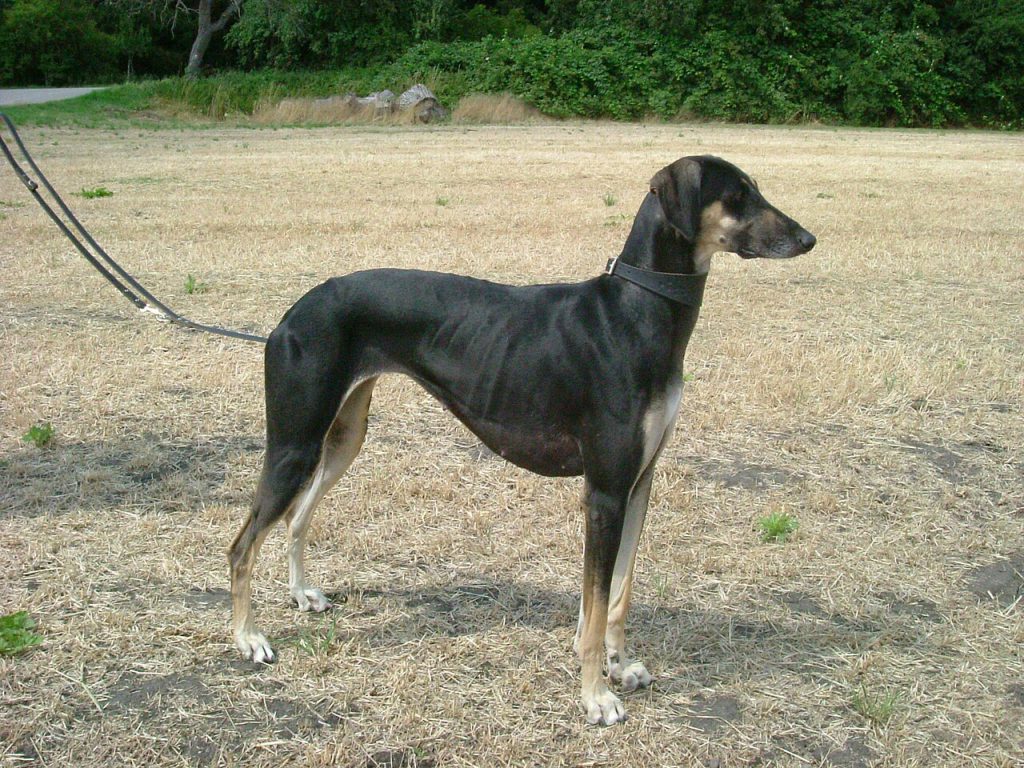
The Gascon Saintongeois is the archetype of the French hound: a dog with noble lines, slender and muscular body, long legs and elegant demeanor. The head is elongated, with long and sloping ears, dark brown eyes and those characteristic dangling lips (belfos).
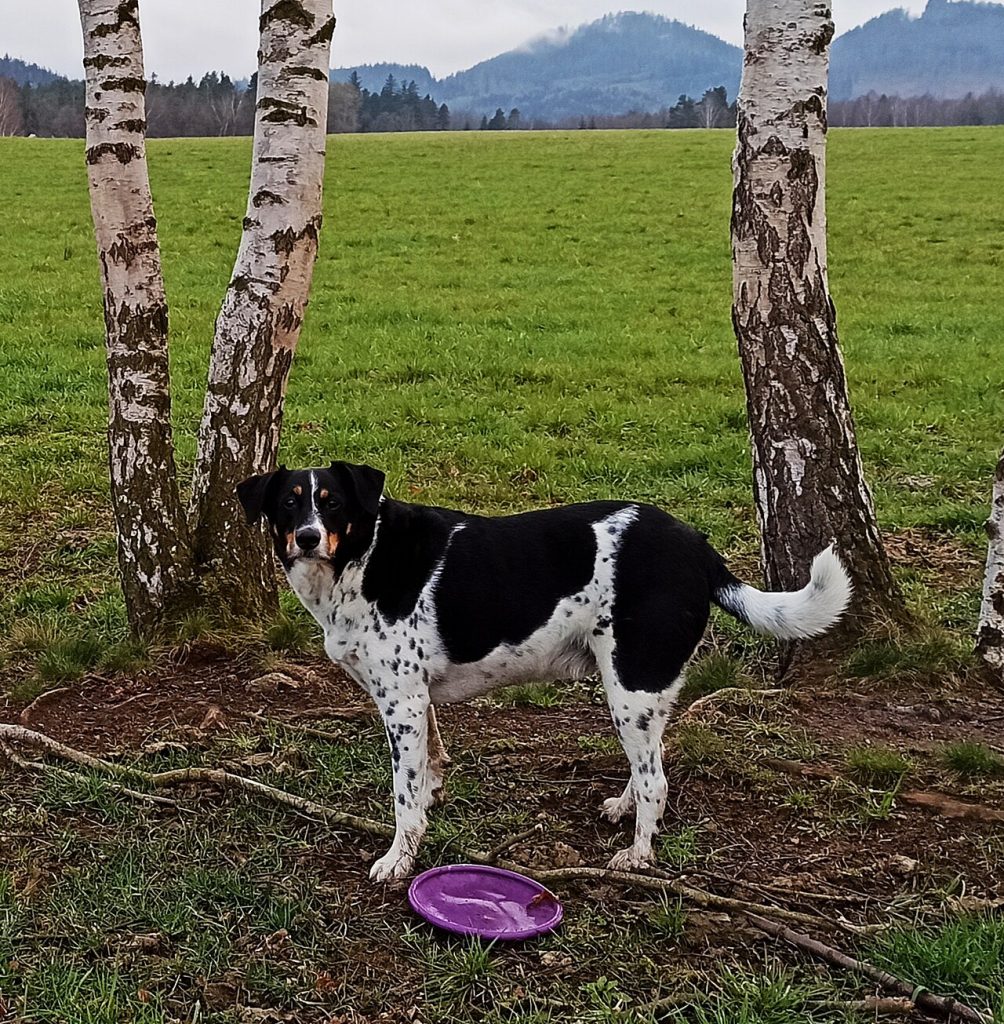
Your coating is unmistakable: white with black spots, sometimes mottled or speckled with black. The ears and the area of the face around the eyes are black, and the cheeks present fire, without the set appearing tricolor. Two fire marks appear over the eyes and sometimes another one at the base of the thigh, the so-called “deer mark”. There are two sizes: the Grand, 65 to 72 cm (males) and 61 to 66 cm (females), weighing about 30-32 kg; and the Petit, 56 to 62 cm, smaller but still a good size dog. The breed is noted for its excellent sense of smell, its high-pitched voice, and its beautiful gallop – qualities essential in a tracking dog.
Origin and history
The history of the Gascon Saintongeois is also that of a breed that was on the brink of extinction. It descends from the ancient Saintonge Hound, a large French hunting dog from which, after the French Revolution, only three specimens survived: two males and one female.
In the mid-19th century, Count Joseph de Carayon-Latour took matters into his own hands and crossed the last of those Saintonge hounds with some of the few remaining old-type Grand Bleu de Gascogne. From that recovery were preserved the white specimens with black mottling, which later received the name of Gascon Saintongeois. Already in the second half of the 20th century, hunters in southwestern France began to select the smallest specimens from the litters of Grand Gascon Saintongeois to hunt hare and other smaller pieces: And so the Petit variety was born.
Curiosities
- The breed literally survived by the hair: the entire modern lineage started from just three Saintonge hounds left over after the French Revolution.
- The Grand Gascon Saintongeois is used for big game – wild boar, deer, and occasionally gray wolf – mostly in packs.
- The Petit is not a small dog: despite its name, it measures between 56 and 62 cm and is still a well-behaved hound.
- Their voice is valued as much as their smell – the beauty of their barking when tracking is a trait prized by hunters.
- The “deer mark” at the base of the thigh is a distinctive detail of its coat when it appears.
If you are interested in the world of hounds and tracking dogs, you may want to check out other related breeds: the Bloodhound, the quintessential tracker; the Basset Hound, another hound with long ears and a prodigious sense of smell; the popular Beagle, a compact and familiar version of the tracking dog; or the Pointer, another hunting classic with a very different temperament.
Frequently asked questions about the Gascon Saintongeois
Is the Gascon Saintongeois a good floor companion?
It’s not their natural environment. The Gascon Saintongeois is a pack hound bred to hunt for hours, with a very high need for exercise and a powerful, melodious barking that it uses when tracking. In a flat, without work or long outings, he tends to get bored, vocal and frustrated. You can live at home with your family if you get lots of daily activity, but you need more space, field and dog company than an urban apartment.
How tall and how much does the Gascon Saintongeois weigh?
There are two varieties. The Grand measures 65 to 72 cm males and 61 to 66 cm females, with an approximate weight of 30 to 32 kg. The Petit is smaller, 56 to 62 cm at the cross, although still a good size dog; the females are somewhat smaller. Both share the same type and coat.
Do you get along with children and other dogs?
With other dogs, very well: it is a pack dog by instinct, sociable and used to working in a group. With children it is usually tolerant and balanced if it is well socialized, although its energy and size (especially the Grand) require supervision with the smaller ones.
How long does a Gascon Saintongeois live?
As a rustic working dog, little modified by aesthetic breeding, it usually enjoys a long life for its size, around 10-12 years, provided it maintains adequate weight, regular exercise and veterinary checks.
Is it easy to educate?
It is intelligent and collaborative, but it has the independence and nose of every dog: when it catches a trail, it disconnects. It responds well to positive reinforcement, to short and varied sessions, and to a call worked out from a puppy. It is not the ideal dog for anyone seeking competitive obedience, but a functional companion that yields when it understands why.
What is the Gascon Saintongeois used for?
The Grand is used for big game (boar, deer and sometimes wolf), usually in packs; the Petit is more versatile and is used mainly with hare and rabbit, although it is also used for big game.
Do you need a lot of exercise?
It needs at least long daily walks, running, and olfactory stimulation; ideally, it can vent its instinct with tracking activities or field work. A Gascon Saintongeois without enough exercise becomes restless and noisy.
Where did the breed come from?
It is a French breed. It is descended from the old Saintonge hound, of which only three specimens survived after the French Revolution. In the mid-19th century, Count Joseph de Carayon-Latour crossed the last of those hounds with the Grand Bleu de Gascogne, and from there emerged the Gascon Saintongeois.