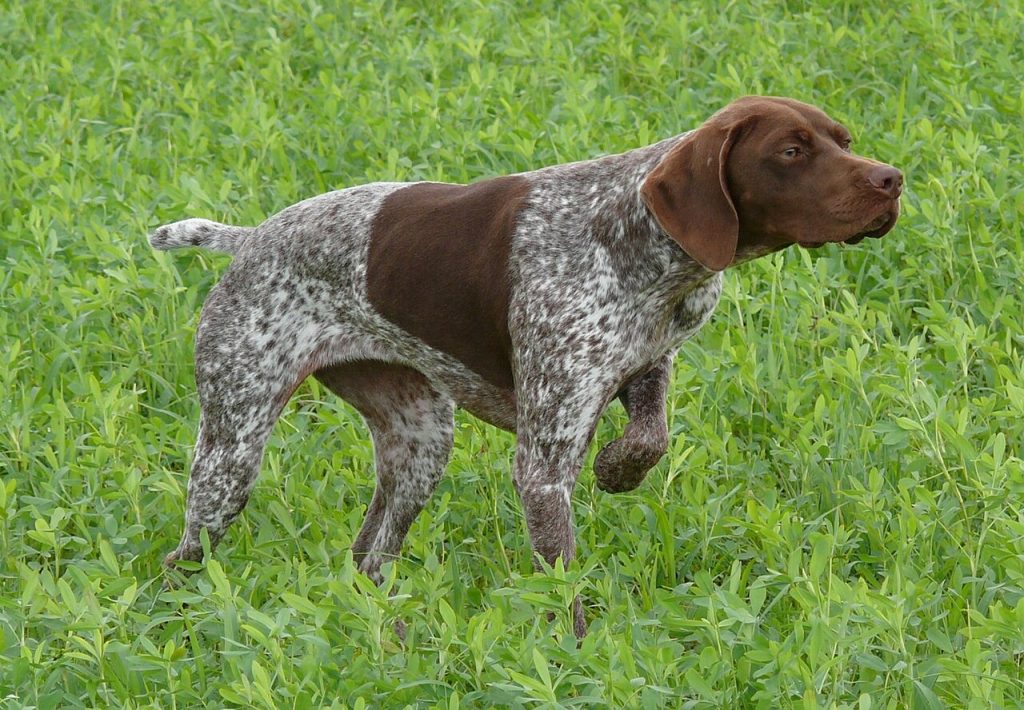
The Braco Francés is one of the oldest and noblest show dogs in Europe: a versatile hunter from the south of France who combines an extraordinary sense of smell with a character so docile and sociable that he has earned a reputation as the perfect family companion. Under this name two sister breeds actually coexist – the Gascon type and the Pyrenean type – similar in all but size. If you’re looking for an active, well-balanced, easygoing dog, the French Braco deserves to be on your list.
Is the French Braco for you?
The French Braco is a full-bodied hunting dog tucked into the body of an affable family companion. That means that you will do your best with people or families who are active, who enjoy the outdoors, and who can offer you real daily exercise. In return, you’ll receive a loving dog, quiet at home, carrier with children and other dogs, and eager to learn. It’s not the best choice for someone who spends a lot of time outdoors or looking for a sedentary dog.
It suits you if…
- You lead an active life and like to go to the countryside, run or walk every day.
- You want a sociable dog, docile and good with children.
- You are looking for a companion for hunting or dog sports (trail, agility, canicross).
- You value a coat that’s short and easy to maintain.
- You can offer him company and time. He doesn’t want to be alone.
Maybe it’s not your dog if…
- You spend a lot of time away from home and you can’t give him any exercise.
- You’re looking for a quiet, sedentary indoor dog.
- You don’t want to spend time on long walks and mental stimulation.
- You have small pets (rodents, birds) and little room to manage their hunting instinct.
- You prefer a breed easy to find: outside France it’s quite rare.
Character and temperament

If anything defines the French Braco , it ‘s its the balance. It is a cheerful, gentle, and deeply attached family dog, without the nervousness and stubbornness that sometimes accompany other hunting breeds. At home he is calm and discreet; in the field he becomes a tireless and attentive worker. That dual nature – quiet couchmate and devoted hunter – is just what makes him so beloved.
It is a sensitive dog, which reads people very well and gives itself completely to its guide. This human orientation makes him very manageable, but it also means he suffers from loneliness and indifference: It’s not a dog to have tied up or ignored in a yard. He needs to be a part of family life. His sociability extends to other dogs, with whom he usually gets along remarkably well, a trait not common among hunters.
Coexistence: children, other pets, flat and loneliness
With children. is one of its greatest strengths. Patient, playful and not aggressive, the French Braco enjoys the company of the little ones and tolerates them with good humor. As with any dog, it is advisable to teach children to respect their rest times and supervise play with the little ones.
With other dogs. Excellent. The breed stands out for its gregarious nature and its ease of getting along with other dogs, both at home and in the park.
With other pets. Here you have to have a head. It is a hunting dog with a marked prey instinct, so coexistence with cats, rabbits, birds or rodents requires prudence and, better still, socialization from puppyhood. Many learn to coexist with the house cat, but it will chase what moves outside.
On the floor and in the loneliness. is clean and quiet indoors, so it can live on the floor if it is compensated for by lots of exercise. The worst part is being left alone for too many hours: it is a companionship-hungry dog that can develop anxiety or destructive behaviors if left unattended often.
Education and training
The French Braco is an applied learner. Intelligent, eager to please and very attentive to his guide, he quickly learns both basic commands and fieldwork. This facility makes him suitable even for people with little experience, provided they commit to constancy.
The key is in the positive reinforcement. He ‘s a sensitive dog . Hard methods and scolding do more harm than good . Instead of correcting it, they block it and undermine their confidence. Rewards, play, patience and short, fun sessions give much better results. It is good to start early with socializing – people, noises, other animals, varied environments – to build on his good character base. Smell work, besides educating him, makes him mentally tired and happy.
Exercise and activity

There are no shortcuts here: the French Braco is a sporting dog that needs expend energy on a daily basis. It was bred to beat the field for hours, and that engine stays inside even though it lives in the city. At least it asks for one or two long outings a day, with stretches of running, exploration and play, in addition to mental stimulation.
He marvels at activities that combine body and smell: hiking, canicross, mantrailing, sample testing, agility or, of course, the hunting it was designed for. The Pyrenean type, lighter and faster, is especially agile and fast; the Gascon, somewhat more leisurely, maintains a steady and tireless rhythm. A French Braco that gets the exercise it needs is a balanced, quiet at home, obedient dog. One who does not receive it accumulates frustration and unleashes it by barking, scratching, or tearing.
Care: fur and hygiene
Its hair is short, smooth and attached to the body – thinner in the Pyrenees type and somewhat denser in the Gascony – so a weekly brushing is enough to remove the dead hair and keep it clean and shiny.
The point that demands the most attention are the ears: long, fallen and stuck to the head, poorly ventilate and favour humidity, especially after bathing or field days. They should be checked and dried frequently to prevent otitis. Complete the routine with trimming your nails when necessary, good dental hygiene, and checking your pads after you go out in the field. Bathrooms, only when it gets really dirty.
Foodstuffs
As an active dog of medium to large size, the French Braco needs a complete and balanced diet, adjusted to its actual activity level. An animal that hunts or trains intensively burns far more energy than one that lives in a city, and its diet should reflect this. Divide food into two daily servings and avoid vigorous exercise just before and after eating, a sensible precaution in deep-breasted dogs.
Keep an eye on weight: Although it is an athletic breed and unlikely to gain weight if it moves, excess weight punishes its joints and reduces its quality of life. It is better to be guided by his physical condition – you should notice his ribs unmarked – than by the scale. Fresh water always available, especially after exercise. If you have any questions about quantities, type of feed or special diets, the most reliable thing to do is to consult your veterinarian.
Health and life expectancy
The French Braco is a rustic and healthy dog, of functional constitution and without the physical exaggerations that drag problems in other breeds.
It is not a breed marked by notorious hereditary diseases, thanks in large part to the careful management of its offspring. Nevertheless, it is advisable to apply the common sense of any dog of this size: monitoring the joints with adequate exercise during growth, maintaining an adequate weight, and routinely checking droopy ears, which are your most sensitive spot because of their tendency to infection. Going to responsible breeders, who take care of the health and character of their breeders, is the best guarantee. Regular veterinary checks and daily vaccination and disinfection complete the picture.
Physical appearance

The French Braco is a show dog of harmonious lines, muscular but elegant, neither heavy nor excessively thin.
- Tipo Pirineos (Pyrénées): the smallest and lightest. It measures approximately between 47 and 58 cm to the cross (the females slightly less) and usually weighs around 17 to 25 kg. Head somewhat narrower, ears shorter and hair thinner.
- Tipo Gascuña (Gascogne): is the largest and heaviest, about 10 cm taller. It surrounds the 58 to 69 cm at the cross and often exceeds 25 kg. Straighter head, slightly sloping lips giving a square-looking snout, and longer ears.
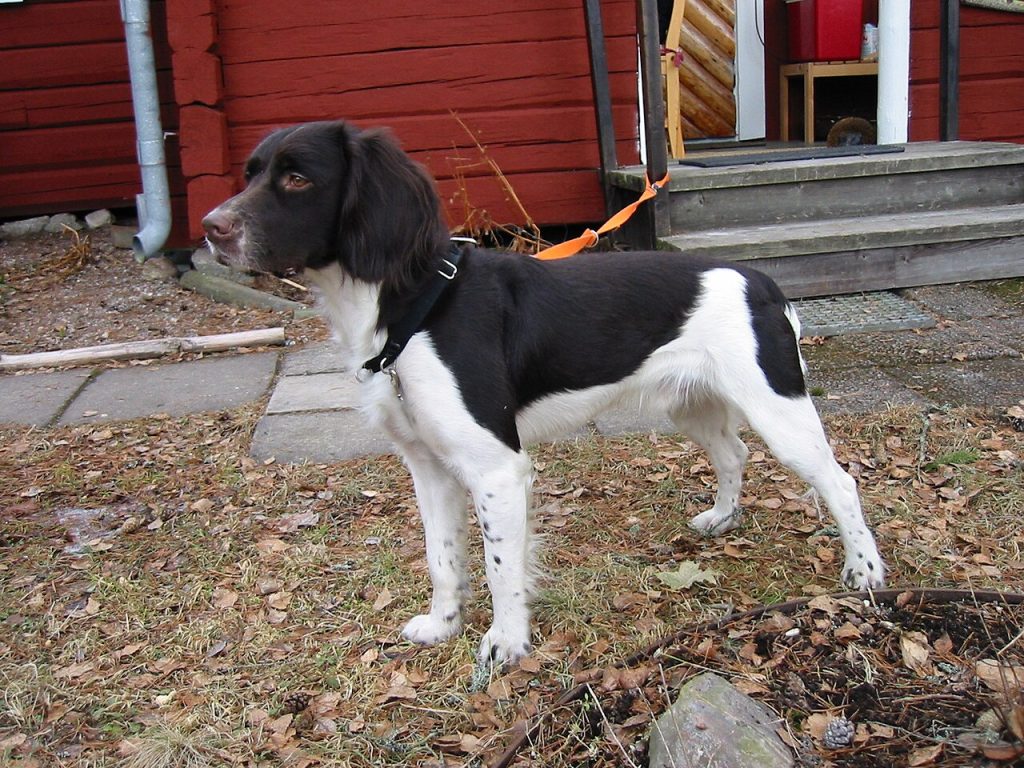
Both share the short coat white spotted or speckled with brown (brown), often with one or several large brown spots; the head is usually brown. Black is not allowed in the breed. The nose is brown, the eyes brown and the tail is natural.
Origin and history
The French Braco is the heir of a very old type of sample dog from southern France, linked to the old bracos that for centuries accompanied European hunters.
The first breed club was founded towards 1850 and the standards for both types were drafted in 1880. The breed is recognized by the French Société Centrale Canine and, internationally, by the Fédération Cynologique Internationale (FCI), which classifies it within the Group 7, sample dogs. An interesting detail of his management: The SCC prohibits consanguinity and in-line crossing, and does not register any specimens that have common ancestors in the first three generations of their pedigree, a policy that has helped preserve the health and genetic diversity of the breed. Among the great clubs of the Anglo-Saxon world, only the Canadian Kennel Club (Canada) and the United Kennel Club (USA) have been recognized. In the United States, it is recognized. Today it is still a very popular hunting dog in France, but rarely outside its borders.
Curiosities
- Two races with the same name. The Gascony type and the Pyrenean type are considered distinct breeds, not simple varieties, and compete separately.
- The A full-blown hunter. is not just a show dog: it also lifts, crawls and even tracks the piece on all types of terrain, making it a very versatile hunting aid.
- “Petite taille” doesn’t mean small dog. The Pyrenean type is called “small sized” only in comparison to the Gascogne; it is still a medium-sized dog.
- Famous comparison. The Pyrenean type has been described as “a short-haired German braco reduced to the size of a Breton epagneul”.
- Protected breeding. His strict rule against inbreeding is uncommon and partly explains his good health.
- Scent of precision. lifts its nose into the wind to pick up even the most subtle odor particles, and adapts to a wide variety of climates.
If you are attracted to the French Braco for its mix of show dog and friendly companion, you will surely enjoy meeting other hunting and show breeds of similar character. Check out the stylish Pointer, the show’s specialist; the Vizsla, another versatile and family-friendly hunter; the athletic and big-nosed Weimaraner; or the sociable Cocker Spaniel, another classic hunting dog turned companion.
Frequently Asked Questions about the French Braco
Is the French Braco a good family dog?
Yes. It is one of the most balanced and sociable show dogs in existence: affectionate, quiet at home and very attached to its people. Its docile character and its patience with children make it an excellent family companion, provided it is given the daily exercise it needs. It is not an ornamental dog or one to spend the day alone in the garden.
How much exercise does the French Braco need?
It is a versatile hunter bred to work long hours in the field, so it needs at least one or two long hours of activity a day: wide walks, running, scent play and, if possible, space to run loose. A well-tired French Braco is a calm and obedient dog; a bored one gets frustrated and can become destructive.
What’s the difference between the Gascony type French Braco and the Pyrenean type?
They are two sister breeds recognised separately. The Gascogne type is the larger and bulkier, with a somewhat stiffer head, slightly hanging lips and a more leisurely trot. The Pyrenean type (Pyrénées) is smaller, lighter and faster, with finer hair and often more mottled mantle. They share origin, function and character; size is the most visible difference.
Can a French Braco live in a flat?
It may, but it is not its ideal environment. If it receives intense daily exercise and company, it adapts to living on the floor because inside the house is quiet and clean. However, it fits much better with active families, a house with a garden or easy access to the countryside. What really hurts it is not the size of the house, but the lack of activity and contact with its family.
Does he get along with children and other dogs?
The breed stands out precisely for its excellent coexistence: it is patient and playful with children and especially sociable with other dogs, an unusual trait. With cats and small pets you have to be careful because of their strong hunting instinct, especially if they live together from puppyhood.
How long does a French Braco live?
Its life expectancy is around 12 to 14 years, and it is not uncommon for some specimens to exceed that. It is a rustic and healthy dog; basic care (adjusted weight, exercise, ear checks and veterinary visits) helps it reach old age in good shape.
Is it hard to train the French Braco?
No, it is usually one of the easy ones. It is intelligent, very guide-oriented and eager to please, which facilitates positive training. It quickly learns basic commands and hunting work. It should be constant and gentle: it is a sensitive dog that blocks itself with harsh methods and responds much better to reinforcement and play.
Does the French Braco shed a lot of hair?
Little. Their hair is short and easy to maintain: with a weekly brushing and some punctual bath is enough. It loosens moderately, without the apparatus moods of the races of long or double coat. What does require attention are the fallen ears, which should be checked and dried regularly to prevent otitis.