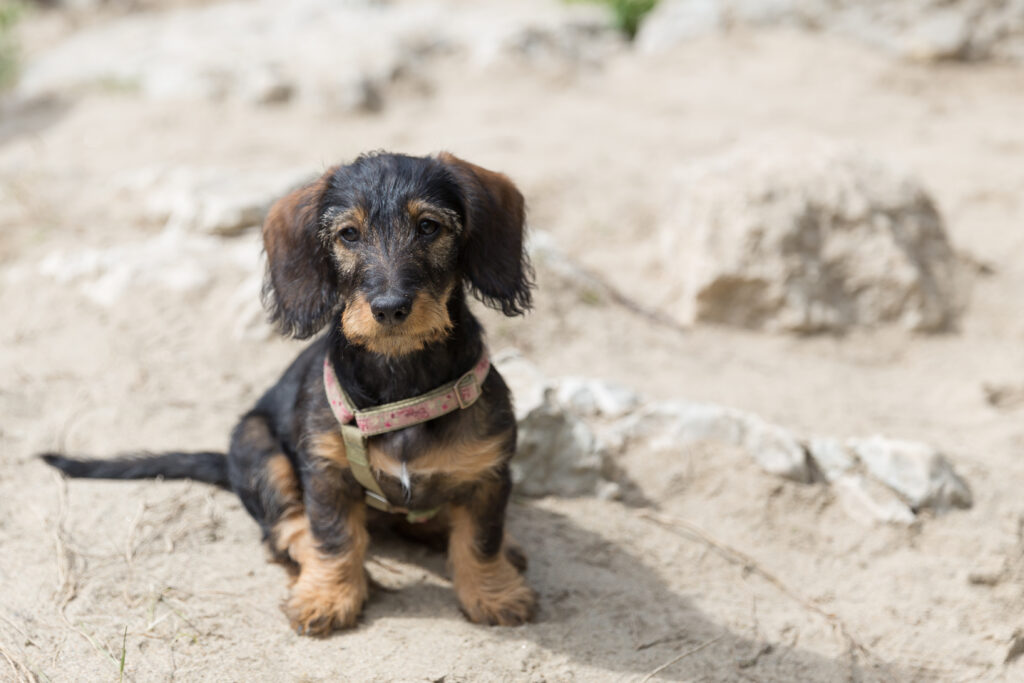
The Teckel (Dachshund, also called sausage dog) is a dog of unmistakable German origin: elongated body, short legs and a character that doesn’t fit in his size. He was born to dig holes and fight badgers and foxes, and that hunter past explains almost everything he does today on the couch at home. Courageous, stubborn and very attached to his family, he is both a fun companion and a dog with very specific needs that should be known before adopting.
Is that Teckel for you?
The Teckel is a breed with a lot of personality, and that means it fits in wonderfully with some homes and very poorly with others.
In favour .
- Small size: lives well on the floor and adapts to small spaces.
- Very affectionate and attached to his people; excellent companion dog.
- Playful and funny at any age, with a clown dot.
- Courageous and alert: he warns of any new developments like a good purse-keeper.
- Intelligent and with an excellent sense of smell inherited from his hunter past.
- Long life expectancy compared to other races.
To be taken into account
- Back problems (herniated discs): jumps and stairs should be avoided.
- Stubborn: Education requires patience and perseverance.
- He can bark a lot and be suspicious of strangers.
- Prolonged loneliness is fatal; you suffer from separation anxiety.
- Hunting and digging instincts very strong.
- I tend to put on weight, and being overweight directly hurts your spine.
Character and temperament
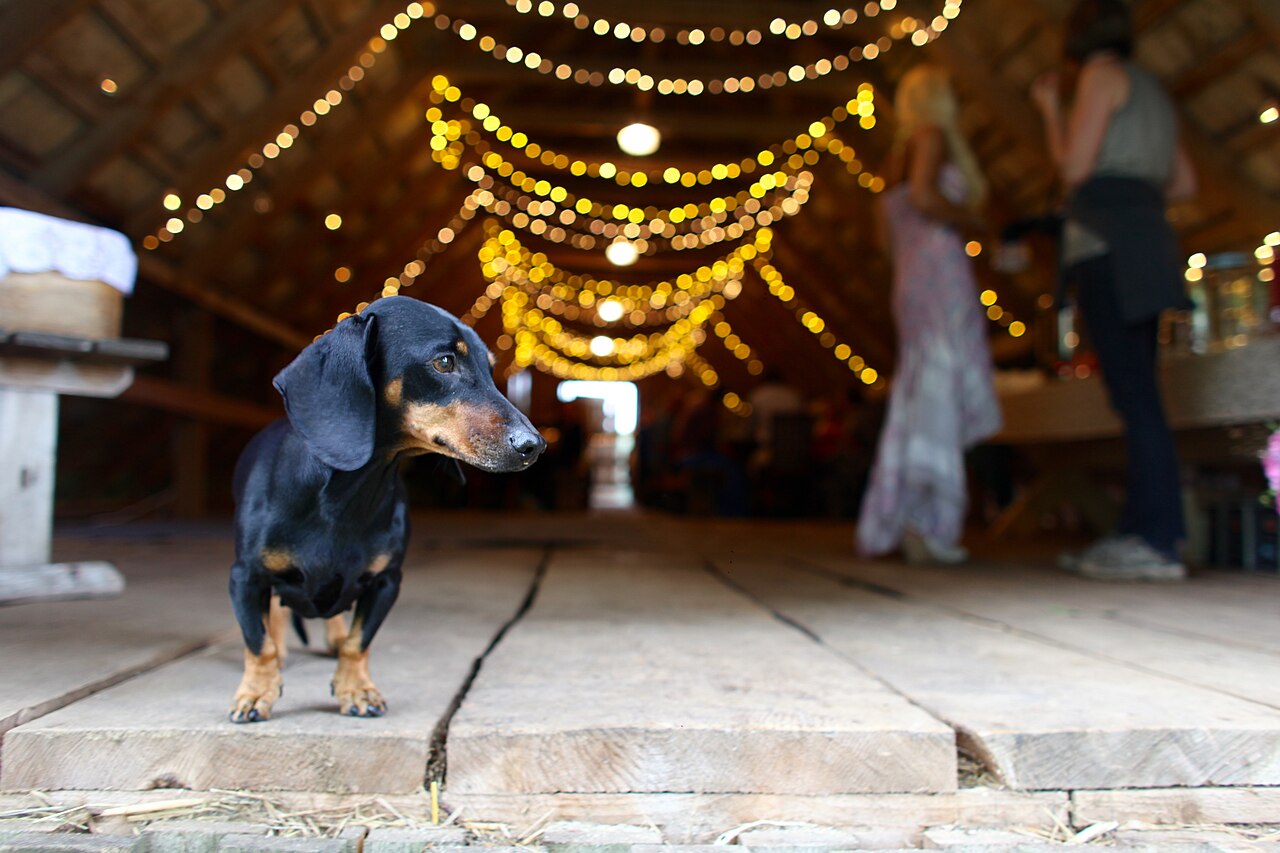
If we had to sum up the Teckel in one sentence, it would be this: a large dog trapped in a small body. It was bred to go into a hole alone and stand up to a badger in the dark, so courage and determination are part of its essence. It doesn’t shake its wrist in front of much larger dogs and often seems to completely ignore its real size.
That same steadfastness translates at home into a legendary headdress. The Teckel knows what he wants and it doesn’t always match up with what you want. Not that he is unintelligent – on the contrary, he is a quick learner – but he has his own judgment and decides whether it is worthwhile to obey. With his family, however, he is tremendously affectionate, outgoing, and playful, and he enjoys spending time with you regardless of his age.
It is a vigilant and alert dog, with a surprisingly powerful bark for its size, which makes it a good warner. With strangers it can be reserved or distant until it takes their measure. Well socialized since puppyhood, this suspicion is kept at bay and only the best is left: a loyal, expressive companion with a sense of humor that hooks.
Coexistence: children, other pets, flat and loneliness
- With children: is playful and affectionate, but its back is delicate. The youngest must be taught to hold it well (holding the rear rail well) and not to treat it like a toy. Best in families with children who already understand how to handle a dog.
- With other pets: coexists well with other dogs, especially if it grows up with them. With small animals (rodents, rabbits, birds) the hunting instinct may fire, so it is advisable to monitor.
- On the floor: is one of the smaller breeds that is best adapted to living in an apartment due to its size and good domestic temperament.
- Soledad: is its big weakness. The Teckel is very attached and, if left alone for too many hours, can develop separation anxiety, stop eating, get sad or break furniture and objects. It is not a dog for houses where no one is around all day.
Education and training
It is often said that the Teckel is impossible to train, and it is an exaggeration. The reality is more nuanced: it is an intelligent dog that learns quickly, but also independent and with its own will, a direct inheritance from an animal bred to work alone underground without constant orders.
The key is positive reinforcement, short sessions and perseverance. Punishing or forcing only gets him to close in on the gang. It works much better to motivate them with rewards, play and food, and turn learning into something they want to do. Much of his reputation as a bully comes, moreover, from excessive consent: Because he is small and nice, he is forgiven for whims that in another race would not be tolerated, and so he reinforces bad habits.
It prioritizes socialization (people, dogs, noises, environments), barking control and gradual tolerance to being left alone from puppyhood. Once it understands the rules of coexistence, the Teckel is a loving, collaborative and much more obedient dog than its reputation suggests.
Exercise and activity
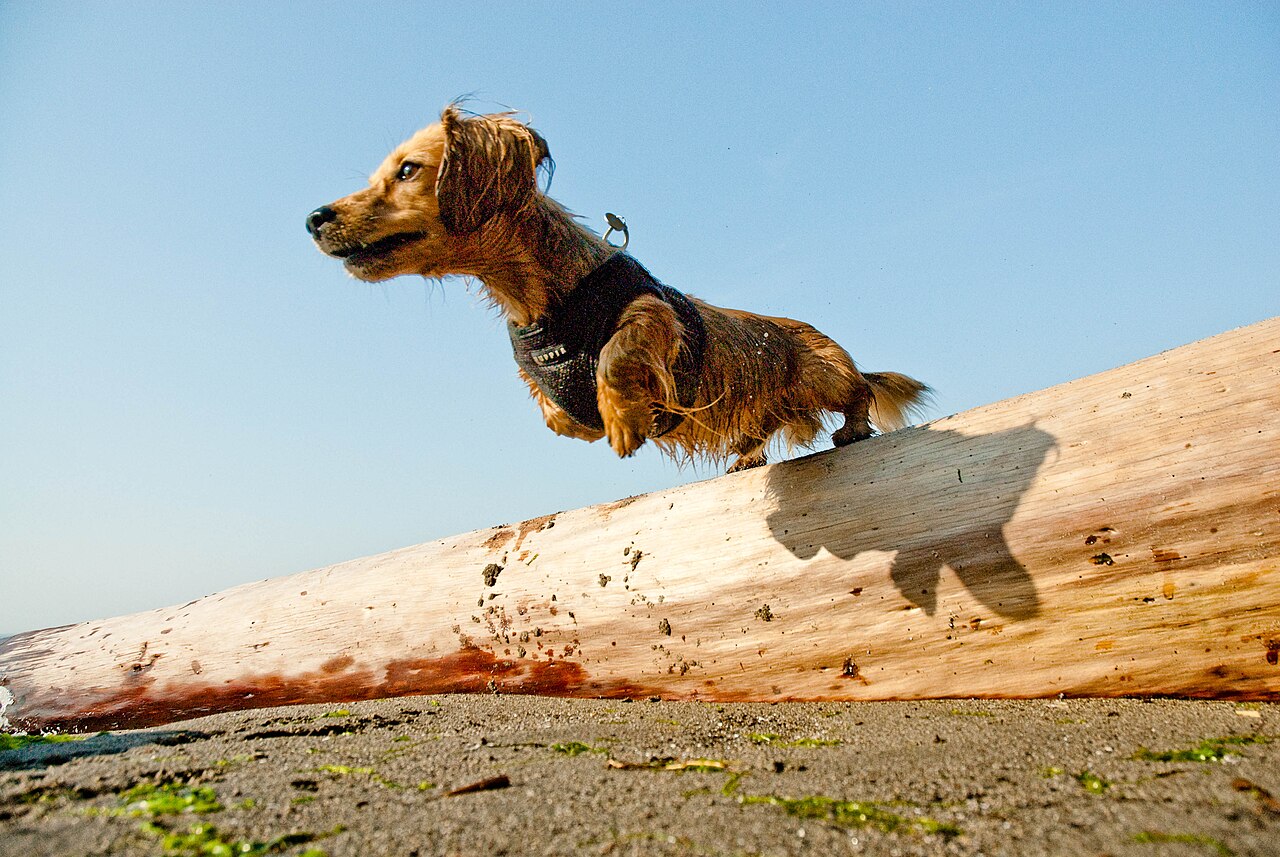
Its short legs make it not a fast dog, but don’t be fooled: The Teckel is agile, has exceptional reflexes, and is remarkably resilient when following a trail.
Ideally, several walks a day at a good pace and moments of play and smelling, which is where you enjoy most thanks to your privileged sense of smell. Search games, food trails, and mental challenges keep you stimulated and happy. If you have safe spaces to run and explore freely, much better.
Important: moderate jumps – in and out of the car, from the couch or bed – and avoid stairs whenever possible, because repeated impact on such a long back increases the risk of injury.
Care: fur and hygiene
The maintenance of the Teckel depends mainly on its hair type, as there are three varieties:
- Short hair (flat): is the easiest variety, shiny, dense, body-tight hair that barely needs a weekly brush to stay clean and free of dead hair.
- Long hair: silky coat with fringes on the ears, legs and under the body, and flag on the tail.
- Hard hair: is a rough and tough outer coat with undercoat, marked beard and crowded eyebrows.
Beyond brushing, the basic care is that of any dog: checking and cleaning dropped ears (which retain moisture and dirt), checking nails, taking care of dental hygiene, and bathing only when necessary.
Foodstuffs
Feeding is a serious matter in this breed, because being overweight is its worst enemy. An overweight Teckel has mobility difficulties and, above all, puts his long spine under stress that leads to back pain and, over the years, serious disc problems. Keeping him thin is not aesthetic: it is prevention.
A balanced, high-quality, high-protein diet, adjusting the amounts to your size, age, and activity level, is recommended. It is preferable to divide the ration into several portions and measure with a scale before filling the bowl by hand. Watch out for the excess rewards and the food on the table, which is the quickest way to make you fat without even realizing it. As a healthy snack, many Teckels love carrots, apples, or cucumbers, low-calorie options. If you have any doubts about the specific guideline, it is best to consult your veterinarian.
Health and life expectancy
The Teckel is, in general, a robust and long-lived dog: its life expectancy is around 12 to 16 years with proper care, one of the highest among canine breeds.
The most important is disorder of the intervertebral disc (IVDD), i.e. herniated discs. Their extremely long spine and short ribs make the back their weak point; it is estimated that a notable percentage of the breed develops some degree of this problem throughout their life, and there is a strong hereditary component. The risk gets worse with overweight, jumping, abrupt driving and strenuous exercise, which is why we put so much emphasis on weight control and moderating impacts.
Other conditions to watch for are knee dislocation, imperfect osteogenesis (especially in the hard hair variety), various eye problems and, in double dapples, an increased risk of genetic deafness and vision problems. Responsible breeders work precisely to reduce these predispositions through careful selection. Regular veterinary checkups, a balanced weight and caution with your back are the best prescription for your Teckel to reach a healthy old age.
Physical appearance

The silhouette of the Teckel is one of the most recognizable in the canine world: long, short body, deep chest, elongated snout, large, sloping ears, long, slightly curved tail and, above all, those short legs that gave rise to the nickname hot dog. That morphology is not a whim: It comes from a genetic mutation (bassetism) that was purposely selected to work inside the burrows. Their broad, shovel-shaped front legs are perfect for digging, and their loose skin prevents tearing when moving through narrow tunnels.
The breed is divided by size into three varieties: standard, miniature and caninchen(German word for “rabbit”), the latter being the smallest and not recognized by all clubs.
As for the mantle, there are three types – short, long and hard – and a huge variety of colors and patterns: red (the most common), cream, brown, black and fire, chocolate and fire, in addition to patterns such as harlequin (dapple/merle), brindle and pie (piebald).
Origin and history
The Teckel is a creation of German breeders, and its very name says it all: Dachshund literally means “jawed dog” (from Dachs, badger, and Hund, dog). It was developed to track, chase and dislodge badgers, foxes and other burrowing animals, while the miniature variety was bred for smaller pieces like the rabbit. In its gestation were mixed elements of hounds and terriers of German, French and English origin.
The first verifiable references to the breed appear in books from the early 18th century, although there are earlier mentions of “jawed dogs”. The original Teckels were larger than the present ones. The short-haired variety is the oldest, and from it developed later the long-haired and, already at the end of the 19th century, the hard-haired. The first club of the breed was founded in Germany in 1888, when the first standard was drafted.
Its popularity owes much to the European royal houses: Queen Victoria was a declared enthusiast of the breed. The International Cinological Federation (FCI) dedicated its own group, the Grupo 4, exclusively to it, because despite being a burrowing dog its character and constitution are far from the basset hounds. Within that group, the Teckel are subdivided according to hair type and size.
Curiosities
- The Teckel has traditionally been seen as a symbol of Germany, to the point that political cartoonists used it to represent the country.
- During World War I, their popularity plummeted in the United States, where they became known as “liberty hounds”.
- It was the first official mascot of an Olympic Games: the Teckel Waldi represented the 1972 Munich Games.
- Its sloping ears and curved tail were purposefully selected – the ears protect the ear from soil and seeds, and the tail serves to locate it in the tall grass and to help pull it out if it gets stuck in a hole.
- Historical figures such as Kaiser Wilhelm II or Marshal Erwin Rommel were known to have Teckels, and artists such as Picasso (with his dog Lump) or Andy Warhol also succumbed to the race.
- In the United States, famous Teckels races (the “Wiener Nationals”) are held, although the breed’s own club does not welcome them because of the risk to their backs.
If you are attracted to the Teckel, you may also be interested in other breeds that share its hunterlike traits, peculiar silhouette, or compact size. Take a look at the Beagle, another hound with an extraordinary sense of smell; the Basset Hound, with whom it shares short legs and a low body; the energetic Jack Russell Terrier, another burrowing expert; or the Pembroke Welsh Corgi, which also bears that characteristic elongated figure on short legs.
Frequently asked questions about Teckel
Is the Teckel a good dog to live on the floor?
Yes. Its small size and good domestic temperament make it one of the breeds best adapted to an apartment. The only important precaution is the stairs – going up and down them daily weighs on its spine, so it is best to pick it up in your arms or use ramps whenever possible.
How long does a Teckel live?
It is a long-lived breed: its life expectancy is around 12 to 16 years with proper care, a balanced diet and good weight control.
Why do Teckels have back problems?
Because of their anatomy: a very long spine combined with short ribs predisposes them to intervertebral disc disease (discal hernias). The risk increases with overweight, jumping, intense exercise and abrupt driving, and also has a hereditary component.
Is the Teckel difficult to train?
It is intelligent and quick to learn, but also independent and stubborn, inheritance of a dog bred to work alone underground. With positive reinforcement, short sessions and consistency it is perfectly educated; punishments only get it to close in on the band.
How many types of Teckel are there?
They are classified by size in standard, miniature and kaninchen (the smallest), and by type of hair in short (smooth), long and hard.
Does the Teckel bark a lot?
It has a powerful bark for its size and is very alert, which makes it a good warner. Some specimens bark a lot, especially at noises or strangers, so it is convenient to work on the control of the bark from puppy.
Does the Teckel get along with children?
Yes, it’s playful and affectionate, but its back is delicate. You have to teach children to hold it properly by holding the rear train and not treat it like a toy. It works best with children who already know how to handle a dog.
How much exercise does a Teckel need?
It needs daily exercise: several walks at a good pace and moments of play and smelling, which is where it enjoys it most. It is not fast, but it is resistant and agile.