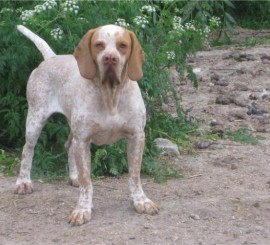
The Pachón Navarro is one of the oldest and most unique dog breeds in Spain: a show dog originally from Navarre, robust and of balanced character, famous above all for a trait he hardly shares with other breeds in the world, his curious broken nose. It was on the brink of extinction in the 1970s and is still recovering. If you’re looking for a versatile hunter who’s also a quiet, loyal companion at home, the Pachón Navarro deserves a thorough introduction.
Is the Navarro Pony for you?
The Pachón Navarro is first and foremost a working dog. It was bred for centuries to accompany the hunter through the Navarre mountains, and that heritage marks everything it is: He needs to get out, smell, move and have a homework assignment. On the couch he fits in and enjoys the family, but a Duck that only sees the street ten minutes a day won’t be a happy dog. Before you decide, look honestly at whether your lifestyle fits a medium-high-energy sample dog.
It suits you if…
- Hunting or trawling, mantrailing or dog trekking.
- You can give him one or two long walks a day, with real exercise.
- You’re looking for a dog that’s well-balanced, sociable and very attached to his family.
- You value a rare native breed and want to support its recovery.
- You have a field, garden or easy access to open spaces.
Think about it if…
- You spend a lot of hours outside and the dog would be alone every day.
- You live in a small apartment with no possibility of extensive daily exercise.
- It bothers you that a dog follows trails and is guided by smell.
- You want an easy-to-find specimen: there are very few breeders.
- You’re looking for a dog with low activity and minimal stimulation.
Character and temperament
If anything defines the Pachón Navarro it is its the balance. It is not a nervous or overwhelmed dog; on the contrary, at home it is usually calm, serene and very sociable.
It is a very clever. dog that enjoys working side by side with people. Its motivation is not so much food or play as collaboration: it wants to participate, understand what is expected of it and do it well. In the field it deploys its natural instinct of sample and collection, remaining motionless when detecting the piece and warning its hunter with that stillness so characteristic of sample dogs.
With his family he is affectionate, loyal and somewhat protective, and forms strong bonds with his owners. He is not a dog of one master: he gives himself to the whole family nucleus.
Coexistence: children, other pets, flat and loneliness
With children: The Navarro is usually patient and playful with the little ones, which makes it a good family companion.
With other dogs and pets: is well socialized from puppyhood, cohabits with other dogs without problems.
On the floor: can live on the floor as long as its exercise needs are met, but it is not its ideal habitat. It performs much better with access to a field or garden where it can smell and move.
Soledad: is a clingy dog who is reluctant to be alone for long hours. If you work outside all day, seriously evaluate whether you can give him enough companionship and encouragement; otherwise, anxiety and destructive behaviors are easy to develop.
Education and training
Training a Navarro is rewarding because it is intelligent and wants to please. It responds very well to positive reinforcement: rewards, friendly voice and collaborative work. Harsh methods are counterproductive with a dog so sensitive to the bond with its people.
The early socialization is key: the more positive experiences you have as a puppy with people, dogs, noises and environments, the more balanced you will be as an adult.
It is advisable to work early on the call and remote control, because a dog guided by smell can disconnect from the guide when it finds an interesting trail.
Exercise and activity
The Pachón Navarro has a medium to high energy typical of a hardy hunting dog. It needs real daily physical activity: a couple of short walks around the block are not enough for it. Designed for long days in the mountains, it appreciates wide walks, controlled runs and, above all, mental exercise.
The best activities for him are those that activate his sense of smell and his instinct: hunting (his natural function), mantrailing, searching for objects, dog trekking or hiking on varied terrain.
Care: fur and hygiene
It is a simple maintenance coat: a weekly brushing is enough to remove the dead hair and keep it clean, increasing the frequency in moulting seasons.
It does not need frequent baths; it is advisable to bathe it only when it is really dirty, so as not to damage the natural protection of its skin. It is important to check and clean its long and sloping ears regularly, as falling favors moisture and wax accumulation, especially after outings in the field.
Foodstuffs
As a medium-sized working dog with good activity, the Navarro Pachon needs a complete and balanced diet, adjusted to its age, weight and exercise level.
It divides food into two daily servings in the adult to favor digestion and, as in other breeds with deep breasts and considerable size, avoids vigorous exercise just before and after eating as a precaution against gastric torsion. Always keep fresh water available, especially after you leave the house. If you have any questions about the quantity or type of feed, it is best to consult your veterinarian.
Health and life expectancy
As an indigenous breed that has been through a very severe population bottleneck, the main health concern today is not so much a specific disease as responsible management of genetic variability: recovery programs care for crosses to maintain a healthy population and avoid hereditary problems.
As with any active dog of medium to large size with droopy ears, it is advisable to monitor otitis (due to moisture in the ears), joint condition with age and keep up to date with veterinary checkups, vaccinations and deworming. There are no official life expectancy figures specific to the breed; in dogs of similar size and type it is usually placed around the 12 – 14 years with good care. Choosing puppies from serious breeders, integrated into the recovery program, is the best guarantee of health.
Physical appearance
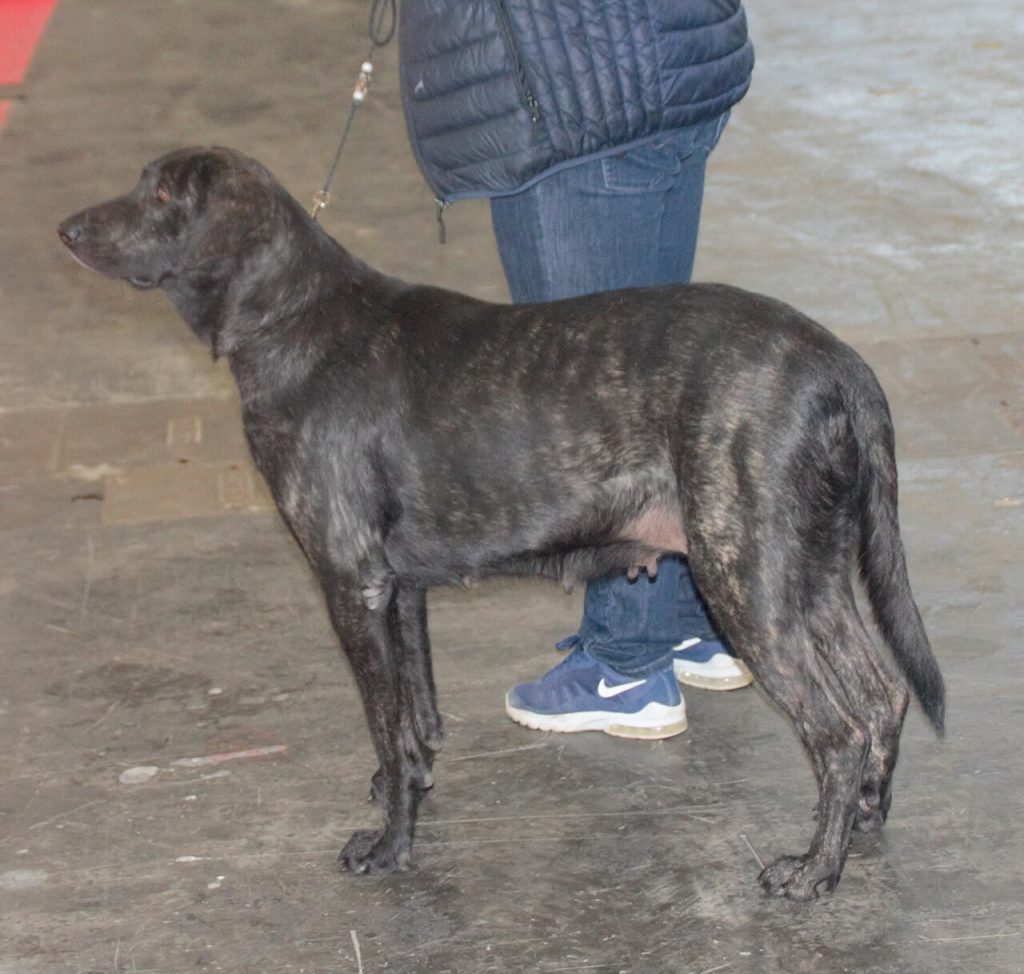
The Pachón Navarro is a sturdy and well proportioned body dog, designed for endurance and agility on difficult terrain.
Its head is large and expressive, with long and sloping ears giving it a gentle and noble air. The most striking feature is its broken nose(bifida): it can be completely split or only slightly split, and is one of the breed’s hallmarks, although not all specimens exhibit it.
The mantle is short and dense. The color is very variable and can be of one, two or three shades: predominate the combinations of white with spots and brown spots, reddish (cinnamon/orange), liver or black. The most common layers are white and black, white and brown, white and liver and white and orange, always on a white mottled background.
Origin and history
The Pachón Navarro is considered one of the oldest show dogs of the Iberian Peninsula, with iconographic evidence dating back to the Middle Ages.
In the 19th century, when hunting became popular among the bourgeoisie, it spread throughout much of Spain under different names: Pachón, Pachón de Vitoria, Spanish Pachón, Perdiguero common or Perdiguero Navarro. Specimens of this type were exhibited in the first Spanish dog shows of the 1890s, and the breed was among those recognized by the Royal Canine Society at its founding, in 1911.
However, the mechanization of the field and the emergence of other more modern sample breeds cornered it to the point that, by the seventies of the twentieth century, it was practically given over to extinct. The recovery began with a census of the surviving specimens in 1979. In 1983 it was one of the four Spanish dog breeds depicted on a postage stamp issue. In 2001 the National Association for the Recovery of the Navarro Dachshund was born in Laserna (Álava) and, in 2002, the Circle of Hunters and Breeders of Navarro Dachshunds in Pamplona.
The Government of Navarre published a breed standard in 2006 and, in 2010, the Navarro was added to the list of dog breeds recognized by the Spanish State. It is not recognised by the International Canine Federation (FCI). In 2009 a total population of between 700 and 1,000 dogs was estimated, and it is still classified by the Royal Canine Society of Spain among the vulnerable Spanish breeds.
Curiosities
- The broken nose: is its most famous trait. This same bifid character is only seen in very few breeds in the world, such as the tattalburun from Tarsus (Turkey), and occasionally in some South American dogs.
- One of the Basque breeds: is told among the canine breeds of the Basque Country and its surroundings, along with the Basque Shepherd, the Erbi Txakur and the Villanos of Las Encartaciones.
- From extinction to postage stamps: went from being lost in the seventies to starring in a Spanish philatelic broadcast in 1983, a symbol of its heritage value.
- Many names, one dog: Spanish dachshund, Navarrese Perdiguero, former Spanish show dog… the breed accumulated denominations throughout its history.
- A really rare breed: with just between 700 and 1,000 specimens estimated, seeing a Pachón Navarro remains rare even in Spain.
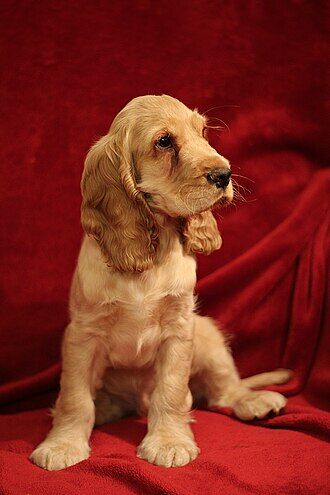
If you are attracted to the Navarro Dachshund for its display instinct and balance, you will surely enjoy meeting other hunting and working dogs with a similar profile. Take a look at the Pointer and Vizsla, both versatile and energetic show dogs; the Weimaraner, another versatile hunter with a strong family bond; and the Cocker Spaniel, a smaller but more manageable hunting classic.
Frequently Asked Questions About the Navarro
Why does Mr. Navarro have a broken nose?
The split nose is an inherited trait of some of the breed’s specimens: the truffle may be completely split or only slightly split. It is one of its hallmarks, although not all dogs have it.
Is he a good family dog?
Yes. It is a balanced dog, quiet at home, affectionate and loyal, which forms strong bonds with its owners and is usually patient with children. Its main requirement is that its needs for exercise and companionship are met; in return, it is a faithful and pleasant companion.
How much exercise do you need?
It has a medium-high endurance hunting dog energy and needs real daily activity: long walks and, above all, olfactory work (hunting, mantrailing, searching). A couple of short walks are not enough for it; mental exercise is as important as physical.
Can he live in a flat?
It can, as long as it is given ample outlets and enough exercise, but it is not its ideal habitat. It performs much better with access to a field or garden. Closed and without stimulation it can develop boredom and problematic behaviors.
Is it recognized by the FCI?
No, the Navarro is not recognized by the International Kennel Federation, but has a standard published by the Government of Navarre in 2006 and has been recognized by the Spanish State since 2010, in addition to having breed clubs dedicated to its recovery.
Is it an endangered species?
It was virtually extinct in the seventies. Thanks to the recovery programs started in 1979, the population has been rebuilt, estimated between 700 and 1,000 specimens by 2009.
What colors can it be?
Its short coat is highly variable: uni, bi or tricolor. White with brown spots and specks, liver, cinnamon/orange or black predominate.
Is it hard to train?
Not particularly: it’s intelligent and it wants to please, and it responds very well to positive reinforcement. It’s good to socialize it early and work on the call, because being a dog guided by smell, it can disconnect from the guide when it finds an interesting trail.