The Chihuahua is the smallest dog breed in the world and, at the same time, one of the oldest in America. Originally from Mexico, this tiny fellow hides a huge personality: Brave, alert and deeply attached to his person. If you’re looking for a pocket dog with a giant personality, this comprehensive guide to the Chihuahua tells you everything you need to know before you share your life with one.
Is the Chihuahua for you?
Before falling in love with its size, it is advisable to look at the breed realistically. The Chihuahua is not a toy or an eternal puppy: it is a small dog with very specific needs and a strong temperament that demands respect and education. Here you have the good and what you should value calmly.
Points in favour
- Minimum size: fits on any floor, even the smallest.
- It needs little formal exercise compared to larger breeds.
- Very attached and loyal to his reference person.
- A sharp, intelligent and excellent alarm dog.
- Longevity: many specimens live more than 15 years.
- Easy to transport and take on the road.
Points to Consider
- Fragile: its small size makes it vulnerable to falls and bumps.
- He can become barking, jealous, or bossy if he is not polite.
- It’s not the best option with very young children.
- Tendency to human overprotection (‘sleeper dog syndrome’).
- Sensitive to cold: needs a coat in winter.
- Dental care and hypoglycemia require veterinary care.
Character and temperament

If there’s one thing that defines the Chihuahua, it’s that it has no awareness of how small it is. It’s a dog brave to the point of recklessness, able to stand up to an animal much larger than itself. That confidence, coupled with its liveliness and intelligence, makes it a funny and surprisingly vigilant companion: few things happen in the house without it giving notice.
They’re an intensely devout breed. Many Chihuahuas choose one person as their great reference and turn on her, sometimes to the point of being jealous of their human’s other relationships. Well channeled, that attachment translates into precious loyalty; mismanaged, it can lead to overprotection, excessive barking, and a dominant attitude that, in such a small dog, is often jokingly called the “Napoleon complex”.
The key is treating him like a real dog, not a baby. A Chihuahua well socialized as a puppy and with clear rules is balanced, sociable, and charming. Without that foundation, it tends to be distrustful and can score high in reactivity to both people and other dogs. Their nature is a clan thing: often prefers the company of other Chihuahuas to that of dogs of other breeds.
Coexistence: children, other pets, flat and loneliness
- With children: is not the ideal breed for households with very young children. Its physical fragility means that an abrupt game can injure it, and when it feels threatened, it may react with a growl or defensive bite. With older and respectful children, coexistence is perfectly possible.
- With other pets: usually gets along well with other dogs, especially those of the same breed, although it depends a lot on socialization.
- On the floor: is one of the top indoor dogs. Its size and modest exercise needs make it ideal for apartments and cities. Of course, it barks by nature, so you have to work on barking control from the beginning.
- In the face of loneliness: is a dog that is very dependent on its family. It does not tolerate long abandonment and may develop separation anxiety. It needs companionship, routine and attention; it is not a dog to be left alone for many hours a day.
Education and training
The big mistake with this breed is not educating it “because it is very small”. Precisely because of its strong character, the Chihuahua needs clear and consistent rules from puppyhood. It is an intelligent dog and learns quickly, but it is also stubborn and takes advantage of any crack in the rules.
Early socialization is non-negotiable: The sooner he gets to know people, noises, other dogs and different situations, the more balanced he will be as an adult. It works very well with positive reinforcement – rewards, caresses and play – and fatal with harsh methods, which only feed their distrust. Two training priorities stand out in the race: control your barking and prevent you from becoming overprotective of yourself. Treating him like a dog, not a stuffed animal, is the best investment for a stable mate.
Exercise and activity
The Chihuahua has moderate exercise needs, perfectly compatible with urban life. A couple of short walks a day and some play at home are usually enough to keep it fit and happy. Its paws travel a long distance with a few feet of ours, so it doesn’t need to walk miles to tire it.
More important than the amount of physical exercise is mental stimulation. It’s a smart dog that gets bored, and a bored Chihuahua barks, digs, and demands attention. Interactive toys, smelling games, and small obedience sessions keep your mind occupied. Watch out for two things: extreme heat and, above all, cold, because it is very sensitive to low temperatures and appreciates a coat on winter walks. And no jumping from heights: His bone structure is delicate.
Care: fur and hygiene
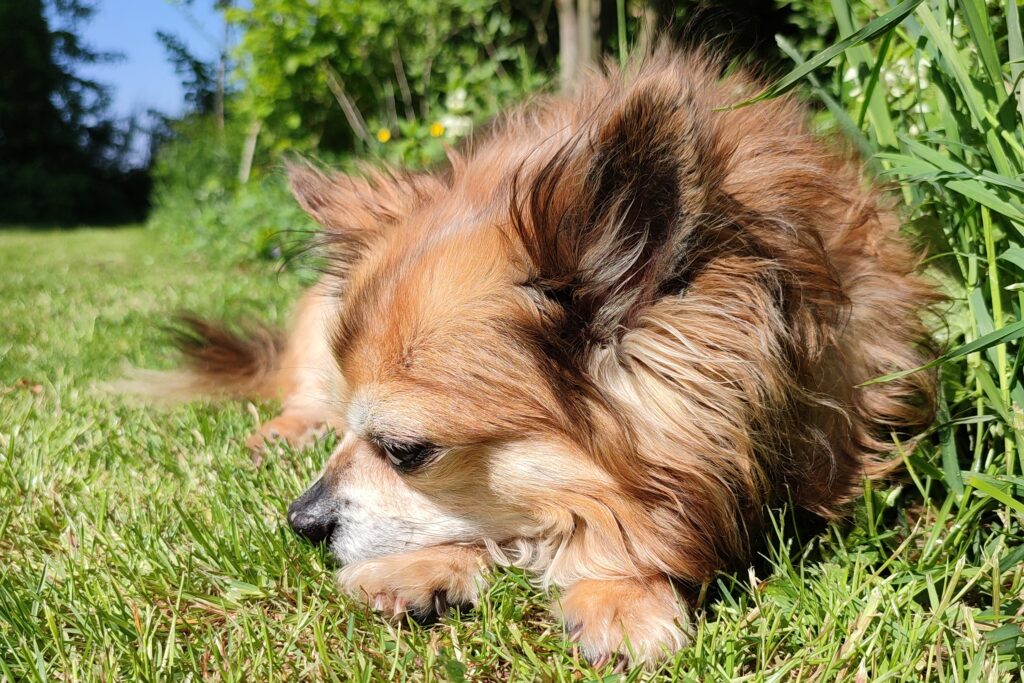
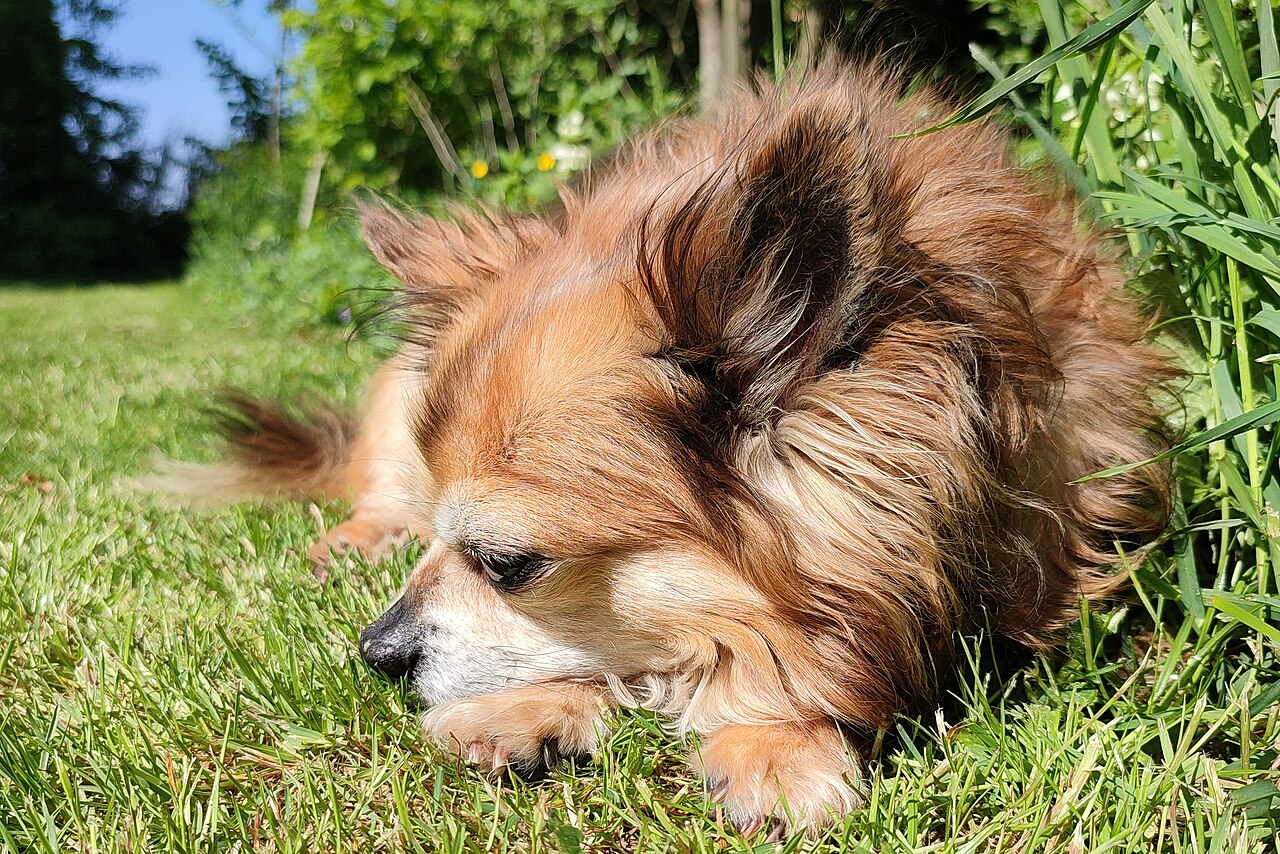
There are two varieties of Chihuahua depending on the coat: short hair and long hair. Both are easy to maintain. The short-haired need only a weekly brushing to remove dead hair; the long-haired appreciate two or three brushes a week to avoid tangles, especially behind the ears and on the legs. It does not require frequent bathing: With one every few weeks, or when it gets dirty, that’s enough.
The most neglected item by owners is the dental hygiene. As a good miniature dog, the Chihuahua accumulates tartar easily and is prone to dental problems; regular tooth brushing and veterinary checkups make a big difference. The routine is complemented by gentle cleaning of the ears, control of the tear duct, and periodic nail trimming, which in indoor dogs wear little. Remember to keep it warm in the winter: Its sparse fur and size cause it to lose heat very quickly.
Foodstuffs
The Chihuahua’s diet must be adapted to its small size and fast metabolism. It needs a quality feed formulated for small breeds, with small-sized croquette adapted to its mouth. The rations are tiny, but it is advisable to divide them into several servings a day, especially for puppies.
This cast is not a whim: Chihuahuas, like other toy breeds, are especially prone to hypoglycaemia(sugar runs) because of their fast metabolism and low body reserve. Puppies, in particular, should not go many hours without eating. At the other extreme is overweight: It’s very easy to go overboard with prizes on a dog this small, and a few extra grams add up to a lot on his body and punish his joints. Water always fresh and available, and weight control with your vet.
Health and life expectancy
The Chihuahua is, in general, a long-lived dog. Many specimens easily exceed 15 years, and it is not uncommon for them to reach very advanced ages; recent veterinary studies place the average life expectancy in a wide range, around 12 to 18 years depending on the source and care.
- Hipoglucemia: low blood sugar, especially in puppies; prevented by frequent intakes.
- Dislocation of the patella: common in miniature breeds; may require veterinary check-up or surgery.
- Neurological problems: predisposition to congenital hydrocephalus, atlantoaxial instability and episodes of epilepsy.
- Molera: Many Chihuahuas are born with a fontanelle (a soft area in the skull) that should be protected from blows.
- Dental health: tends to accumulate tartar; oral hygiene is key.
- Difficult births: dystocia (complicated childbirth) is much more common than in other breeds, so breeding should be left to professionals.
An annual veterinary check-up, daily vaccinations and deworming, weight control and dental hygiene are the best recipe for your Chihuahua to enjoy a long and healthy life.
Physical appearance
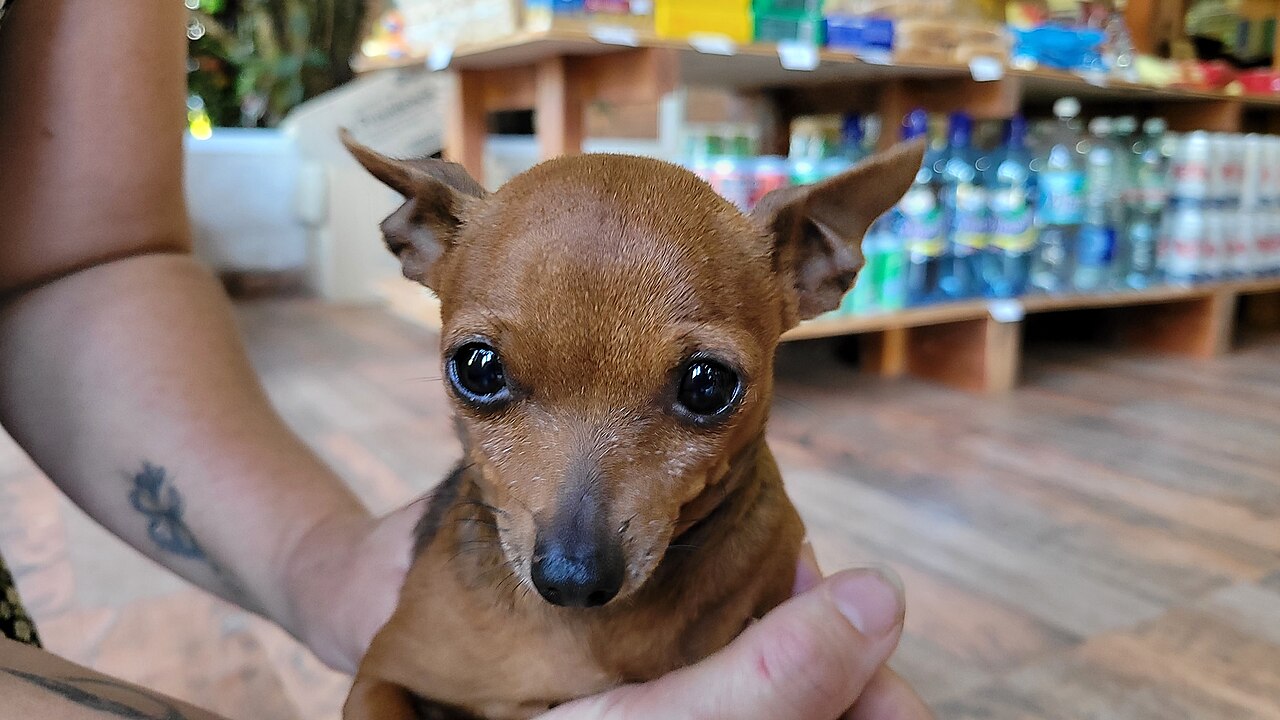
The Chihuahua is the smallest dog breed in the world. The FCI standard sets the ideal weight between 1,5 and 2,5 kg, and considers acceptable specimens between 1 and 3 kg; the American standard marks a maximum of 2.7 kg for exposure. Interestingly, the standards do not usually fix a specific height, but the weight and proportions; in practice, most measure between 15 and 23 cm at the withers, although some companion specimens exceed these figures.
Its most distinctive feature is the rounded head in the shape of an “apple” (apple head), with a very marked stop, large, round eyes and wide, erect ears that give it that alert expression. There is also the type of “deer head” (deer head), with a flatter skull and longer snout, which remains a purebred Chihuahua even though it is penalized in competition. The body is compact and well proportioned. As for the cloak, it is available in short and long hair, in an almost infinite variety of colors and patterns: Deer, chocolate, black, white, blue, silver, tricolor, orange and combinations of all of them.
Origin and history
The Chihuahua is a Mexican breed and one of the oldest on the American continent. The most widely accepted hypothesis points to him as a descendant of techichi, a small companion dog of the Toltec civilization, whose records date back to at least the 9th century. Depictions of dogs very similar to the Chihuahua have been found in numerous Mesoamerican remains, from figures of the Three Zapotes (Veracruz) to vessels and materials from the pyramids of Cholula and the ruins of Chichen Itza.
The breed’s name comes from the Mexican state of Chihuahua, where specimens were found near the ruins of Casas Grandes in the mid-19th century. Modern genetic studies have confirmed its exceptional character: the Chihuahua retains a small proportion of pre-Columbian indigenous canine ancestry – something rare among current breeds, mostly of European origin – and even has a unique mitochondrial DNA haplotype, also detected in pre-Columbian dogs from Mexico. The breed was later crossed with European dogs to produce the tiny animal we know today. The American Kennel Club registered its first Chihuahua in 1904, and since then it has become one of the most popular companion dogs on the planet.
Curiosities
- It is the smallest dog breed in the world officially recognized.
- He gives his name, and he gets it, from the Mexican state of Chihuahua.
- It retains DNA from pre-Columbian dogs, a rarity among modern breeds.
- Many are born with “molera”, a soft fontanel in the skull similar to that of human babies.
- There are two very recognizable types of heads: “apple” and “deer”.
- His fame soared in film and pop culture as a celebrity handbag dog.
- Despite its size, it often completely ignores how small it is compared to other dogs.
If you are attracted to this dog but want to compare with other small and companion breeds, take a look at very similar profiles such as the Pomerania, the Yorkshire Terrier, the Pinscher Miniatura or the Bichón Maltés.
Frequently Asked Questions About the Chihuahua
How long does a Chihuahua live?
It is a long-lived breed. Many specimens exceed 15 years and veterinary studies place their average life expectancy in a wide range, around 12 to 18 years depending on the source and the care received.
Is the Chihuahua aggressive?
Not by nature, but it can show reactivity and barking if not socialized and well-behaved. A Chihuahua treated like a real dog, with clear rules since puppyhood, is balanced and sociable.
Is he good with kids?
It is not the ideal breed for households with very young children, because of its physical fragility and because it can defend itself if it feels threatened.
How tall and how much does a Chihuahua weigh?
The standard sets an ideal weight of 1.5 to 2.5 kg (up to 3 kg acceptable).
What’s the Chihuahua grinder?
It is a fontanel, a soft area on the skull, similar to that of human babies, with which many Chihuahuas are born.
Do you need a lot of exercise?
No, with a couple of short walks a day and playing at home, it’s enough, but more important than exercise is mental stimulation to avoid boredom and barking.
Apple head or deer head?
The “apple head” (rounded skull and marked stop) conforms to the exposure standard. The “deer head” (flatter skull and long snout) is also a purebred Chihuahua, although it is penalized in competition.
Is the Chihuahua suitable for living in a flat?
Yes, it’s one of the best indoor dogs for its size and its modest exercise needs.