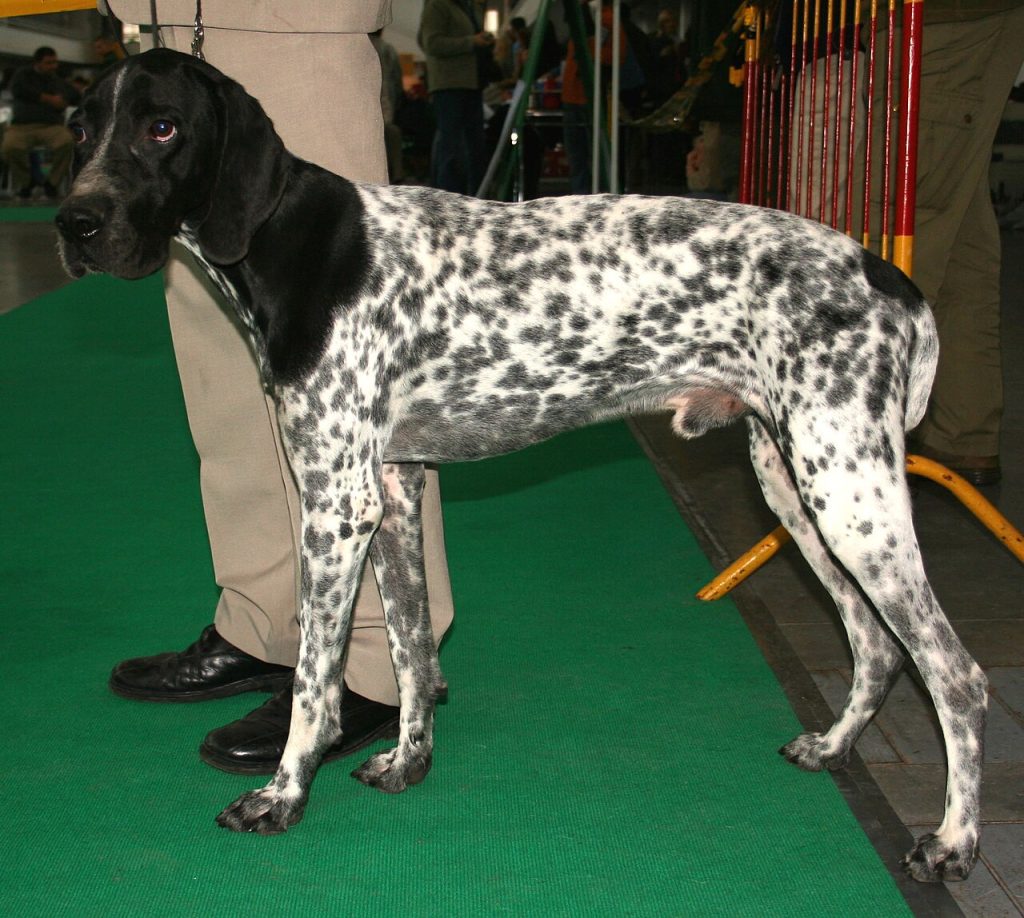
The Brachus of Auvergne(Braque d’Auvergne) is one of those French show dogs that conquers by character rather than fashion: a versatile hunter, always with a black head and white coat dotted with a speck that looks bluish, bred for centuries in the Cantal mountains. Balanced, docile and deeply attached to his people, the Braco of Auvergne works just as well tracking in the countryside as lying at your feet at home. If you are looking for a reliable hunting companion or a loving sporting dog for an active family, this breed deserves to be thoroughly acquainted with.
Is the Braco of Auvergne for you?
Before you fall in love with his amber gaze and unmistakable coat, you should know who this dog is really meant for. The Braco of Auvergne is a working sample dog: He needs to expend body and head, and he returns every minute of attention in the form of loyalty. It’s not an ornamental dog or a lazy couch companion, but it’s also not an unmanageable whirlwind. These are the lights and shadows to decide with a cool head.
In favour .
- Sweet, balanced temperament and very close to the family.
- Intelligent and eager to please: learns fast with positive reinforcement.
- Sociable with other dogs and, well presented, with other pets.
- Short hair with minimal maintenance.
- Versatile hunter looking close to the guide, ideal for small game.
- Robust and, in general, a healthy breed.
To be taken into account
- He needs plenty of daily exercise; bored, he becomes frustrated.
- Very sensitive: does not tolerate hardness or isolation.
- He suffers from prolonged loneliness; he’s not a dog to be alone all day.
- Strong hunting instinct: call control is essential.
- Rare breed outside France: finding a puppy can be expensive.
- Its long, dangling ears require periodic inspection.
Character and temperament

If we had to sum up the Auvergne Braco in one word, it would be the balance. It is a lively and sensitive dog, but rarely nervous; affectionate without becoming clingy, and obedient without losing that spark of initiative that characterizes good show dogs.
In the countryside is another animal: Concentrated, methodical and with an extraordinary nose. Unlike other show dogs that open up a lot, the Auvernia works “up close”, constantly seeking contact with his guide and checking back where he is. That same vocation for companionship is what makes him so pleasant at home, where he becomes a loving shadow who would rather be with you than anything else.
It is a thinking dog. It reads its family’s mood very well and responds calmly to a calm environment, but it also senses tension and comes down with screaming or abruptness. It is not aggressive or suspicious by nature; on the contrary, it usually greets the world with friendly curiosity.
Coexistence: children, other pets, flat and loneliness
The Auvergne Braco is, first and foremost, a family dog. Its patience and friendly nature make it a good companion for homes with children, always with the supervision and rules of respect that apply to any large and energetic dog: a puppy full of energy may unintentionally pull a small child during play, so it is advisable to teach both of them to treat each other well.
With other dogs it tends to be sociable; its history as a pack dog and group hunting dog plays in its favor. Coexistence with cats and other pets is possible, especially if you are bred with them from puppyhood, but we must never forget that we are facing a hunting dog with a prey instinct: very small animals (rabbits, birds, loose rodents) can awaken their predatory interest.
What about life on floor? It’s not the ideal breed for an apartment, but it can adapt if you guarantee it several long walks and real exercise every day. What it by no means tolerates well is the loneliness: It’s a dog deeply attached to its people that suffers when left alone for too many hours, and that distress can translate into barking, wrecking, or apathy. If you spend a lot of time outdoors, this is not your dog.
Education and training
Few specimen breeds are as grateful to educate as the Auvergne Braco. His intelligence, his sensitivity, and, above all, his desire to please make him an easy learner when he is trained with patience and positive reinforcement. The reward, play and loving voice work much better than any harsh correction; in fact, harshness is counterproductive with this breed, because an Auvernia treated abruptly retreats and stops collaborating.
The educational priorities are clear. The early socialization, during the first months, lays the foundation for a safe and balanced adult. The call (recall) is the star lesson: Being a dog with a nose and hunting instinct, it needs to learn from a puppy to come back whenever asked, ideally reinforced with a whistle. And it is good to channel your energy early into olfactory games and basic obedience, so that your head works as hard as your legs.
It’s a dog that enjoys having a “job”. Even if you don’t devote it to hunting, activities like mantrailing, sports tracking, obedience or agility give it that purpose it needs and strengthen your bond.
Exercise and activity
There are no shortcuts here: the Auvergne Braco is a sporting dog that needs daily and vigorous exercise. We’re talking about a lot more than a lap around the block. A fit adult appreciates at least one or two long hours of activity a day, combining walking, free running in a safe area and, very importantly, mental stimulation.
Due to its profile as a show dog, the activities that suit it best are those that involve using the nose and body at the same time: long walks in the countryside, hiking, running alongside you on a bike, search games and, of course, hunting for whoever it is intended for.
An Auvernia that doesn’t expend energy isn’t a bad dog: it’s a frustrated dog. Boredom and lack of exercise are the cause of almost all the behavioral problems attributed to it. Give it physical and mental outlet and you’ll have a calm and satisfied companion at home.
Care: fur and hygiene

One of the great practical advantages of this breed is how easy it is to maintain. The hair of the Auvernia Braco is short, thin and shiny, with no abundant undercoat, so a weekly brushing with a glove or pig brush is enough to remove the dead hair and keep the coat shiny.
What does deserve special attention are the ears. Because they are long, hanging and poorly ventilated, they retain moisture and dirt, especially after bathing or field work, so they should be checked and cleaned regularly to prevent otitis. Complete the routine with cutting or wearing nails, dental hygiene, and bathing only when they are really dirty, so as not to damage the skin’s natural protection.
If you use it for hunting or hiking, get in the habit of checking it thoroughly when you return: pads, ears, armpits, and forearms for grains, ticks, or small wounds.
Foodstuffs
As an active dog of medium to large size, the Auvergne Braco needs a complete and balanced diet, adjusted to its age, weight and, most especially, to its actual activity level.
It is reasonable to choose a quality food with a good protein intake, divide the food into two daily servings and monitor the body condition: the ribs should be intuited by touch without being marked. As in other deep-breasted breeds, avoid strenuous exercise just before and after eating is appropriate to reduce the risk of gastric dilation-torsion.
For puppies of breeds that are still growing, it is best to follow your veterinarian’s guidelines so as not to force growth too quickly, and beware of prizes: they are a great training tool, but they must be deducted from the daily ration so that they do not end up overweight.
Health and life expectancy
The Auvergne Braco has a reputation for being a rustic and generally healthy breed, having been bred for centuries as a functional working dog rather than an aesthetic one.
This being said, no dog is free from predispositions. As with most medium and large breeds, it is advisable to keep in mind the hip and elbow dysplasia, and because of its long, dangling ears it is prone to ear infections (otitis) if not watched.
The best medicine is prevention: regular veterinary checkups, a daily schedule of vaccinations and deworming, weight control, dental hygiene and attention to those ears.
Physical appearance
The Braco de Auvernia is a strong and well proportioned specimen dog, of solid constitution without falling into the heavy, which transmits resistance and nobility.
Its most distinctive feature is the head, always black, with elegant lines, with long, thin, dangling ears that frame the face, and hazel eyes of sweet and intelligent expression. The neck is well developed and the body, robust and muscular. Traditionally the tail was amputated at half-length, although in many countries today it is left natural by regulations that prohibit aesthetic cutting.
The coat is the other hallmark: short, thin, shiny, white hair with a black speck so dense that it gives a characteristic blueish print, often combined with large black spots.
Origin and history

The Braco d’Auvergne takes its name from the historical region of Auvergne, in south-central France, and very specifically from the mountainous department of Cantal, where it has been rooted for more than two centuries. It is descended from ancient types of local hunting dogs and is part of the large family of French bracks, the continental show dogs that have such a good reputation as versatile hunters.
There is a nice legend about its origins that relates it to dogs brought from Malta by the Knights of the Order, a very repeated story but one that should be taken as a popular tradition rather than as a documented fact.
Despite its quality as a hunter and companion, it is still a relatively small breed outside France, something that its fans defend almost as a virtue: few specimens, but very well bred.
Curiosities
- Its characteristic white coat with spotted so dense that it looks like blue even has a technical name among breeders, who distinguish more “spotted” or more “carbonated” patterns.
- The always black head is a hallmark of the breed: an Auvergne Braque with a white or spotted head of another color would not meet the standard.
- It is a close to the hunter working show dog, which makes it especially comfortable for beginners in show dog hunting.
- Despite its prestige in France, international recognition came late: the UK did not officially admit it until 2016.
- In France it has its own amateur club, the Réunion des Amateurs de Braque d’Auvergne, dedicated to preserving the breed.
If you’re attracted to the profile of the Auvergne Braque (a versatile, docile, family-friendly show dog), you’ll probably enjoy meeting other related breeds. Check out the sleek Pointer, the spectacular Arm of Weimar, the energetic Vizsla or, if you’re looking for a versatile and family-friendly collector, the inexhaustible Labrador Retriever.
Frequently asked questions about the Auvergne Brace
Is the Auvergne Braco a good family dog?
Yes. It is a sweet, balanced and very attached to its people dog, which lives very well with active families and with children as long as the basic rules of treatment are respected. What it needs is company and exercise: it is not made to spend many hours alone.
How much exercise does the Braco d’Auvergne need?
It’s a sporty show dog that appreciates at least an hour or two of long daily activity combining walking, free running and mental stimulation, without which it tends to get bored and frustrated.
Can the Braco of Auvergne live in a flat?
It can adapt to a flat if you guarantee it several long walks and real exercise every day, but it is not its ideal environment. It enjoys much more a house with access to the countryside or garden and, above all, not being alone for too many hours.
Does the Auvergne Braco get along with children and other pets?
In general, yes. It is patient with children and sociable with other dogs. With cats and other pets it can coexist, especially if raised with them, although its hunting instinct advises caution with very small animals.
How long does an Auvergne goose live?
Its life expectancy is about 12 to 14 years, a remarkable length of life for a dog of its size.
Is it easy to train the Braco of Auvergne?
Very. It is intelligent and has a strong desire to please, so it learns quickly with positive reinforcement, rewards and patience. Hardness is counterproductive: an Auvernia treated harshly retreats. It prioritizes socializing and calling from a puppy.
Does the Braco of Auvergne shed a lot of hair?
Not too much. Its hair is short and fine, without abundant undercoat, so it loosens moderately and a weekly brushing is enough.