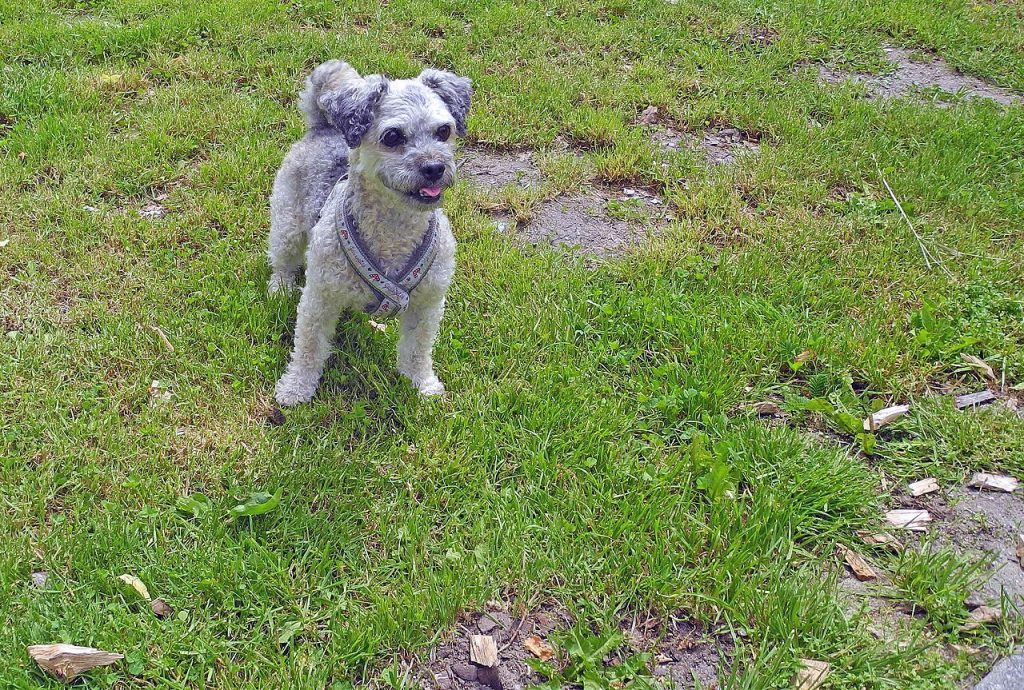
The Bolonka is one of the rarest and most charming dog breeds in existence: a small, bichon-like dog with a long, curly coat, born in the Russian cities of Moscow and St. Petersburg for a single mission, to keep company. If you’re looking for a mini-sized, sociable dog that barely sheds hair and is wonderfully adapted to life on the floor, the Bolonka deserves to be known in depth.
Is the Bolonka for you?
Before you fall in love with that hairy face, you should know which home it fits in best. The Bolonka is a pure companion dog: it glows when it lives close to its family and suffers when it is left alone for too many hours. Here’s the honest summary.
In favour .
- Mini size ideal for apartment and city.
- It barely changes hair; suitable for many allergy sufferers.
- Sociable and affectionate with people, dogs and cats.
- Smart and easy to motivate to learn.
- He needs little intense physical exercise.
- It was long and usually sturdy.
To be taken into account
- Loneliness is fatal: it is not a dog for whom the whole day is gone.
- The long coat requires almost daily brushing.
- Very rare breed: serious breeders are hard to find.
- Warn with barking if you don’t socialize well.
- Its size makes it vulnerable to rough play.
Character and temperament
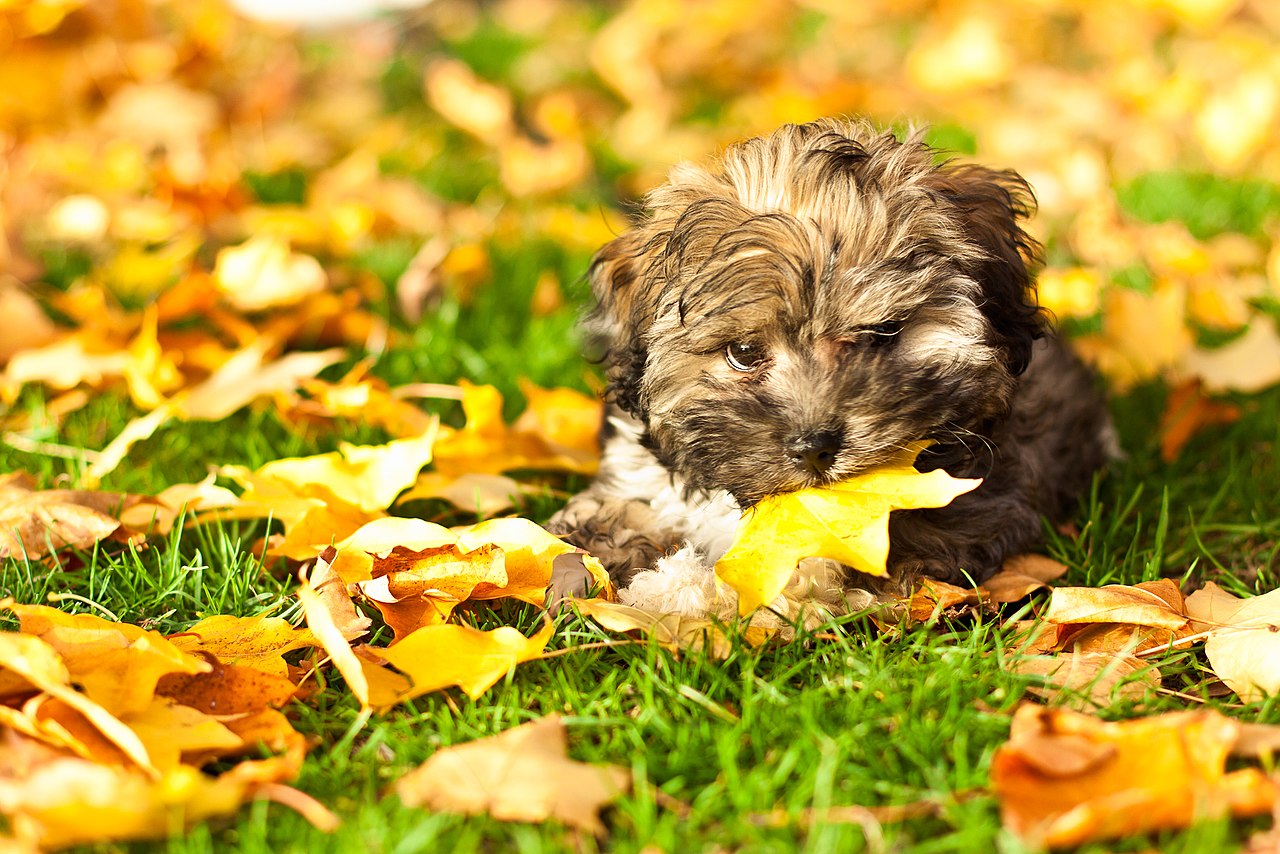
If we had to describe the Bolonka in one word, it would be balanced. It is a dog of stable temperament, very intelligent and friendly to everyone; the standard insists that it should never be shy or aggressive. It was specifically bred as a companion, and that is noticeable in every gesture: it seeks contact, follows you from room to room and is content to be close to its own.
He’s not a nervous or rebellious dog. He enjoys the game, but he avoids too abrupt twists and doesn’t tolerate being roughly manipulated. He tends to see any stranger as a potential friend, which makes him a terrible guardian and an enthusiastic host. Interestingly, it retains a certain instinct to defend its territory and its favorite people, so it warns when something moves. You should never be asked to play the role of guard dog.
Coexistence: children, other pets, flat and loneliness
The Bolonka is an animal meant literally to live indoors, attached to the family. In a small apartment he’s just as happy as in a cottage, as long as he has company and a couple of walks a day. He understands children very well and can be pampered for hours, although it is good to teach the younger ones to treat him gently: We’re talking about a two to four-pound dog that can be hurt by a bad gesture.
He usually gets along well with other dogs and cats, especially if he grows up around them. His sociable disposition makes introductions easy. The Bolonka’s great weakness is loneliness: This breed develops anxiety if it spends too many hours alone. It’s not the right dog for someone who works out all day and no one else is home; instead, it’s perfect for seniors, teleworkers or families with a constant presence.
Education and training
Here the Bolonka plays with advantage: it is alert, attentive and eager to please, a combination that makes training much easier. It quickly learns the basic commands and responds wonderfully to positive reinforcement, with rewards, a friendly voice and play. Forget harsh methods: it is a sensitive dog that is blocked by abruptness and gives its best when training is a shared game.
Two educational priorities deserve special attention. The first is early socialization: Without it, your enthusiasm for greeting strangers can degenerate into a heavy, barking receptionist. The second is loneliness management: Teaching him from puppyhood to be alone for short periods of time, gradually, prevents him from developing separation anxiety. As a good, intelligent little dog, he also appreciates smelling games and small mental challenges that keep him occupied.
Exercise and activity
Do not expect an athlete. The Bolonka has a moderate energy and its exercise needs are easy to cover: two daily walks and a few moments of play at home are enough to keep it in shape and in good spirits.
Of course, don’t confuse “little exercise” with “no stimulation”. What really fills it is mental activity and interaction with its people. A boring Bolonka is just an unhappy Bolonka; a Bolonka with quiet walks, games and company is a placid and grateful dog.
Care: fur and hygiene

The Bolonka’s greatest treasure and greatest responsibility is his hair. It has a long, soft, curly, wavy coat that, like the rest of the bichones, barely comes off. That’s the good news for allergy sufferers; the downside is that that hair that doesn’t fall out gets tangled up easily. That’s why you need to brush almost daily to prevent knots. If the coat becomes severely soiled, it can cause stretch marks and bruising on the skin.
In addition to brushing, bathe regularly and trim the hair around the eyes and pads to keep it clean and comfortable. Many owners opt for shorter cuttings to simplify daily maintenance. Don’t forget the rest of any toy dog’s hygiene routine: ears checked and cleaned, nails trimmed and, very important in small breeds, frequent dental hygiene to prevent tartar. Males have a more pronounced beard and moustache than females, a detail that calls for careful facial styling.
Foodstuffs
Being such a small dog, the Bolonka needs modest but quality rations. Ideally, a food formulated for miniature breeds, with mouth-sized croquettes and a good protein intake. Divide the food into two daily servings to keep your energy stable and monitor the amounts: In such light dogs, a few extra grams a day quickly translate into overweight, which punishes their joints and their heart.
Take special care of the rewards during training, because they add up to a lot of calories without you realizing it; use tiny portions. And always have fresh water available. If in doubt about the exact ration, it is best to adjust it with your veterinarian according to your dog’s age, weight and activity.
Health and life expectancy
The Bolonka is, in general, a robust and long-lived dog. Like other bichon-type toy breeds, their life expectancy is usually around 12 to 16 years when given good care. As it is a small breed, raised from several lines, it does not carry a long list of hereditary problems as well documented as in more popular breeds, but it is advisable to apply the common sense of any small dog.
Watch the dental health, the glass heel of the mini breeds, because tartar accumulation is frequent. Also take care of your joints (knees) and keep your weight in check. And do not neglect the fur: A very tangled coat can cause skin problems. With regular veterinary checkups, daily vaccinations, hygiene and a balanced diet, the Bolonka has all the cards to accompany you for many years.
Physical appearance

The Bolonka is a toy dog of almost square silhouette, compact and well proportioned, without ever appearing thin or fragile of bone. It measures approximately between 20 and 26 cm at the cross and weighs between 2 and 4 kg, up to 5 in some specimens.
The tail, covered with abundant hair, is carried on the back with the tip touching the back. The ears are neither too long nor too short, and the males exhibit a characteristic beard and mustache. In terms of color, the most well-known variety is the colored (Tsvetnaya or Zwetna), which comes in black, brown, gray, red and wolf gray; the older white variety is known as Franzúskaya Bolonka. It is common for the tone to clear up as the dog matures.
Origin and history
The history of the Bolonka is a small chapter in the history of Europe. Its roots can be traced back to the bichon-type white slippers that the French aristocracy gave to the Russian nobility as early as the 18th century; they even say that Louis XIV sent copies as a gift. Later, other ancestors came to Russia with Napoleon’s army, hence the name: Bolonka stands for “doggy skirt” and Franzúskaya, “French”.
Russia was never a land of toy races: Their climate and economy demanded working dogs, and during the Soviet period small dogs were considered a superfluous luxury. Since animals could not be imported, enthusiasts from Moscow and Leningrad developed their own skirt by crossing what they had on hand: ancestors of Bichon Frise, Toy Poodle, Shih Tzu, Pekingese and French Bolognese. The target was a tiny dog, with the perfect character for apartment life. Since 1966 it has been known as Russkaya Tsvetnaya Bolonka (Russian Bolognese).
After the fall of the Iron Curtain, interest in the breed revived. In 1978, the Soviet Union sent a pair of Franzuskaia Bolonka as a diplomatic gift to the GDR, and from the 1980s the breed began to develop in Germany, where it is still popular. Today it has active clubs in several countries, although the FCI does not yet recognize it. It is considered the rarest of all bichon-type breeds.
Curiosities
- The name Bolonka derives from “Bolognese”, for its kinship with the Bolognese bichon, although it is sometimes confused with the Bolognese bichon and is not the same.
- The white variety (Franzúskaya) was admitted by the German VDH club as a variation of the Bolognese Bichon, while the colored variety went its own way.
- In the Czech Republic it is called Barevný Bolonský Psík, literally “colored Bolognese puppy”.
- Since 2013, the Nordic Union of Kennel Clubs has allowed him to compete in exhibitions in Denmark, Norway, Sweden and Finland.
- It is one of the few dog breeds developed entirely “at a closed door”, regardless of foreign specimens, because of the isolation of the Soviet era.
If you are attracted to this small Russian skirt but want to compare, take a look at other toy and companion breeds with which it shares airs or ancestry: the Caniche (Poodle), one of its ancestors; the Shih Tzu, another of its ancestors; the ever-popular Yorkshire Terrier; and the tiny Chihuahua.
Frequently asked questions about the Bolonka
Is the Bolonka hypoallergenic?
The Bolonka belongs to the bichon type and, like its relatives, barely loosens hair: its long coat retains dead hair and dandruff instead of spreading them around the house.
How tall and how much does a Bolonka weigh?
It is a very small-sized (toy) dog. It measures approximately 20 to 26 cm at the withers and weighs between 2 and 4 kg, reaching some specimens up to 5 kg.
Does the Bolonka bark a lot?
It’s not the most barking toy dog, but it warns. It was bred as a roommate and tends to alert when something changes in its environment, so it serves as a lively alarm. With early socialization and stable routines, barking is kept at bay.
Do you get along with children and other animals?
Yes. It is sociable and affectionate with almost everyone, and gets along well with other dogs and cats if presented calmly. With children it is a great companion, as long as play is respectful: due to its size it does not tolerate rough play or careless manipulation.
How long does a Bolonka live?
Like other bichon-type toy breeds, it usually enjoys a long life: around 12-16 years with good nutrition, moderate exercise, dental hygiene and regular veterinary checkups.
Is the Bolonka recognized by the FCI?
I’m not going to. The International Kennel Federation (FCI) does not recognize it as an independent breed, partly due to the lack of a consolidated national club in Russia. The white variety (Franzúskaya Bolonka) was admitted by the German VDH club as a variation of the Bolognese Bichon, and since 2013 the Nordic Union of Kennel Clubs recognizes the Russkaya Tsvetnaya Bolonka. The American Kennel Club incorporated it into its developing breed service in 2015 and fully recognized it in 2026.
Do you need a lot of exercise?
No, just a couple of walks a day and some playtime at home. It’s a companion dog designed for living on the floor, so its energy expenditure is moderate; what it really needs is mental stimulation and companionship.
What color is Bolonka?
The color variety (Tsvetnaya or Zwetna) is presented in black, brown, gray, red and wolf gray, often with nuances that lighten with age.