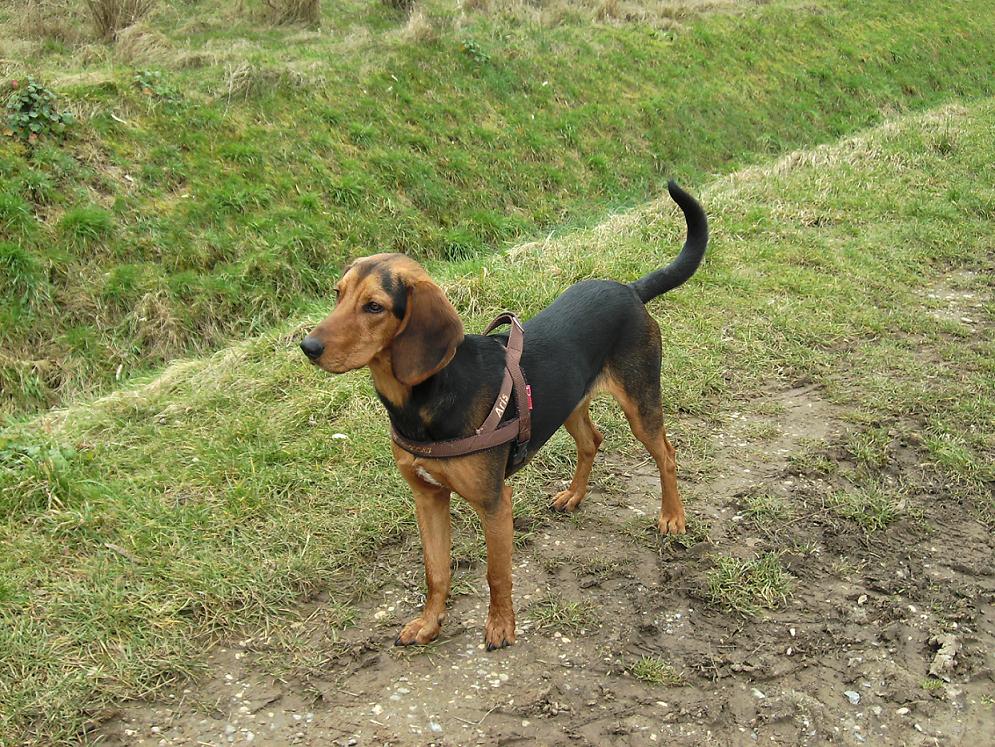
The Sabueso Helénico(Greek Ελληνικός Ιχνηλάτης, “Greek tracker”; also called Greek hound) is a hardy, prodigious-nosed, Mediterranean hunting dog bred for centuries in the mountains of southern Greece to follow the trail of the hare over steep terrain. It is the only Greek breed recognized by the International Canine Federation (FCI no. 214) and is still very rare outside its country of origin. If you’re looking for a sporty, straightforward, elegant-looking companion in black and fire, this is a dog that deserves to be thoroughly known before you take the step.
Is that the Hellenic Hound for you?

The Hellenic Hound is a purebred working dog: He was born to run and sniff and chase for hours, and that instinct still runs through his head. He’s not a couch dog or an easy beginner. It fits perfectly with someone who enjoys the countryside, hiking or hunting, and wants a tireless, caring and unyielding companion. Instead, it can frustrate those looking for a quiet pet on the floor or expecting immediate manual obedience: This hound thinks with his nose and needs you to give him a reason to listen to you.
In favour .
- Very tough and healthy, with little genetic manipulation.
- Exceptional sense of smell and tremendous passion for tracking.
- Affectionate and loyal to his family; sociable with other dogs.
- Short hair with minimal maintenance.
- Good life expectancy for its size (around 13 years).
- Elegant black cloak and fire, harmonious line.
To be taken into account
- It needs a lot of daily exercise; it’s not worth a short walk.
- It barks and “sings” at the trail, with a sonorous voice.
- When it picks up a scent, it tends to ignore you: easy escapes.
- Independent and stubborn; not a dog of quick obedience.
- Little adapted to small apartments or long hours of solitude.
- Rare breed: difficult to find and to socialize with nearby breeders.
Character and temperament
Anyone who knows the Hellenic Hound describes it in two words: Devoted and tireless. It is a cheerful dog, balanced and very attached to its people, which outside the hunting ground is calm, affectionate and not aggressive. That domestic sweetness coexists with an inner motor that never goes out: As soon as he smells something interesting, he transforms into a determined tracker, with a determination that borders on obsession.
Like a good scent hound, it has an independent vein. He wasn’t raised to constantly look at the guide waiting for orders, but to work alone, following the trail in the air and warning with his voice. That means he’s smart but selective: He understands perfectly what you’re asking, and yet he may decide that the lead he’s found is more important. Don’t mistake it for a lack of affection; it’s simply the legacy of a dog trained to make his own decisions in the bush.
It is also a tone-sensitive dog, responding much better to positive stimuli and a relationship of trust than to harshness, which turns it off or makes it reticent. With patience and consistency, it is as cooperative as one would expect of a hound.
Coexistence: children, other pets, flat and loneliness
With children:‘s gentle nature and lack of aggressiveness make it a good family companion. It is solid and playful, tolerates the treatment of the smallest and enjoys joint activity. As with any dog, it is advisable to teach children to respect their rest times and supervise first contacts.
With other dogs:, traditionally raised in packs, is usually sociable and gets along well with his fellow dogs.
With other pets: here is instinctive. It is a hunting dog with a very strong chase impulse, so that cats, rabbits and small animals can awaken their hunting side. Coexistence is possible if you grow up with them from a puppy, but it is never good to trust.
On the floor and in solitude: is not its ideal habitat. It is a rural dog, made for the outdoors and intense exercise; enclosed and without stimulus it is bored, barks and can become destructive. It does not tolerate long hours alone. It performs much better in a house with fenced terrain (and high fence: it jumps and climbs when a smell calls it) than in an urban apartment.

Education and training
Training a greyhound is an exercise in humility and perseverance. It is not a dog of competitive obedience, and whoever expects instant answers will get a bang. The key is to work from a puppy, with short, motivating and always positive sessions, rewarding with food, play and voice.
Early socialization is essential: early exposure to people, other dogs, noise and different environments makes him a safe and balanced adult. It is good to teach him from the beginning to walk with a leash and to go to the call, although you have to assume an uncomfortable truth: the call from a tracking hound isn’t 100% reliable.. When the nose takes over, most of these dogs disconnect from the world. That is why the job of “acude” must be well trained, with highly valuable rewards, and still keep the dog tied up or in safe areas near traffic or livestock.
Channeling his instinct is more effective than fighting it. Olfactory games, tracking clues, and olfactory game or sporting activities make him happy and strengthen your bond. A greyhound with a “job” to do is an obedient dog; a boring one, a little demolition worker.
Exercise and activity
This is, perhaps, the point most people underestimate. The Grecian Hound has an extremely high energy and endurance forged to jog over the mountain for hours. It needs a lot of daily exercise: long walks, running, exploration and olfactory stimulation. A couple of short laps around the block are not enough for it.
It is an excellent companion for running, hiking, or trail running, and it enjoys wide, safe terrain for galloping. Eye, always in a fenced space or with a long strap: As soon as it smells prey, it flies out and doesn’t pay attention to reason or danger. A tired and mentally satisfied dog is calm, affectionate and a good companion; an unspent one is the recipe for barking, running away and wrecking. If your life doesn’t include outdoor activity almost daily, this is not your race.
Care: fur and hygiene
The greyhound is most grateful for care. Its hair is short, dense and attached to the body, so a weekly brushing is enough to remove the dead hair and keep the mantle shiny; in the mules, a somewhat more frequent brushing.
Bathrooms, only when it’s really dirty; too much dries out the skin. Maintenance care focuses on the basics of any active dog: checking and cleaning drooping ears (which ventilate worse and accumulate moisture, especially after going out in the countryside), cutting nails if they do not wear out on their own, brushing teeth regularly and checking pads after hikes. Since it is a dog that kicks the mound, it is advisable to inspect it after each outing for ticks, spikes or small wounds.

Foodstuffs
As an athletic and very active dog, the greyhound needs a complete and balanced diet, with a good supply of high-quality protein to support its musculature and energy expenditure.
It’s a naturally slender dog, and it should be kept that way: It’s best to avoid being overweight, which punishes your joints and performance. Divide food into two servings a day for the adult, and watch out for strenuous exercise just before or after eating. Water is always fresh and available, especially in summer and after field trips. If you have any questions about the quantity or type of feed, it is best to consult your veterinarian.
Health and life expectancy
One of the great virtues of this breed is its robustness. Having remained relatively isolated in the Greek mountains and having not undergone intensive breeding or extreme aesthetic selection, the Hellenic Hound retains a healthy genetics and remarkable rusticity. It is a dog not prone to hereditary problems that afflict more “manufactured” breeds, and its half-life is around 13 years old, a very good figure for a medium-sized dog.
That doesn’t mean I’m immune to anything. Like all dogs with long, drooping ears, it is somewhat more prone to ear infections, which are prevented with regular checkups. Their active outdoor life exposes them to external parasites, ticks and minor injuries, so deworming and hygiene after camp are important. Keeping your weight in check, an up-to-date vaccination schedule, and regular veterinary checkups are the best guarantees of a long and healthy life.
Physical appearance
The Hellenic Hound is a medium-sized dog, slightly longer than tall, with a harmonious silhouette that conveys agility and endurance rather than corpulence. Males measure between 47 and 55 cm at the withers and females between 45 and 53 cm, with a weight that is around 17 to 20 kg. Everything in it speaks of a distance runner: deep chest, jagged, muscular limbs and a tail that he carries high, often curved, when he’s in action.
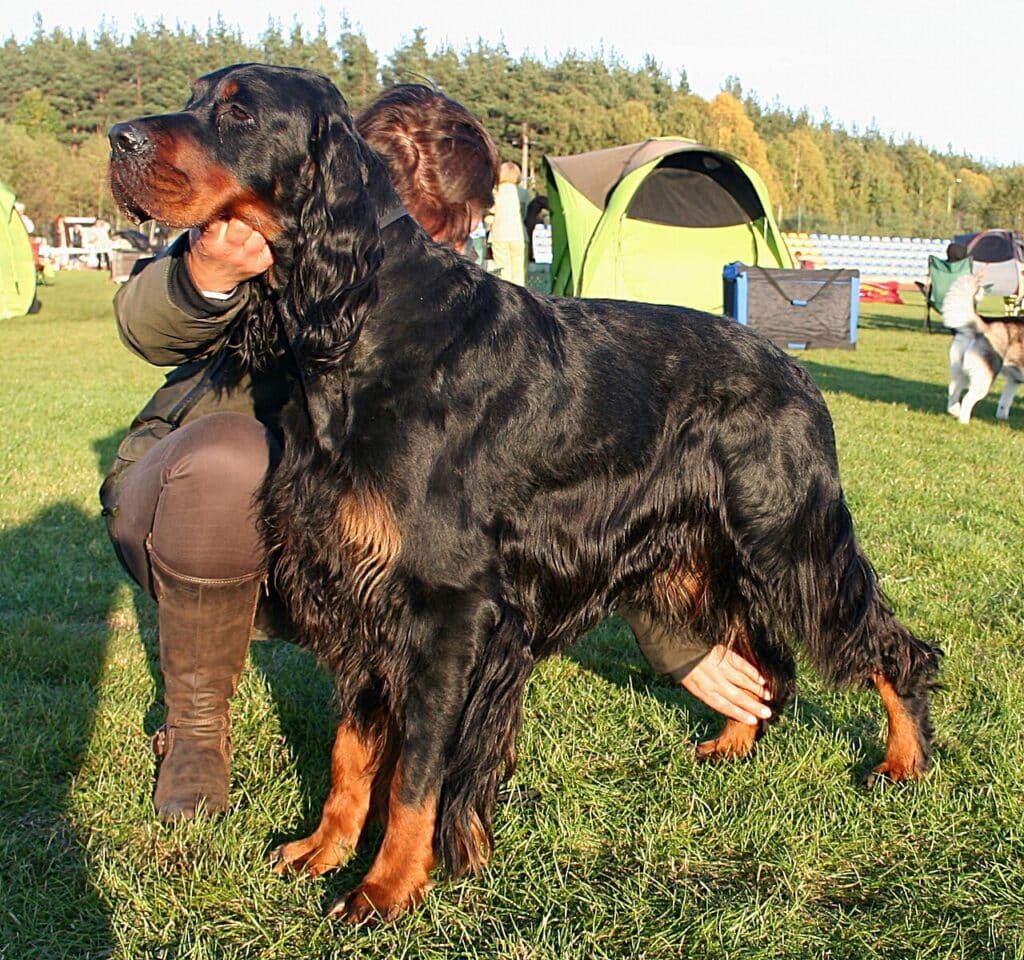
Its most distinctive feature is the coat: the Hellenic Hound is always black and fire(black and tan), with short, dense and shiny hair attached to the body. The head is elongated and noble, with ears of medium insertion hanging from the sides of the cheeks, and lively, expressive eyes of sweet gaze. His nose, black and broad, betrays his status as an accomplished tracker. All in all, an elegant and functional dog, without exaggeration.
Origin and history
Few races boast of such an ancient lineage. The Hellenic Hound is believed to be descended from the extinct Laconian Hound, a famous dog of Ancient Greece praised for its sense of smell and its drive in hunting, already mentioned by classical authors. Over the millennia, geographical isolation in the mountain ranges of southern Greece kept its type relatively unchanged, protected from the crosses and fashions that transformed other European hunting dogs.
For generations it was primarily a working tool for hare hunters, bred for its function and not for its appearance. The result is a rustic, functional and genetically healthy dog, shaped by terrain and need rather than by the standard of a salon. The International Kennel Federation officially recognized it in 1996, with the number 214, and with this the Hellenic Hound became the only Greek dog breed recognized by the FCI, an honor that underscores its value as a living heritage of the country.
Curiosities
- It’s the only Greek breed recognized by the FCI, a whole national cynological symbol.
- Its Greek name, Ελληνικός Ιχνηλάτης(Ellinikós Ichnilátis), literally means “Greek tracker”.
- It is attributed kinship with the Laconian hound of Ancient Greece, so that its roots sink into classical antiquity.
- It only exists in one color: always black and fire, with no supported variants.
- Their relative isolation in the mountains has preserved very little altered genetics for thousands of years.
- Outside Greece it is still a very rare breed, practically unknown to the general public.
If you are attracted to the Greyhound because of its sense of smell, energy, and tracking instinct, you may be interested in other greyhounds and hounds with similar temperaments. You can take a look at the Beagle, another festive, snooty hound; the towering Bloodhound, the undisputed tracking champion; the Basset Hound, a quiet, short-legged hound; or the versatile Vizsla, an athletic, family-oriented hunting dog.
Frequently Asked Questions About the Greyhound
Is the Greyhound a good family dog?
Yes, within its profile. It is affectionate, loyal and not aggressive, gets along well with children and other dogs and enjoys an active family life.
How much exercise does the Greyhound need?
Much. It is a hunting dog with enormous endurance that requires long walks, running and olfactory stimulation every day. A short walk is not enough for it; without enough activity it gets bored, barks and can become destructive.
Can you have a Hellenic Hound on a floor?
It’s not ideal. It’s a country dog, designed for the outdoors, which has a poor tolerance for confinement and long hours of solitude. It performs much better in a house with fenced-in terrain than in an urban apartment. If you live in a flat, you’d need to compensate with a lot of daily activity.
Is it easy to train?
Not particularly. It’s intelligent but independent and stubborn, like a good sniffer dog. It learns with patience, short sessions and positive reinforcement, but when it catches a trail, it tends to ignore commands. The call is never completely reliable, so it’s best to keep it on a leash near dangers.
How long does a Hellenic Hound live?
Their average life expectancy is around 13 years, a very good figure for a medium-sized dog.
What color is the Hellenic Hound?
It is the only color allowed in the breed, with short, dense and shiny hair attached to the body.
Do you get along with other animals?
With other dogs it is usually sociable, since it was raised in packs. With cats and small animals you have to be careful: its strong hunting instinct can be activated. Coexistence is possible if you grow up with them from a puppy, but without lowering your guard.
Why is the Hellenic Hound so rare?
It has been bred mainly in Greece and for its hunting function, without international diffusion.