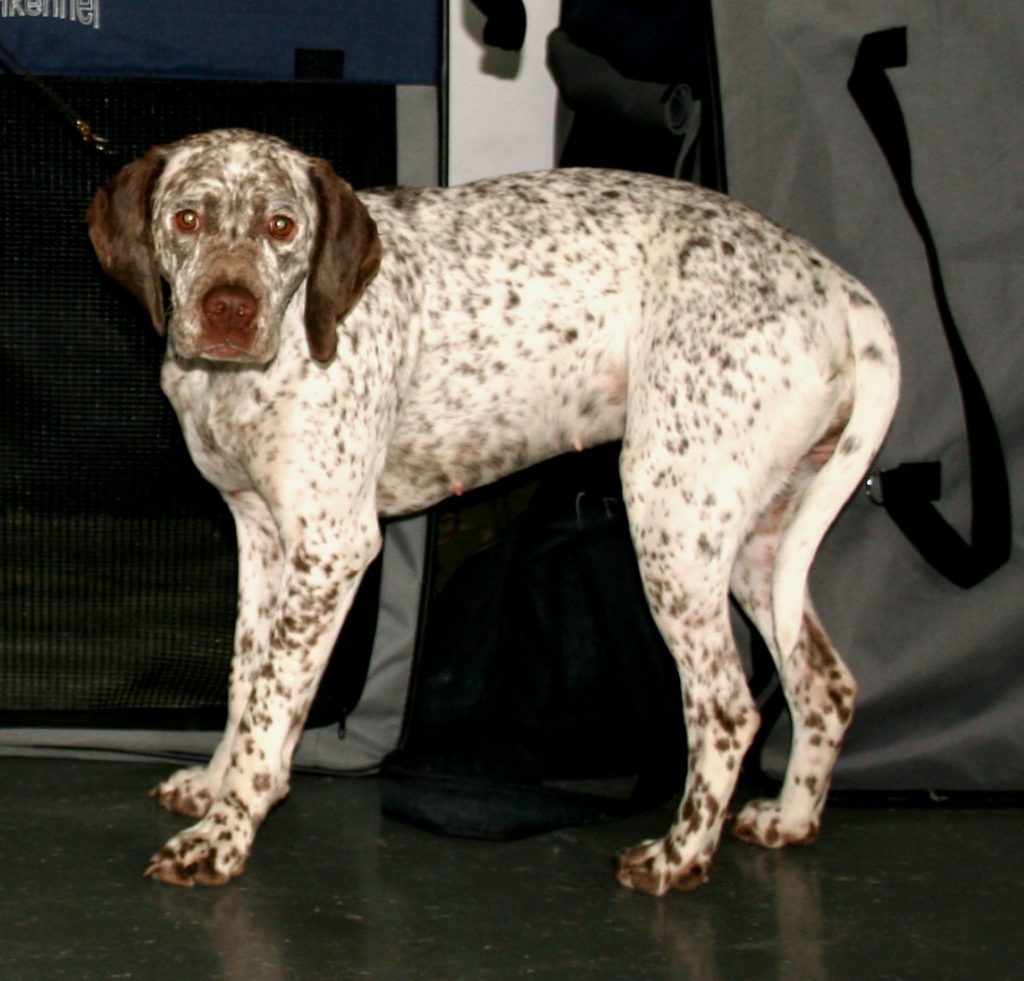
The Braque of Bourbon(Braque du Bourbonnais) is one of the oldest and most unique show dogs in France: a robust and versatile hunter, with a finely mottled white coat in liver or lion-like tones, often born with or without a short tail. Under his rustic appearance he hides a companion exceptionally attached to his family, balanced at home and tireless on the field. This is the complete guide to the Bourbon Brack: character, care, health, training and history of a race that was on the brink of extinction.
Is the Bourbon Jack for you?

The Bourbon Hound is a multi-purpose show dog, designed to work and live very closely with its people. It is a breed for those who enjoy the outdoors and can offer plenty of daily exercise; it is not the best choice for a sedentary life or for those who spend many hours away from home, because they suffer from loneliness and need to vent. Before you decide, weigh these pros and cons.
In favour .
- Very close and loyal to his family; always wants to be with his people.
- Balanced and quiet at home when he’s exercised.
- Intelligent and eager to please: easily learns positively.
- Versatile hunter, with a firm and natural sample.
- Rustic, robust and easy to maintain (short hair).
To be taken into account
- He needs a lot of physical and mental exercise every day.
- He has a hard time with prolonged solitude; he is a constant companion dog.
- Strong hunting instinct: watch out for cats and small animals.
- Rare breed: finding serious breeders can be expensive.
- He’s a sensitive character. The harsh treatment makes him shy.
Character and temperament
The temperament of the Bourbon Brack is possibly its most prized trait. He is described as a balanced mix between the affectionate family dog and the tireless worker: At home it is sweet, sociable and very attached to its people, whom it follows from room to room; in the countryside it becomes an attentive, motivated and very resilient hunter. That dual nature – loving on the inside, effective on the outside – is what has kept it alive as a race.
It is a good-natured, stable and unconflicted dog, which forms an intense bond with its family. It shows a lot of activity, although unlike other breeds it does not tend to get too far away from the hunter, which makes it a comfortable and manageable hunting companion.
Coexistence: children, other pets, flat and loneliness

With children:‘s balanced temperament and companionship make it generally a good dog for families with children, always with the usual supervision and mutual respect.
With other pets: usually coexists with other dogs without problems. It is advisable to keep in mind its marked hunting instinct with small animals (cats, rabbits, birds), especially if it has not grown up with them; early socialization helps a lot.
On the floor: can live in an apartment if it receives long, intense daily outings, but its ideal environment is a house with a field or garden to run in.
Soledad: is its weak point. The Bourbon Arm wants to be with its people and has trouble spending many hours alone; lack of companionship and activity can lead to anxiety and destructive behaviors.
Education and training
We are dealing with a dog that is intelligent, sensitive and eager to please, a combination that greatly facilitates training. The instinct to sample appears early and naturally, so the guide’s job is more to channel than to impose.
- Positive reinforcement: rewards, play and friendly voice work better than hard correction, which only gets you back.
- Early socialization: expose you from puppyhood to people, dogs, environments and stimuli for a safe and balanced adult.
- Consistency and consistency: clear and stable rules; it is a dog that quickly understands what is expected of it.
- Mental stimulation: scent and search games channel your hunting instinct and avoid boredom.
Exercise and activity
The Bourbon Hound is, above all, a field sporting dog. It is very active and its natural gait is to gallop, moving to the trot when trailing on deck; it changes direction with agility and speed.
The ideal is to offer him daily intense exercise – running, crawling, collecting, canine sports – combined with olfactory work that satisfies his hunter’s head. He is an excellent candidate for hunting, canicross, mantrailing or field trials.
Care: fur and hygiene

The mantle’s maintenance is simple. It has flat (short) hair, thin and attached to the body, which is kept in good condition with a weekly brushing to remove dead hair and distribute natural fat. The baths, only when really needed.
The hanging ears does deserve attention: as with any sample dog, it is advisable to check and clean them regularly to prevent infection, especially after field days.
Foodstuffs
As an active dog of medium size (about 16-25 kg depending on sex), the Bourbon Brack needs a complete and quality diet, adjusted to its age, weight and, above all, to its actual level of activity: a hunting specimen in the middle of the season spends much more energy than one who just walks.
For deep-breasted sport dogs, it is advisable to avoid vigorous exercise just before and after eating.
Health and life expectancy
The Bourbon Braco has a reputation for being a rustic, healthy and robust breed, partly the result of a small population but selected for work rather than aesthetics.
There is no long list of hereditary diseases specific to the breed, but, as with any sport dog, sensible veterinary follow-up should be maintained: caring for drooping ears, weight control, joint health and regular check-ups. Going to responsible breeders who perform regular health checks on their breeders is the best guarantee of a healthy puppy.
Physical appearance
The Bourbon Braco is a medium-sized, well-proportioned and muscular bracoid, which transmits robustness and strength without losing elegance; the female is somewhat less bulky and more stylized.
- Height at the cross: males 51 to 57 cm; females 48 to 55 cm (± 1 cm is allowed in very typical specimens).
- Peso: males 18 to 25 kg; females 16 to 22 kg.
- Cabeza: rounded in all directions, with well-developed zygomatic and parietal arches; skull and snout axes parallel or slightly divergent forward.
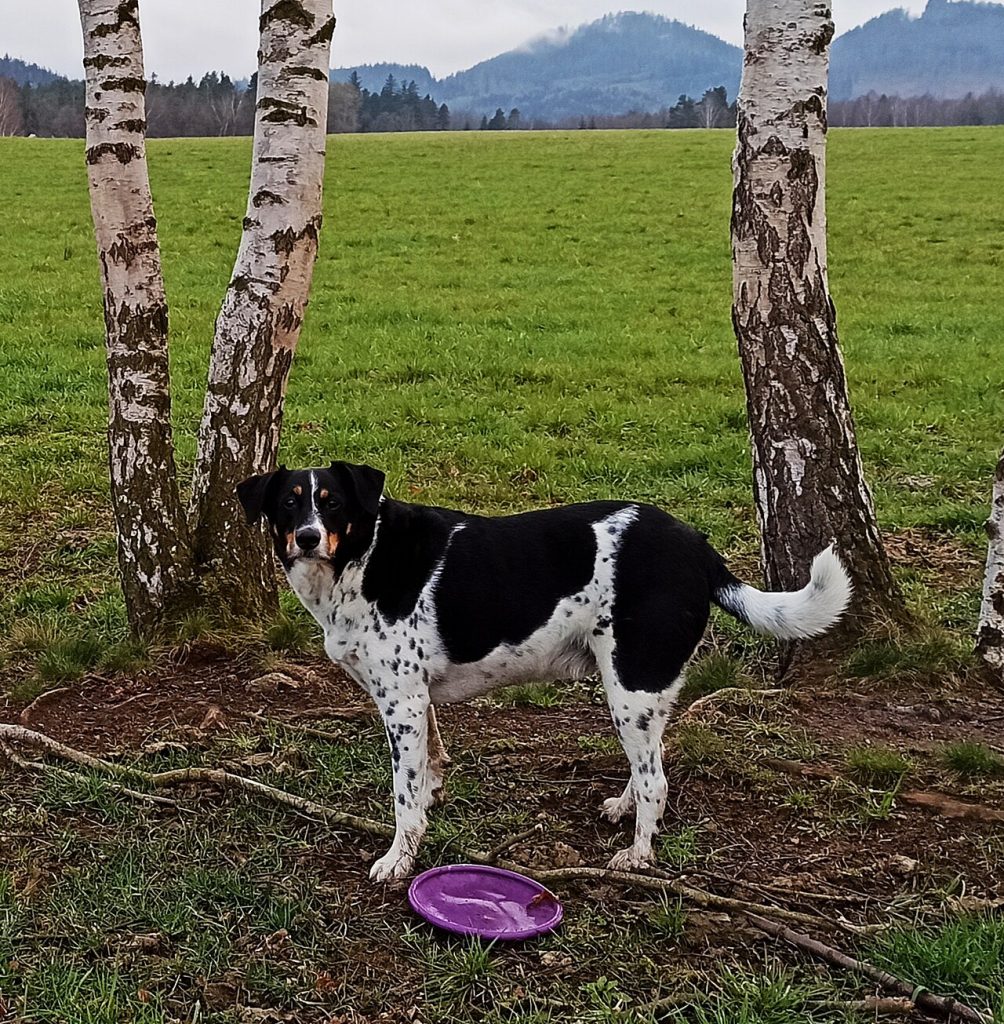
- Manto: short hair on a white background, finely mottled in two breed-specific colours – liver (“lie de vin”, faded purple) and leonade (“peach blossom”) – .
- Cola: commonly short at birth (brachyuria) or absent (anuria).
Origin and history
The Brac de Bourbon takes its name from the Bourbon (Bourbonnais), a region in central France. It’s a very old breed: Already in 1598 he is mentioned in Aldrovandi’s Historia Natural as a dog “skillful for hunting quail”. Classical authors described it as a pleasant companion of the hunter, robust in appearance and health, with a short tail at birth and a white coat finely mottled with light brown or dotted with lionskin.
For a long time, breeders wanted to fix at all costs a “tinted purple” color and the mandatory short tail at birth. Such a strict selection on secondary traits, in a breed with few specimens and also subjected to work tests, was counterproductive: the hobby collapsed and, between 1963 and 1973, not a single specimen was registered in the French book of origins (LOF). The race was on the brink of extinction.
In 1970, Michel Comte set out to save it: He searched for the last dogs with Bourbonnais blood and, finding only half-breeds that retained traits of the breed (height, head shape, short tail), began a recovery program. It registered its first specimens in the LOF under the ‘Initial Title’ procedure between 1973 and 1975. In 1981 the Club du Braque du Bourbonnais was recreated, with Comte as president until 2001. Success in field trials re-launched the breed, and in 1988 the first Bourbonnais arrived in the United States, now its second-largest producer after France.
Curiosities
- It was formerly known as the “short-tailed braco” for its frequent brachiuria or anuria at birth.
- The short tail gene is the same as that of the Breton Epagneul, autosomal dominant inheritance.
- Its two colors have their own poetic names: “lie de vin” (liver) and “peach blossom” (leonate).
- In the head, the standard requires that both eyes not be in the same spot.
- It was an entire decade (1963-1973) without a single recorded birth: its recovery is one of the most remarkable canine rescue stories of the 20th century.
If you are attracted to this versatile and family-friendly French breed, you may also be interested in other sample and collection breeds with a similar profile: the elegant and energetic Pointer, the inseparable Vizsla, the athletic Weimaraner and the versatile Labrador Retriever.
Frequently Asked Questions about Bourbon Brack
Is the Bourbon Jack a good family dog?
Yes. Despite being a pure-breed sample dog, the Bourbon Braco is noted for its attachment to people: it is affectionate, balanced and very loyal to its family, with whom it wants to be at all times. It combines the tireless hunter in the field with the calm and affectionate companion at home, as long as it covers its exercise needs.
How much exercise does a Bourbon Arm need?
It is a highly energetic hunting dog, requiring at least one to two hours of intense activity per day (running, tracking, playing) in addition to walks.
Why are some Bourbon Bracks born without tails?
It is a historical characteristic of the breed: many specimens are born with a short tail (brachiuria) or directly without a tail (anuria).
What colour is the Bourbon Jack?
Their coat is finely mottled or spotted white in two varieties peculiar to the breed: liver (called “lie de vin”, “tinted purple” or “past lilac”) and leonado (described as “peach blossom”).
Is it hard to educate?
Not particularly. It is an intelligent, sensitive and willing to please dog, which facilitates positive training. Its instinct for showing off emerges early and naturally. It requires consistency, early socialization and respect for its sensitive character: harsh treatment holds it back more than corrects it.
How long does the Bourbon Jack live?
It is a rustic and robust breed, with a life expectancy that is usually around 12 to 15 years. As in all sporting dogs with hanging ears, it is advisable to take care of ears, feeding and weight, and maintain veterinary checks and physical activity throughout its life.
Does he adapt to living in a flat?
It’s not your ideal environment. You can live on the floor if you’re guaranteed several long, intense outings a day, but you perform much better in a house with access to a field or garden where you can run. It’s not the square footage that counts, but the hours of actual exercise you get.
Is the Bourbon Jack a rare breed?
Yes, it is a small breed. It was on the verge of extinction: between 1963 and 1973 not a single specimen was recorded in the French book of origins. It has recovered since 1970 thanks to Michel Comte. Today France is its main breeder and the United States the second, but it is still infrequent outside the kennel circles.