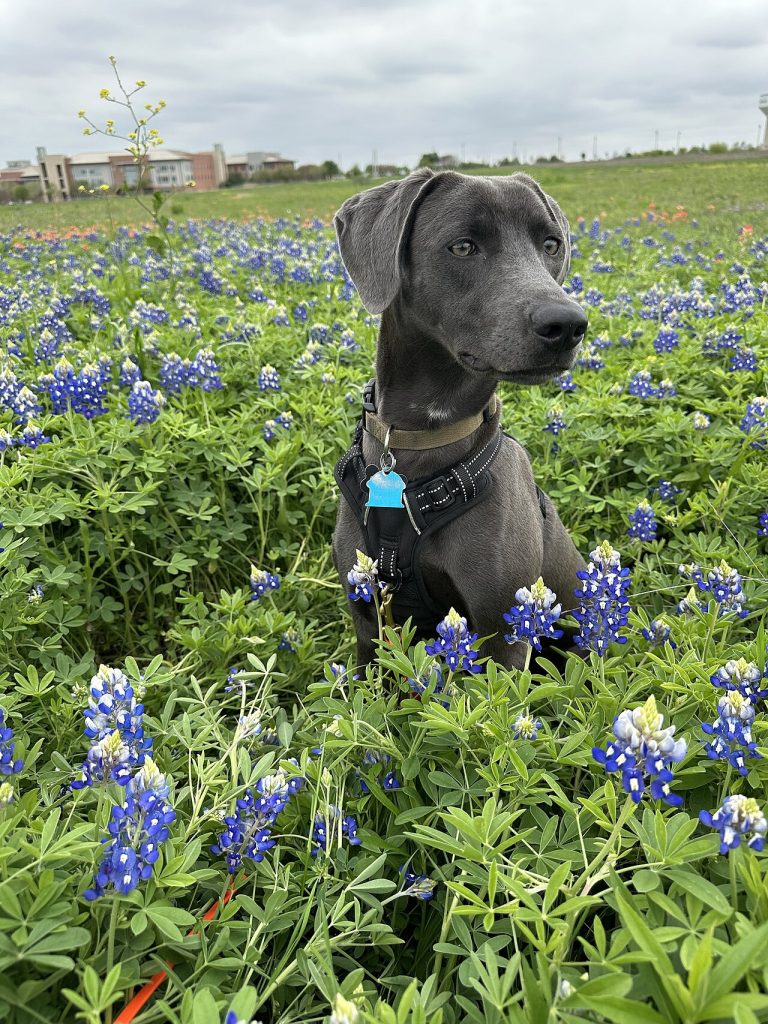
The Blue Lacy is the quintessential working dog of Texas: agile, tireless, and intensely alert, bred on 19th-century ranches to herd cattle, track and hunt wild boars. It is not a couch dog, but an athlete with a bluish-grey coat and amber eyes who needs a task and an owner at his height. If you are looking for a sporty and loyal companion, here you have everything about the Blue Lacy.
Is the Blue Lacy for you?
The Blue Lacy is a wonderful breed, but demanding. It shines in the hands of active people who understand that it is, first and foremost, a working dog with an engine that almost never shuts down. Before you fall in love with her elegant blue cape, be honest about your pace of life: This dog returns many times what it gets in exercise and dedication, but it takes a toll when it’s treated like any other companion dog.
In favour .
- Very smart and very easy to train.
- Tireless athlete: ideal for dog sport and work.
- Loyal and deeply attached to his family.
- Short coat with minimal maintenance.
- Rustic, healthy and long-lived for his size.
Against
- Overwhelming energy and drive: not suitable for sedentary life.
- He gets bored and frustrated easily if he doesn’t have homework.
- Too intense for very young children.
- He’s a poor fit on small floors without much exercise.
- Rare breed outside the U.S.: hard to come by.
Character and temperament

If we had to sum up the Blue Lacy in four words, it would be intelligent, intense, active and alert. It was developed simultaneously as a hunting and herding dog, and that has left it with a double-edged character: an enormous determination to face large game and to control difficult livestock, combined with an unusual sensitivity and connection to its guide.
It’s a dog that do you want work with. That motivation makes him an exceptional learner, able to learn complex routines at first, but it also means he needs a purpose. A Blue Lacy without a job doesn’t go out: It redirects all that energy where it can, usually into behaviors that its owners don’t like. With family he is affectionate and loyal; with strangers he is usually reserved and watchful, making him a good warning dog.
Coexistence: children, other pets, flat and loneliness
The Blue Lacy is very sociable with its people, but its intensity greatly affects coexistence. With children can be a great companion in active and older families, although young specimens accumulate so much energy and drive that they are too abrupt for very young children without supervision.
With other pets you have to be careful: Their strong hunting and chasing instinct can be triggered by cats or small animals running. Cohabitation works best when you grow up with them. On the floor is not its ideal habitat; it appreciates a house with fenced land where it can expend energy. And the loneliness is his Achilles heel: Such an active, attached dog has a hard time spending long hours alone, and frustration often translates into barking and tearing.
Education and training
This is where the Blue Lacy stands out. Its intelligence and willingness to please make it one of the easiest breeds to train: it picks up new commands with very few repetitions. The challenge is not to teach it, but channeling that ability and give it a job to match its head.
It works wonderfully with positive reinforcement, short, varied sessions, and challenges that test your sense of smell and agility. It is good to start socializing and educating from puppyhood, setting clear and consistent boundaries. Avoid training based on hard correction: It’s a sensitive dog that performs much better with motivation than with pressure. And remember: An awakened mind needs daily stimulation, or it will look for its own “exercises”.
Exercise and activity

This is the decisive section. The Blue Lacy is a very high energy working dog, and performs much better when it has a specific job that allows it to burn that excess fuel. In its native Texas it excels at herding cattle, tracking blood trails, corraling game, traversing trapping lines and hunting wild boars.
Few homes can offer you a ranch, but there are perfect modern substitutes: agility, which rewards your intelligence, passion, speed and agility; herding tests; mantrailing and sports tracking; canicross or bikejöring. In fact, in recent years the Blue Lacy has gained a reputation for its tracking skills and is used to locate wounded game pieces. Without a good daily dose of mental and physical exercise, this dog is not happy, and it shows.
Care: fur and hygiene
Good news for those who value practicality: the Blue Lacy is very low maintenance. Its coat is cut, smooth and sticky to the body, without the curls or dense undercoat of other breeds. A weekly brushing to remove dead hair is more than enough; it sheds moderately, but nothing dramatic.
As with any dog, it is advisable to maintain a routine of inspection and cleaning of the ears, control of the growth of the nails and good dental hygiene.
Foodstuffs
Because the Blue Lacy is such an active dog, it needs a quality diet that is well adjusted to its actual activity level. A dog that works or trains daily burns a lot of energy and requires an adequate calorie and protein intake.
Divide your ration into two meals a day, choose a balanced food or diet appropriate to your age and exercise level, and always keep fresh water available, especially after strenuous activity. Since the breed may have food allergies, watch for possible digestive or skin reactions; if they occur, your veterinarian can help you identify the responsible ingredient and suggest an elimination diet.
Health and life expectancy
Generations of purely functional selection, designed to withstand harsh terrain, demanding working conditions and the rigors of the Texas climate, have given him a solid constitution and little afflicted by the pathologies of highly “manufactured” breeds.
That said, you’re not out of trouble. The most commonly reported are skin disorders and food allergies. alopecia by dilution of colour, a problem associated with diluted coats such as blue, has also been documented, although very rarely. With basic care, exercise and good nutrition, its life expectancy is usually around 12 to 16 years according to breed associations, a remarkable longevity for a medium-sized dog.
Physical appearance
The Blue Lacy is a light but proportionate, strong and fast dog, with a balance between height and weight designed for endurance. The height to the cross ranges from 43 to 56 cm (the Texas State standard expands the range to 46-64 cm).
Its most famous trait is color. Despite the nickname “blue”, the standard supports three varieties: the blue(any shade of gray, from light silver to dark charcoal), the red(light cream to rust) and the tricolor(blue base with red markings and some white on the chest and chin to groin). Excess white is penalized, and marks on the face or above the midline disqualify. The eyes, alive and alert, range from bright yellow to intense amber. The coating must be short, smooth and tight; long or rough hair is grounds for disqualification.
Origin and history
The Blue Lacy owes its name to the the Lacy brothers.(Ewin, Frank, Harry, and George), Kentucky ranchers who settled in Burnet County, Texas in 1858, taking their ranch dogs with them. According to tradition, the breed emerged from the crossing of greyhounds, greyhounds and, it is said, coyotes, looking for a versatile dog capable of grazing cows and pigs in the wild, tracking and cornering minor game and hunting deer and wild boar. Hence his local nickname: The Lacy hog dog, the Lacy pig dog.
The Lacy family left their mark beyond the dogs: Donated the pink granite from his quarry at Granite Mountain to build the Texas State Capitol in Austin. The breed was recognized by the Texas Senate as 2001 and, on June 18 of 2005, Governor Rick Perry signed the bill declaring it official dog of the State of Texas, following the resolution pushed by Representative Joaquin Castro. Today, though the vast majority of Blue Lacy are still in Texas, breeding grounds are beginning to be established throughout the United States, Canada, and more recently, Europe.
Curiosities
- It’s the official dog of the State of Texas since 2005, an honor very few races hold.
- It is called “blue” for its more representative gray variety, but also exists in red and tricolor.
- Legend attributes some of his blood to coyote, as well as greyhounds and hounds.
- U.S. trappers use it in rescue and persecution parts operations.
- When it was declared an official breed, it was said to be “the only breed originating in Texas”; in reality another Texas breed, the Silken Windhound, was already in development.
- His amber eyes on the blue coat is one of his most striking hallmarks.
If you are attracted to the Blue Lacy’s profile – intelligent, hardworking and loyal athlete – you may be interested in other breeds with a similar profile. Check out the Border Collie and Pastor Australiano, two prodigies of herding and obedience, or versatile and athletic hunters like the Weimaraner and Vizsla, who share with the Blue Lacy that need for constant movement and work.
Frequently Asked Questions About Blue Lacy
Is the Blue Lacy a good family pet?
It can be in the right family: active, experienced and with time to give it work. It is a loyal dog and very attached to its own, but has a very high work impulse. Puppies are usually too intense and energetic to live with very young children without supervision. In a sporting home that offers daily exercise and mental stimulation, it fits wonderfully.
Can a Blue Lacy live in a flat?
It’s not their ideal environment. It’s a ranch dog bred to run and work for hours, and in a small apartment without enough activity tends to get frustrated, bark and develop destructive behaviors. If you live on the floor, it will only function with several long, intense outings a day and regular dog exercise; a house with fenced terrain does it much better.
How much exercise does a Blue Lacy need?
It needs at least one or two hours a day of intense physical exercise (running, tracking, agility, canicross) plus mental work. A boring Blue Lacy is a problem; a Blue Lacy with a job to do is a balanced companion.
Does the Blue Lacy drop a lot of hair?
It has short, smooth and sticky hair, so maintenance is minimal: a weekly brushing is sufficient. It sheds hair moderately throughout the year, without the large seasonal motions of the double-coated breeds. It does not require hairdressing or cuts.
Is it hard to train the Blue Lacy?
On the contrary: he is very intelligent and learns quickly, which makes training much easier. The difficulty lies in his intensity and in his own initiative: he needs constant guidance, positive reinforcement and, above all, a task in which to channel his energy. Without direction, that same intelligence turns against you.
How long does a Blue Lacy live?
The breed associations usually place its life expectancy at around 12 to 16 years, a high figure for a medium-sized dog, thanks to its functional selection and a genetic base little affected by aesthetic fashions.
Is the Blue Lacy recognized by the FCI or the AKC?
The Blue Lacy is not recognized by the FCI or the American Kennel Club. Its official status comes from the State of Texas, which declared it an official state dog in 2005.
Is the Blue Lacy always blue?
Although it is popularly called “blue”, the standard supports three varieties: blue (any shade of gray, from silver to charcoal), red (clear cream to rust), and tricolor (blue base with red markings and some white).