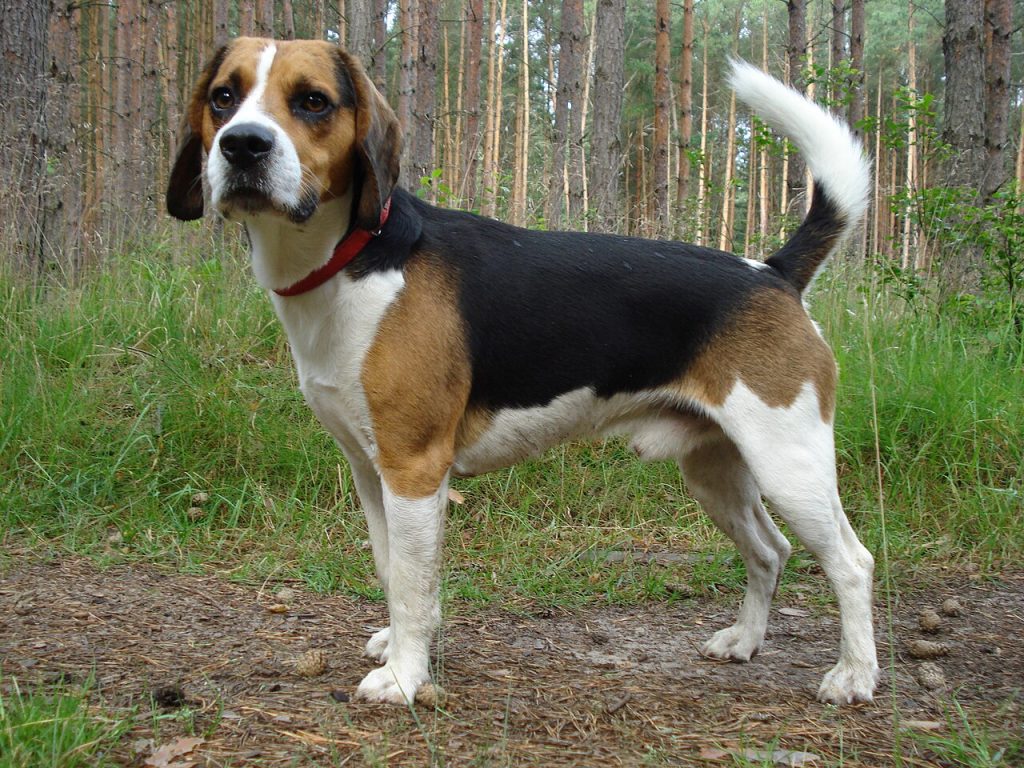
The Beagle-Harrier is a medium-sized French hound, bred to hunt in packs and with a fine and tireless sense of smell. It looks, depending on how you look at it, like a big Beagle or a small Harrier, and it brings together the best of both: the prodigious nose, the cheerful character and a physical endurance that knows no fatigue. It is a frank, affectionate and extremely sociable dog, but also a rare breed outside France and, above all, an athlete who needs to expend energy daily. If you are looking for a loyal companion for running, cycling, and sharing outdoor adventures, the Beagle-Harrier deserves to be well-known before you decide.

Is the Beagle-Harrier for you?
The Beagle-Harrier is not a dog for any household, and that is just the first thing to be clear about. It’s a hound with all the letters: nose glued to the ground, powerful voice and a battery of energy that never seems to run out. In the right family – active, patient, and with time to devote – he becomes an exceptional, loving, and always cheerful companion. In the wrong home, on the other hand, he may become frustrated, barking, and likely to run away after any interesting trace.
Before you fall in love with his hound face, sincerely pity him: can you give him a couple of long hours of exercise a day? Does it bother you that he barks or howls? Do you have a well-fenced garden or are you willing to never let him loose in unfenced areas? If the answers fit you, keep reading. Here’s the honest balance.
In favour .
- He is outspoken, affectionate, and enthusiastic; rarely aggressive.
- Extremely sociable with other dogs: bred to live in packs.
- Extraordinary physical endurance: the ideal companion for running or cycling.
- Short hair and very low maintenance.
- Generally healthy breed with a reasonable life expectancy.
- Intelligent, curious and playful; he learns quickly what motivates him.
To be taken into account
- It needs a lot of daily exercise; bored, it becomes destructive.
- The sense of smell rules: loose, it can ignore you and chase a trail for miles.
- Hound voice: barks and howls, something to be valued in floor or sensitive neighborhood.
- Independent and stubborn in training; the so-called slope.
- Very rare breed outside France: hard to find breeders.
- Gourmet and “food thief”: watch the pantry and the weight.
Character and temperament
Interestingly, the FCI standard does not describe the Beagle-Harrier’s character, but those who live with the breed agree on a very recognizable portrait. It is a frank and honest dog, without folding: what you feel is what there is. To that transparency is added a sincere affection for his family and an almost contagious enthusiasm for everything that smells of walking, playing or adventure.
It is also a smart and inexhaustible animal. Its head does not stop, and its body does not either. This combination makes it very fun, but also demanding: if you do not give out its energy and its curiosity, it will seek it out on its own, usually in the form of mischief.
The Beagle-Harrier is rarely aggressive or suspicious. Its gregarious nature, inherited from generations hunting in groups, predisposes it to get along well with everyone, including dogs. It is therefore not a good guard dog: it can warn with its roar, but its instinct is not to defend a territory, but to follow a smell and enjoy the company.
Coexistence: children, other pets, flat and loneliness
With children.‘s cheerful, tolerant and resilient nature makes it a good playmate for children who already know how to treat a dog with respect.
With other dogs. Here it shines. Few dogs are so sociable: life in a pack is written into their DNA, and most Beagle-Harriers greatly enjoy canine companionship. If you value a dog that gets along well in the park or that lives with another dog at home, this breed starts out with an advantage.
With cats and small animals. More delicate. We are dealing with a hound with a highly developed hunting instinct towards hares, rabbits and similar prey. It can learn to live with a cat if it grows up with it, but its sense of smell and its chase impulse require caution with ferrets, rodents, rabbits or birds.
On the floor. is not his ideal environment. He can live in an apartment as long as you guarantee him plenty of exercise and mental stimulation, but his energy and tendency to vocalize make him more suitable for a house with a garden – well fenced, because he is an expert at tracking and escaping.
In the face of solitude. is a pack dog that needs company. Spending many hours alone makes it feel bad: it gets bored, barks, howls and can become destructive. If you work all day outside, consider the option of another dog as a companion or of covering those hours with a caregiver.

Education and training
The Beagle-Harrier is smart, but it is not a dog of blind obedience. Like a good hound, it is independent and is programmed to make decisions on its own when following a trail. This means that training requires more patience and perseverance than with a working dog than with those who live dependent on their guide.
The key is the positive reinforcement and, most especially, the food: This gourmet dog will do almost anything for a prize that smells good. Short, fun, motivating sessions work much better than monotonous repetition or, worse, harsh methods, which only get you to close in on the band. Early socialization with people, dogs, environments and noises is essential for this naturally open character to develop safely.
The great workhorse is the call (recall). When the Beagle-Harrier catches an interesting scent, its nose disconnects its ears: He can ignore you completely and go after the trail. Therefore, outside fenced spaces, it is wise to keep it tied or with a long leash. It works the call from a puppy, in controlled environments and with extremely high-value rewards, but it assumes that 100% loose reliability is difficult to guarantee in this breed.
Exercise and activity
If there’s one unnegotiable point with the Beagle-Harrier, it’s this one. We’re talking about a hardy, rustic hunting dog, designed to jog for hours behind a pack without getting tired. That machine needs gasoline in the form of activity, and a lot. A couple of short walks won’t get it far.
The ideal is to offer him one or two long hours of exercise a day, combining olfactory walks, running and play. This is where the breed shows its best version: hunting is not essential to keep him happy, but it does channel his energy. It is a great companion for going out on running or cycling, for hiking or for canine sports that exploit his nose, such as mantrailing or scent-seeking games.
Don’t forget the mental plane. Just as important as tired legs is tired head: olfactory games, search rugs, food dispensers, and simple challenges keep that curious mind busy. A Beagle-Harrier that gets enough physical and mental exercise is a calm and balanced dog at home; one that doesn’t is an inexhaustible source of trouble.
Care: fur and hygiene
In the maintenance section, the Beagle-Harrier is most grateful. Its hair is short, smooth, dense and fairly thick, a functional coat designed to protect it from weeds and weather, not to look at a hairdresser. With a weekly brushing is enough to remove the dead hair and keep the mantle healthy; in times of moult you can increase the frequency to control the fall.
Bathing should be occasional, only when you get really dirty, so as not to dry out your skin. Where you have to be consistent is with the ears: If they fall and stick to the skull, they ventilate worse and should be checked and cleaned regularly to prevent infection, especially after going out or getting wet. Complete the routine with nail trimming when necessary and good dental hygiene with frequent brushing.
Foodstuffs
The Beagle-Harrier needs a complete and balanced diet, adjusted to its average size and, above all, to its very high level of activity. A dog that runs miles every day has different energy needs than a sedentary one, so adapt the ration to its actual expenditure, its age and its physical condition, ideally with the advice of your veterinarian.
The great risk of the breed has a name: the appetite. Like its relative the Beagle, the Beagle-Harrier is an avid eater and a pantry thief with few scruples. That gluttony, coupled with its ease of gaining weight if not exercised enough, makes quantity control essential. Measure the rations, watch the treats (it’s better to discount them from the daily total) and keep the food out of your reach, because your scent will find it. Keeping your weight in check isn ‘t just aesthetic . It’s key to protecting your joints and your long-term health.

Health and life expectancy
The Beagle-Harrier is, in general terms, a healthy and rustic breed, the result of its functional origin as a working hunting dog.
The most mentioned precaution has to do with its structure: Being a slightly long back. dog , he may have some predisposition to the hypoplasia of the hip. Maintaining a healthy weight, avoiding overexertion in the growing phase, and providing regular, well-dosed exercise help care for your joints. As with all dogs with droopy ears, it is also advisable to watch out for otitis, which is easy to prevent with regular checkups.
In addition, the usual pillars make the difference: daily vaccination and deworming, regular veterinary checks, good dental hygiene and, very importantly in this breed, weight control.
Physical appearance
The Beagle-Harrier is a medium size, midline type hound with a harmonious and balanced silhouette that effectively resembles a full-grown Beagle or a miniature Harrier.
The head has a snout that is almost the same length as the skull, with a sharp profile without becoming square or pointed. The well-open, dark-colored eyes s convey that sweet, awake expression so characteristic of hounds. ears s are short and medium-width, inserted at eye-line height, slightly rounded in their center, and fall flat past the skull.
The coat is short-haired, smooth, dense and quite thick. The coat is tricolor, with combinations of lionado (fire), black and white; there are also specimens of grey tricolor coat.
Origin and history
The Beagle-Harrier is a french breed, and its history is literally the sum of its two British progenitors. Already from the 18th century attempted crossings between the Beagle and the Harrier with a very specific goal: It was not possible to obtain a medium-sized hound, agile and robust enough for the follow the horses at the gallop during hunting, something that the small Beagle could not achieve and that the Harrier was less manageable.
The desired result came in the 19th century from the hand of the baron Gérard Grandin of the Éprevier, considered the originator of the breed. From that successful crossbreeding was born a dog courant of balanced measures, with the nose of the Beagle and the thrust of the Harrier. The breed was even imported to America for rabbit hunting and was recognised by the FCI in 1974, where it is classified within Group 6 (hound type dogs) with the standard number 290.
Despite its virtues, the Beagle-Harrier never achieved great popularity, and today it remains a rare outside France breed.
Curiosities
- Big Beagle or small Harrier? The most repeated description of the breed plays with precisely that ambiguity: at first glance it is difficult to classify, and that middle point is just what its creators were looking for.
- A dog on a horse. The entire breed was born from a very practical need of mounted hunting: that the hound could keep up with the pace of the horses.
- A professional thief. Its reputation as a “voleur” (thief) is not an insult, but almost a sign of affectionate identity: few dogs steal food with such impudence and efficiency.
- So weird it’s almost a secret. Outside France, seeing a Beagle-Harrier is quite a rarity; many dog lovers don’t even know it exists.
- You don’t need to hunt to be happy. Although born for the pack, today it is also appreciated as a companion animal: it is enough to run or pedal alongside his family to feel fulfilled.
If you are attracted to the Beagle-Harrier’s spirit – smell, energy, and good temperament – you will find it interesting to compare the breed with its relatives and with other active hounds and dogs. Take a look at the Beagle, its direct and much more widespread progenitor; the quintessential tracker, the Basset Hound; the legendary scent hound that is the Bloodhound; and, if you’re looking for a tireless athlete companion, the versatile Vizsla.
Frequently Asked Questions about the Beagle-Harrier
Is the Beagle-Harrier a good family dog?
Yes, in active families. It is frank, affectionate, playful and tolerant, and usually gets along very well with children who know how to treat a dog. Its only great requirement is exercise: it needs to expend a lot of energy daily to show its best character.
How much exercise does a Beagle-Harrier need?
Very. It is a hardy hunting dog that appreciates one or two long hours of activity a day, combining olfactory walks, running and play. It is an ideal companion for running or cycling, and also needs mental stimulation with olfactory games.
Can you have a Beagle-Harrier on one floor?
It can adapt to an apartment if you guarantee it plenty of exercise and companionship, although its energy and tendency to bark and howl make it more suitable for a house with a well-fenced garden.
Does the Beagle-Harrier bark or howl a lot?
It has the powerful voice typical of the pack hound and may bark and howl, especially if it is bored, is alone for a long time, or is following a trail.
Is the Beagle-Harrier easy to train?
It’s intelligent, but it’s independent and very olfactory, so it requires patience and perseverance. It works very well with positive reinforcement and food rewards. Calling is its weak point: loose can ignore you to chase a trail, so it’s best to secure it in unfenced areas.
How long does a Beagle-Harrier live and how healthy is it?
Its life expectancy is around 12 to 13 years and it is a generally healthy and rustic breed. Due to its somewhat long back it may have some predisposition to hip dysplasia, so it is advisable to take care of its weight and also monitor the ears to prevent otitis.
Does the Beagle-Harrier lose a lot of hair?
Its hair is short and low maintenance, and it sheds moderately and increases in moult at certain times, but a weekly brushing – more frequent in moult season – is enough to keep its coat healthy.
Do you get along with other dogs and pets?
With other dogs, excellent: it was bred to live in packs and is very sociable. With cats it can live if it grows up with them, but you have to be careful with rabbits, rodents and small animals because of its strong hunting instinct.