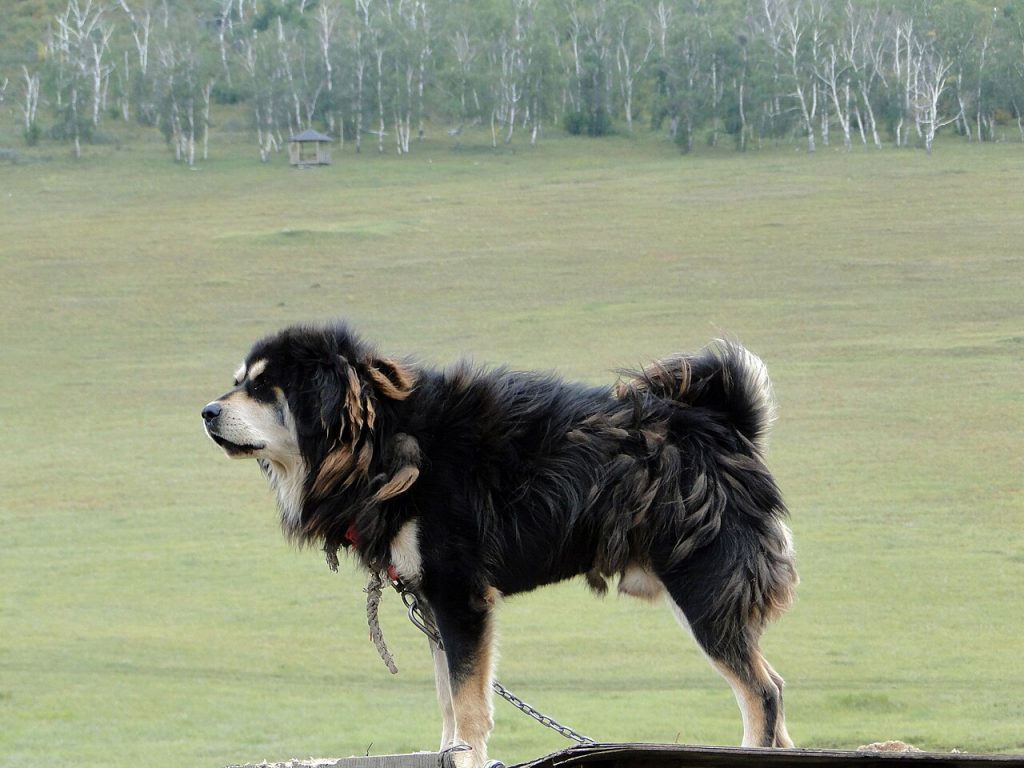
The Bankhar is one of the oldest and most fascinating livestock watchdogs in the world: a breed native to Mongolia and Buryatia, bred for millennia by nomadic peoples to defend herds of wolves, bears and leopards from the snow in the middle of the steppe. It is not a conventional pet, but a huge, independent working dog with unwavering loyalty. If you are attracted to the Bankhar, you should understand where it comes from, what it needs and why it almost disappeared in the middle of the 20th century.
Is the Bankhar for you?
Before you fall in love with its imposing appearance, let’s be honest: The Bankhar is a full-time livestock guard dog, selected for centuries to live outdoors with the herd and make decisions on its own. That makes it extraordinary in its function and, at the same time, demanding as an urban companion animal. Here’s a clear summary of who fits in and who doesn’t.
In favour .
- Exceptional guardian: protector, brave and tireless in the face of any threat.
- Very loyal and affectionate to his family, including the children in the house.
- Long-lived and robust: lives 15 to 18 years and dysplasia is rare.
- Resilient to extreme weather and with surprisingly low caloric needs for its size.
- Intelligent and independent: solves on its own, without waiting for orders.
Against
- It’s not a flat or city breed: it needs space, territory and real work.
- Very territorial and suspicious of strangers; his guarding instinct is serious.
- Independent to the point of stubbornness: not seeking obedience, but protection.
- It’s a rare and endangered breed, hard to find outside Mongolia and Russia.
- Their size (up to 60 kg) and character require an experienced owner.
Character and temperament

The Bankhar combines two traits that at first glance seem to be opposites: a profound calmness and a fierce determination. In day-to-day life, it is a calm, observant dog that reserves its energy and watches its surroundings without a fuss. But when it senses a threat – be it a wolf, an eagle, a snow leopard or an unknown – it transforms into a formidable guardian who does not shrink from anything.
With his family it’s a different story: Loyal, affectionate and surprisingly sensitive. Historical records describe dogs able to play with camp children and, minutes later, face a bear. That duality is the essence of the race. The Bankhar is also very intelligent and persevering; it is bred to think and act autonomously, without waiting for human instructions. He who seeks a dog submissive and attached to his master will not understand this animal; he who values an independent and noble companion will find in him a lifelong loyalty.
Coexistence: children, other pets, flat and loneliness
With children: The Bankhar is usually patient and protective with the little ones in his own family, whom he tends to include in his “herd”.
With other pets: is raised alongside sheep, goats, and horses, and sees cattle as something to protect, not chase.
On the floor: flatly, no. It’s an outdoor dog, of large spaces and harsh weather. Locking it in an apartment frustrates it and wastes all that the breed is.
Soledad: tolerates very well being alone and working without human company – that’s what it was selected for – but it doesn’t tolerate inactivity or a lack of purpose.
Education and training
Raising a Bankhar is not like training a border collie or a Labrador. This breed was not bred to obey a sequence of commands, but to make decisions on its own miles from the shepherd. So expecting blind obedience is a misconception.
The key is early socialization and a relationship based on mutual respect. The puppy should be exposed to different people, animals and situations from the first weeks, set clear and consistent boundaries, and always reinforce positively. The Bankhar responds fatally to harshness and punishment: He’s proud and disconnected. It requires patience, calm, and a calm leader who earns their trust, not imposes it. Their guarding instinct is not to be taught – it comes from the factory – but to be channeled to distinguish what is a real threat from what is not.
Exercise and activity
Despite its large body, the Bankhar is athletic, fast and tough; it can patrol large areas throughout the day without becoming fatigued.
The ideal exercise is not the ball or the frisbee, but to have a territory to go through and guard. In a rural setting, with land and a herd or a farm to guard, it self-regulates perfectly. Without that purpose and without space, a Bankhar gets bored and can become destructive or overly vigilant. Mental activity – deciding, observing, protecting – is as important to him as physics.
Care: fur and hygiene
The Bankhar has an abundant double coat that can be short or long, designed to insulate it from the extreme cold of the steppe and Mongolian winters.
Otherwise, it is a rustic dog and easy to maintain. You do not need a hairdresser or frequent baths – too much bathing damages the natural protection of your fur – just brush, check your ears, pads, and nails, and maintain good dental hygiene. Its mane, especially marked around the neck in long-haired specimens, is one of its most characteristic features and should be kept free of tangles.
Foodstuffs
One of the most striking peculiarities of the Bankhar is that it has low calorie requirements for its size. Centuries of living in an environment of scarce resources have made it extraordinarily efficient: it eats less than one would expect from a 50- or 60-kilogram dog.
The diet should be balanced and adapted to its stage of life, with special care during the puppy’s growth: a slow-growing giant needs an adjusted intake of protein, calcium and phosphorus so that its bones and joints develop without haste.
Health and life expectancy
Here the Bankhar shines. It is a remarkably healthy dog and longevity: lives on average between 15 and 18 years, an extraordinary figure for an animal of its stature, when many giant breeds barely make it past the age of ten. Natural selection under extreme conditions eliminated fragility: only the strongest survived and reproduced.
The hip dysplasia and other joint problems are very rare in the breed, something unusual in dogs of this size. The females breed only once a year, in a slow and natural reproductive cycle. However, like any large dog, it is advisable to take care of weight, offer moderate exercise during growth and maintain regular veterinary monitoring.
Physical appearance

The Bankhar is a large and imposing dog, which can reach 75 cm in height and weigh between 50 and 60 kilos. Despite its volume and abundant coat, it is not a heavy or clumsy dog: it must be athletic, agile and fast.
The mantle can be short or long and is presented in black, red and black and fire. Especially appreciated are the dark specimens with two light spots over the eyes, known as “four-eyed dogs”. Those marks aren’t just aesthetic: They helped shepherds distinguish their dogs from wolves in dim light conditions. To the naked eye, it resembles the Tibetan Mastiff, but genetic studies confirm that they are only distantly related.
Origin and history

The Bankhar is a very ancient breed. Genetic analyses point to a baseline breed, i.e. very close to the root of the dog tree, and possibly the ancestor of all cattle guard dogs.. It was developed by the Buryat-Mongol people, and its effectiveness caused it to spread throughout Buryatia, Mongolia and neighboring regions. In Buryat it is called hotosho(“dog wolf”) and in Russian it is known as the Buryat-Mongol wolfhound.
Buryat legend has it that the breed originated from a huge, ferocious dog that descended from the mountains accompanied by a giant. These dogs are said to have participated in Genghis Khan’s campaigns, sowing fear among enemies. Marco Polo was so impressed that, according to tradition, he took one to Venice. Travelers such as Erich von Salzmann described him as a beautiful dog, similar in size to the German shepherd, with a dark coat and a ruthless nature to strangers; and Wilhelm Filchner recounted encounters with dogs the size of a bear, fierce to predators but docile to children.
The 20th century almost wiped out the race. During Mongolia’s communist era, the Bankhar were either released or exterminated to force the resettlement of nomadic groups into socialist-style villages. Their hides became fashionable for making Russian coats, and the larger specimens were sacrificed. By the 1980s, the breed had all but disappeared. The loss of effective guard dogs prompted herders to shoot or poison predators, resulting in a sharp decline in gray wolves and snow leopards. Today there is renewed interest in preserving the Bankhar in Mongolia and Russia – with specific recovery projects – but the breed is still considered endangered.
Curiosities
- The four-eyed dog: light spots over the eyes give this variety its name; Mongolian legend says they allow them to see the world of spirits.
- It ‘s not a Tibetan Mastiff . despite the enormous resemblance, the genetics show that they are distant relatives, not the same race.
- Extreme efficiency: consumes few calories for its size, an adaptation to the scarcity of the steppe.
- Double name, double culture:“bankhar” in Mongolian alludes to its woolly appearance, while the Buryat hotosho means “hoard wolf”.
- Keeper, not shepherd: does not lead the herd like a border collie; it protects it from within, living among the animals.
- Possible grandfather of the guard dogs: could be at the origin of all the livestock protection breeds in the world.
If you are interested in the Bankhar for its robust and loyal keeper profile, you may also want to know about other large breeds of protective and molosoid origin: the imposing English Mastiff, the vigilante Cane Corso, the gigantic San Bernardo or the independent and primitive character of the Japanese Akita.
Frequently asked questions about Bankhar
Is the Bankhar a good companion dog?
It is primarily a working cattle guard dog. To its family it is loyal and affectionate, but it needs space, purpose and an experienced owner. It is not an urban pet to use or a dog to live in a flat.
Is it recognized by the FCI?
The Bankhar is an indigenous breed (landrace), not standardized by the FCI, and is currently considered endangered.
How long does a Bankhar live?
It is very long-lived for its size, with an average life span of 15 to 18 years, and hip dysplasia and joint problems are rare in the breed.
Is the Bankhar aggressive?
It is formidable against intruders – people, wolves, snow leopards, or eagles – but it is not a dog of gratuitous aggression. With its family it is balanced, sensitive, and even patient with children.
How much does a Bankhar weigh and measure?
It is a large dog: it weighs between 50 and 60 kilos and reaches up to about 75 cm in height.
Is it the same as the Tibetan Mastiff?
Although they are physically similar, genetic studies show that the Bankhar and the Tibetan Mastiff are only distantly related.
Why is it called a four-eyed dog?
Because of the two bright spots that many specimens wear over their eyes, they helped shepherds distinguish their dogs from wolves in dim light, and Mongolian legend says they allow them to see the spirit world.
Can you have a Bankhar in a flat?
It is not recommended. It is an outdoor dog, of large spaces and harsh climates, bred to patrol and watch. Without territory or a real job, it becomes frustrated and can develop behavioral problems.