Canine body language: What’s your dog telling you?
Your dog talks to you all day. Not with barking, but with tail, ears, gaze and even an untimely yawn. Learning to read body language of the dog is like installing a translator: Suddenly you understand when he’s comfortable, when he’s having a bad time, and when he’s begging you, with all the education in the world, to stop. And here’s an uncomfortable fact: Most “unannounced bites” did come with a warning; no one could just read it.
In this guide, you’ll learn to interpret every part of your dog’s body, the calm signals it uses to manage stress and the warning signs you should never ignore, all based on what veterinarians and dog trainers say, no myths.
The golden rule for reading your dog’s body language
Before I go into detail, stick with this: no signal is self-interpreted.. A moving tail doesn’t mean anything by itself; you have to look at the posture, the ears, the eyes, the mouth and, above all, the situation at the same time. It’s exactly what organizations like the American Kennel Club recommend: read the “complete package”, not isolated signs.
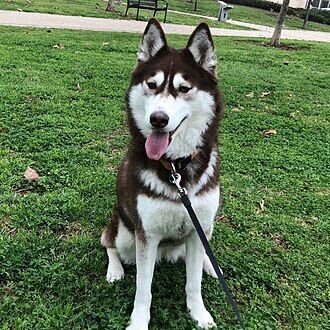
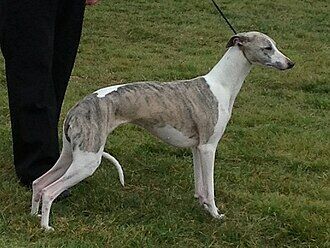
It also counts the starting point of each dog. Each breed (and each individual) has a different neutral position of tail and ears. A Husky Siberiano carries the tail high and curved in series, and a Whippet carries it low and collected between the legs even though it is perfectly happy. If you do not know your dog’s “normal” posture, you will not be able to detect when it comes out of it.
The tail – the big misunderstanding
“Move your tail, so you’re happy” is probably the most dangerous myth in the dog world. A moving tail only indicates one thing: emotional activation. It can be joy, yes, but also excitement, frustration or tension. Dogs also move their tails before they bite.
To improve your reading, consider three things:
- Speed and amplitude: a slow, wide and loose sweep, which often drags the entire rear end, is the classic relaxed and contented dog.
- Altura: as a general rule, the higher the tail relative to its natural position, the more excited or self-confident the dog is; the lower or between the legs, the more fear or insecurity the dog feels.
- Although Dirección: sounds like science fiction, there are studies (published in the journal Current Biology by Vallortigara and Siniscalchi’s team) that point out that dogs tend to move their tails more to the right when delighted and more to the left when delighted.
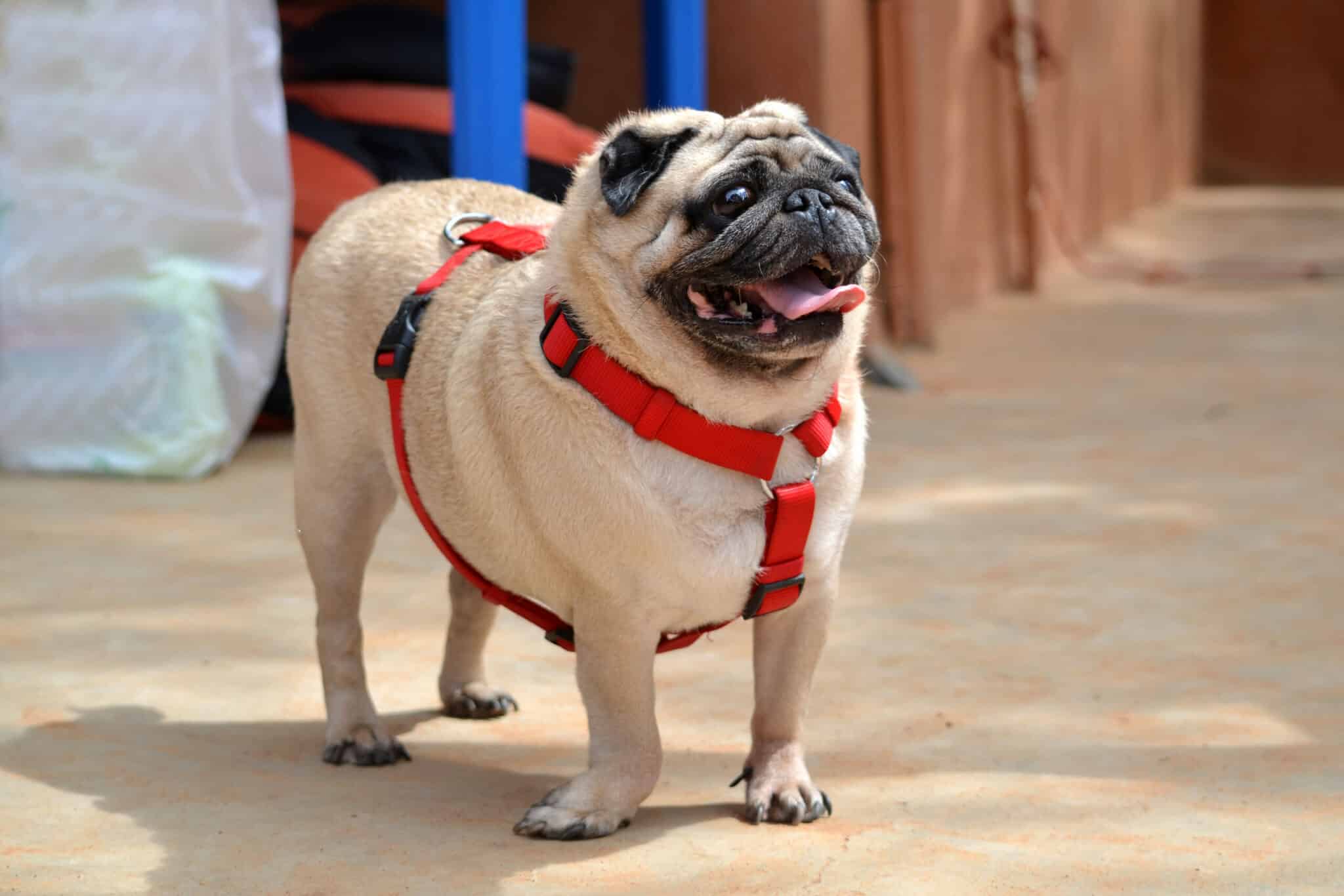
Watch the morphology: in curly-tailed dogs such as the Pug, amputated tails or naturally short tails such as hares, this communication channel is limited.
Ears and head
The ears are a great thermometer, always comparing them to your dog’s natural position:
- Neutral and relaxed position: is calm, that’s all.
- Ears forward: interest, attention, alertness, he’s processing something that matters to him.
- Ears backwards or attached to the skull: fear, discomfort or appeasement (“I don’t want trouble”).
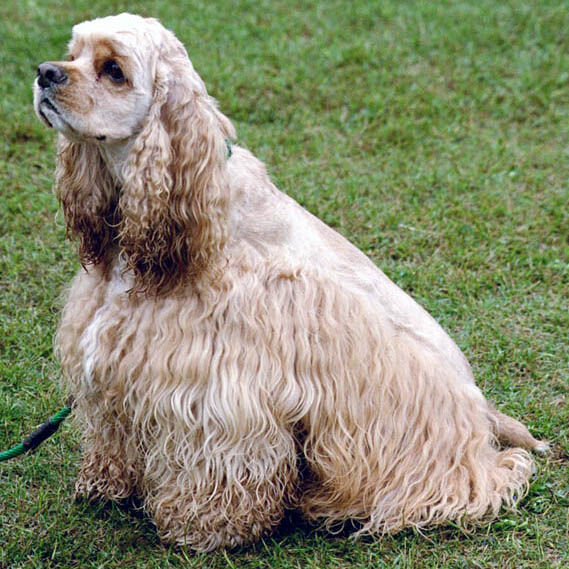
Again, anatomy dictates: in a German shepherd, the ears are read at a distance, but in a Cocker Spaniel with long, sloping ears, the changes are much more subtle and you have to look at the base of the ear, not the tip.
Eyes and gaze
Educators talk about “soft eyes” and “hard eyes”, and once you see it, you never forget it:
- Soft eyes: relaxed eyelids, soft gaze, sometimes half bent.
- It’s a serious sign; a harsh, sustained gaze can precede a growling or something worse.
- “Eye of the whale”: when the dog turns its head but keeps looking at the stimulus, showing the white crescent of the eye. It’s a clear indicator of anxiety and tension. Very typical when someone hugs a dog who doesn’t want to be hugged or gets close to his bone.
- Take your eyes off: is far from being “pasotism”, it’s a polite way to relieve tension.
A curious nuance: in working breeds like the Border Collie, the fixed, intense gaze is part of their herding repertoire and does not imply aggression.
Mouth and facial expression
The mouth of a relaxed dog is slightly open or closed without tension, with the corners loose.
- Sleepless yawning: dogs yawn to calm themselves in tense situations (and even to calm others). If your dog yawns at the vet’s office, he’s not bored: he’s managing stress.
- Licking your nose with no food in sight: Rapid snorting from the nose or lips is a sign of discomfort or anxiety, not affection.
- Mouth closed with a bang and corners backwards: tension, fear, a dog gasping quietly and then suddenly closing its mouth is saying something has changed.
- “Submissive smile”: Some dogs show their front teeth with a soft posture and wriggling with pleasure; it is a friendly appeasement.
In brachycephalic (flat-faced) breeds like the Bulldog Francés, permanent wrinkles and habitual panting make it harder to read the face, so give more weight to the body and tail.
Body posture: where to put the weight
The distribution of body weight is one of the most reliable signals:
- A relaxed dog looks like rubber.
- The dog tries to look smaller.
- Weight forward, rigid body, in tension: a lot of interest or offensive intent combined with a hard look, bad business.
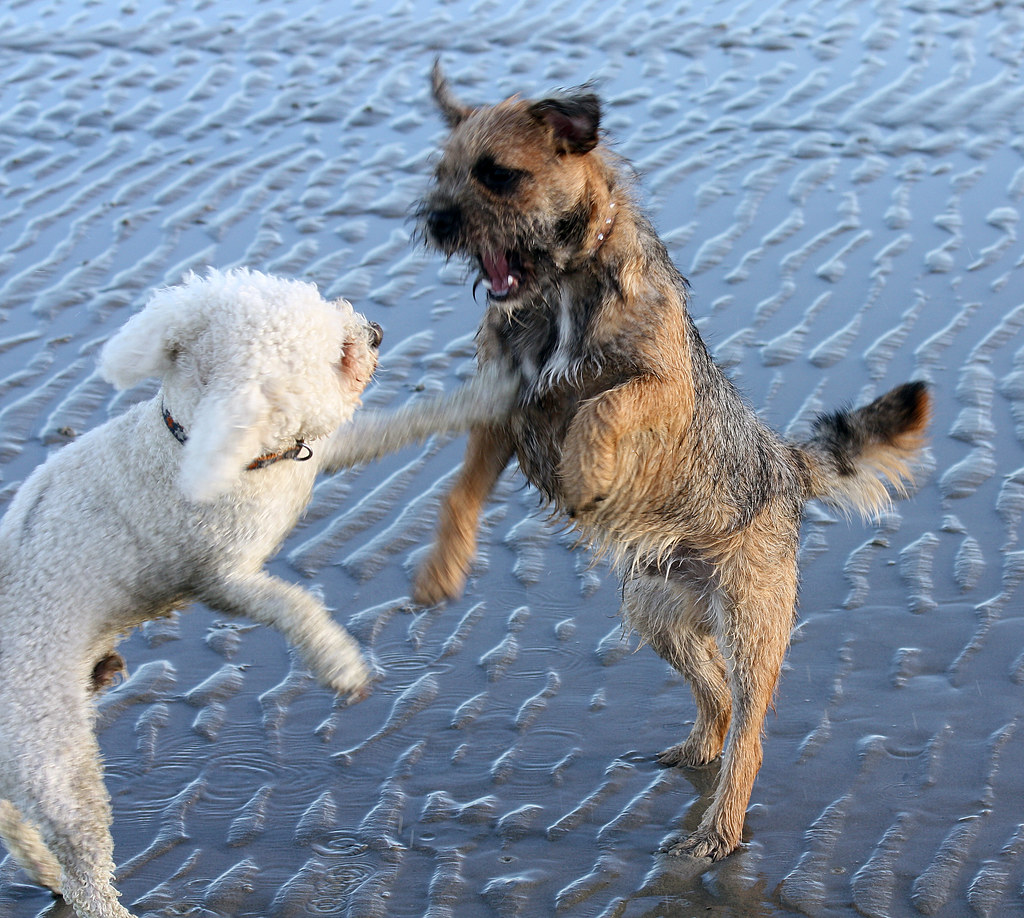
- Reverence of the game: chest to the ground, butt up, tail tapping. It’s the universal invitation to the game and the signal that whatever comes next (even if it includes theatrical growls) is a joke.
- Front leg raised: in most dogs indicates insecurity or doubt. The exception is sample dogs like the Vizsla, which raise it as part of their hunting sequence.
- Hair that is eroded (pylorection): the pointed hairs on the back and neck indicate activation, but not always negative: it can be excitement or intense interest. It is involuntary, like our chicken skin.
- Staying frozen: total immobility to a stimulus is one of the most serious signals there is a dog that freezes with a bone between its legs is giving you the last polite warning
Signals of calm and stress – the language of peace
The Norwegian educator Turid Rugaas popularized the concept of “calm signals”: behaviors that dogs use to lower tension, avoid conflict, and calm themselves.
- Yawn out of context.
- Lick your nose or stick out your tongue fast.
- Turn your head or your whole body away.
- Smelling the ground all of a sudden, with nothing interesting.
- Approach in a curve instead of a straight line (this is how well-socialized dogs greet each other).
- Squeezing as if wet, without being wet, usually marks the end of a tense moment, a “reset”.
- Move in slow motion or stand still.
- Sitting or lying on your back.
If your dog makes several of these signals (e.g., yawns, licks his nose, and looks away while a child hugs him), he is telling you that he is uncomfortable.
Warning signs: the ladder of aggression
Behaviorists describe aggression as a ladder: the dog starts with subtle cues (calm, look away), climbs up to obvious cues (stiffness, whale’s eye, freezing), then warns clearly (growl, show teeth, mark with the muzzle) and only at the end bites.
Here comes the most important rule in the whole article: never punish the grunt.. The growl is very valuable information, your early warning system. Punishing a dog for growling doesn’t eliminate its discomfort: You just delete the warning. The result is the famous dog that “bite without warning”. If your dog growls, relieve pressure, analyze what caused it, and if it comes back, see a veterinarian or an ethologist.
Summary table: four basic states
| State | Tail | Eyes and mouth | The body |
|---|---|---|---|
| Relajado | Natural position, wide and loose sweep | Soft eyes, open mouth without tension. | Loose, curved, weight distributed |
| Alert / excited | High, fast moving and short | Staring at the stimulus, mouth closed | Weight forward, ears forward, still |
| Fearful / stressed | Down or between the legs | Whale eye, yawning, licking of the muzzle | Squeezed, weighted back, shakes or freezes |
| Advertencia | High and stiff or low and stiff | Hard look, wrinkled muzzle, teeth | Stiff, curly hair, growling |
Tips to Practice Today
- Study your dog calmly: memorizes your neutral posture of tail, ears and body when you’re comfortable at home.
- Play the commentator: in the park, mentally narrates what you see (“weight back, low tail, licks snout”).
- Respect the “no”: if he looks away, turns or walks away from an interaction, let him out.
- Protect him from the embraces of others: many dogs tolerate hugs, few enjoy them. Watch whale eye and yawning when someone touches it, especially children.
- Teach children the three basic signs: dog that walks away, frozen dog and dog that growls = left alone.
- It’s on video. the situations that generate you doubts (greetings between dogs, abrupt play) and review them in slow motion: you will see signals that live escape.
Common mistakes when playing your dog
- Translate “he wags his tail” as “he’s friendly”. is activation, not sympathy.
- Interpreting stress signals as “guilt”. The famous “guilty face” (ears behind, shrunken body, elusive gaze) is appeasing your anger, not moral remorse.
- To think the belly up always begs for caresses. Sometimes yes; sometimes it’s a sign of submission that says “I’m no threat, please stop”. If the body is tense and the tail covers the belly, it’s not an invitation.
- Silences the alarm, not the fire.
- Ignoring race and the individual. Curly tails, drooping ears, flat faces and amputated tails change the “grammar” of each dog.
- Forget the pain. A sudden change in body language (irritability, avoidance of contact, licking an area) can be a medical problem.
Frequently Asked Questions
Is a dog that wags its tail always happy?
No. Tail movement indicates emotional activation, which can be positive or negative. A wide, loose sweep with the body relaxed is usually joy; a fast, rigid movement with the body tense can precede a conflict. Always read the body as a whole.
Why does my dog yawn if he’s not sleepy?
Yawning out of context is a sign of calm: dogs use it to calm themselves in stressful situations (vet, hugs, scolding) and even to calm other dogs or people.
What is whale eye in dogs?
It is when the dog turns its head but keeps its gaze on something, showing the white part of the eye in the shape of a crescent. It indicates anxiety, tension or discomfort, and is very common when the dog is hugged or someone approaches his food or toys. It is a signal to give him space.
Should I scold my dog when he growls?
No. Grunting is an honest warning that it is uncomfortable, and punishing it only teaches the dog to skip that warning, increasing the risk of “no warning” bites.
Do dogs understand our body language?
Dogs are experts at interpreting our postures, gestures, and expressions, so leaning over an unfamiliar dog or staring at it may intimidate it, while turning to the side and crouching invites it to come closer.
When should I see a professional?
If you notice a sudden change in your dog’s usual body language (more stiffness, irritability, avoidance of contact), first rule out pain or illness with your veterinarian.