Sobrepeso en perros: cómo saber si tu perro está gordo y qué hacer
You give him a prize when he rolls his eyes, you leave him the last piece of your sandwich and you fill the feeder “eye-on-eye” because he’s always eaten it like that. They’re gestures of affection, but when you add them up day after day, they end up on the scale. overweight in dogs is today one of the most frequent and, at the same time, silent health problems: It settles in slowly and many owners don’t even see it coming until the vet mentions it.
It’s not an aesthetic issue. An overweight dog lives, on average, fewer years, and with poorer quality of life. The good news is that it’s one of the most reversible problems there is: with a simple plan, consistency, and the support of your veterinarian, most dogs regain their ideal weight. In this guide, I’ll teach you how to detect it yourself at home, understand why it happens, and what to do step by step.
Why Being Overweight Is More Serious Than It Looks
It’s hard to think of it as a disease because a stuffed dog even seems funny to us. But excess fat is not inert tissue: it releases inflammatory substances that affect the whole body. Veterinary associations already consider it a chronic disease in itself.
The most impressive data comes from purina lifetime study, which followed 48 Labradors for 14 years: dogs kept lean lived on average 1.8 years more(16% longer) than their normal-high weight littermates, and developed osteoarthritis later.
These are the health problems that being overweight promotes or aggravates:
- Arthrosis and joint problems:, every extra pound weighs on your knees, hips and spine, and accelerates cartilage wear.
- Diabetes: the abdominal fat promotes insulin resistance.
- Breathing problems and decreased stamina: fat compresses the chest and makes breathing difficult, especially in brachycephalic and hot breeds.
- Heart disease and hypertension: the heart works too hard to move a larger body.
- More risk with anesthesia and increased likelihood of certain tumors.
- Lower quality of life: an overweight dog plays less, gets tired earlier and suffers more from the heat.
The important thing is, almost all of this is preventable and much of it is reversible, and slimming a dog with osteoarthritis, for example, can dramatically reduce its pain and its need for medication.
How to tell if your dog is fat (home test)
The scale alone is misleading, because “normal” weight varies greatly between breeds and sizes. Veterinarians use the Body Condition Scale(BCS, Body Condition Score), a rating from 1 to 9 where between 4 and 5 is ideal.. The best thing is that you don’t need a scale: it’s done by looking and feeling, and you can do it yourself at home in two minutes.
The test of the ribs
Pass your hands over your dog’s sides, without squeezing. In an ideal weight dog you should have notice the ribs easily under a thin layer of fat, similar to when you touch the back of your hand and feel the knuckle bones. If you have to sink your fingers to find them (like noticing the knuckles on the side of the palm), there’s too much fat.
2. The waist from above
Stand up and look at your dog from above. You should see a marked waist, a constriction behind the ribs shaped like an hourglass. If the body is a rectangle or even widens behind the ribs (barrel shape), there is excess weight.
3. Profile from the side
Bend over and look at your dog from the side. The belly should be going up. from the end of the ribs to the hind legs (the so-called “abdominal retraction”). If the belly line is straight or hanging down, it is a sign of overweight.
| Signal | Ideal weight (BCS 4-5) | Overweight (BCS 6-9) |
|---|---|---|
| Fresh or chilled | They’re easy to feel with little fat. | It ‘s hard or you can ‘t feel it . |
| Belt (from top) | Marked, like an hourglass. | Slightly visible or barrel shape |
| Belly (of the profile) | Picked up | Straight or hanging |
| Activity | It moves freely. | He gets tired before, gasps hot. |
Each point above the ideal on the scale is roughly equivalent to a 10% of excess weight. That is, a dog with a BCS of 7 walks about 20% above its ideal weight. If your self-assessment is high, don’t get overwhelmed: check with your veterinarian, who will also rule out medical causes and set a real target weight.
Why Dogs Get Fat
In the overwhelming majority of cases the formula is simple: more energy enters than is expended..
- Rations and surpluses: serving unmeasured feed is the number one silent cause. An extra handful every day is hundreds of calories a week.
- Prizes and rebates: suckers, teeth, a piece of cheese, leftovers from the plate… add up very quickly, especially in small dogs.
- Low exercise: short “pee and go home” rides don’t just burn.
- Sterilization without adjusting the food: after castration or sterilization, the calorie requirements decrease; if you do not reduce the ration, the dog gets fat.
- Edad: a senior dog spends less and loses muscle mass.
- Medical reasons: hypothyroidism, Cushing’s syndrome or certain medications, they’re a minority, but that’s why it’s a good idea to evaluate by a vet if your dog gets fat for no apparent reason.
- Genética: some breeds have more factory appetite (now we see it).
Breeds most prone to obesity
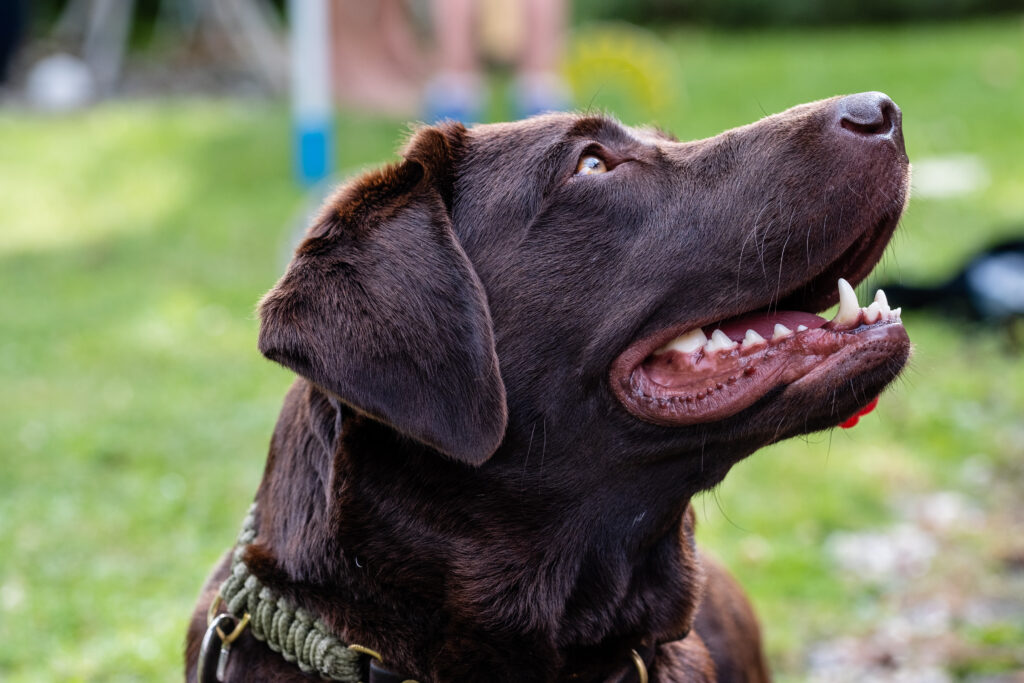
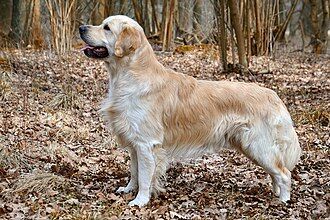
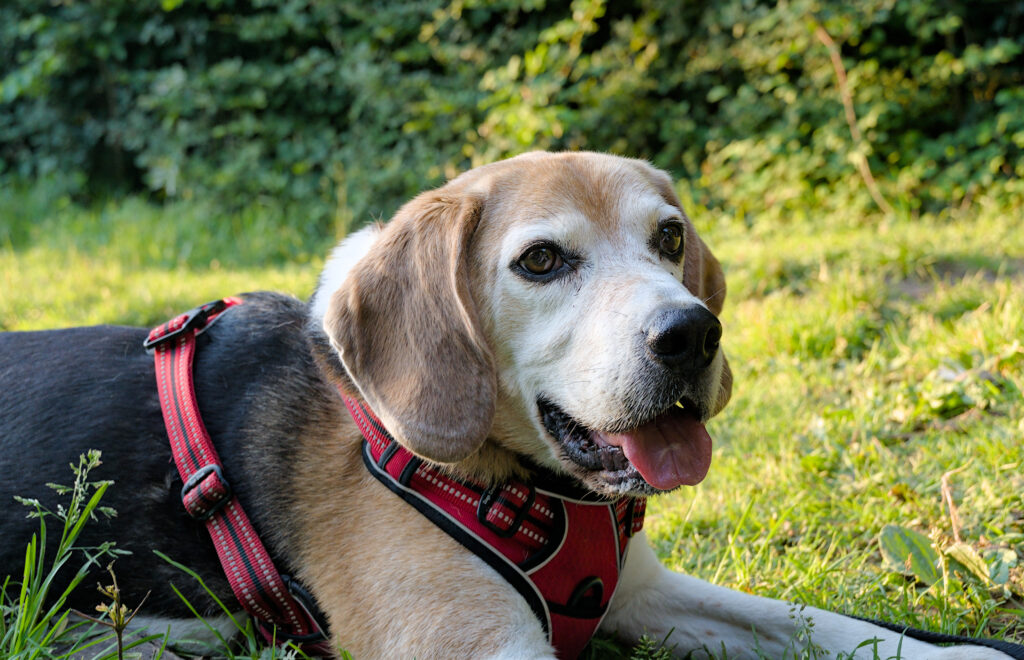
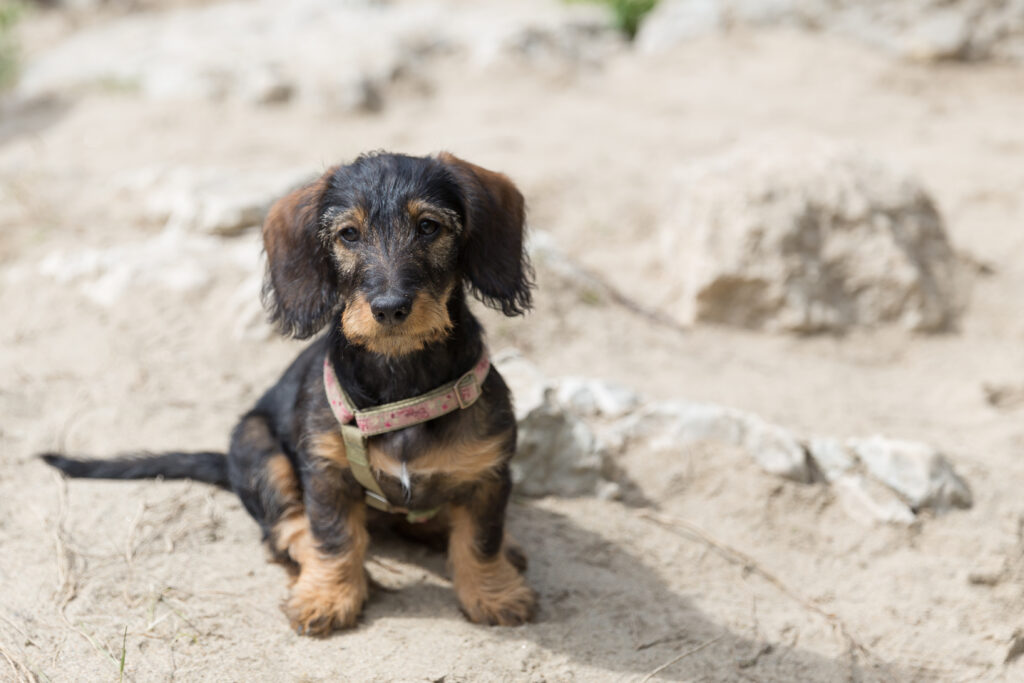
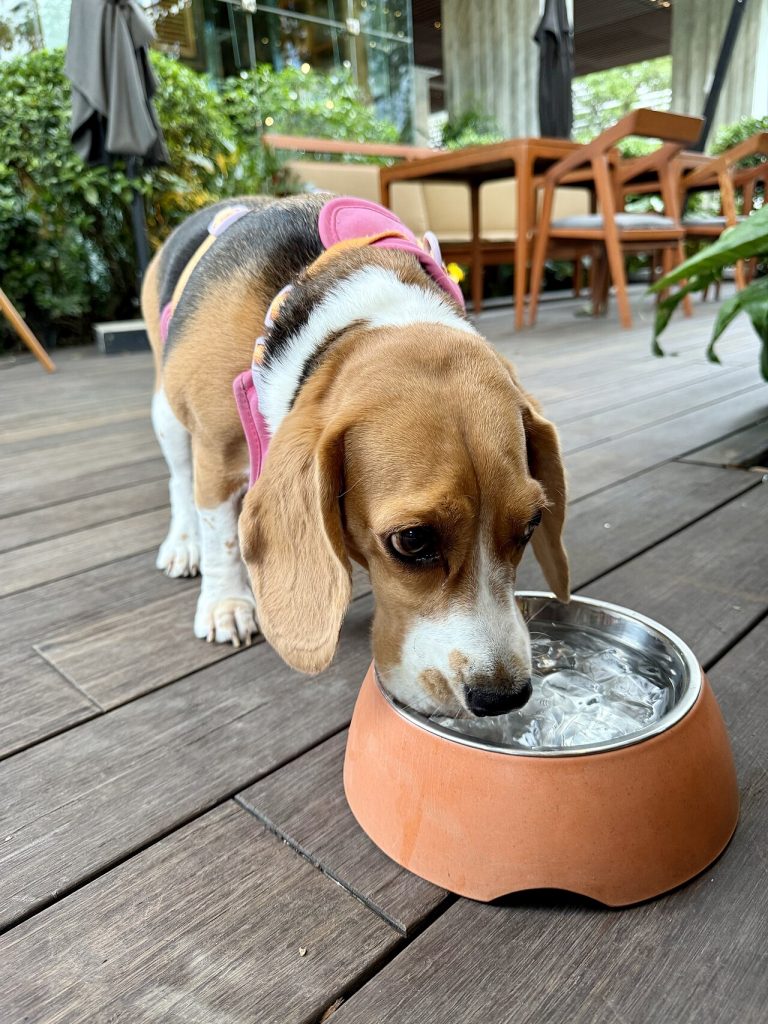
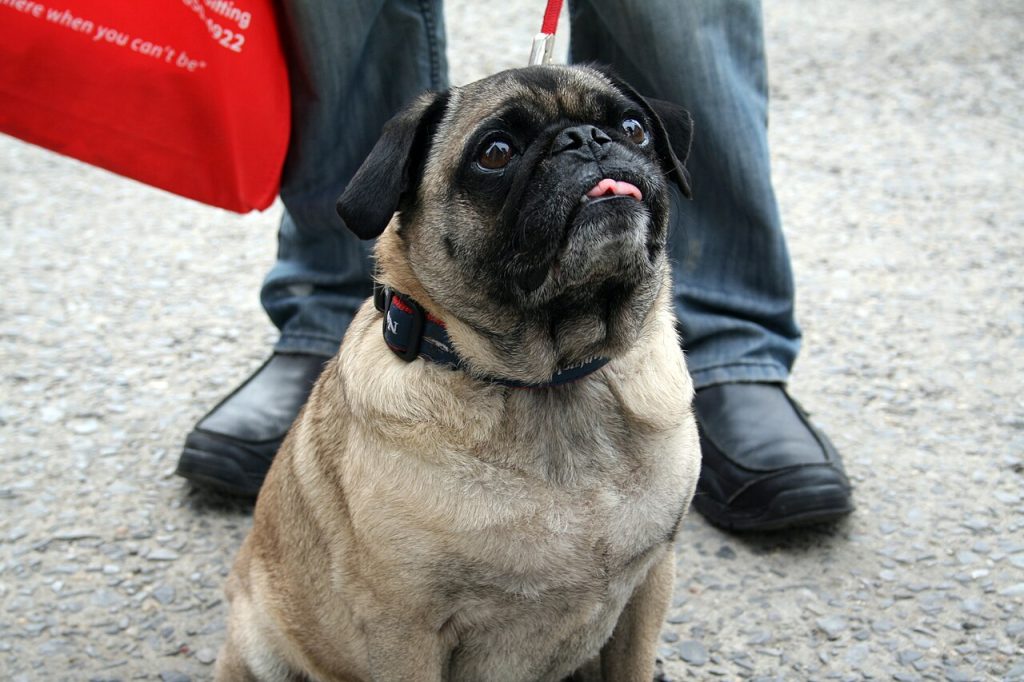
Not all dogs start with the same cards. Veterinary studies consistently point to several breeds with a higher risk of overweight, partly due to appetite and partly due to lifestyle. Among the most cited are the Labrador Retriever, the Golden Retriever, the Beagle, the Teckel, the Cocker Spaniel, the Cavalier King Charles Spaniel and the Carlino.
In the case of the Labrador and its relative the Flat-Coated Retriever there is even a documented genetic explanation: A mutation in the POMC gene makes the “I’m full” signal reach their brain worse, so they stay hungry and more motivated to eat even though they’ve eaten enough. It ‘s not rude gluttony: This is biology. With these breeds you have to be especially firm with rations and prizes.
Just because your dog is of a predisposed breed doesn’t mean he’s going to get fat, it means he needs a more attentive eye and discipline with his food.
What to do: plan to slim down your dog
The key is to do it slow and steady., never on the basis of starving to death.
- Start with the vet. to confirm overweight, rule out medical causes, set the target weight and calculate daily calories based on age, size and whether you’re sterilized.
- Measure each portion with a measuring cup or kitchen scale. Nothing “in the eye”. Shake the glass, don’t fill it. This one change already makes many dogs thin.
- Divide the food into 2 servings a day. helps you feel less hungry between meals than a single large serving.
- 10% rule with prizes. The total of suckers, teeth and leftovers must not exceed 10% of daily calories.
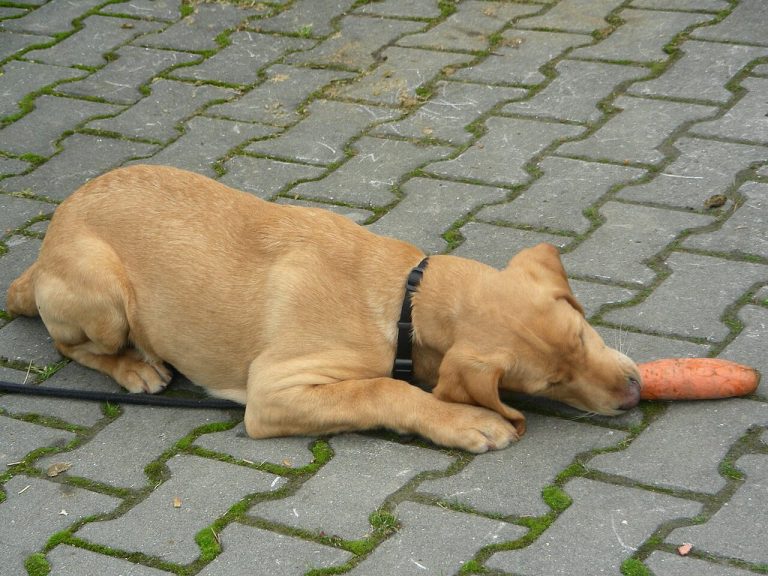
- Change the rewards to low-calorie options: carrot slices, green beans, apple without the nuggets or cucumber instead of greasy cookies.
- He values a weight-management feed. or prescription light foods contain less fat and more fiber: they satiate more with fewer calories, so the dog does not go hungry while losing weight.
- Slowly increase the exercise. Longer walks, play, and if there is osteoarthritis, swimming or hydrotherapy (low impact).
- Weigh every 2-4 weeks and record. What you measure, you improve.
How fast should you lose weight? The safest thing is to lose between one 1% and 2% of body weight per week. For a 30 kg dog that is about 300-600 g per week. Going faster is not better: it increases the risk of nutritional deficiencies and of regaining weight later (rebound effect). If your dog “plays” with hunger, you can lower the goal to 0.5-1% per week. It is a long-distance run, not a sprint.
In high-energy breeds such as the Border Collie or Pastor Australiano, increasing exercise is usually as important as cutting back on food; however, in a Bulldog Francés or other brachycephalic breeds you have to be cautious with effort and heat, and lean more on diet.
Common Mistakes That Sabotage the Diet
- Trust the board of the feed bag. They usually indicate generous rations and for current weight, not target.
- Don’t count the prizes or the leftovers. That piece of bread, the cheese “for the pill” or the training cookies count, and a lot.
- If at home everyone throws him something, no one controls the total.
- Losing weight too fast or starving the dog to death: rebound assured and risk of shortages.
- Give in to the “eyes”. Asking doesn’t mean he’s really hungry; often it’s habit or he’s looking for attention.
- Abandon at the first deadlock. It’s normal for the weight to get stuck; you adjust the plan, you don’t throw in the towel.
If you have a Chihuahua and a Labrador, the little one needs far fewer calories and it is very easy for the big one to steal his ration.
Frequently Asked Questions
How do I know if my dog is overweight without taking him to the vet?
With the home fitness scale test: feel the ribs (you should notice them with little fat), look at the waist from above (it should narrow behind the ribs) and look at the belly profile (it should pick up). If you don’t notice the ribs, there’s no waist, and your belly goes straight or hangs, you’re probably overweight. Nevertheless, it is advisable to confirm this with your veterinarian to set the target weight.
How much weight can a dog safely lose per week?
Between 1% and 2% of their body weight per week. For example, a 20 kg dog should lose about 200-400 g per week. Losing faster increases the risk of nutritional deficiencies and regaining weight later. If your dog is very hungry, you can slow down to 0.5-1% per week.
What rewards can I give you if you’re on a diet?
Low-calorie options such as carrots, green beans, cucumbers, apple without pickles or small pieces of your own feed. Remember the 10% rule: the total rewards should not exceed 10% of the daily calories, and must be deducted from the main meal.
My dog always seems hungry, am I giving him too little?
Not necessarily. Many dogs ask for habit, boredom, or attention, not real hunger. Some breeds like the Labrador even have a genetic predisposition to feel more appetite. If you follow the rations set by the vet, your dog is well fed even if he makes a sad face. Try replacing the reward with a walk or a game.
Does sterilization make dogs fat?
Sterilization reduces calorie requirements, so a sterilized dog will gain weight more easily if he keeps eating the same food. It is not that the operation “makes” him fat by itself: you have to adjust the ration (often a sterilized feed) and maintain exercise.
When should I worry and go to the vet?
If your dog has gained weight without changing his food, if he has less energy, gasps easily, has trouble moving, or if your self-assessment of body condition is high, or if you try a weight loss plan and it doesn’t respond, your veterinarian will rule out medical causes like hypothyroidism and design a safe, tailored plan.