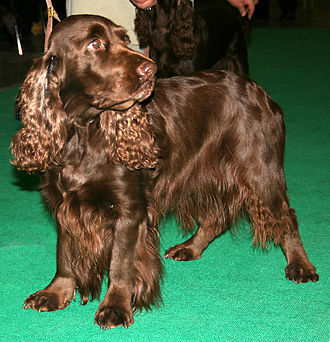
The Field Spaniel is a medium-sized, elegant, sweet-looking English spaniel, bred for over a century as a hunting and gathering dog. Today it is one of Britain’s rarest breeds, registered as a vulnerable native breed, and combines a calm and affectionate character with remarkable working intelligence. If you’re looking for an athletic, sensitive, unusual companion, the Field Spaniel deserves to be well-known.
Is the Field Spaniel for you?
Before you fall in love with that face of spaniel, you should be honest about what it asks in return. The Field Spaniel is a dog for hunting in the body of a sofa companion: it needs movement, mental stimulation and, above all, to be part of the life of its family. It is not a garden dog or a dog of prolonged loneliness.
In favour .
- A balanced character, docile and very attached to his people.
- Patient and affectionate with children.
- Intelligent and willing to learn: easy to educate positively.
- Less excitable and nervous than other Spaniels.
- Comfortable medium size and coat with no undercoat that changes in moderation.
- Versatile: suitable for hunting, agility, tracking or simple active family life.
To be taken into account
- It needs plenty of daily exercise; bored, it becomes destructive.
- He suffers from loneliness if he spends many hours alone.
- Fringes require regular brushing to avoid knots.
- Predisposition to eye and hip problems.
- It’s a very rare breed: it’s hard to find breeders and puppies.
- Their hunting instinct calls for call reinforcement and control in the field.
Character and temperament

If we had to sum up the Field Spaniel in one word it would be sensitive. It is a dog that looks into the eyes, that wants to please and that lives dependent on its family. Active and curious by nature, it retains the motor of a hunting dog, but accompanies it with a serene and reflective temperament that distinguishes it from more electric cousins such as the Cocker.
It is docile without being completely submissive: It has an independent vein inherited from field work, where it had to make decisions at some distance from the hunter. This mixture of obedience and self-control makes him a pleasant companion, one who cooperates because he wants to and not out of mere automaticity. With his people he is affectionate and sometimes a little possessive: He likes to be around, follow you around the house and participate in what you do.
The flip side of such sensitivity is that it needs occupation. A Field Spaniel that receives exercise, play, and companionship is a quiet, home-bred dog. One that is bored or lonely may get bored, bark, or seek undesirable entertainment. It is not a troublesome dog; it is simply honest: it gives back what you give it.
Coexistence: children, other pets, flat and loneliness
The field spaniel fits well in very different homes as long as it is guaranteed activity and presence.
- With children: is patient and tolerant, a good playmate for homes with small children, always with the supervision and respect any dog deserves.
- Well-socialized With other dogs: gets along well with its congeners; it is sociable and conflict-free.
- With other pets:‘s hunting instinct calls for caution with small animals, though raised with cats he usually coexists without drama.
- On the floor:‘s medium size and quiet character at home make it suitable for living on the floor, provided you take it out to exercise daily.
- In the face of loneliness: is his Achilles heel. He does not tolerate spending long hours alone and, if left unoccupied on a routine basis, can become bored and destructive.
Education and training

Training a Field Spaniel is usually a pleasure. Stanley Coren’s reference work, The Intelligence of Dogs, places it above average in work intelligence, which translates into a dog that quickly understands what you ask and enjoys collaborating. It learns basic commands with ease and responds very well to short, varied and motivating sessions.
The key is in the tone. It is a sensitive dog that shuts down with harshness and flourishes with positive reinforcement: rewards, play, kind voice and a lot of patience. It is advisable to start early with socialization, exposing it as a puppy to people, dogs, noises and environments so that it grows safe and balanced.
Because of his hunting background, it’s worth working hard on calling and remote control from the start, because when he catches a trail his nose can do more than his head. Activities that combine body and mind – obedience, agility, search and tracking, collection tests – delight him and channel his energy in the best way.
Exercise and activity
There are no shortcuts here: the Field Spaniel is a sporting dog and needs to expend energy every day. A couple of long walks are not enough if they are merely city tours; it asks for moments of running, sniffing and playing in which it can be really employed. A long hour of daily quality activity is a good starting point, especially in young dogs.
It marvels at anything that appeals to its field heritage: hiking in the mountains, dummy charging games, swimming, nose work, or dog sports like agility. And, as important as physical exercise, there’s the mental: A Field Spaniel stimulated with olfactory games and obedience challenges comes home tired and happy, which is just the state in which it behaves like an angel.
Care: fur and hygiene
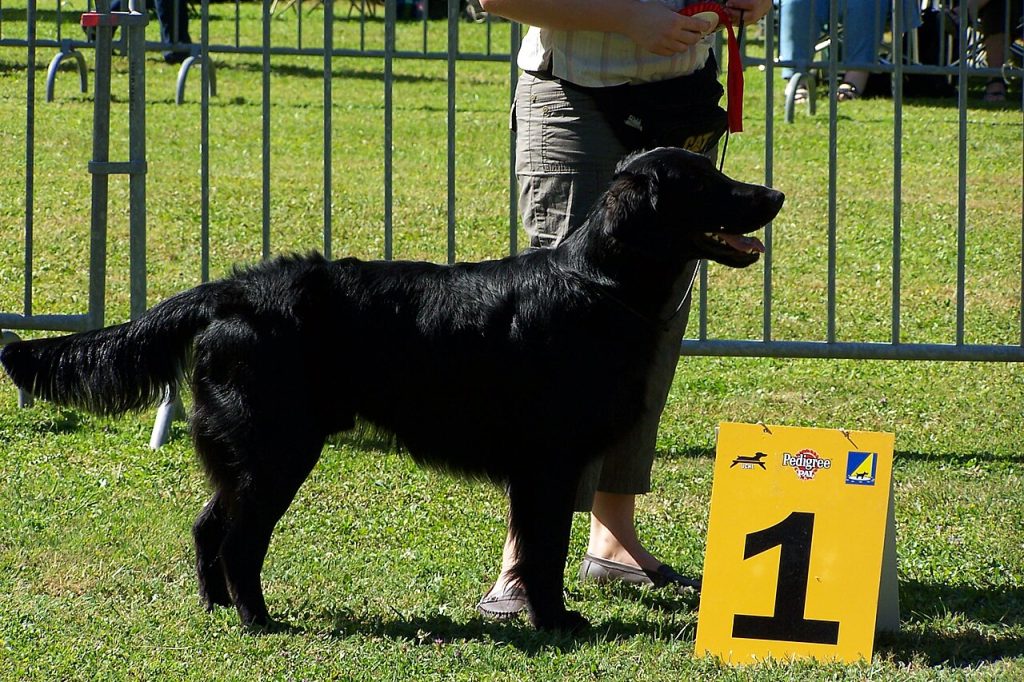
The coat of the Field Spaniel is plain, silky and moderately long, without undercoat, with abundant fringes on the ears, chest, belly and back of the legs.
- Cepillado: two or three times a week to untangle and keep the fringes clean and knot-free.
- Orejas: their long, droopy ears need regular checking and cleaning to prevent infection, especially after bathing or going out in the field.
- Baño: when needed, with mild shampoo; dry fringes and ears well.
- Nails, teeth and eyes: regular nail trimming, dental hygiene and a frequent eye exam, given his eye predisposition.
Moderate but constant grooming keeps the knots at bay and leaves the coat with that polished, shiny appearance so characteristic of the breed.
Foodstuffs
The Field Spaniel is not particularly picky about food, but as a good spaniel, it tends to enjoy eating, so it is advisable to monitor rations so that it does not gain weight.
The wise thing to do is to divide food into two servings a day, adjust the amount according to whether you work more or less and use part of the daily ration as a reward in training, instead of adding extra calories. Water is always fresh and available.
Health and life expectancy
The Field Spaniel is a robust and generally healthy dog, with a life expectancy of about 12 to 14 years. A British study from 2024 calculated an average of 13.1 years for the breed, above the average of purebred dogs.
- Eye problems: Cataracts, retinal atrophy and retinal dysplasia are among the conditions to watch for.
- Dysplasia of the hip: has been detected in British lines of the breed.
- Cáncer: according to a Kennel Club health survey, was the leading cause of death, followed by old age.
The best prevention starts with the breeder: the Kennel Club and the British Veterinary Association strongly recommend that breeders undergo eye and hip tests. From there, regular veterinary checkups, weight control, daily vaccination and deworming are the recipe for a long and healthy life.
Physical appearance

The Field Spaniel is a medium-sized, well-proportioned, noble-line dog, which ranges in size between the English Cocker Spaniel and the English Springer Spaniel. It measures about 46 cm at the cross – males around 45-46 cm and females around 43 cm – and weighs, according to the modern standard, between 18 and 25 kg. The set transmits weightless strength and serene elegance.
The head has a rounded skull and a long, thin snout, with dark brown almond-shaped eyes that give it that sweet and serious expression of its own. The ears are long and broad, covered with hair. The neck is long and muscular, the back strong and the chest deep; the extremities, robust and not too long, end in compact and round feet.
Its coat, darker than that of other spaniels, comes in solid colors – black or liver (dark reddish brown) – or in ruano, sometimes with fire marks and white touches on the throat and chest.
Origin and history
The Field Spaniel originated in England in the 19th century and shares roots with the Cocker Spaniel: both came from the same trunk of ground spaniels that officially separated in 1892, becoming distinct breeds.
That exhibitionism came at a price. In an effort to produce a completely black spaniel with a striking silhouette, some breeders crossed it with the Sussex Spaniel and the Basset Hound, resulting in short-legged and excessively long-bodied specimens. The result was serious health problems and an impractical working dog: Its dark colour was barely visible in the countryside and its shape made it difficult to move through the bushes. Just as he was triumphing in the ring, the original Field Spaniel was on the brink of extinction.
Rescue came from the hand of the English Springer Spaniel. Under the supervision of the British Kennel Club, it was used to expand the gene pool and return the breed to longer legs and a healthy, functional conformation. Most modern dogs are descended from a handful of dogs from the 1950’s. The current standard dates back to 1948, when the UK’s Field Spaniel Society was reformed. Despite his recovery, he never regained his former popularity: Today it remains a rare breed, registered as a Vulnerable Native Breed by the Kennel Club.
Curiosities
- It is a Raza Nativa Vulnerable from the United Kingdom: the spaniel with the fewest annual registrations in the Kennel Club, ahead only of the Sussex Spaniel.
- He shares an ancestor with modern cockers: the famous Ch. Obo, born in 1879, son of father Sussex and mother Field Spaniel, is considered the origin of the English Cocker Spaniel.
- Unlike most field spaniels, has no undercoat makes its coat somewhat easier to maintain.
- He embodies a paradox: he was born to shine in exhibitions and that same fame was about to extinguish him, until fieldwork saved him.
- Their coat is noticeably darker than that of other spaniels, a trait purposely sought by their early breeders.
If you are attracted to the world of spaniels and versatile hunting dogs, you will be interested in comparing the Field Spaniel with closely related breeds. It shares family and character with the English Cocker Spaniel and with the Cocker Spaniel, while the English Springer Spaniel was key in its genetic rescue. And if you are looking for another rare field spaniel, the Clumber Spaniel is an equally unique alternative.
Frequently Asked Questions About the Field Spaniel
Is the Field Spaniel a good family dog?
Yes. It is a balanced, affectionate and very attached Spaniel to its people, patient with children and, well socialized, sociable with other dogs. It needs company and daily activity, but as a family companion it works great.
How long does a Field Spaniel live?
Their life expectancy is around 12 to 14 years. A British study from 2024 placed the average of the breed at 13.1 years, above the general average of purebred dogs.
Does the Field Spaniel shed a lot of hair?
It has a simple, silky coat with no undercoat, so it sheds less than the double-coated breeds, but the fringes of the ears, chest and legs become dull if not brushed regularly.
How much exercise does a Field Spaniel need?
It’s an active, restless hunting dog that appreciates at least an hour of daily exercise between walks, play and olfactory work.
Is the Field Spaniel easy to train?
Stanley Coren ranks him above average in work intelligence, he learns fast and enjoys collaborating, although he has some independence, so he responds much better to positive reinforcement than to harshness.
How is the Field Spaniel different from the Cocker Spaniel?
They share a common origin, but the Field Spaniel is somewhat larger than the Cocker, with a longer body, darker coat and no undercoat.
Is this a rare breed?
It is registered as a Vulnerable Native Breed by the British Kennel Club; it is the spaniel with the fewest annual registrations in the UK.
What health problems does the Field Spaniel have?
It is recommended to buy from breeders who do eye and hip tests. Cancer is the leading cause of death, followed by old age.